Author kicks off book tour at Sheffield Library with a history of the elm tree in New England

By Kate AbbottPrint Story | Email Story
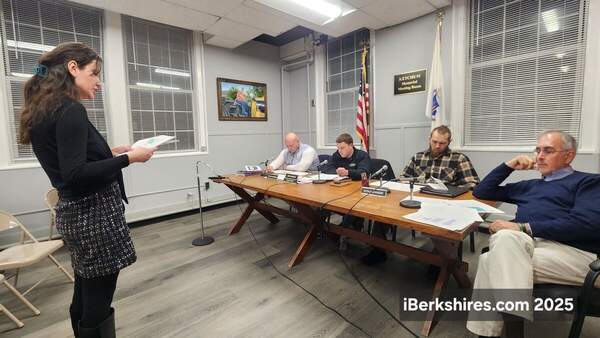
The Sheffield Elm was reputedly the largest in New England. In a flashback to tree worship in 1896, Sheffield schoolchildren in white sang and danced around the trunk of the elm, offering the Father of Elms, which they called it, their loyalty on the 50th anniversary of the Tree Bee, which was a community tree-planting event that occurred in 1846. Sheffield played a leading role in the cultural history of the elm as the tree transformed from a weed wood to an icon and an almost universal presence in New England. Fittingly author Thomas J. Campanella began his tour there to celebrate the publication of Republic of Shade: New England and the American Elm. It was at the Sheffield Library on May 17 and Elmwatch sponsored the event. Campanella gave a talk, entitled "How Elm Street Got (and Lost) Its Trees." Ulnus americana is indigenous to the eastern half of the United States, especially New England, he said. According to historical records it has had a dominant presence in the landscape. Contrary to many accounts, when Europeans reached the eastern shores of this continent, it was not a howling unspoiled wilderness, Campanella said. The land had been inhabited and farmed for centuries. American Indians shaped and managed the land with fire. This controlled burning helped to establish the elm. Fire cleared forested areas for American Indian encampments and encouraged the growth of certain plants and animals that were good for food. It affected various ecosystems differently: dry uplands burned more readily than the wetter valley bottoms. Controlled burning knocked back upland trees and gave bottomland trees room to spread. This pattern of land use caught the attention of the early European settlers. Thomas Morton, a New England Canon, wrote in 1637, "If seeking good timber, he that will look to find large trees must look to find them in the lower grounds where the ground is wet when the country is fired." The trees caught the settlers' eyes too. The largest trees in the lowlands were elms and sycamores, or plane trees, Campanella said. Sycamores are stocky trees and are not often tall. Elms have a graceful architectural stature. The colonists built their earliest settlements on cleared areas, often on the sites of former American Indian villages. Often the land around had been farmed for generations, and the soils were depleted. Settlements and farms expanded into the richer soil of the forested valleys. Very early on, the colonists began to sell timber. Not all trees were equally valuable for wood, Campanella said. Elm wood did not lend itself well to carpentry because it was tough and stringy, warped fast, and dried slowly. Elm trees grew quickly and often had impressive girths; it was not worth taking a week to fell one. So when the settlers cleared the bottomlands, they left the elms standing. Elms that had grown in forests also stood tall and narrow, and, if the land around them were cleared, they would not cast a dense, killing shadow on pasture lands and crops planted nearby. This arrangement showcased the elms. They gained presence. Colonists honored solitary elms as totems, Campanella said. They became associated with political or historical activities. One of the best examples grew in Pittsfield: the Pittsfield Elm was supposed to be over 200 years old when the town was incorporated, and it stood over 130 feet tall. A line of English pottery that typically showed famous American sites, like Niagara Falls, made a Pittsfield Elm platter. And Herman Melville compared the lightning scar on the elm to the scar on Captain Ahab's face. Boston's Liberty Elm, which grew near where today sits Chinatown, became a political symbol in the Revolutionary War. It grew next to a tavern where the Sons of Liberty regularly gathered. After the Stamp Act, Campanella said, the tree became associated with the general political ferment. Firebrands hung effigies of British rulers from its boughs. Liberty tree fever swept the colonies, he said. They all had a liberty tree, though not always an elm. Rhode Island crowned a sycamore and Maryland crowned a tulip tree. New York had a totem pole, which was cut down several times. The symbol even traveled to France. Campanella looked into this totem tree phenomenon. Elm trees were honored for their age and perceived antiquity, he said. Compared to the Old World the United States considered itself a fresh and virgin place. The colonists did not take 10,000 years of American Indian history into account. They were proud of that freshness, "unburdened by ideas of baronial oppression, feudal slavery and monkish delusion," an 1819 source wrote. But they were insecure about it too. Another source replied, if they had neither old castles nor old associations, they had at least their old trees. The Great Elm on Boston Common was a witness tree. It was believed to have seen "the aboriginal age," the deluge - even creation itself - Campanella said. It was a living link to the past. Elms grow fast and look older than they are. They were thought to hold memory well. He showed a photograph of a gathering of Methodist ministers under the Great Elm; it was said that if people wanted to be recalled for something they did, they might be advised to do it under an elm. People interpreted the saying with creative freedom. Historical events had a way of migrating to nearby trees. Eighteenth and 19th centuries are replete with monument elms, Campanella said, most associated with the Revolution. None had more recognition than the Washington Elm in Cambridge. For over a century it was the most famous tree in the states. The tree has long since died, but there is a monument to it on the spot where it stood; it's a metal disk of the same dimensions. In the popular version of the story, Campanella said, Washington relieved another general of the command of the continental army under that elm tree. When the tree died, its rings were counted; if he had really taken over the army under that tree, Washington would have been crouching under a sapling. He did take over the troops on the Cambridge Common, but in the old Oliver Wendell Holmes House. When the house was torn down the tradition reattached itself to the tree. The legend lived long: When the tree fell it caused a mob scene, with souvenir hunters battling the police. One newspaper accused Communists of felling it. Another accused Radcliffe students of descending on the cop to steal commemorative wood chips. In fact the tree was cut up in 1923 and pieces of it went to all the state governors and all foreign heads of state around the world. The elm itself migrated into the urban landscape in the 1830s. In the Victorian age they were planted in cities by the hundreds. A dawning sensitivity to nature - an environmental awakening - swept the country, along with the romantic movement, transcendentalism, the Hudson River School of painting and the Olmstead Parks era. People cultivated a new interest in shaping town and village public spaces. America was not so fresh and young anymore, Campanella said. It had acquired an impulse to tidiness, good management and principles. In Sheffield in 1846, elms came onto Elm Street with a movement to "improve village environments," an early example of a village improvement effort. A couple of local men organized the Sheffield Tree Bee under the Sheffield Elm. It went on for a couple of weeks and Sheffielders planted 1,000 sapling elms down Main Street, beginning under the old elm. The collaboration was the first of its kind that Campanella had found anywhere and the first example of a community-wide effort. Sheffield was not the first town to line its streets with elms. Other towns in this area, in the Pioneer Valley area - even south to New Haven - beat Sheffield to the shovel. But in all of these cases, the trees were planted through philanthropy. In Sheffield they were planted by community impulse. There were other, rather grimmer reasons why New England turned to village improvement, Campanella said. In the 1830s the Erie Canal opened up the fertile farmland in upstate New York and Ohio. As a result New England farmers were cut off from eastern markets and young people began moving west. Campanella said the migration prompted one villager to ask, "What is it coming over us that looks like degradation and running down? Is our life going out of us to enrich the great West?" New England towns hoped village improvement might help to keep young life at home. After the Civil War the same energy went into attracting second-home owners and vacationers from the cities. Towns tried to provide the idea of a New England country setting. By then, Campanella said, elms had as great a place in the New England image as the meeting house steeple. One Vermont town actually condemned and relocated an entire cemetery so they could create a village green, which the town had never had, in order to live up to that image. Elms did not stop the decline of New England villages but they did hide the evidence. In The American Scene, Henry James said, of New England streets, that since they are elm-shaded, little else remained. The elm is still an enduring New England image. Henry Ward Beecher, who would rather walk beneath the elms than examine a cathedral, was moved to exclaim, "The elms of New England! As much a part of her beauty as the columns of the Parthenon are part of her architecture." The elm-lined streets in New England cities helped reach toward the ideal of the pastoral city, which had gripped American imaginations since Thomas Jefferson. Campanella said the living ideal was New Haven, which is called the Elm City and is internationally known for its elm trees. Charles Dickens commented on them in 1842, saying they "brought about a kind of compromise between town and country, as though each had met the other halfway and shaken hands upon it." Temple Street was considered the most glorious tree-lined street in the world by the end of the 19th century. But, by then, the end was in sight. Before the modern era towns had a good environment for trees, Campanella said. The trees got plenty of water because the roads and sidewalks were not yet paved. No sewer or water lines dug through their roots. They were not baked in exhaust fumes. They suffered no greater assault than a bite from a hungry horse. With the coming of the motorcar, the roads were not only paved but widened. The trees grew weaker under these conditions. Many insects and diseases that they used to resist now easily did more damage. Then, in 1930, Dutch Elm Disease came to America. It did not come from the Netherlands. The disease had already spread in Europe and had baffled European scientists, who thought the blight might have been due to nerve gas from the first World War. A team of Dutch women scientists identified and gave the disease its name. In fact, Campanella said, it spread from Asia and came to America on elm burl logs shipped from France. The disease first cropped up in port cities. By 1933 it had spread from New York to New Haven. Scientists let off balloons to track the prevailing winds and to determine where the carrier beetles would be carried. In 1938 a great hurricane swept New England. The greatest storm that ever struck the New England coast, it was of a magnitude to roost sailing ships in Boston Harbor into trees, struck land right about at New Haven, and tore up the Connecticut River. It felled vast numbers of elms on its own, and the trees were not burned. They were piled in heaps, which Campanella said he thinks formed a perfect breeding ground for the beetles that carried Dutch elm disease. At any rate, after the storm, the disease took off wildly throughout New England. Sanitation efforts got underway. Sick trees were felled and burned. The efforts were effective in containing the disease, Campanella said. Teams of Dutch Elm Boys formed across New England, and then the United States entered World War II. Efforts were suspended while the manpower was in the trenches. By the time the soldiers came home in the 1950s, the disease had spread beyond control, and many of the old totem elms had fallen.
If you would like to contribute information on this article, contact us at info@iberkshires.com.

Friday Front Porch Feature: A Charming House Like New

By Breanna SteeleiBerkshires Staff
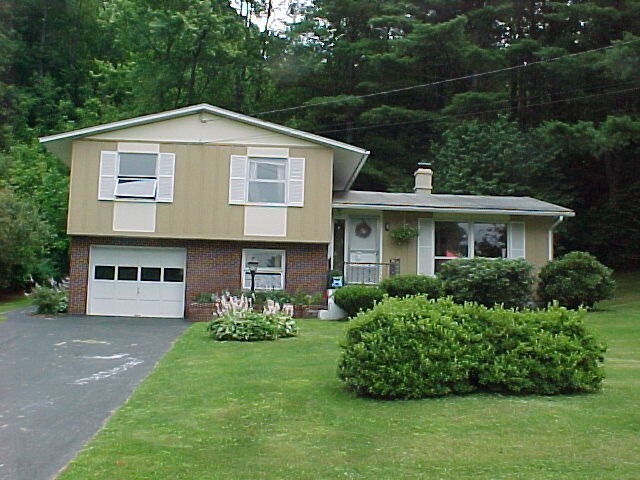
The home prior to renovations.

NORTH ADAMS, Mass. Are you looking for a newly renovated home with great space? Then this might be the perfect fit for you!

Our Friday Front Porch is a weekly feature spotlighting attractive homes for sale in Berkshire County. This week, we are showcasing 100 Autumn Drive.

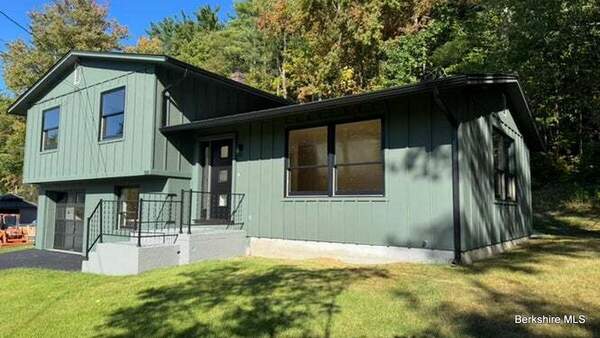
This three-bedroom, two-bathroom split level was built in 1965 and is 1,396 square feet on 0.32 acres.

The house was completely renovated recently. It includes a one-car garage, and comes with appliances including a dishwasher and stove/oven, and other major appliances.

The house is listed for $359,500.

We spoke with owners Michael Zeppieri and Chris Andrews, who did the renovations. Zeppieri is an agent with Alton and Westall Real Estate Agency.

What was your first impression when you walked into the home?

Zeppieri: I purchased this home to do a full renovation flip and saw tremendous potential in this mid-century split level home that had not been updated since it was built in the 1960s, in a great North Adams neighborhood.


Andrews: The house was a much different house when we first purchased it in 2022 (photo attached is from about 2010.)  The interior was painted all in dark colors and we brightened it up with neutral colors. The transformation makes you feel like you are in a totally different house.  



What were the recent renovations, any standout design features?


Zeppieri: The house has had a complete reconfiguration including new kitchen with high-end appliances, ceramic tiled baths, hardwood floors, new windows and roof ... just to name a few.  All a buyer has to do is move in and enjoy.


Andrews: Yes, we renovated the entire house.  New windows, new roof, all new custom black gutter system, new blacktop driveway, hardwood floors were installed through out the house. New kitchen and bathrooms as well as painting the exterior and interior of the house.  New paver patio in the back yard.


What kind of buyer would this home be ideal for?


Zeppieri: The buyer for this home could be a first-time homebuyer or a retiree ... the location is close to attractions in North Adams ... and the property is located in Autumn Heights, which is a very small residential development with several long-term owners.


Andrews: This home is truly ideal for a variety of buyers. Whether a first-time homebuyer, a small family or even someone looking to downsize from a larger home.



What do you think makes this property stand out in the current market?


Zeppieri: The location, price and move-in condition of this home make it a true market leader in the North Adams Market.


Andrews: This house is completely renovated and in a desirable location of North Adams. The natural light in the home really makes the interior pop. And with all the upgrades the home stays quite cool in the summer months.

Do you know any unique stories about the home or its history?

Zeppieri: This home was built for the Gould family in 1969 and they lived there till 2010. It was always a family home during that time in which the Goulds had two children ... and Virgina Gould managed Mohawk Forest Apartments and was a very active resident of North Adams.


Andrews: Built in about 1965.


What do the current owners love about this home?


Zeppieri: As the current owner it was a fun project to transform this home and get it ready for its next adventure with a new family to enjoy for many years.


Andrews: No one has lived in the house since we purchased the home. The new owners would be the first to live in the house since the renovations have been completed.



What would you say to a buyer trying to imagine their life in this space?


Andrews: I would suggest seeing the house either on a sunny day or at twilight to really get a vision of how special the home feels.  


You can find out more about this house on its listing here.

*Front Porch Feature brings you an exclusive to some of the houses listed on our real estate page every week. Here we take a bit of a deeper dive into a certain house for sale and ask questions so you don't have to.



View Full Story

More North Adams Stories