Study Recommends 'Removal' for North Adams' Veterans Bridge
NORTH ADAMS, Mass. — Nearly a year of study and community input about the deteriorating Veterans Memorial Bridge has resulted in one recommendation: Take it down.
The results of the feasibility study by Stoss Landscape Urbanism weren't really a surprise. The options of "repair, replace and remove" kept pointing to the same conclusion as early as last April.
"I was the biggest skeptic on the team going into this project," said Commissioner of Public Services Timothy Lescarbeau. "And in our very last meeting, I got up and said, 'I think we should tear this damn bridge down.'"
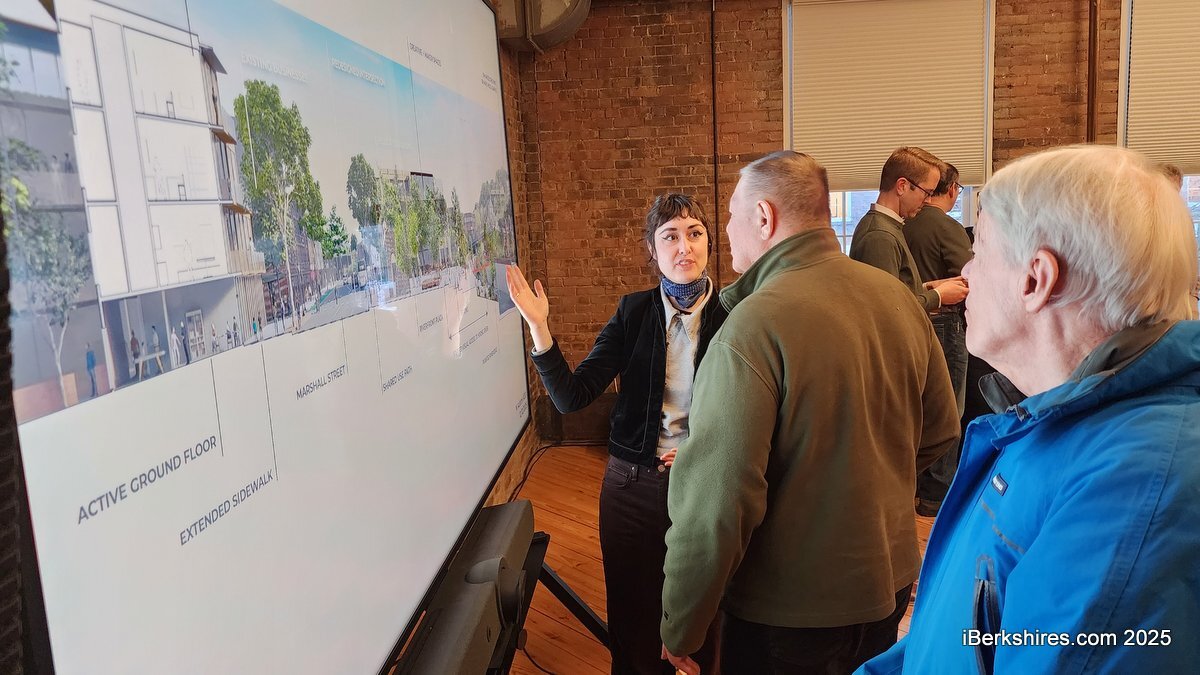
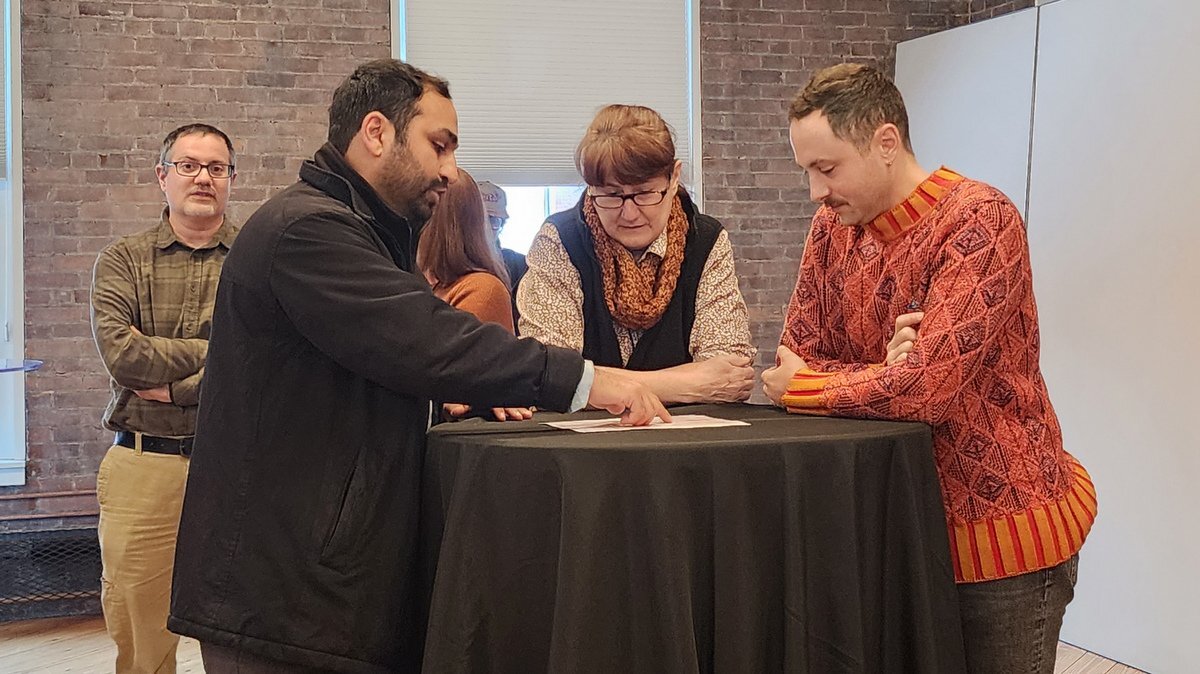
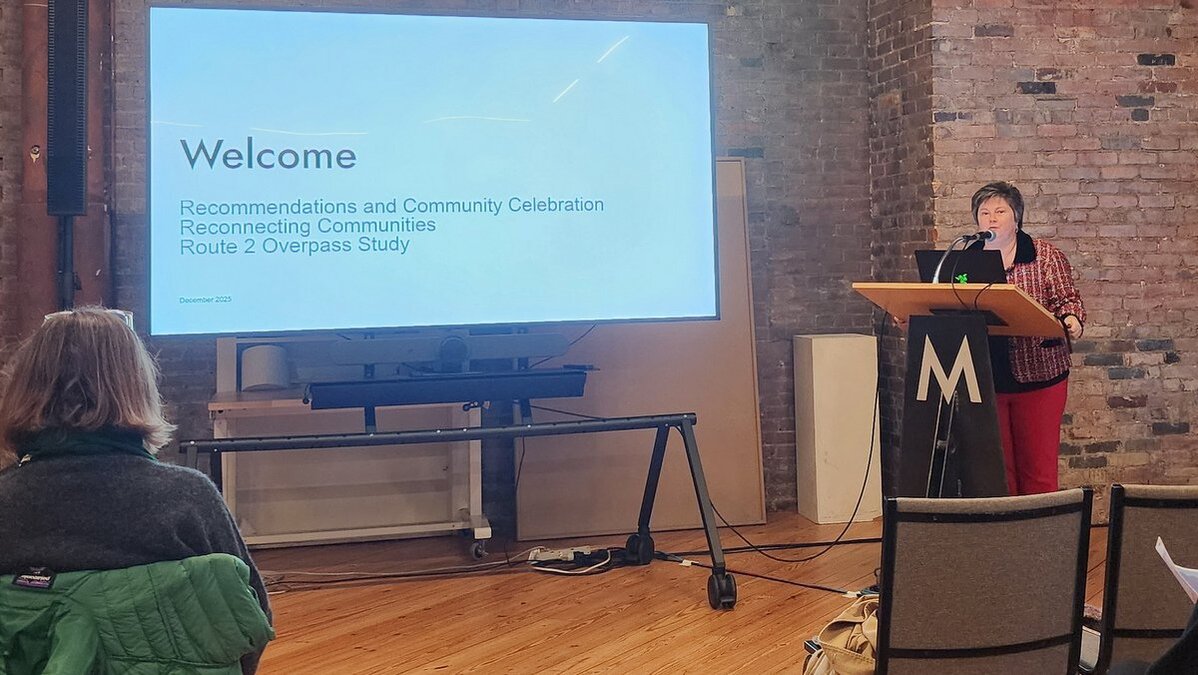
Lescarbeau's statement was greeted with loud applause on Friday afternoon as dozens of residents and officials gathered at Massachusetts Museum of Contemporary Art to hear the final recommendations of the study, funded through a $750,000 federal Reconnecting Communities grant.
The Central Artery Project had slashed through the heart of the city back in the 1960s, with the promise of an "urban renewal" that never came. It left North Adams with an aging four-lane highway that bisected the city and created a physical and psychological barrier.
How to connect Mass MoCA with the downtown has been an ongoing debate since its opening in 1999. Once thousands of Sprague Electric workers had spilled out of the mills toward Main Street; now it was a question of how to get day-trippers to walk through the parking lots and daunting traffic lanes.
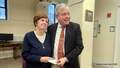
The grant application was the joint effort of Mass MoCA and the city; Mayor Jennifer Macksey pointed to Carrie Burnett, the city's grants officer, and Jennifer Wright, now executive director of the North Adams Partnership, for shepherding the grant through.
The report, available here on the city's website, is 115 pages of history, engineering, traffic design, and possibilities for renewal, economic development and pedestrian access. The appendices are 551 pages.
The summary presentation was made by Chris Reed, founding director of Stoss, with help from senior associate Chelsea Kilburn.
Reed said the study received more than 5,000 individual inputs over the past 10 months, which he thought was amazing for a communities this size.
"You told us we need safer pedestrian crossings. We need more spaces for people and bicyclists. We need central community gathering spaces for this community to come together, right? We want to rediscover our river. It's hidden right by all the infrastructure that's out there. We want flexible space," he said.
"This is a community that's ready for change. You've told us that very clearly."
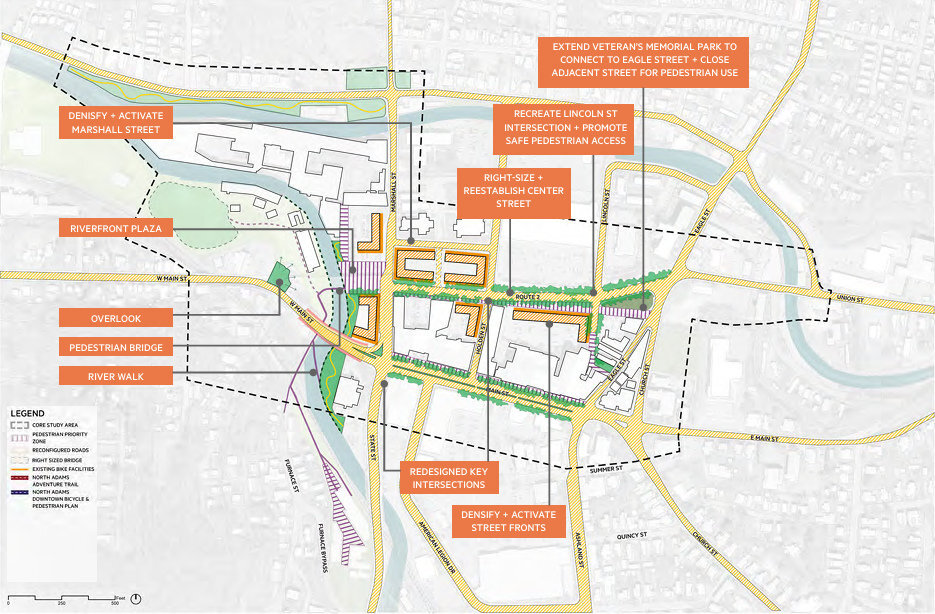
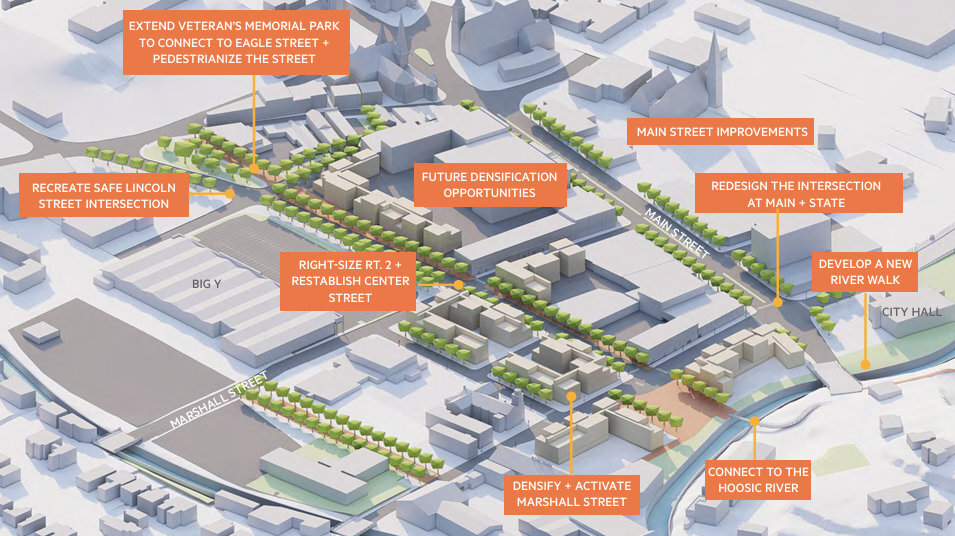
Initial designs envision restoring Center Street and reducing the lanes on Route 2; Reed pointed out that North Adams is the only community west of Athol where the highway has four lanes and it's only six blocks — while the traffic is lower.
The removal of the overpass would not only capture people moving east or west, or from the museum, it would open a rather forbidding area of the city to more pedestrian and bike access.
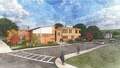
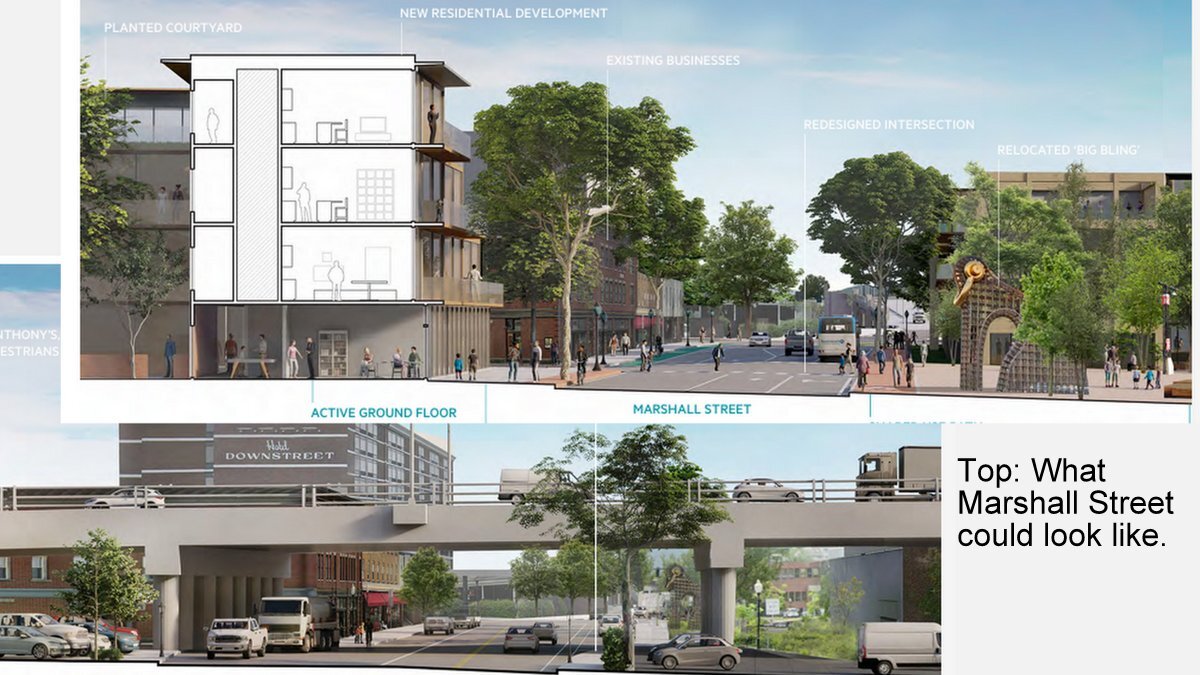
This would include extending Veterans Memorial Park and opening up areas for the long-promised housing and retail development. It also envisions creating a greenway and river access on Marshall to induce people to make their way downtown.
"We have the opportunity to create two new community destinations, closing part of Center Street around Veterans Park, to give that space the tranquility and honor that it really deserves, and to really extend the life and usability of that space, and also to create a new waterfront plaza right on the river, right at the front door Mass MoCA, and to connect this with a tree-lined boulevard," Reed said. "That is a central move that creates a new sense of community, a new sense of connectivity and a new identity for the downtown, but it also then sets up opportunity for new development, particularly in the St. Anthony's lot and on some of Mass Moca properties right along Marshall Street."
A lot of the questions that followed were about traffic, particularly truck traffic on Main Street, East Main and Eagle. Reed said a lot of thought had gone into redirecting traffic, using roundabouts and traffic calming measures. The main access west would be West Main Street, the original route, which will require some engineering of the road and intersection to make it two-way again. Most of that design work will be done once the project moves forward.
And will it move forward? Reed pointed to former Gov. Mitt Romney's pet project to build a direct highway overpass at the Sagamore Rotary — he got it done in one term.
"Because there was support at all levels — local, state, federal government — and you need community members to do that," he said.
"We're going to need money guys, so start shaking those trees. No matter who's president, North Adams is going to fund this project one way or the other," said Macksey, pledging that the falling down bridge will eventually come down (after a short-term fix). "There's a lot more work to come, and there's a lot more community engagement that's going to occur now with the state and the federal government, one would hope we would get another Reconnecting Communities."
Kristen Elechko, director of the governor's office in Western Mass, took the microphone to say the Healey administration "really believes in this project."
Mass MoCA Director Kristy Edmunds sees the project as not only a way to heal an urban wound but something that shows optimism can change things, and that city can heal.
"The other way that this matters is that when we start to normalize something that is a deep and profound scar, we also end up normalizing a certain kind of pessimism that a community voice may not actually be able to move the needle," said Edmunds. "This moved the needle, y'all, and it also moved that needle from 'it's too daunting, it'll never happen' into 'it is possible.' Here's the proof, and here's a way forward."
Route 2 Overpass Study by iBerkshires.com
Tags: route 2,