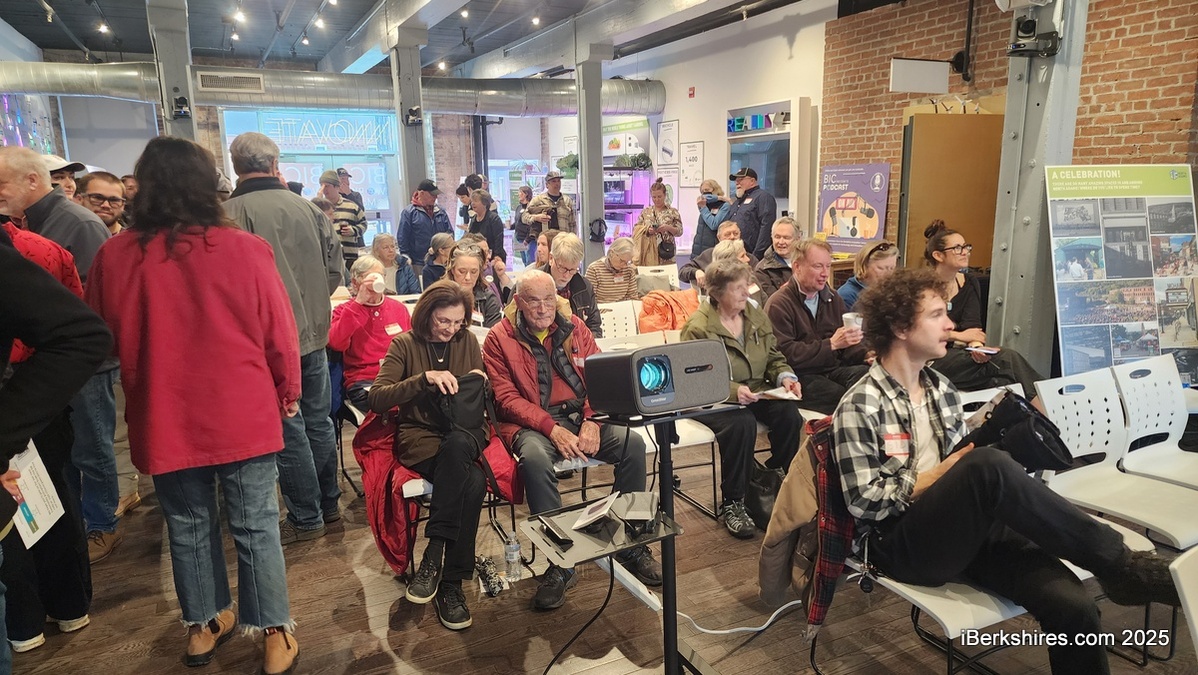
North Adams' Route 2 Study Looks at 'Repair, Replace and Remove'
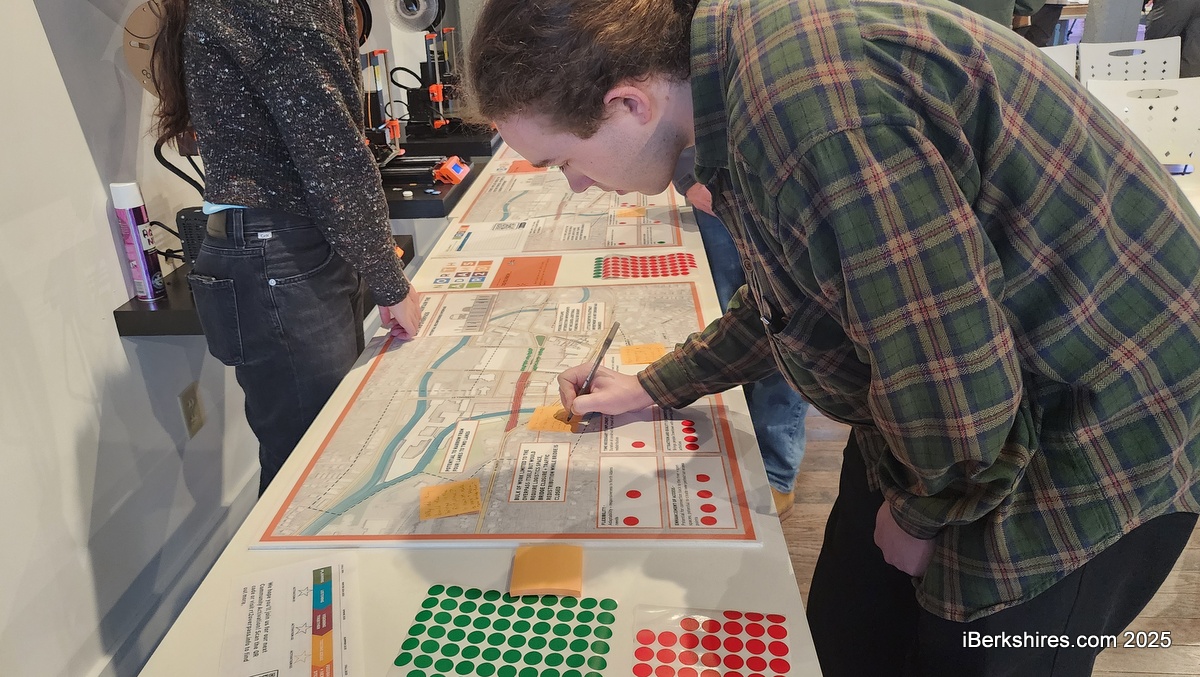
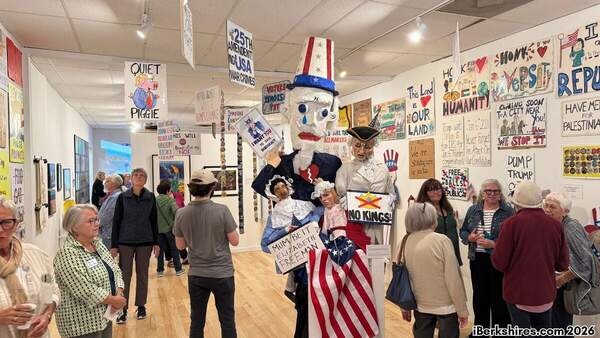
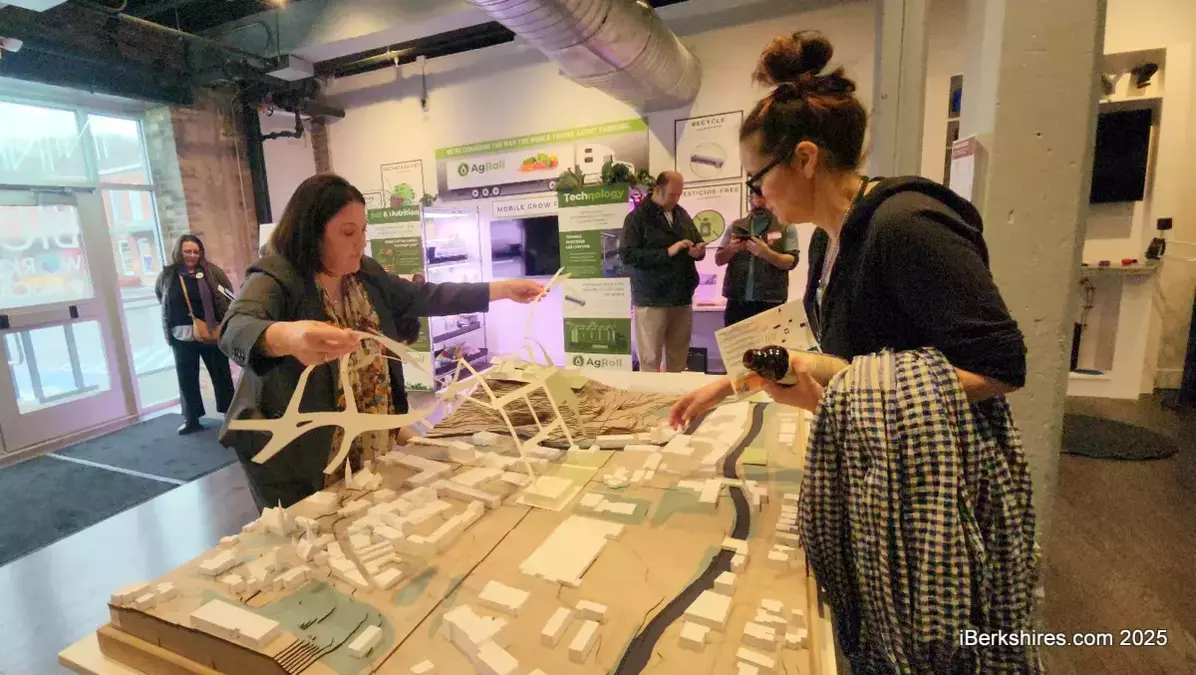
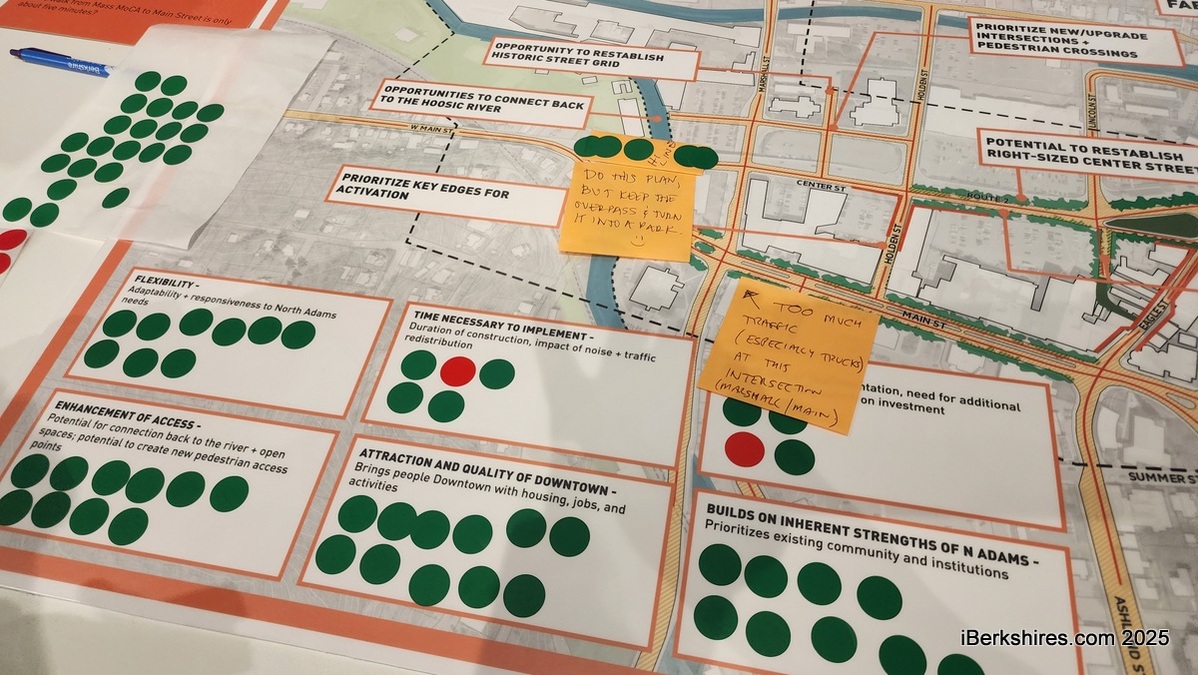
Attendees make comments and use stickers to indicate their thoughts on the priorities for each design.
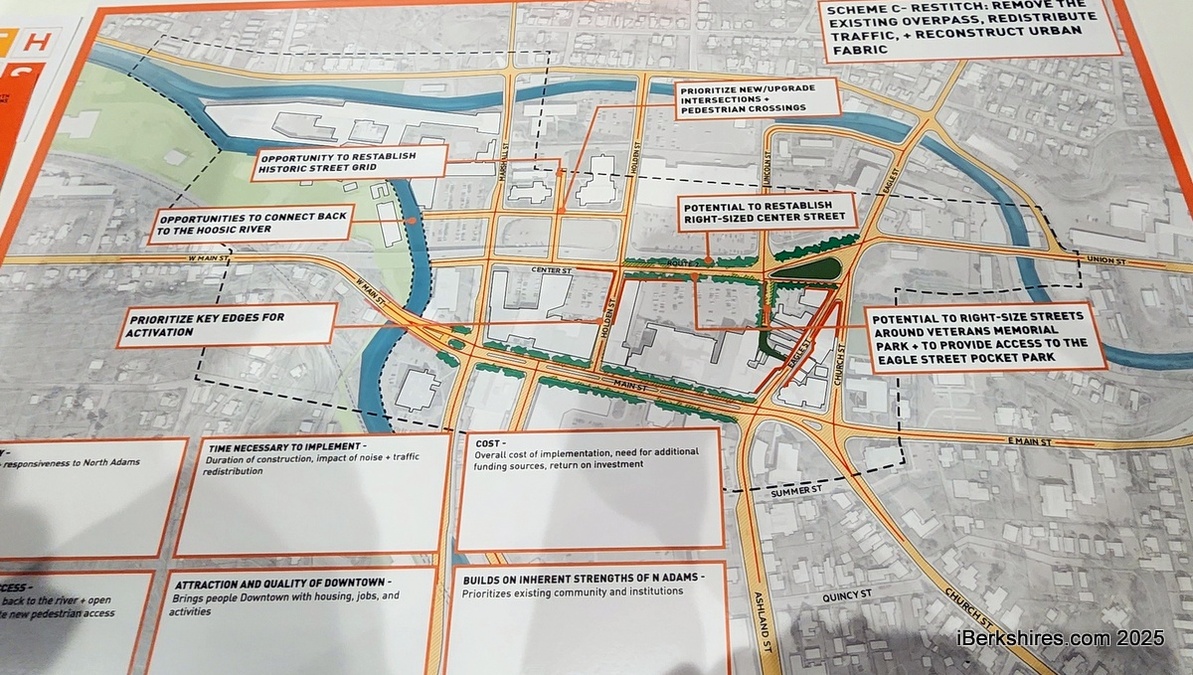
Of the three options proposed — repair, replace or restore — the favored option was to eliminating the massive overpass, redirect traffic up West Main and recreate a semblance of 1960s North Adams.
"How do we right size North Adams, perhaps recapture a sense of what was lost here with urban renewal, and use that as a guide as we begin to look forward?" said Chris Reed, director of Stoss Landscape Urbanism, the project's designer.
"What do we want to see? Active street life and place-making. This makes for good community, a mixed-use downtown with housing, with people living here ... And a district grounded in arts and culture."
The concepts for dealing with the crumbling bridge and the roads and parking lots around it were built from input from community sessions last year.
The city partnered with Massachusetts Museum of Contemporary Art for the Reconnecting Communities Pilot Program and was the only city in Massachusetts selected. The project received $750,000 in grant funding to explore ways to reconnect what Reed described as disconnected "islands of activity" created by the infrastructure projects.
"When urban renewal was first introduced, it dramatically reshaped North Adams, displacing entire neighborhoods, disrupting street networks and fracturing the sense of community that once connected us," said Mayor Jennifer Macksey. "This grant gives us the chance to begin to heal that disruption."
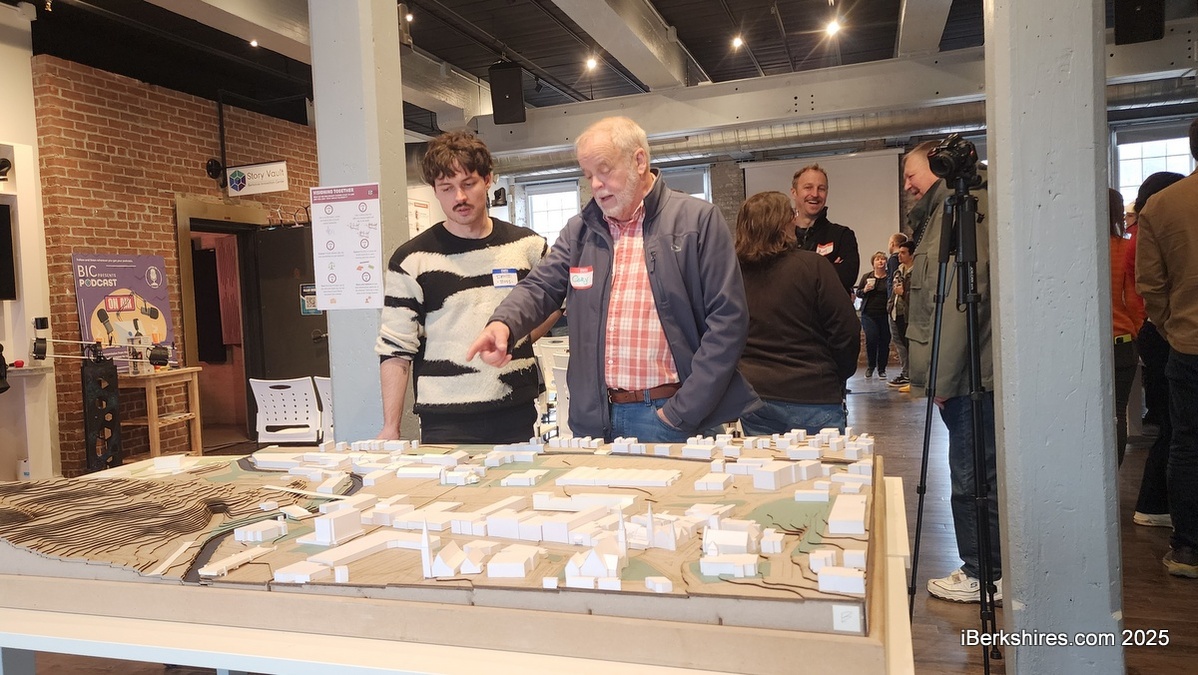
The session at the Berkshire Innovaction Center offices on the Mass MoCA campus included "stations" where participants could prioritize what they liked — or disliked — about the options and to understand how the city used to look and function.
"Somebody coming in on Route two, what you see is a parking lot and a parking lot and a parking lot, and suddenly you're on the overpass and out of town," Reed said. "The first time I drove through here, I missed it, because you're not coming down Main Street ... there's not a lot of pedestrian activity, so it's barrier on barrier on barrier that creates the sense of separation."
The challenges of getting from one side of the downtown to the other was a major topic of the community sessions, with comments like "pedestrians shouldn't be forced to cross a raceway," "going from Mass MoCA into downtown feels like such a hike, and "I'll walk an extra quarter of a mile to avoid a particular intersection."
"The problem is the gaps are so big, you don't know where to go next," said Reed. "Somebody likened downtown to Swiss cheese, a bunch of holes."
The feedback had Stoss looking at number of elements in its transportation, economic and infrastructure analyses, which also included related projects like the bike path and the Hoosic River Revival and the city's master plan.
Those elements included a central community space, green space, riverfront access, housing, retail, connections, and bicyclist and pedestrian safety.
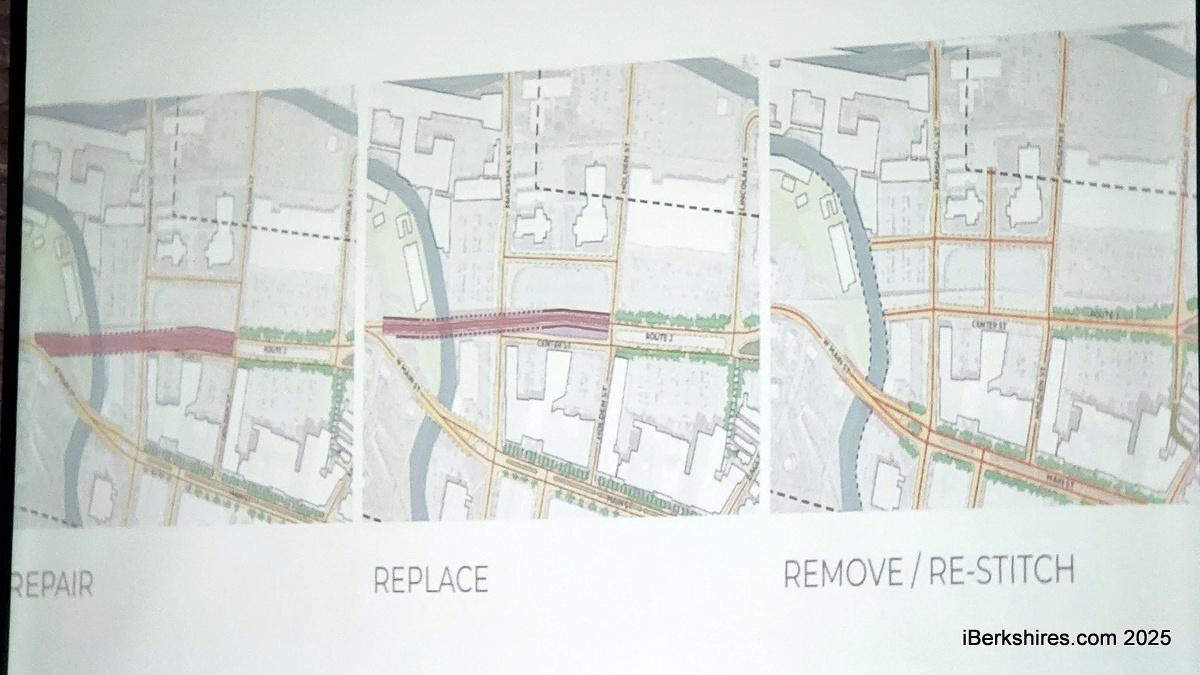
"We need to look at repair, replace, remove, but we're starting to think of remove as an opportunity to restitch," Reed said.
Narrowing the bridge to two lanes won't narrow the deck and only open up limited green space and a replacement bridge wouldn't be much smaller and would also mean years of construction. Either option would likely eat up the $40 million estimated for the project.
"Possible streetscape improvements, little incentive to attract investment. Not a whole lot's changed in the scheme," said Reed.
If the overpass is removed, it creates a catalyst for investment and opportunity to "reknit" a gridded street pattern with squared off and scaled down intersections, and a Route 2 (Center Street) that's half as wide.
"How do you begin to think about improvements to Main Street that could come off of this as well, right? And how do we connect to the river?" Reed said. "This is a different kind of project, it's not about vehicles first. It's about people and community first."
A layout of all three options found "removal" as meeting more priorities in access, flexibility, time and cost, building on inherent strengths and attracting investment.
There were some worries, mainly on traffic, roundabouts and shifting tractor-trailers coming over Route 2 through the downtown to and from Center Street.
"My concern is the traffic would have to go down Main Street," said Council President Bryan Sapienza, the only councilor to attend, who added the through-traffic might affect people trying to get to downtown businesses was a concern.
Rye Howard, owner of Bear & Bee Bookshop on Holden Street, said the sides streets 50-60 years ago had been lined with small businesses — and it will take investment from small entrepreneurs to make that happen again.
"It would be such an opportunity to make downtown more accessible and more walkable and more available to the community," they said. "But the challenge there is that after you've done the road work, you have to have the development, and you have to have money for the development ...
"None of these are easy solutions, but I think it's really worth fighting for a town that looks the way we want to."
Macksey was enthused by not only the number of people who attended but the level of engagement and input. There were still people talking with Stoss and other project representatives as the two-hour session wound down.
"We can build projects like this with our own ideas, but it's all about the community and community input," she said. "The next steps is we'll take all this data, and then the team will get together and we'll regroup, and we're really focused on fleshing out each design and each option."