

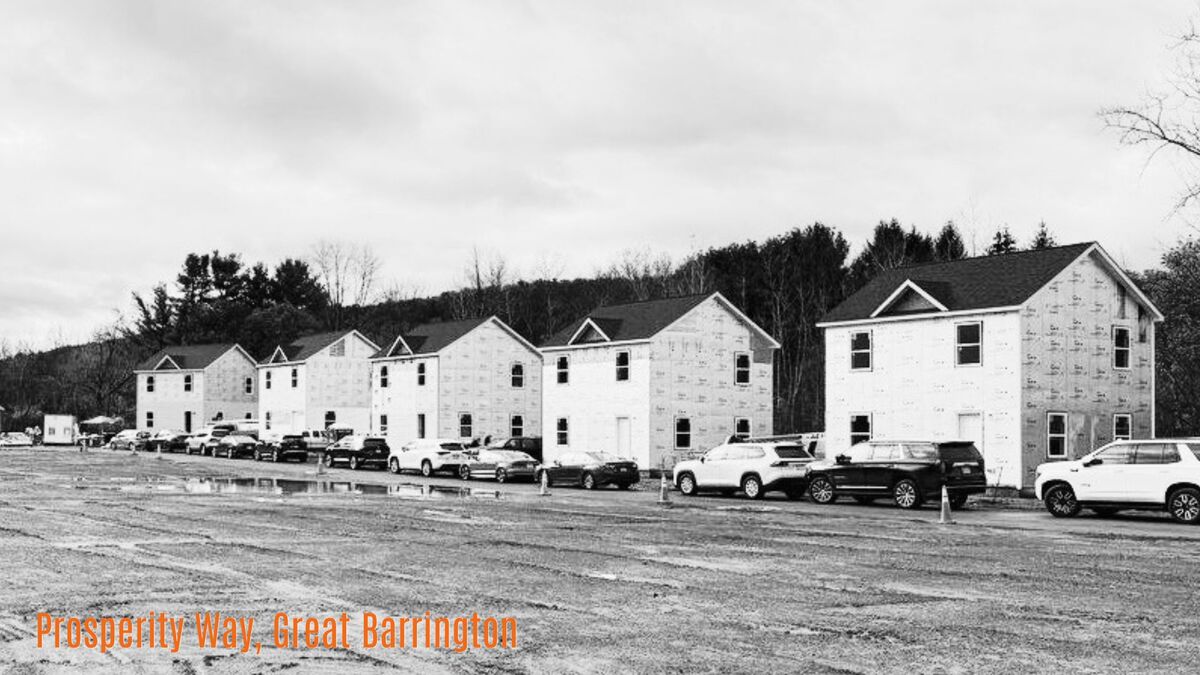
Affordable Housing Situation 'Dire' in the Berkshires
It's widely recognized that the need for affordable housing is critical in Berkshire County and nationally.
When asked to describe the situation here in separate interviews, one word was repeated by several regional housing experts: "Dire."
"It's a dire situation," said Brad Gordon, executive director of Upside413, (formerly the Berkshire County Regional Housing Authority) an agency that provides a continuum of services and programs to address the underlying causes of household instability. Its services include housing consultation, court-authorized mediation, landlord/tenant dispute-resolution, and housing-search assistance, among others.
"In terms of rentals, there is a significant incongruence between household incomes and the housing available," said Gordon. "And for potential homebuyers, the price is often beyond the reach of many people."
The broad goal of ensuring that everyone has access to affordable housing is clear, but the specifics are complex, multifaceted and often confusing. The roots of the present crisis developed over decades and intensified with the COVID-19 pandemic of 2020.
For context on initiatives to solve the problem, it is helpful to look at the current situation and how we got here.
The need for affordable housing extends beyond the stereotype of public housing for those with the lowest incomes who are either chronically unemployed or hold extremely low-wage jobs.
It now encompasses many people who have well-paid jobs in business and public service positions such as teachers, health-care workers and other essential services. It also impacts senior citizens and young people who are starting out in life.
Over the years, many strategies and initiatives to increase the availability of affordable housing have been undertaken or proposed through the private sector and local, state, and national governments. These include subsidies such as vouchers to help tenants pay rent, and incentives to developers to include affordable housing in their projects.
The state's ongoing efforts to address housing issues recently were kicked into higher gear.
In August 2024, Gov. Maura Healey signed into law the most ambitious housing legislation in Massachusetts history, the Affordable Homes Act. Its goal is to counter rising housing costs caused by high demand and limited supply. It authorized $5.16 billion in spending and includes 49 policy initiatives to support the production, preservation and rehabilitation of more than 65,000 homes statewide over the next five years.
While this is expected to bring eventual improvements, the availability of affordable housing is far outpaced by the demand. Projects with units that are subsidized for affordable housing have long waiting lists. There are also many people who fall through the cracks.
"There's a dire need for affordable housing for people at many income levels," said Jim Harwood, president of Community Development Corp. of Southern Berkshire (CDC). The non-profit organization develops affordable housing and works with business and governments to create living-wage jobs in the Southern Berkshires.
"It's especially acute for people with low or moderate incomes," he continued. "But it's also a problem for middle-income families who earn too much to qualify for subsidized housing options but don't earn enough to afford market-rate housing."
The housing crisis is national and statewide, with both common situations and differing conditions in many communities and regions. Housing is also connected to larger social, economic and political trends, as escalating costs in most sectors of the economy are squeezing families, businesses and governments
from many directions. The word "affordability" has become a new political buzzword.
In addition, Berkshire County housing has been affected by conditions specific to this region, such as the presence of affluent outside buyers who compete with the lower average incomes of the local population for housing. The situation within Berkshire County also varies widely. Some communities have more expensive housing than others. Nevertheless, the overall trends have impacted the entire county.
The concept of affordability is open to differing interpretations.
Households with higher incomes can more easily absorb increased housing costs and still have sufficient money for other basics such as food, transportation and health care, as well as discretionary spending.
But for others with moderate or low incomes, the impact on their overall budget is more significant.
A frequently used rule of thumb to define affordability is 30 percent of an occupant's gross income for housing and utilities. This is based on the official definition of the U.S. Department of Housing and Urban Development (HUD).
While real-estate values have always fluctuated and generally trended upward, it becomes a serious issue when they outpace and escalate beyond the average incomes of the population.
As one indication of this in Berkshire County, the median sale price for single-family homes and condos here rose from $295,000 in 2012 to $518,900 in 2021. This is a 76 percent increase by 2023 when adjusted for inflation, according to the "Housing Snapshot" of Berkshire County compiled by the state Executive Office of
Housing and Livable Communities (EOHLC).
More than half of the renters in Berkshire County spend more than 30 percent of their income on rent, according to another report named "Building Homes, Building Futures," prepared by Way Finders and the Donahue Institute at the University of Massachusetts.

Gordon noted that average rental prices in the Berkshires increased by an estimated 35 percent in the last three years. "If you are on a lower income, that can be catastrophic," he said.
Regarding home-ownership, Gordon cited the example of his own house, which he described as an entry-level home in a traditionally middle-class neighborhood in Pittsfield, which he purchased in the 1990s.
"It was built in 1957 and was initially sold for $11,000, which was the equivalent of an affordable starter home for young families in today's dollars," he said. "I bought it for $84,000, which was still affordable."
"However," he continued, "the current market value of existing houses like this have become too expensive for many of the young families who would have bought them in the past. And builders can't afford to construct new homes to sell at the current equivalent of the original entry-level price."
In addition to cost, there is a serious shortage in the number of units of available housing overall. The UMass/Way Finder's analysis concluded that Berkshire County has a deficit of 1,910 housing units.
Meanwhile, the EOHLC Housing Snapshot noted that only 1.4 percent of homes in Berkshire County are available for sale or rent, which is just below the statewide average and well below what is considered a healthy vacancy rate.
Only 1,500 new homes were built in the last 10 years, resulting in a housing stock increase of just 2 percent, according to the EOHLC. Another issue is the condition of the county's older housing stock. Many existing homes "are threatened by deferred maintenance and natural hazards," pointed out the agency's report.
The supply of housing in Berkshire County is also impacted by seasonal homes and the conversion of year-round rentals to short-term rentals through online listers as Air BnB and Vrbo. The Snapshot reported that seasonally vacant homes are approximately 12 percent of the total housing stock, and 25 percent or even 50 percent of the total housing inventory in some communities.
EOHLC warned that "the county may lose 1,500 homes to seasonal use or short-term rentals over the next decade."
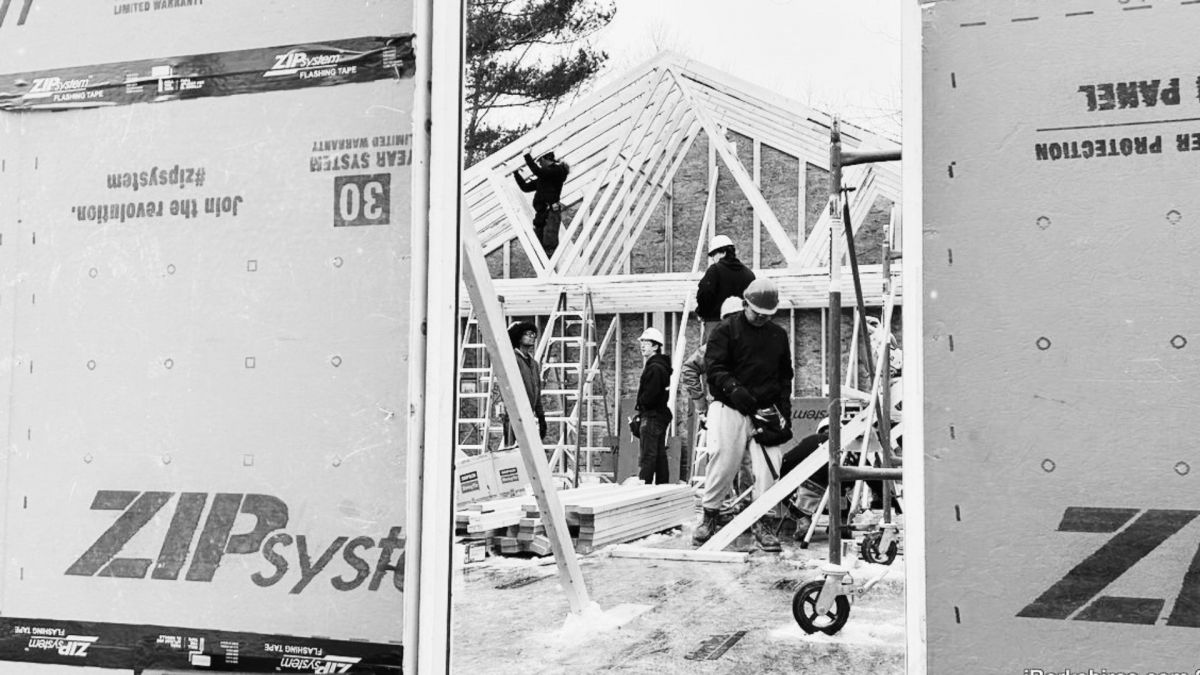 Paradoxically, the shortage of affordable housing has been occurring at the same time Berkshire County's population has been declining.
EOHLC used data and trends to project three potential population forecasts for the next decade under different ratios of new and departing residents. All three predict population declines ranging from minus-5 percent to minus-1.5 percent.
However, there will still be a shortage of available units, according to the agency: "EOHLC estimates that the Berkshire region will need to add at least 1,300 homes to the year-round housing stock over the next decade, and (possibly) as many as 2,500 homes under the high series population projection."
Housing advocates also emphasize that there also continues to be a pressing need for housing for those on the lowest income levels of 30 percent of the region's average median income (AMI) or less. This category of housing is also known as deep affordability.
"For properties with a development subsidy only, there are still so many households who can't afford the rent," said Joey Lindstrom, executive director of Construct, a nonprofit provider of affordable housing and supportive services in South Berkshires. "For the lowest income people, there needs to be deeper affordability ...
"Many are working hard at jobs in supermarkets and other businesses, but they are still on the cusp of homelessness. Or they are already living in their cars or on someone's couch because they don't earn enough to meet the minimum requirements for a rental unit. We have to focus our scarce subsidy resources on these households."
Developing strategies to solve these wide-ranging problems requires dealing with the various factors that led to them.
Look for Part 2: Costs, Supply & Regulations Factors in Affordable Housing Scarcity
Tags: affordable housing, deep dive,