Clarksburg Average Tax Bill Up 4%
CLARKSBURG, Mass. — The owner of an average home will see their tax bill rise by about $132, or about 4.16 percent.
The Select Board on Monday approved a single tax rate, which means property owners will see a rate $12.29 per $1,000 valuation.
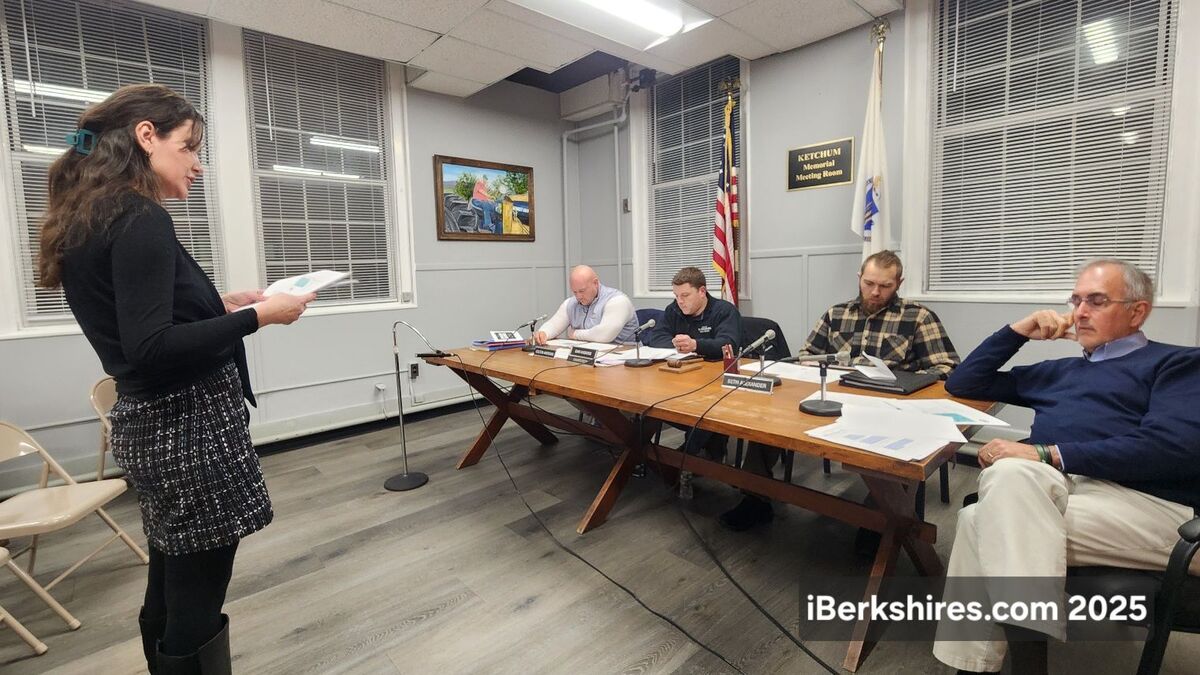
Assessor Romana Messer walked the board through the town's valuations and her recommendations to stick to a single tax rate.
"Taking our necessary budget, and from it, we deduct all other revenue streams, so excise tax, fees, fines, state aid, and then the number that we're left with, we know that that's the number that we need to raise through taxation," she said.
For fiscal 2026, that number is $2.4 million; the town's total taxable value is $194,590,301, up some $27 million, resulting in a tax rate of $12.29.
"While that seems low, the values raised up over 16 percent so overall, the town is still bringing in $123,000 more than it did last year, even with this lower tax rate, because the values went up so much so," she said.
Last year's tax rate was $13.58 and the average home was valued at $235,243; for this year, the rate drops by more than a dollar but the average home value is now at $268,125 for an average tax bill of $3,295.
Messer noted that the even with new growth, the town only had excess levy capacity of $3,815.20.
"We actually had $2,000,224 in new growth, but that translates in $30,205 in extra levy capacity," she said. "So if you went back to the other sheet, if we didn't have that $30,000 we would have actually been over our levy limit."
She added that the next year's rate will go up with the debt exclusion to pay for the school roof.
The board did have some options — set a split rate that would put more on the commercial/industrial or adopt an exemption.
"If we were adopting a split tax rate and what it would look like for each class of property up to the maximum that we discussed of 1.5, which would lead to the $18.44 cent tax rate for businesses with a $91 savings to an average single family home," she said.
However, residential makes up some 95 percent of the town's value, meaning the small business sector would be overly burdened. Commercial and industrial make up about 1 percent each and personal property 3 percent.
"Adopting a split rate would have very little effect for the residential class, and it would hurt the business class drastically," Messer said, as it would raise the commercial rate to $18.44 for the small number of local businesses.
The board had two tax exemptions to consider: giving owner-occupied homes a tax break of up to 35 percent or a 10 percent reduction for commercial parcels less than $1 million in value and with fewer than 10 employees.
Messer pointed out any reduction in one sector has to go elsewhere. In the case of discounting owner-occupied homes, the burden would shift non-owner occupied — second homes, apartments and rentals. There's only a dozen or so properties that would have to carry the load.
In the case of small businesses, all but one fit the exemption criteria, which means tax burden would shift to that one business.
A third exemption is for open space but Messer said the town has no property that fits that criteria.
"I recommend a residential factor of one for all of the reasons we just discussed," she said.
Board members approved the single tax rate and voted against the exemptions, thanking Messer for being thorough and saying it was the presentation they'd had on the tax classification process.
Town Administrator Ronald Boucher said she deserved the kudos.
"She started here Aug. 25 with really no assessor background, and she inherited sort of a messed up situation, and she did one heck of a job," he said.
In other business, the board
• Appointed Liz Redwing as Cultural Council representative for Clarksburg for a three-year beginning Jan. 1 to Dec. 31, 2029; a approved used car dealer's license submitted by Tom Rotolo of Walker Street; voted to move the annual town election from May 12 to May 19 to accommodate an absence in Town Hall and voted to close Town Hall on Dec. 24 and 31.
• Set a public hearing for Jan. 5 at 5 p.m. regarding the state Department of Conservation and Recreation acquiring a strip of land at Hairpin Turn and heard a request from the town's health agent for the board to act as the Board of Health, continuing that discussion to Jan. 5.
• Heard from Brett Roberts of Berkshire Regional Planning Commission about a homeowner's repair program and agreed to participate.
• Heard updates from Boucher on receiving an Americans with Disabilities grant of $30,000 to used to make the school bathrooms more accessible, that bidding was close for the Middle Road project being funded by a MassWorks, and that it "looks very good for us" on a Green Communities grant for HVAC, lighting and insulation on town property.
Tags: clarksburg_budget, fiscal 2025, tax classification,