The early ups and recent downs of a Williamstown mill

By Linda CarmanPrint Story | Email Story
The rise and fall of the mill on Cole Avenue in Williamstown — known first as the Station Mill and, more recently, as Photec — was recounted in illustrated talks Sunday, as the once thriving and now disintegrating brick building nears its inevitable demolition. The talks, given by retired Clark Art Institute Director David Brooke and Town Manager Peter Fohlin, were part of a series sponsored by the Williamstown House of Local History. More than 70 people attended the program at the Richard A. Ruether Post #152, American Legion hall. Brooke, who lives nearby on North Hoosac Road and has long taken an intense interest in the history of the area, recounted the mill’s beginnings in 1866, when the Williamstown Manufacturing Co. began its operations there. That factory gave rise to 28 company-owned double tenements for workers, a general store operated by F.T. Mather, and, later, a school — now the Williamstown Youth Center — all serving as the nucleus for the development of “Williamstown Station” in the later 19th century. This mill village was, Brooke said, “widely separated from the rest of town.” According to Williamstown: The First 200 Years, and 20 Years Later, by the Williamstown Historical Commission, Robert R.R. Brooks, editor — a principal source for Brooke’s information — the principal organizer of the company was Paul Chadbourne, a Williams College science professor and later the school’s president, who owned the land on which the mill and the village were built, under his direction, and who served as the company’s first treasurer. Chadbourne, Brooke said, had a finger in other textile manufacturing operations, including the Walley mill — on the Green River, where the Travel Store is now — and the Loop or Water Street mill — subsequently the site of Cornish Wire. In the 1880s, Brooke said, Chadbourne left the presidency under pressure from college trustees because of his textile interests. The Williamstown Manufacturing Co. owned more than 100 acres of land. Its three-story brick mill, measuring 350 feet by 60 feet, had 319 looms that turned out cloth that went to Arnold Print Works in North Adams. Harvey Arnold, one of the founders of Arnold Print Works, was the first president of the Williamstown Manufacturing Co. The factory, using three water wheels, ran on water power from the Hoosic River. But because those provided a maximum of 475 horsepower, and only half that during the dry months, a 150-horsepower steam engine was installed in 1878. In January of that year, the North Adams Transcript ran a highly laudatory article on the company, describing the village as “the model manufacturing property of the state.” Among the advantages listed were its location, on “high dry land with no hint of malaria.” Rules, according to that story, prohibited the keeping of pigs or poultry on the tenement premises. Brooke noted that the poultry prohibition was more likely to discourage cockfighting. A community barn could hold workers’ livestock. Also, the article counted more than 20 houses containing parlor organs, and several families “engaged in the luxury of pianos.” However, the Williamstown history book notes that, juxtaposed with this version of the company’s concern for workers’ welfare, is the subsequent fining, four years later, of the company in Williamstown court for violating the 10-hour law and for employing minors without proper certificates. Brooke has a special interest in New England mills. Before coming to the Clark he worked at the Currier Gallery in Manchester, N.H., a town with a long history of textile mills and manufacturing. The steam engine was replaced by a 500-horsepower engine in 1904, when another 131 new looms were added, for a total of 450. However, despite the new engine, water provided most of the power, and in 1911, the old wheels were replaced by more efficient ones. The mill was sold in 1910 to Berkshire Fine Spinning and absorbed by the Greylock Mills. Crippled by the depression that followed the stock market crash of 1929, it closed in the early 1930s. “The last years of the mill were a rather unhappy affair,” Brooke said, noting that the depression and the move of industry from New England to the south combined to doom the operation. In 1933, Greylock auctioned off the mill housing for prices ranging from $500 to $2,000. The store brought $4,000. The mill itself, in September 1934, was sold to Howard Moore for $950 and back taxes. From the mill’s windows, Brooke said, one could see “a view of the wicked saloon, a glimpse of the village, trolleys, and the spire of St. Raphael’s Church, built in 1890.” St. Raphael’s was built as the French church for the mill work force, which was largely Canadian. Brooke noted that very few interviews with people who worked in the mills prior to 1935 can be found. That is a loss, he said, referring to the book Amoskeag, which is about that giant mill complex in Manchester and which includes many such interviews. In an intriguing coda, Brooke said that the current owner of the superintendent’s house found letters under the floorboards indicating “an affair that somebody in the house had with somebody in the mill.” These letters, Brooke said, were exchanged in a “physick [medicine] tin.” “If anybody has a great-grandfather called Fay, there could be a scandal,” he said. The mill stayed idle until 1940 when it was acquired by the Gevaert Co., of Belgium, to manufacture photographic film. In 1953 it was leased by Remington Rand to manufacture paper used in the reproduction of documents. Subsequently Anken Chemical, General Photo, and finally, Photec, operated the mill. Fohlin spoke in place of the originally scheduled speaker, the town’s Director of Inspection Services Michael Card, who in his early years worked at the mill when it was the Photec plant. The slides shown during Fohlin’s talk were a dismal contrast to the earlier ones of a thriving manufacturing section of town. The first showed Card standing on the mill roof beside a gaping gash in the roof. That gash let in the streams of water that have spawned rot and mold in the building, which is now irreparably damaged, Fohlin told listeners. Card, Department of Public Works Director Timothy Kaiser and Fohlin have been “struggling with the building for the past three years” since Fohlin arrived, he said. “The reason the building is irretrievable is that it has been damaged by water,” he said. “It’s completely infested with mold.” Fohlin said a University of Massachusetts professor who has inspected hundreds of mill buildings called it “the worst he has ever seen.” “Even if [the mold] could be cosmetically removed, there is no way to eliminate it,” he said. In addition to mold, the inundations caused decay, he said, showing a slide of two floors that have collapsed onto a third. And, he said, “the bricks freeze, then crumble,” particularly on the side of the building next to the river. “When I came three years ago, you could walk through,” albeit carefully, he said. “Now, we won’t allow people to go through.” “The 1865 part could fall down at any moment,” Fohlin said. “The 1940 part will never fall down.” In the building’s middle section, between the bell tower and the 1940s building, the floors have collapsed — no contractors can go in to remove asbestos and other hazardous waste. So when it is demolished, all the rubble will have to be disposed of as asbestos-contaminated debris. The rest will have to be decontaminated before demolition. “The building is a frustration, because portions are very secure and strong, but only a few steps away it’s collapsing,” he said. “The only feasible way to ‘save’ the building would be to gut it and rebuild it with steel beams, and no one can estimate the economic feasibility of that.” “We’re using state money removing the underground storage tank and soil contaminated with chemicals from the photographic process,” he said. Wooden buildings are also being demolished. But while the town is facing the need to demolish the massive old mill building, it lacks the funds to do so. “The estimates for demolition and disposal of the building are about $3 million,” he said. “And there are not any programs currently for either state or federal funds.” Five or six years ago, the U.S. Environmental Protection Agency removed the soil that was contaminated with heavy metals from the property. At present, the mill yard is a staging area for J.H. Maxymillian Inc. vehicles. “We’re bartering for services in the future,” Fohlin said. “If we rented it, we’d have to sign a lease, and we didn’t feel comfortable signing a lease when we don’t own it.” “You too can own this property,” Fohlin said. “For just slightly more than $900,000 this can be yours.” Asked who owned the property, Fohlin responded that the last owner of record was a corporation whose principals sold all the portable assets in the late 1980s. When Fohlin contacted that corporation’s attorney in New York, he said, “she had no knowledge of where the principals were, and furthermore, they left the attorney unpaid.”
If you would like to contribute information on this article, contact us at info@iberkshires.com.

Friday Front Porch Feature: A Charming House Like New

By Breanna SteeleiBerkshires Staff
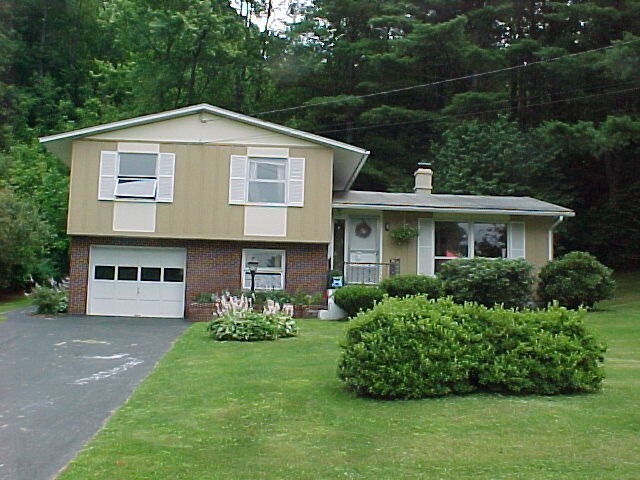
The home prior to renovations.

NORTH ADAMS, Mass. Are you looking for a newly renovated home with great space? Then this might be the perfect fit for you!

Our Friday Front Porch is a weekly feature spotlighting attractive homes for sale in Berkshire County. This week, we are showcasing 100 Autumn Drive.

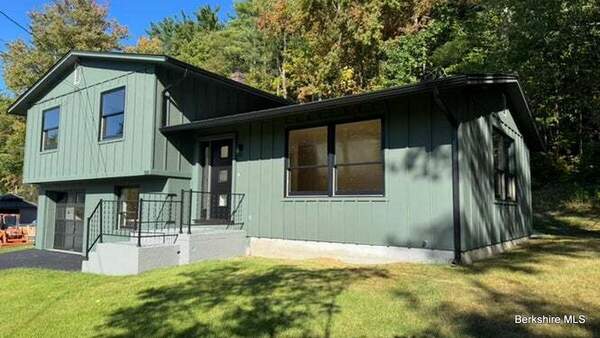
This three-bedroom, two-bathroom split level was built in 1965 and is 1,396 square feet on 0.32 acres.

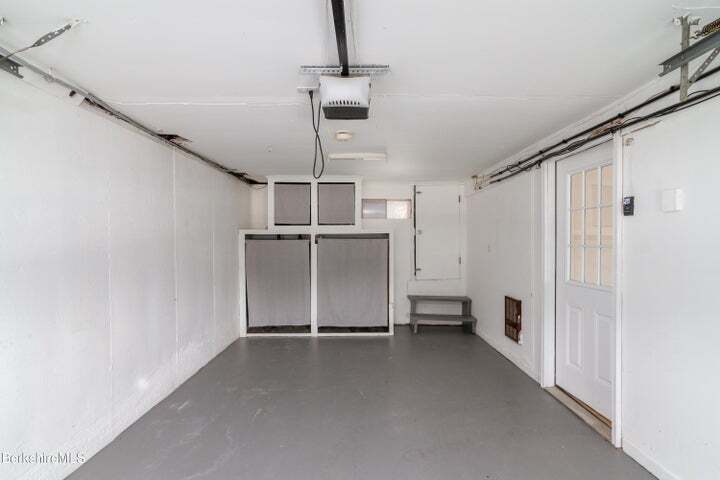
The house was completely renovated recently. It includes a one-car garage, and comes with appliances including a dishwasher and stove/oven, and other major appliances.

The house is listed for $359,500.

We spoke with owners Michael Zeppieri and Chris Andrews, who did the renovations. Zeppieri is an agent with Alton and Westall Real Estate Agency.

What was your first impression when you walked into the home?

Zeppieri: I purchased this home to do a full renovation flip and saw tremendous potential in this mid-century split level home that had not been updated since it was built in the 1960s, in a great North Adams neighborhood.


Andrews: The house was a much different house when we first purchased it in 2022 (photo attached is from about 2010.)  The interior was painted all in dark colors and we brightened it up with neutral colors. The transformation makes you feel like you are in a totally different house.  


What were the recent renovations, any standout design features?


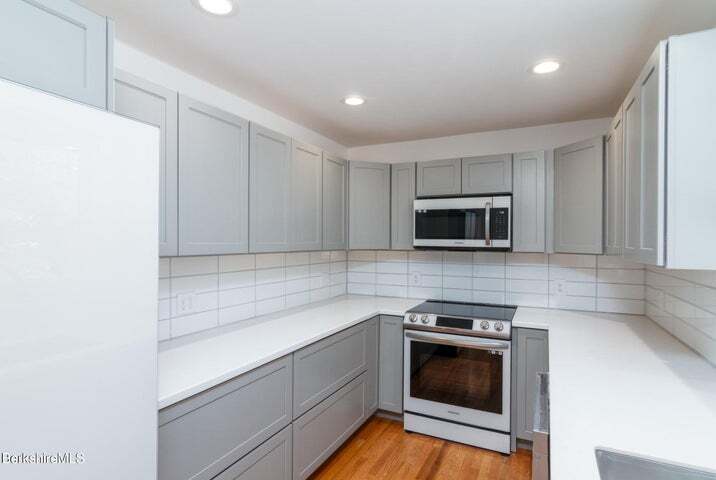
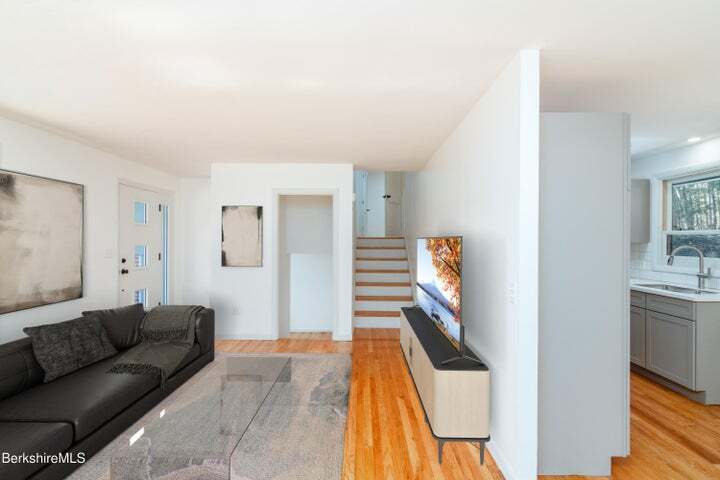
Zeppieri: The house has had a complete reconfiguration including new kitchen with high-end appliances, ceramic tiled baths, hardwood floors, new windows and roof ... just to name a few.  All a buyer has to do is move in and enjoy.


Andrews: Yes, we renovated the entire house.  New windows, new roof, all new custom black gutter system, new blacktop driveway, hardwood floors were installed through out the house. New kitchen and bathrooms as well as painting the exterior and interior of the house.  New paver patio in the back yard.


What kind of buyer would this home be ideal for?


Zeppieri: The buyer for this home could be a first-time homebuyer or a retiree ... the location is close to attractions in North Adams ... and the property is located in Autumn Heights, which is a very small residential development with several long-term owners.


Andrews: This home is truly ideal for a variety of buyers. Whether a first-time homebuyer, a small family or even someone looking to downsize from a larger home.


What do you think makes this property stand out in the current market?


Zeppieri: The location, price and move-in condition of this home make it a true market leader in the North Adams Market.


Andrews: This house is completely renovated and in a desirable location of North Adams. The natural light in the home really makes the interior pop. And with all the upgrades the home stays quite cool in the summer months.

Do you know any unique stories about the home or its history?

Zeppieri: This home was built for the Gould family in 1969 and they lived there till 2010. It was always a family home during that time in which the Goulds had two children ... and Virgina Gould managed Mohawk Forest Apartments and was a very active resident of North Adams.


Andrews: Built in about 1965.


What do the current owners love about this home?


Zeppieri: As the current owner it was a fun project to transform this home and get it ready for its next adventure with a new family to enjoy for many years.


Andrews: No one has lived in the house since we purchased the home. The new owners would be the first to live in the house since the renovations have been completed.


What would you say to a buyer trying to imagine their life in this space?


Andrews: I would suggest seeing the house either on a sunny day or at twilight to really get a vision of how special the home feels.  


You can find out more about this house on its listing here.

*Front Porch Feature brings you an exclusive to some of the houses listed on our real estate page every week. Here we take a bit of a deeper dive into a certain house for sale and ask questions so you don't have to.



View Full Story

More North Adams Stories