Williamstown’s Francis C. “Tank†Wilson, arguably one of the town’s top all-round athletes, will be honored again at the third annual Tank Wilson Open Platform Tennis Tournament on Saturday.
Tank, who will be 87 in February, excelled at the former Williamstown High School in football, basketball, baseball and tennis. He continued to win letters for two years at Williston Academy and then at Brown University.
In the meantime he excelled at skiing and in my estimation should be honored again for bringing happiness to so many skiers at the former Petersburg Pass Ski Area, which he co-founded and operated for five years atop the Taconic Trail, just over the line in Petersburg, N.Y.
Getting back to platform tennis, the event will be held on the Williams College court at Weston Field. Afterwards. there will be an awards dinner at the La Veranda Restaurant in North Adams.
Tank helped the late John Jay build and operate the town’s first platform tennis court at the 1896 House on Route 7 in 1970 and won many matches there. The court was removed in 1986, but by then the Williams court was open. With the late Billy Hart, acknowledged as the town’s most outstanding athlete, Tank won the No. 1 doubles team ranking in New England for three straight years.
Age and two knee replacements have put Tank on the sports sideline for the past five years, but he takes in many sporting events.
Playing the three major sports at Williamstown and Brown, Tank’s perhaps most memorable experience was on the basketball court as a sophomore, when Brown represented New England in the first ever NCAA national championship, losing to the eventual winner.
World War II Navy duty replaced sports, but upon discharge Tank resumed tennis and devoted more time to skiing. He had sampled resort skiing for the first time in 1937, riding the one-of-its-kind Skimobile at North Conway, N.H.
After the war, Tank and friends skied throughout New England and in the Laurentians. As a youngster he had skied most of the hills in Williamstown and enjoyed the rope tow at Sheep Hill. After Sheep Hill closed in the early ’50s, the only uphill conveyances were the rope tows at the Mount Greylock Ski Club’s Goodell Hollow (which still operates in South Williamstown).
Dutch Hill in Heartwellville, Vt., and Jiminy Peak in Hancock opened with T-bar lifts in the late ’40s, and Tank and fellow ‘Sprague Electric executive Gilbert Devey decided to build their own ski area. They selected the Petersburg Pass site, where Sterling Smith of North Adams had operated a gift shop and observation tower for quite a few years. The 450 acres were all located in New York State.
With an SBA loan and a group of local investors, Tank and Gil opened Petersburg Pass on Christmas Day 1962, to a handful of skiers. I came along as ski school director. Petersburg boasted the only chair lift in the area, a 3,000-foot-long double chair built and personally installed by Eugene Pomagalski, who came over from France in the final days of construction.
His Poma Lifts were sold all over the world, but Pomagalski died not long after his stint at Petersburg. The next winter saw a 1,300-foot Pomalift, added in the valley below the base lodge. Skiers from nearby Troy and Albany joined Berkshire folks at Petersburg, which sported a small cocktail lounge, tended by another Sprague exec. Bob Diodati.
Mike Catrambone of Dutch Hill and Carinthia joined the staff as co-director of the ski school. Hundreds of kids learned to ski in our Saturday morning specials, and ladies’ days were also popular. With an elevation of 2,500 feet above sea level, snow conditions were generally good, but the wind through the open parking lot was fierce at times, discouraging many potential skiers.
In the meantime Brodie Mountain opened in nearby New Ashford, Jiminy expanded operations and added a chair lift, and Butternut Basin opened to the south, with Berkshire East also opening in Charlemont.
And the Southern Vermont resorts kept expanding. After five years of increasing expenses, Tank and Gil sold out in October 1967 to Springfield industrialist Joseph J. Deliso Jr., who had plans for a giant resort on the Saddle Ball section of Mount Greylock and wanted hands-on ski experience.
Roland Blood left the Jiminy Ski School to become manager and ski school co-director with me, and after a year I left to help Ruedi Wyrsch of Switzerland run the Jiminy Ski School.
In the summer of 1969, Brian Fairbank arrived at Jiminy as resident manager for the Kissing Bridge Corp., which had a contract with Jiminy President Fred Crane Jr. (sadly deceased) to operate the then low-key resort. I switched from ski school to helping Brian for a year and never taught another lesson in downhill skiing, shifting to running cross-country ski centers.
But nothing matched the good times at Petersburg and the small band of instructors, workers and ski patrolmen. Jim Burnett headed the patrol, and he arrived each afternoon with cookies and pastries from the Spring Street bakery he and brother Bill operated.
Soon after closing in April 1969, the Petersburg base lodge burned to the ground, and Deliso abandoned the area and his plans for Saddle Ball also.
In 1972, seven area businessmen formed Taconic Trails Inc. and bought the vacant ski center. Manager Mark Raimer oversaw construction of a larger base lodge and cut new trails on the western slopes leading down to the valley. After a few years, skiing ended, and the new lodge burned to the ground in May 1983. A dreary end to a brilliant start! Now the land is owned by the state of New York and is posted as a passive recreation area.
Tank concentrated on civic affairs in Williamstown and his job at the then bustling Sprague Electric complex, now better known as Mass MoCA. Catrambone and I maintained our relationship with Tank, playing him and his partner, Robert C. Sprague, each Saturday morning on Sprague’s clay court for several years.
Sprague soon became involved in another small ski area, Carinthia (now part of the Mount Snow/Haystack complex). Founded by Australian ski pro Walter Stugger, who taught at Bousquet’s in Pittsfield and won the Berkshire tennis championship several years, Carinthia saw several Spragues involved: Bob, his sons, John and Bob Jr., and Junior’s daughter, Diana, who married Stugger. Like many small ski areas, Carinthia was gobbled up by larger competitor, Mount Snow. Tank’s son, Gary, also helped Stugger for a time.
Gary’s older sisters, Amy Coldiron and Dana Wilson, also perfected their skiing at Petersburg, and Dana joined the ski school staff. Gary also designed and sold snow-making guns for several years, in partnership with Al Steinhoff when they both worked for Jim Kelly at the former Brodie Mountain.
Tank was always barrel-chested, and his high school teammates called him Barrel at first, then Tank. At Brown, he was 5 feet 11 and weighed 195 pounds. By the time he opened Petersburg, Tank could have been called Big Tank.
Son Gary, a welding specialist for GE, quickly surpassed his father at well over 6 feet and considerably over 300 pounds. Despite his bulk, Gary was an agile skier.
Now back to the future and upcoming skiing and boarding, as well as snow tubing, snowshoeing and snowmobiling. The slopes should be well covered, both by snow (machine-made and natural) and hordes of happy people. Take it easy out there!
John Hitchcock of Williamstown frequently writes about the area sports scene.
If you would like to contribute information on this article, contact us at info@iberkshires.com.
Your Comments
iBerkshires.com welcomes critical, respectful dialogue. Name-calling, personal attacks, libel, slander or foul language is not allowed. All comments are reviewed before posting and will be deleted or edited as necessary.
No Comments
BRTA Looks to Another Year of Fare Free
By Breanna SteeleiBerkshires Staff
PITTSFIELD, Mass. — The BRTA is expecting another year of fare free rides.
Berkshire Regional Transit Authority Administrator Kathleen Lambert told the advisory board recently that she expects to receive $1.3 million in state funding to remain fare free. She said RTAs may be given up to $40 million this year statewide, which is $5 million up from last year.
While the state budget is not formally approved yet, the effect will take place on July 1.
The news came at the same time the board approved the BRTA's budget of $13.6 million, which is an increase of 11 percent since last fiscal year.
Some of the increases were in the fixed route area which jumped from $9 million to $12 million. Lambert said this is due to the contractual agreement between the union where they have a five percent raise for all of the drivers and other union members, as well as a seven percent raise for paratransit fleet operators.
Lambert said much of the costs raised were fuel costs because of the ongoing war in Iran. The authority uses about 8,000 gallons of fuel a month and has planned for $5.75 per gallon.
The customer service desk, which currently staffs two employees, will be shut down, she said. The two employees were given notice months in advance and one showed interest in becoming a bus driver and will plan to interview for that. Lambert said two new drivers have started and that the new transit company Keolis, which is taking over for Transdev, will continue to hold recruiting events. The new manager is Mark Moujabber, taking over for Bobby Quintos.
Lambert told the board she believed there are discrepancies in ridership data. Deputy Administrator Benjamin Hansen, who was in operations before his current role, said the authority has been seeing low ridership because of route cancellations, however, this past month, the numbers did not make sense as demand has stayed the same but ridership seemed exponentially low.
To get the figures, bus drivers must manually push a button on the farebox to record passengers, wheelchairs, and bikes, which might have errors. There are automatic passenger counters (APCs) installed, but they are not certified, so are only used as a rough comparison tool as they are not accurate.
Board member Stuart Lawrence asked if there has been any investigation on if this might be deliberate. Hansen said there is not as he does not know how they could watch for that to happen.
Lambert said she has been working with professor Paula Consolini at Williams College, who will have a group of samplers who will ride the bus and gather a week's worth of data.
In the last meeting, the board spoke about anonymous emails from drivers, and a letter iBerkshires received spoke of unhappy drivers who were considering quitting because of decisions being made without "input from frontline staff," frustration and falling morale, and the removal of the former general manager shortly after Lambert came in.
Multiple employees had also signed on to a vote of no confidence letter in the BRTA administration spearheaded by Raymond Killeen who is a bus driver and represents Cheshire on the advisory board. Killeen said losing Quintos was hard, stating he was an excellent general manager and not having him there led to hardships on accomplishing many things.
"Once the removal was there, it was difficult to accomplish certain things, because we had lost the general manager. So, the letter was an attempt to get things moving a little bit quicker, so we could provide a better service for the residents of Berkshire County. I don't know if it accomplished that. We were able to do some things, though, but the concern amongst rank and file here is that we're not providing the best service we possibly could, and we're hoping that when the new management team comes in, that can be accomplished," Killeen said.
Killeen said he was unhappy with the progress to a revised driver schedule. The day after the meeting, Lambert and the team had a meeting to discuss and negotiate run schedules, Lambert said it was a very good and productive meeting.
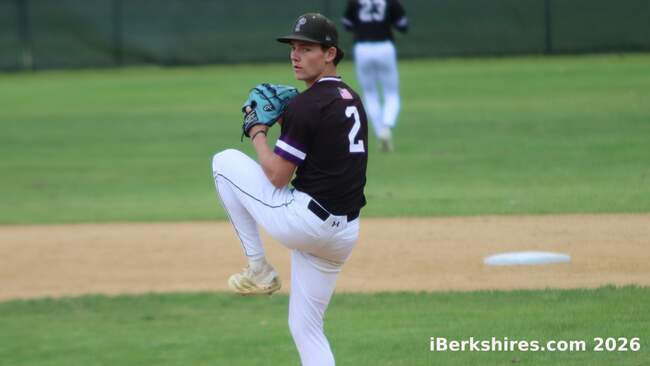
Jason Codey struck out 13, walked two and allowed just an infield single as the Generals earned a 7-1 win over Wahconah to claim their third straight regional title. click for more
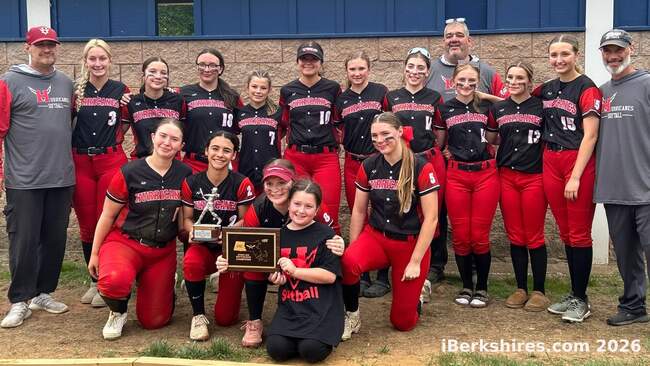
Gracelyn Wright struck out eight, and Genevieve Lagess went 3-for-5 with four runs batted in as the Hurricanes beat Monson, 17-3, to claim their first Western Mass title in four years. click for more
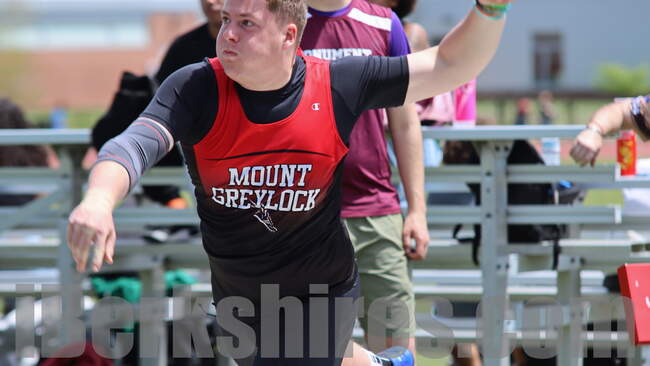
For the boys, Ward Bianchi helped lead the way with a win in the shot put and a second place in the javelin as the Mounties finished 16 points ahead of runner-up Pittsfield (pending the results of the pole vault, which were unavailable at 11 p.m. Friday night). click for more
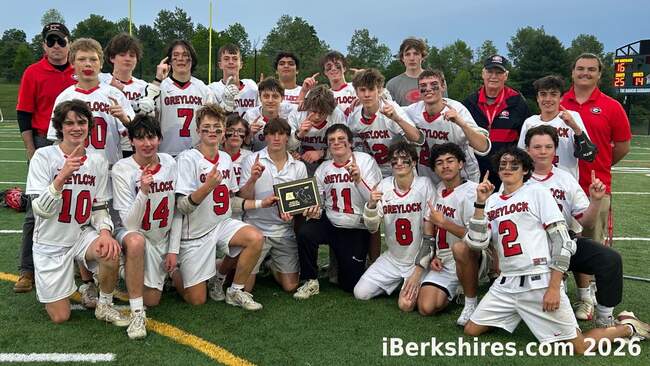
Brady Auger Friday scored five goals to lead the Mount Greylock boys Lacrosse team to a 16-14 win over Hoosac Valley in the title game of the Western Massachusetts Class C Tournament. click for more
Brooke Harrington scored four goals, and Abigail Rodhouse had a hat trick as Wahconah won its second straight Western Mass title and the rubber match against the Mounties in the third one-goal game between the teams this spring. click for more