Wiccans celebrate birth of a different god

By David VerziPrint Story | Email Story
LEE — The birth of the Son of God has been celebrated for some 2,000 years, the birth of the Sun God for eons longer. Increasingly, in the United States and Europe, modern-day pagans, or Wiccans, on the eve of the winter solstice, or Yule, commemorate the birth of the Sun God by their Goddess. "Wicca is the fastest growing religion the United States," said Pamela Getner, high priestess of the South Lee-based "Chalice Well" coven — and, yes, both Wiccan women and men are correctly referred to as "witches.” "Estimates run to 250,000 American Wiccans, but it's difficult to be sure because while some converts become members of covens, others are 'solitaries,' practicing in their homes," Getner said. She also cited as a reason for growth the fact that more Wiccan clergy are qualifying to perform the sect's marriage rite, called "handfasting,” in an increasing number of states, including Massachusetts. Getner explained that Yule festivities, which may begin a week prior to the solstice and continue for days past, include coven gatherings at hearty meals centered around beef roasts and accented with spice cakes and mulled wine, the burning of an oak Yule log to coax the sun's return and songs and dances, in Celtic and general medieval traditions, to raise energy to help the Goddess birth the Sun. "The Yule log," Getner said, " is what remains of the ancient pagan tradition of setting bonfires to signal to the Sun God that the people were eager for his birth." Also common are pageants, the main characters crowned with appropriate leaves, depicting a stronger Oak King defeating a weaker Holly King in mock battle — signifying that the days will now be growing longer and eventually fruitful. The Wiccan altar at Yule is bedecked with candles and the colors of the season, with red, white, gold and green predominating. Also, as Yule means "wheel," hung nearby is a Sun Wheel symbolizing the life cycle of the God — his annual birth, youth, maturity and dying. "For Wiccans, Yule is a time for thanksgiving and giving," Getner said. Among popular exchanged gifts are garden gloves and tools, in observance that the Wiccans hold the Earth as holy. It is also common during Yule for covens to donate vegetables and fruits, the bounty of the Sacred Earth, to food pantries. Getner, also the proprietor of "Woman of Wands," a "dot com" Wiccan religious goods shop, noted that Yule was one of the religion's eight Sabbats, solar holidays associated with the God. She explained that Yule was not a time for "asking" or seeking the intervention of the divine through the invocation of "magick" (the Wiccan spelling). "The working of our magicks is more closely associated with Goddess celebrations (called Esbats and annually numbering 14) centered around the moon rather than the sun," she said, noting that Wiccan magick is manifested though focusing on the spirit and nature's powerful elements of water, air, fire and earth. Getner said many converts in the past sought out the Wiccan way to tap its magick, but those drawn lately are attracted by its emphasis on sound ecological practices, the logical female-male balance in its deity and its offering of a greater direct access to the divine. "Wiccan clergy serve and aid,” she said. “But we're not saying that you have to talk to us to speak to the God or Goddess." Getner, while noting the link between Christmas and Yule, also acknowledged the age-old Christian suspicion and misunderstanding of witches, "However," she said, "the primary rule of Wiccan magick is to 'do what you will but harm none,' and while our religion is not Christian, it is just as assuredly not anti-Christian." She noted that the Dec. 25 celebration of the birth of Christ took root in the third century, as Christianity swept into Europe, and while the "new religion" sometimes put the pagan practitioners of the "old religion" to the stake or sword, there were also accommodations made to make the new God more acceptable. Finding that the pagan population was already celebrating the nativity of the Sun God, the church moved the spring birth of Jesus near to the winter solstice. Getner, who cited a growing understanding of Wicca in the contemporary Christian community, said she took comfort in reflecting that, in the darkness of the winter and our times, both faiths find hope in celebrating the birth of the Light of the World.
If you would like to contribute information on this article, contact us at info@iberkshires.com.

Dalton Fire District Voters OK 'Surprise' Building Purchase

By Sabrina DammsiBerkshires Staff
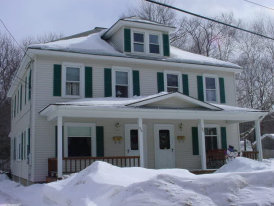
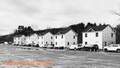
An image of 30-32 Flansburgh from the town's assessor data. 
DALTON, Mass. — For several years, the district has been working with limited space, and a vote at the annual meeting is expected to help ease those constraints.
 
During the meeting on Tuesday at the Stationary Factory, 48 voters approved 24 of the 25 articles on the warrant, including the purchase of 30-32 Flansburgh Ave., directly next to the current station. 
 
If the property passes the home inspection, the district would purchase the multi-family home from its current owner Richard Olsted for $350,000. 
 
The property is a two-family duplex built in 1920 with more than 6,000 square feet on a fifth of an acre. Its assessed value according to information in the town's database is $305,200. It's estimated on Zillow at $312,500, with a potential high of $350,000.
 
As part of the agreement for the purchase cost, the district agreed to allow Olsted to reside in one of the building's units for as long as he chooses, with the understanding that he will be responsible for utilities and will not be required to pay rent.
 
The foreseeable purpose of the other units will be to create proper housing for emergency services personnel. 
 
The department currently has three makeshift bedrooms in the fire station that were described as not well suited for a regular ambulance service.
 
View Full Story

More Stories