Ballots Slowly Making Their Way to Towns, Cities
 |
It wasn't a partisan thing - she just didn't have any ballots available. And she wasn't the only town clerk missing them.
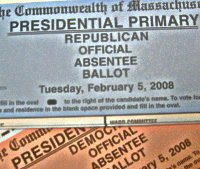
Absentee and regular ballots for the presidential primary on Feb. 5 have been dribbling into town and city halls across the state at a slow enough rate to raise concerns.
"Some towns don't have Democratic [ballots], some have Republican, some towns have no ballots yet, some cities have no ballots, some cities and towns have all their ballots," Kennedy told the Selectmen on Monday night after Town Manager Peter Fohlin wondered if there political reasons behind the lack of GOP ballots.
"Sounds like the chaos is more evenly distributed than we thought," he said.
Rutland Town Clerk Sally M. Hayden, president of the Massachusetts Town Clerks Association, said on Tuesday that there has been a lot of chatter between the clerks over the past couple days about who has ballots and who doesn't. "There are clerks who are getting deliveries on a daily basis."
It's not just about Democrats and Republicans - there's also Green-Rainbow Party and a Working Family Party primaries, too. Luckily, the Working Families ballot doesn't have anyone listed on it, making it an unlikely choice. The Green-Rainbow Party has six candidates, including Ralph Nader.
For cities, it's been even tougher because the ballots also have to be by ward or precinct. North Adams City Clerk Marilyn Gomeau said all her absentee ballots had arrived by Tuesday - but not all her ballots.
"I'm not panicking yet," she said. "They're coming in in bits and pieces. The state told us to give them until Wednesday."
The state supplies the ballots but it's up to the town and city clerks to get absentee ballots to the people who request them, said Hayden. "We've got to get them out on a timely basis."
Hayden had been trying to contact the state Tuesday but had been getting a busy signal. "I don't think it's intentional. ... I think moving the primary election to February [from March] put them in a crunch."
In Michigan, county clerks tried unsuccessfully last year to stop their primary election from being held Jan. 15 over concerns absentee ballots couldn't be printed and distributed in time - that was two months before Tuesday's primary.
Brian McNiff, spokesman for Secretary of State William Galvin, said on Tuesday there were "no ulterior motives" in the way ballots are being received.
"You can't deliver all the ballots to 351 communities simultaneously," he said, adding that deliveries are being made as the printers finish each ballot order. McNiff said he didn't know of any delays in the printing.
Luckily for Kennedy, the only requests for absentee ballots so far had been 30 Demcratic ones but she was relieved to receive all her absentee ballots Tuesday afternoon - but not all the regular ballots.
"We've still got three weeks," she said.
Area residents are reminded that they have until 8 tonight, Jan. 16, to register to vote or to change their party affiliation in the presidential primary Feb. 5. Voters who choose to be unenrolled (not enrolled in a party) can pick which primary to vote in. Those enrolled in parties must take their respective ballots.