North Adams Chiropractor Tries New Technology
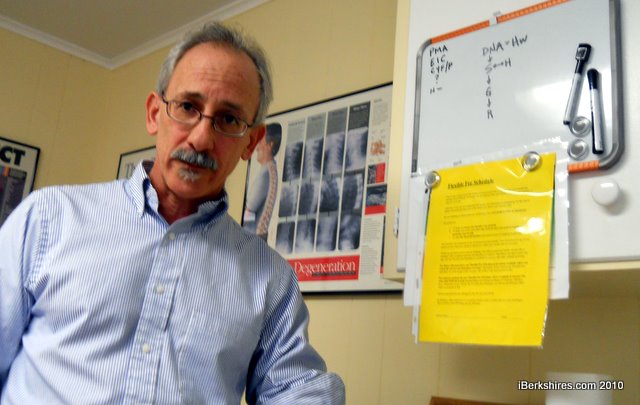 May began working as chiropractor in 1986 and, in October, branched out and added the LENS Neurofeedback system to his practice. |
May has installed a newly developed Low Energy Neurofeedback System at his Church Street practice and is treating an array of brain-oriented ailments including depression, attention deficit disorder and posttraumatic stress disorder.
The system is used to help anxiety in adults or behavioral problems with adolescents.
"We are treating a dysfunctional brain," May said on Tuesday. "I have a very powerful tool here. I can help a lot of people."
The system is basically a computer and sensors. There are three sensors, two of which monitor brainwaves and a third that sends a weak electromagnetic signal to the body. The wave is similar to cell phone or stereo waves but on a much smaller scale, May said.
The idea is that the generated field will disrupt the brainwaves pattern just enough to trigger the brain to heal itself.
Monitoring will predict where the stimulus should be placed on the patient's head for results and it draws the brain's attention to begin healing the part of the brain that is dysfunctional. May characterized it as "inviting the brain to reboot and defrag."
"This is a form of neurofeedback but it's unique and different from other forms of neuro and bio feedback in that those other forms are specifically trying to have the patient train their brain to achieve specific brainwaves," May said. "This works so much dramatically faster and better."
The patient needs only to sit down and let May do the work. The patient does not feel anything and it does not take long, he said.
The two monitoring sensors are attached to the body and the third is held against the head with a headband. A map is generated from the monitors and shows where subcortical activity is permeating the cortex — a result of trauma, overload or inadequate development.
To protect against trauma or overload, the brain builds neuro-blockades, which indirectly create pathways for subcortical activity. Those pathways inhibit the cortex from its normal function, according to Len Ochs, who developed the procedure.
The map dictates where the waves will be administered and the idea is to trigger the brain to break down the neuro-blockades and suppress the overactive subcortical brainwaves naturally. It is administered on the healthiest areas first to trigger a natural reaction.
Unable to explain his work while developing the system, Ochs referred to it as "weird stuff."
 May said the LENS system treats brain-based problems similar to anxiety, insomnia or depression. |
"There is nobody more amazed by the results than me," May said. "It's never hurt anybody. It's never created a new negative symptom in anyone and all adverse reactions are very transient."
May does not believe those waves even pierce the skull. The skin senses the wave and reacts to it, which triggers the brain.
Exactly how the radio wave triggers the healing is still uncertain, May said.
Some people will be unaffected by it, and some will show a change in behavior but the sensor's reading will not change; then there are people who have no behavioral changes but their brains appears healthier on the reading, he said.
Sometimes, he said, it can cause an outburst or intense feeling. For example, an angry child could get upset right after treatment. May claims those responses are infrequent and short-lived.
The LENS procedure was developed in 1992 by Ochs. Long-term effects have not been studied on a large scale; May claims there have been no signs of any negative effects. Several smaller research reviews of the LENS, its predecessor and other types of EEG neurofeedback have indicated its usefulness in treating a range of systems that appear to be long-lasting.
The system did have an unintentional test to see if it renders a placebo effect. During development, May said an updated version of the program was released to technicians and, shortly after, patients were complaining that it was not helping and things were getting worse. It turned out the program was written wrong and was not working at all, he said.
May flew to California on multiple occasions to study the system and began treating patients in October right after he was certified. He is currently the only Ochs Lab-certified provider in Western Massachusetts; the next closest are in Chatham, N.Y., and Rutland, Vt.
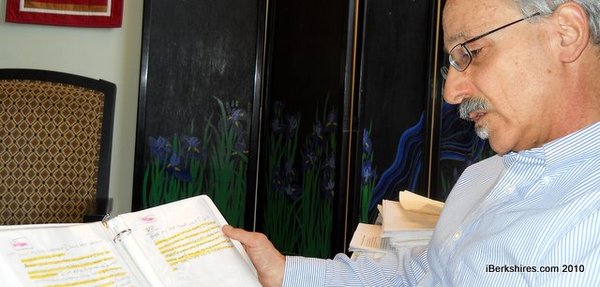
He keeps a binder filled with patients' writing about their experience with highlighted sections of results that he said were better than he expected. It takes between 15 and 20 sessions to restore the brain to optimal function but he said he has seen results even after one treatment.
Ideally it would be used to get people off prescription drugs, he said. "I want to get my hands on veterans with post-traumatic stress."
The system cost about $10,000 to install at his practice and May will soon be charging $100 for the first session and $50 for each after that.