Local Nurse Headed to Dominican Republic
GREAT BARRINGTON, Mass. — Despite mumblings and grumblings about co-pays and increased rates, most Americans do still enjoy adequate health care when it is needed. The basics — dental hygiene, nutritional supplements, pain medication, etc. — are readily available at the local pharmacy.Yet, in many parts of the world, including right here in the Western Hemisphere, access to basic medical supplies and medical care is limited and, in many cases, nearly impossible to get. It is for this reason that longtime nurse Scottie Mills, now a medical interpreter for Community Health Programs, packs her bags every January and heads to the Dominican Republic for two weeks.
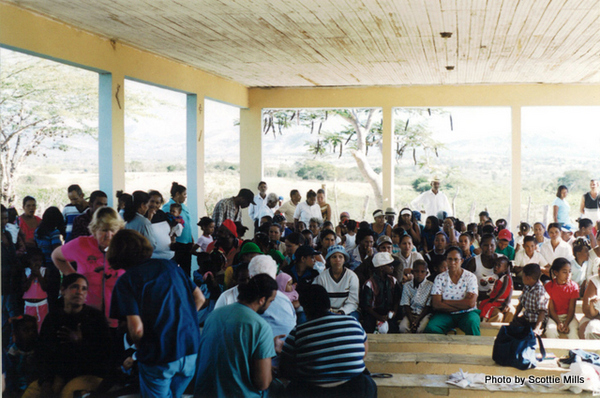
Mills is bound for the mountainous village of Las Matas de Farfan, about a 30-minute drive from the Haitian border. She, along with 30 other nurses, nurse practitioners and nursing students through the Intercultural Nursing program at the University of Rhode Island, set up temporary day clinics for people of neighboring villages who are in need of care — any kind of care.
"I've been doing this for about 12 years now and still one of the most gratifying things is to watch how the nursing students react to the experience," Mills said in a phone interview. "We usually take nursing students in their senior year. They've never experienced health care or nursing in an area where there is poverty. They usually come back pretty changed."
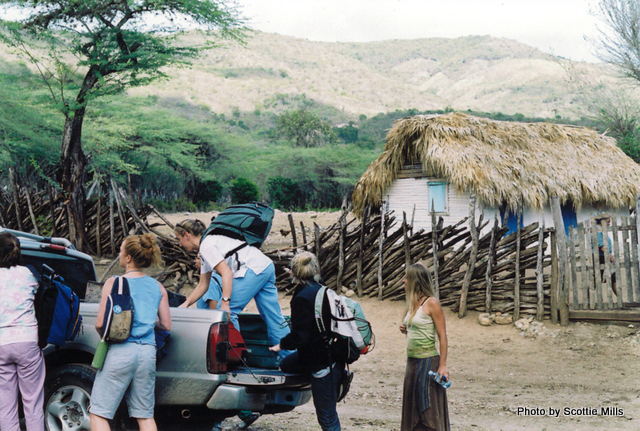 Every morning nurses load up two open-air trucks with medical supplies to take to small villages surrounding Las Matas de Farfan in the Dominican Republic. |
"Where we go there are usually no roads, no electricity. It's a whole different world," she said. "Anything that we bring is going to help. Mostly it's about just listening to the patients. Because of the hard agricultural work they do, the complaint is mostly aches and pains from a very hard life."
Other common ailments that Mills has seen are gastritis, fungal infections on the skin and head, scabies and, in many cases, malnutrition. For the most part, she said, these are relatively treatable with the right medicines.
"The gastritis is from basically eating once a day and we often find that Tums and other antacids help with that. Also, children are weaned by one year and so nutritional supplements, like powdered milk, and vitamins are very important. So are prenatal vitamins as most women do not receive any kind of prenatal care."
Every day, Mills and her colleagues treat more than 100 people, roughly 1,600 in the two weeks that they are in the Dominican Republic. While she is accustomed now to long hours, Mills said she is more concerned about the recent cholera outbreak in Haiti than about long lines of patients.
"I am a little bit nervous about the cholera. But really, again, the treatment for that is washing with soap and not drinking contaminated water," she said. "It's all pretty simple for the most part. A lot of the men that we treat have infections on their feet from wearing hot rubber boots in the fields all day. We give them socks and things become much better."
Although not all of the cures are simple (Mills said sometimes her work feels like a "Band-Aid approach"), much of the cure is within reach. She herself continues to implore the community for donations, and continues to get an overwhelming response.
"The community has been very generous over the years," she said. "The pharmacy at Fairview [Hospital] has donated, VIM [Volunteers in Medicine], a lot of local places. CHP has also been very supportive of the project, even the patients have brought things in. It's definitely a community effort."
Mills has a donation box set up at the CHP office on Stockbridge Road and will be taking donations until Jan. 8, right before her departure. For more information, call 413-229-8592.