Great Barrington Fairgrounds Resurrected in Photo Exhibit
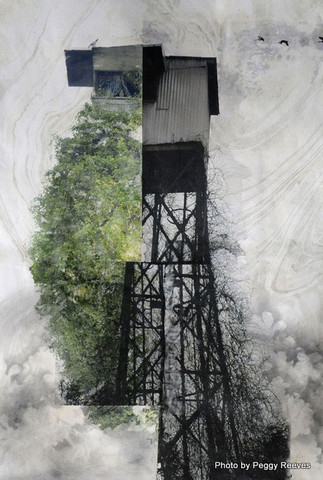 Peggy Reeves and other photographers have found inspiration in the abandoned fairgrounds. |
Not surprisingly, there is a bad reputation that goes along with the decayed and tornado-hit Great Barrington Fairgrounds, including tens of thousands of dollars in unpaid taxes, indigence and a rumored connection to shady Mafia types, including Whitey Bulger. It's the place where I won my first pie contest.
I was only in fourth grade but since then (actually long before then) the fairgrounds has been an integral part of my life as a Berkshire County native and in the lives of many longtime residents. The place holds a strange fascination for all sorts, especially visual artists. In an effort to pay homage to the fairgrounds as both a subject and historical object, 10 area photographers are presenting their images of it in "Win, Place, Show: Contemporary Photographers View the Fairgrounds."
The opening reception for the exhibition is Saturday night from 5 to 7 at the Barnbrook Realty office at 271 Main St.
Curator and photographer Peggy Reeves said the draw of the fairgrounds is twofold.
"There's definitely a bit of nostalgia in regards to the fairgrounds but my initial attraction was as an artist looking for material to photograph," she said. "I have fond memories of the agricultural fairs from the first years visiting the Berkshires in the '70s from New York City. However, my first treks within its gates were clearly motivated by curiosity and I wandered about with an archeologist's nose."
Reeves said the idea for the show came from her archives of images that had piled up over the years and she decided to invite others to participate.
"I would recruit willing partners from my Berkshire Photographers Group or my cadre of brave friends to accompany me," she said. "It was obvious that deer and other wildlife had made the property their hangout but it was more the wild human creatures that I was more wary of meeting. Evidence of their gathering is everywhere in the form of graffiti, old tools and appliances, clothing, bicycles, out-of-place furniture and clubhouse memorabilia. Like the cave paintings of Lascaux, only conjecture makes sense in analyzing the purpose of these artifacts."
In fact, photographer Tim Heffernan, whose work also appears in the exhibition, has admitted to being one of those "wild human creatures."
"I've definitely done some car camping there with my dog," he said in a phone interview. "In between girlfriends or something awful like that. I actually went there the last time that there was horse racing and I've been there more recently as a photographer. There's a new sport; urban explorations where you find nasty, old abandoned buildings, basically places you're not supposed to go, and start snapping pictures. There's a certain thrill to this that you don't often have as a photographer."
Aside from the adrenaline rush of opening mystery doors and climbing rickety wooden stairs to get to the top of an old tower, Heffernan said the fairgrounds is also loaded with corners and lighting and structure that any photographer can take advantage of.
"I love barns when they're falling down," he said. "It's this idea of rural decay. The Earth is reclaiming these old subjects. With the fairgrounds there [is] always the questions [such as] will this be rotting away a hundred years from now? What's going to happen to the place? There is so much nostalgia tied up in it. People went here as kids or as parents. They don't seem to care too much about who owns the place. I have a colleague who, when I showed him some of my pictures, he pointed to one of the food kiosks that he sold out of and said, 'That used to be my spot.' Everyone has a memory tied up in the place."
Whether it's winning a pie contest or making bank on a horse race, the fairgrounds continues to haunt and inspire passers-by. According to Reeves, the effect is almost transformative.
"There is an oxbow-type formation and more calm shores of the Housatonic that stretch from there to the right toward Sheffield," she said. "Without knowing the local latitude and longitude, one could be in the French countryside where the cousins of Corot's trees bend over the river banks. More abandoned red wood buildings, stables and the hay that fed the race horses still remain and, and when facing in this direction, the Big Y sign peeking through the railing of the racetrack and the starting gates reminds the explorer exactly where you are in time and place."
Tags: exhibit, Great Barrington Fairgrounds,