Mount Greylock High Again Grapples With Cell Tower
WILLIAMSTOWN, Mass. — Mount Greylock Regional High School is again the possible site of a 190-foot cell phone tower after the town said it could not be built on a neighboring property.A tower proposed by AT&T and Florida Tower Partners was approved to be built in the southeast corner of the school's property by the School Committee early in the year but then Peter Phelps offered his property. The school asked Florida Tower Partners to look at using the Phelp's property.
However, the company came to a final determination last week that because of wetlands and endangered species habitats the location would not suffice.
The School Committee asked for the change in response to South Williamstown residents' concerns that the tower would ruin the majestic view. When the committee first advocated for Phelp's property, it also eyed a section behind the school as an alternative.
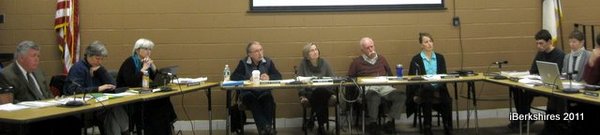
Now, the tower is back near the football field and so is the debate over it. Lawyers representing homeowners of nearby properties argued their points to the School Committee against two possible locations on school grounds, the southeast corner or behind the school. The lawyers also pushed the school district to again ask the company to move it to a location near the New Ashford border.
"There just is no good location on this site," attorney Daniel Finnegan, who is representing an Oblong Road resident, said.
The School Committee expressed concern over making additional changes to the plan because the contract had already been awarded. The school cannot force the company to move to any other location and changing location could open the door for a lawsuit against the district.
"We have an obligation to honor the contract," School Committee member Carrie Greene said. "I don't want to keep dragging this out."
While many may have wanted the School Committee to ask for another location — and many of the members voiced support of moving it behind the school — the board decided that it was not yet time to make that decision. The company is scheduled to go before the Zoning Board of Appeals next week for a permit. That ruling will determine the next steps.
The southeast location was chosen in coordination with a subcommittee's approval because putting a tower behind the school would interfere with the cross-country ski and running courses. However, subcommittee member Larry Bell said it could be worked around if the committee chose to change the location.
Executive Vice President John Stevens of Florida Towers said either location could work. The difference would be in the construction of access roads and underground power lines.
"From my standpoint, it doesn't matter that much," Stevens said.
School Committee member Jack Hickey said he preferred the tower to be in the rear of the school because if the committee received approval to build a new school, it would likely be built closer to Route 7.
While a decision has not been reached yet, the developments are being watched closely by committee members.
"We are being offered and opportunity to change the location," Chairman Robert Ericson said. "This could be one of the larger decision Mount Greylock ever makes."
Tags: cell tower, MGRHS,