Pittsfield Police Panel Gets Briefing on Gang Activity
|
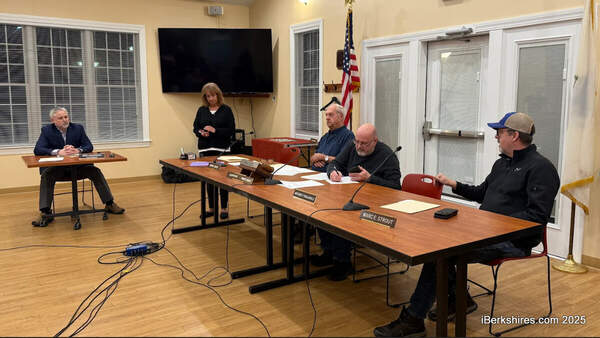
The Police Advisory Committee got a briefing Monday on the Crips, Bloods and other gang activity. |

PITTSFIELD, Mass. — Police are continually improving their intelligence about gang violence in the city.
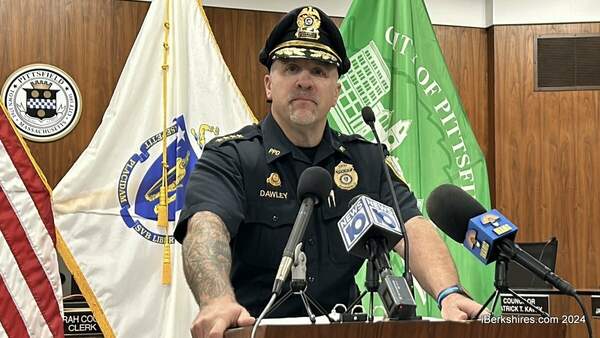
Police Chief Michael Wynn briefed the Police Advisory Committee on Monday about gang activity and said the department has made tremendous steps in the last decade in fighting them.
A dozen years ago, files on gang activity were limited and stored in boxes, he said.
But in 2000, the department began an internal review of how it looked at gang structure and opened relations with the FBI's Western Massachusetts Gang Task Force in Springfield.
That opened eyes in the department.
Police began noticing an influx of nationally affiliated gangs — particularly with Latin Kings and The Bloods. Research and investigations were kept under wraps as they built cases internally and seldom discussed the gang problem in the city.
At one point, the city had more than 100 verified members of the Bloods living here, Wynn said. The focus was on Crips, Bloods, Latin Kings and the Hells Angels.
They built cases against those gangs and made some large busts. In the late 2000s, they began seeing something even worse than notorious national gangs — locally formed gangs.
"We found some of those were more violent than the nationally affiliated gangs because they had nothing to lose. They were just trying to make a name for themselves," Wynn said.
Focus switched more toward home-grown gangs, and away from the federal gang task force. Recently, the department has been redeveloping its relationship with the task force and aligning criteria on classifying gang members with the federal government. Those classifications are now resulting in different sentences for convicted gang members.
Intelligence on gangs has contined to be the most difficult aspect; the department has been trying to find ways to share information not just within the force but statewide.
"The challenge is technologically because there isn't one global database," Wynn said, adding that there is often a lag time between updated information.
Tying in with the federal database would be better but the city would need to reach a new agreement for that, he said.
Difficulty also arises in analyzing the intelligence about local gangs and members. Wynn said that even if police had 12 additional officers, they wouldn't be able to accomplish much without analysts. Currently, that work falls on one full-time officer.
For example, police were investigating a presumed criminal gang but then found a different sect that was not committing crimes.
"Sometimes they have all the criteria but aren't committing the crimes," Wynn said. "We're not going to define them as a criminal street gang if they aren't committing the crimes."
Wynn said he would love to have a few more analysts but doesn't see that happening for a while.
Sheriff Thomas Bowler said the Berkshire County House of Correction does its part with two officers tasked with following gang affiliations of those incarcerated.
Despite the difficulty gangs present to law enforcement, the city has less violent crime now, according to officials.
"Ten years ago there was a shooting every night on the weekend," Bowler said to nods of agreement from Wynn. "We were dealing with a lot more violent crime and shootings 10 years ago."
Gangs are the latest presentation the newly formed committee has heard in its quest to learn about the department's function. It has also heard from school officers and drug task force members, and toured the jail.
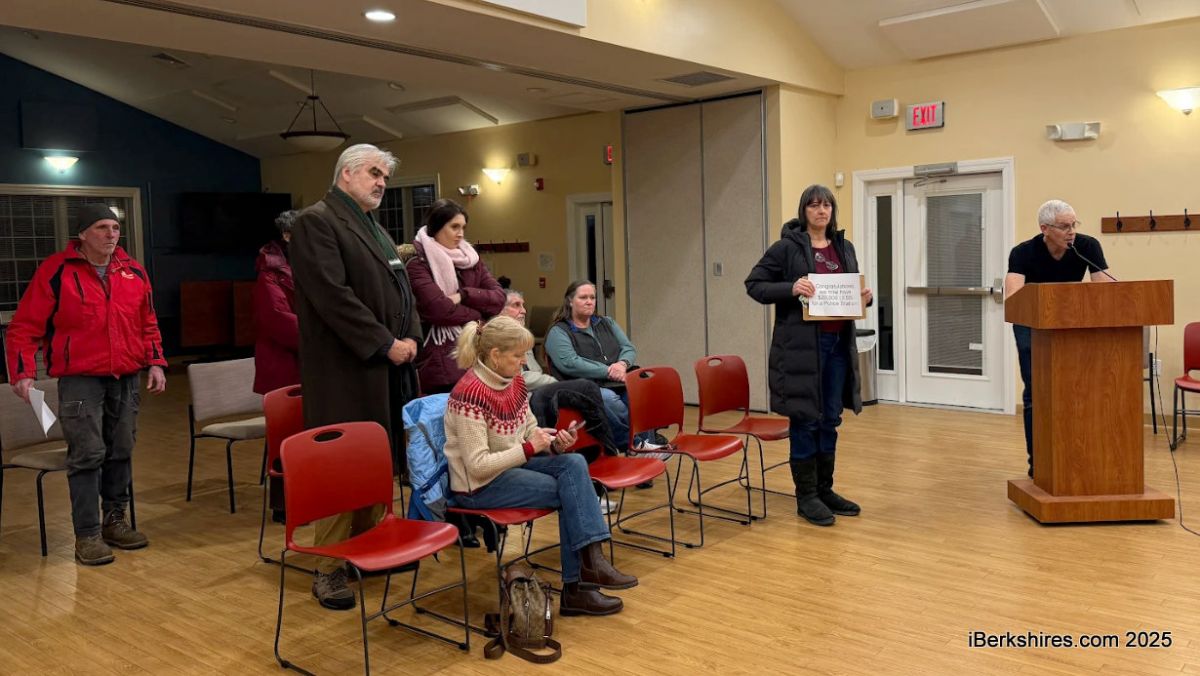
In other business, the committee approved sending a letter to federal and state representatives advocating for a new police station. The City Council will also receive copies.
The committee is also thinking of ways to publicly recognize officers for the good things they do.
Tags: gangs, task force,