Susan B. Anthony Birthplace Hosts Talk on Abolitionism
 ADAMS, Mass. — As important as Susan B. Anthony was to the Suffrage movement, the contribution of Anthony — and women like her — to Abolitionism sometimes goes overlooked.
Not at Susan B. Anthony's birthplace. Not on Saturday.
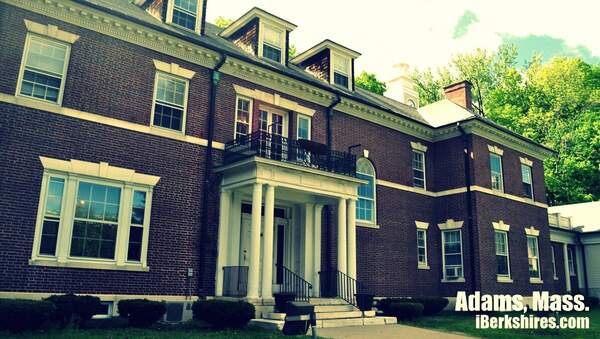
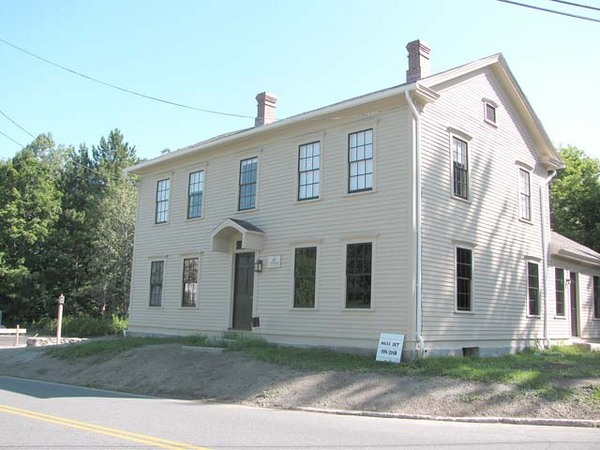
Northampton historian Steve Strimer at will give a talk titled "The Underground Railroad of Massachusetts" at the Anthony Birthplace & Museum on East Road.
While Strimer will share insights about the secret network of safe houses that helped quietly liberate tens of thousands of African-Americans, he also will talk about two New England women who very loudly and publicly advanced the cause of freedom.
"Something I found recently has to do with the comparison of the summer of 1833 for Prudence Crandall and Lydia Maria Childs," said Strimer, the director of the Ruggles Center in Florence, a village of Northampton.
"Both women were key to the early Abolitionist movement."
Today, Crandall (1803-90) is a heroine in the state of Connecticut and a museum in her honor is featured on the state's tourism website.
But in 1833, she was briefly jailed under a law passed solely to shut down the nascent academy for African-American girls that she founded in the town of Canterbury, Conn.
Meanwhile, Medford native Child (1802-80) in '33 published the incendiary "An Appeal in Favor of That Class of Americans Called Africans."
"By carefully spelling out the realities and complexities of slavery, her appeal brought many influential personalities to join the Child’s friend, William Lloyd Garrison, in abolitionism," according to the National Women's History Museum.
Child's work, which led to protests that bankrupted the children's magazine she published, predated the "Uncle Tom's Cabin," by 18 years.
"I've become fascinated with the synchronicity of two women in the movement each having their major contributions happen at the same time in the summer of 1833," Strimer said. "I'm taking that as a lead to learn more about them. [On Saturday], I'll share what I've learned about them."
And there may be more of a connection between Anthony, an associate of Abolitionist leaders Frederick Douglas and William Lloyd Garrison, and Crandall.
Strimer is intrigued by an assertion on Anthony's Wikipedia page that she visited Crandall's school in 1833. Though there may be a hole in that story; the Wikipedia entry notes that Anthony met Crandall while the former "attended The Friends' Boarding School in the Black Hill section of Plainfield, Connecticut," but Anthony's New York Times obituary says that after receiving private tutoring at home she "finish[ed] her education at a Friends' boarding school in Philadelphia."
Strimer thinks the Wikipedia claim is worth investigating.
"It's provocative to think how much Susan B. Anthony may have been inspired by Crandall," he said. "That needs to be looked into. ... There's no citation for the claim on Wikipedia, but it's very detailed. I'm guessing there must be a citation somewhere."
In addition to sharing information Strimer has learned in his own research, he will talk about his audience can do their own investigations of 19th century history, including Berkshire County's stops on the Underground Railroad.
"I'm going to encourage them to go into their archives and go into their microfilm and look at it," he said. "Especially now with sites like Genealogy Bank, I'll be talking about discoveries made through a straight searchable database.
"You can put in a search term and find 400 hits."
Steve Strimer of the Ruggles Center in Northampton will speak at the Susan B. Anthony Birthplace Museum on Saturday, Aug. 16, at 3 p.m.
Tags: abolition, Susan B. Anthony,