Cable Mills Developer Pushing for December 2015 Occupancy
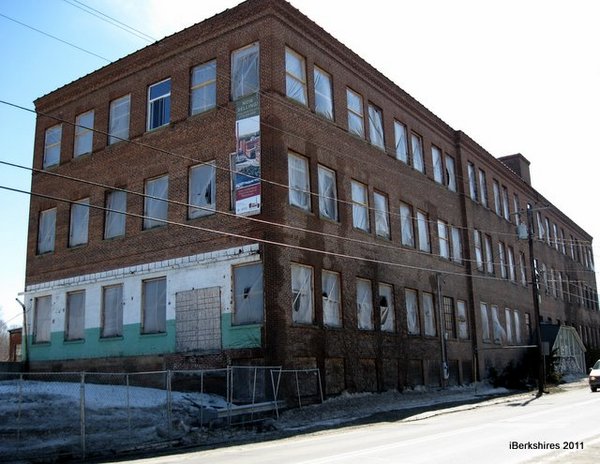 The Cable Mills project is expected to be ready for occupancy by the end of next year. The Cable Mills project is expected to be ready for occupancy by the end of next year. |
WILLIAMSTOWN, Mass. — The developer of the Cable Mills housing project said Wednesday that it hopes to have 61 units ready for occupancy by the end of 2015.
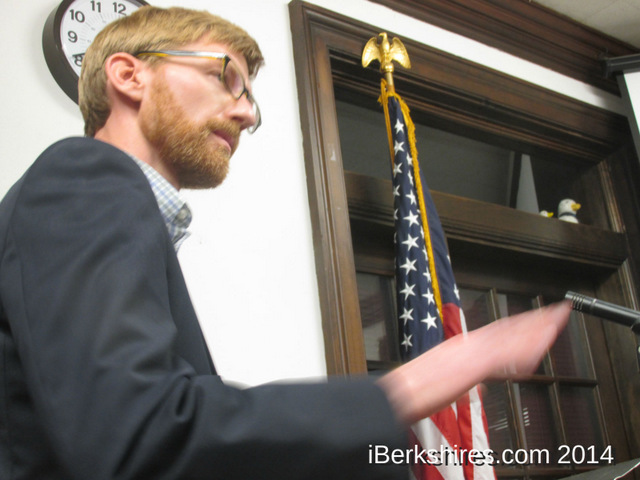
David Traggorth of Boston's Mitchell Properties told the Board of Selectmen that contractors will be working in the former mill buildings throughout the winter to maintain an aggressive construction schedule and that the apartments will be marketed as early as spring 2015.
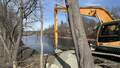
"As you can see, we are moving ahead," Traggorth said. "Masons are all over the site. The water lines are two-thirds done. We're going to be putting on a roof very soon. We're getting done everything we can possibly get done while it's still 40-60 degrees.
"And we'll work right through the winter. We will be tenting. We will have temporary heating and doing everything we can to keep things moving."
Traggorth and the attorney for 160 Water Street LLC, Jamie Art, appeared before the Selectmen to give an update on the progress of the project, which broke ground last month, and to discuss modifications to Mitchell's grant agreement with the town for $1.5 million in Community Preservation Act money approved by town meeting in 2007.
The CPA funds were promised under three provisions of the act: that the development would increase open space and recreation opportunities in the town, that it would preserve an historic building and that it would provide affordable housing.
The open space requirement will be met by the creation of a river walk on the east side of the property along the Green River. The historic preservation is self-evident; it will restore a deteriorating former mill complex at the gateway to the town's business district.
The subsidized housing component has changed since the grant agreement reached with the town. At the time the CPA funds were expended, Mitchell Properties planned on 12 income-sensitive units with the rest of the units available at market rates. Since then, the number of affordable units in the plan has been raised to 13.
The other significant change since the original plan is a switch from condominium sales to rentals for at least five years.
Traggorth and Town Manager Peter Fohlin explained to the board that because of the $27 million project's reliance on federal historic preservation grants, 160 Water Street cannot sell the units as condos for at least five years after occupancy begins.
"The people who give out the historic tax credits are concerned that someone might take advantage of the tax credits and 'flip' the property," Fohlin said. "They require that a property stay in the same ownership for five years. David [Traggorth] doesn't want to live in 61 condos for five years."
So instead, 160 Water Street has changed its marketing model to rentals, an approach that has worked at other Mitchell Properties developments, Traggorth said.
He said interest in the Cable Mills site has been strong among potential residents — either as condos or rental units.
"We feel like we're going to appeal to the same people," Traggorth said. "The [construction] superintendent was joking with me today that he can't get any work done because people are coming into the trailer all the time."
"The remarkable thing about Cable Mills is there is such an appeal to this property because of Williamstown, Northern Berkshire County and the property itself. So many people came to us and said we wanted to buy but we're going to rent because we want to live here."
Ultimately, 160 Water Street plans to build townhouses and duplexes and, perhaps, some commercial development on the Cable Mills project. Traggorth referred to those projects as Phases 2 and 3 of the development.
Phase 1, the rehabilitation of the former mill complex, is the only part of the project that concerns the $1.5 million in town CPA funds.
Elsewhere on the housing front, Fohlin gave the board an update on the relocation of residents from the Spruces Mobile Home Park, which is scheduled to be closed in March 2016 under the terms of a federal Hazard Mitigation Grant negotiated by the town and the park's owner, Morgan Management.
To date, the town has dispersed nearly $856,000 in FEMA benefits to 47 of the 66 owner-occupants who lived at the park for at least 180 days at the time the grant was awarded.
Of those 66 residents, 39 have relocated out of the park, and by the end of 2014, the town expects there to be 25 units occupied at the site, Fohlin said.
The town owns 50 trailers that it either has purchased under the Hazard Mitigation Grant directly or bought for $1 from former occupants without the means to remove them from the property, as required by FEMA. The town likely will soon acquire 31 more mobile homes that have been abandoned at the site, Fohlin said; Williamstown is asking a housing court judge to award possession to the town so it can have those trailers removed and disposed of.
Thirteen of the 50 trailers the town already owns have the potential to be moved and used on another site, and they will be sold at auction on Friday, Nov. 14, at 11 a.m., Fohlin said.
"The incentive here for the town is not the selling price," he said. "It's the avoidance of demolition and disposal. Every trailer we sell is worth $5,000 to us even if it's worth a buck to the guy who buys it."
In other business on Wednesday, the board continued its discussion of economic development in Williamstown, hearing input from Jeffrey Thomas, the director of Williams College's Williams Innovates Project and Lever Inc., a North Adams-based "center for entrepreneurship and social innovation."
Tags: Cable Mills, CPA, FEMA, housing projects, redevelopment, Spruces,