image description

Red Cross Offers Tips for Keeping Safe in Frigid Weather

Print Story | Email Story

CAMBRIDGE, Mass. — As frigid temperatures move in and blanket the region this weekend, the Red Cross warns of dangers to pets and frozen pipes in homes.

During cold weather, take preventative action in your home

  • Keep garage doors closed if there are water supply lines in the garage.
  • Open kitchen and bathroom cabinet doors to allow warmer air to circulate around the plumbing. Be sure to move any harmful cleaners and household chemicals up out of the reach of children.
  • When the weather is very cold outside, let the cold water drip from the faucet served by exposed pipes. Running water through the pipe - even at a trickle - helps prevent pipes from freezing.
  • Keep the thermostat set to the same temperature both during the day and at night. By temporarily suspending the use of lower nighttime temperatures, you may incur a higher heating bill, but you can prevent a much more costly repair job if pipes freeze and burst.
  • If you will be going away during cold weather, leave the heat on in your home, set to a temperature no lower than 55 degrees F.

To thaw frozen pipes

  • If you turn on a faucet and only a trickle comes out, suspect a frozen pipe. Likely places for frozen pipes include against exterior walls or where your water service enters your home through the foundation.
  • Keep the faucet open. As you treat the frozen pipe and the frozen area begins to melt, water will begin to flow through the frozen area. Running water through the pipe will help melt ice in the pipe.
  • Apply heat to the section of pipe using an electric heating pad wrapped around the pipe, an electric hair dryer, a portable space heater (kept away from flammable materials), or by wrapping pipes with towels soaked in hot water. Do not use a blowtorch, kerosene or propane heater, charcoal stove, or other open flame device.
  • Apply heat until full water pressure is restored. If you are unable to locate the frozen area, if the frozen area is not accessible, or if you cannot thaw the pipe, call a licensed plumber.
  • Check all other faucets in your home to find out if you have additional frozen pipes. If one pipe freezes, others may freeze, too.

Pet safety in winter

  • If possible, bring your pets inside during cold winter weather. Move other animals or livestock to sheltered areas and make sure they have access to non-frozen drinking water.
  • If the animals are outside, make sure their access to food and water is not blocked by snow drifts, ice or other obstacles.

The following tips on winter pet safety are provided by the Humane Society of the United States:
 

  • If pets cannot come indoors, make sure they are protected by a dry, draft-free enclosure large enough to allow them to sit and lie down, but small enough to hold in the pet’s body heat. Raise the floor a few inches off the ground and cover it with cedar shavings or straw. Turn the enclosure away from the wind and cover the doorway with waterproof burlap or heavy plastic.
  • Salt and other chemicals used to melt snow and ice can irritate a pet’s paws. Wipe their paws with a damp towel before your pet licks them and irritates their mouth.
  • Antifreeze is a deadly poison. Wipe up spills and store antifreeze out of reach.

More winter safety information can be found at www.redcross.org.

 

If you would like to contribute information on this article, contact us at info@iberkshires.com.

McCann Making Progress Toward MCAS Targets

By Jack GuerinoiBerkshires Staff

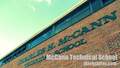
NORTH ADAMS, Mass. — McCann Tech Principal Justin Kratz told the Northern Berkshire Vocational Regional School District School Committee last week that because the school is making substantial progress toward its 2026 MCAS targets, there will be no Massachusetts Department of Elementary and Secondary Education (DESE) intervention.

"So long story short, we are not on DESE's radar for MCAS performance," he said. "At the end of the day, that is what is what we are after."

Kratz said McCann scored "a ton" of points, showing growth in most categories. He said they earned 75 percent of total possible points for all students and 83 percent of all possible points for lowest-performing students.

Kratz noted that DESE tends to change targets and formulas every year. But he drew attention to the year 2025, when a passing MCAS score was no longer a graduation requirement. In 2025, McCann received 33 percent of the possible points and 7 percent for the lowest-performing students. This equaled a score of 20 percent.

"That was the year where everything went off the cliff," he said. "We didn't do very well. This year was 79 percent, and that is knocking it out of the park. ... If we followed up with another 20, we would have been in rough water."

Kratz added this drop was typical across the state, saying he assumed students just took the test less seriously. He wanted to demonstrate how the scores and targets are "reshuffled" and gave a closer look at English scores over the years.

In 2024, the school had a target of 499.3 (average scaled score). The school scored 500.4. In 2025, McCann's new target was 502.5, but McCann scored 485.6. McCann's 2026 target was 487.7, and they scored 486.8.

Kratz said McCann is not scoring as high as they were in 2024, but they are getting more points. He said sometimes the scores needed to be taken with a "grain of salt."

He underlined that although MCAS is important in a vocational education, it only represents half of what a student does in a given school year. 

"There is no MCAS for 50 percent of their time here, which is their trade area," Kratz said. "They [DESE] don't assess that ... so this one little pocket is important, but it doesn't show the entire picture of a student."

Kratz moved from what he called the "good" section of his presentation to the "awesome." He said McCann was recognized as one of 55 schools that drastically improved chronic absenteeism by at least 5 percentage points. He said the school received a letter from DESE congratulating them that included a survey that asked how the school did it.

"It was a nice letter, but we kind of laughed and asked, 'What did we do?' " he said. "I say that sort of tongue-in-cheek because we didn't do any sort of targeted attendance improvement initiative."

He said the more he thought about it, the more he attributed the change to standardized grading and improving the school environment physically and culturally.  

"We didn't do all that wanting to improve attendance. We did it because we wanted to create more equity, and ... I think that is a byproduct of that," Kratz said. "Kids are more likely to want to go to school if that 62 they got on a test does not bury them for the rest of the year. They know they can dig their way out of it. And they are more likely to go to school if the building is a little brighter when they walk in in the morning."

Also, the importance of attendance is baked into the vocational school experience.

View Full Story

More North Adams Stories