North Adams School Adds New Breakfast Program
.JPG)
NORTH ADAMS, Mass. — Children at Brayton School are getting a healthy head start on their day by getting breakfast in the classroom.
The pilot program began a few weeks ago and was be rolled out to the entire school this week, just in time for "National School Breakfast Week."
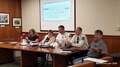
"It's getting fairly common," Cory Nicholas, food service director, told the School Committee last week. "The national average is 36 percent [for traditional] ... there's really been a push over the last five or six years to raise that."
Nicholas said he looked into the program after realizing the participation rate for the traditional breakfast at Brayton was 49 percent, compared with a subsidized lunch rate of 72 percent.
"The question was ... where are they eating if they're eating at all," he said at Tuesday's meeting.
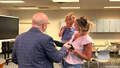
To bridge the gap, the food service department looked to a program for eating in the classroom rather than requiring children to go to the cafeteria. Adams-Cheshire and Pittsfield have implemented the program. Children order breakfast for the week ahead and everything is delivered to the classroom.
"It's more of a family oriented engagement, the kids are socialized a little bit, the teachers get it ready. It's so much more organized," he said. "We've gone from 49 percent in those classes to 90 percent. ... It's still free, it's still optional.
Principal John Franzoni said it was a "nicer way to start the day."
The children often have adults eating with them, and it's a smoother transition into the school day than eating in the cafeteria.
"They can go right to their classroom," he said. "It's a much calmer start to their day.
"And it's about helping kids make more healthy habits."
The equipment for transporting the meals came from a grant from the New England Dairy Council. Older children are helping to deliver the meals and helping with the younger children, and all the children are learning about cleaning up after themselves.
Nicholas said the breakfast choices are all nutritional and that he hopes to add in a hot component once a week. The goal is to roll out breakfast in the classroom to all the other elementary schools.
The School Committee also approved a recommendation by the superintendent to continue the 2015-2016 district improvement plan for another year.
"This year I'm hoping to take a breath," said Superintendent James Montepare. "It has been a struggle to keep things going and provide the instruction."
Among the factors to the that recommendation are continued budgetary issues, redistricting, the delay in opening Colegrove Park Elementary School and continued changes in curriculum at the state and national level
"We just got our heads around the framework and a new higher order of thinking has come along," Montepare said, adding that there is a lack of curriculum materials to aid in the transition.
The school district has "strategically piloted" the new Partnership for Assessment of Readiness for College and Careers testing and it will be held harmless for two years of testing.
In his report to the committee, Montepare wrote that "While there are still many controversial issues regarding the new PARCC assessment, we hope the two year hold-harmless window will provide ample time for those concerns to be reconciled."
The closure of the former Conte Middle School in 2009 creating significant overcrowding issues at the elementary level. The solution approved by the state in renovating the school as an elementary school ran into opposition and then construction problems that delayed its opening until Jan. 2. That caused a disruption with the redistricting plan implemented in 2015 and stalled efforts to repurpose technology and materials at Sullivan School for use elsewhere in the district.
"The delay of the opening of Colegrove was the single most problematic event affecting the forward motion of our master plan of activities," Montepare wrote.
The school district's budget has been an issue since the city's loss of state aid in 2008, hampering its ability to meet instructional needs and state and federal mandates. Lack of grant funding has also affected the district's ability to collaborate with partners to address social, economic and health issues of children and families.
Montepare said the district is working with area agencies, with Child Care of the Berkshires taking the lead, in issuing a request for proposals for a planning grant to rejuvenate that partnership. The superintendent also said he was concerned with the lack of enrichment activities available to students, which he believes can significantly boost their participation and enthusiasm for school - and be a prevention device against bad behaviors.
"I don't want to lose them at fifth grade and have them throw their hands up in the air and say I'm done, he said frustrated students.
In other business, the committee was provided with a contract draft for the use of school gymnasiums and Drury High's auditorium. Committee members Heather Boulger and Mark Moulton volunteered to meet with the administration to review the language and bring a recommendation to the committee.
Committee member John Hockbridge, representative on the Berkshire County Education Task Force, reported the task force had acquired the funding needed to begin the Phase 1 study of county needs with the Donahue Institute. The task force is also asking the state for $150,000 for Phase 2.
Tags: breakfast, NAPS, school district,