BCC, BIC Show Off New 3D Printers, Laser Scanner
.JPG)
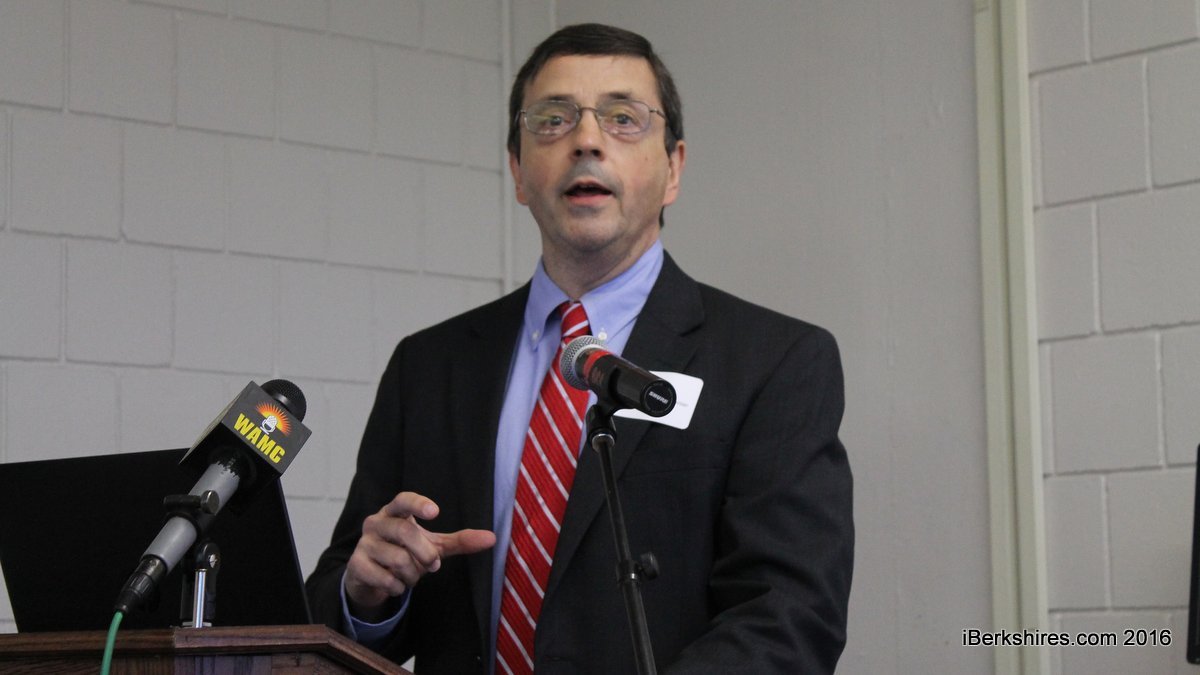
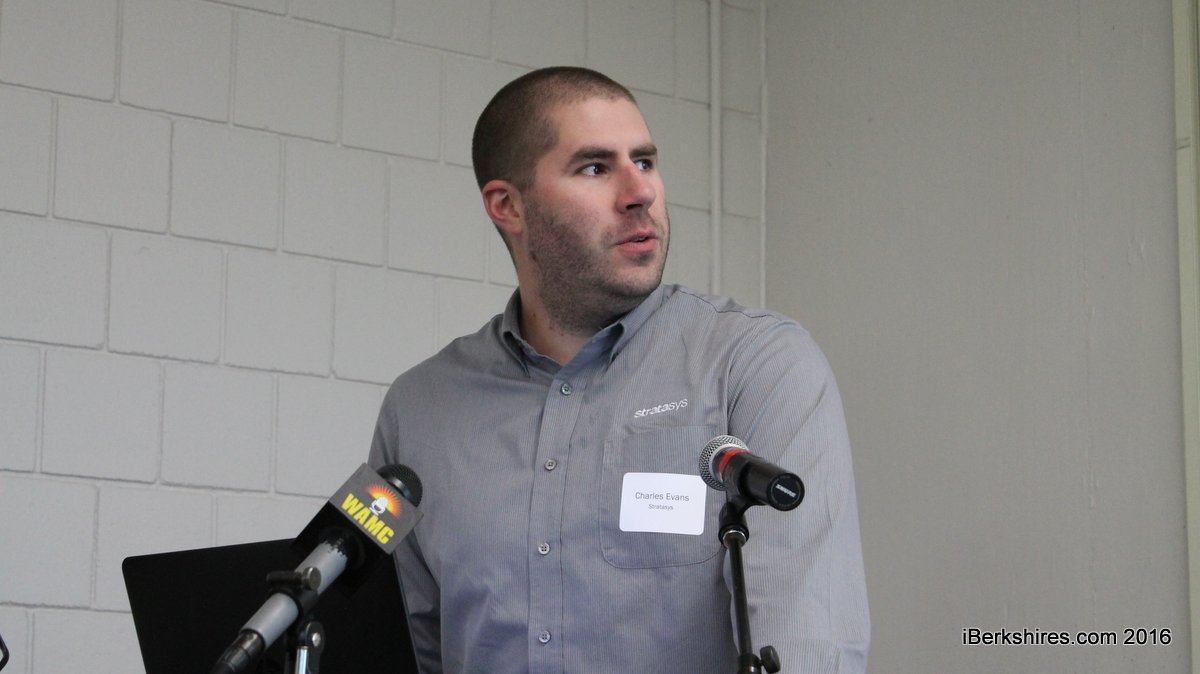
Charles Evans of Stratsys discusses the J750 3D printer.
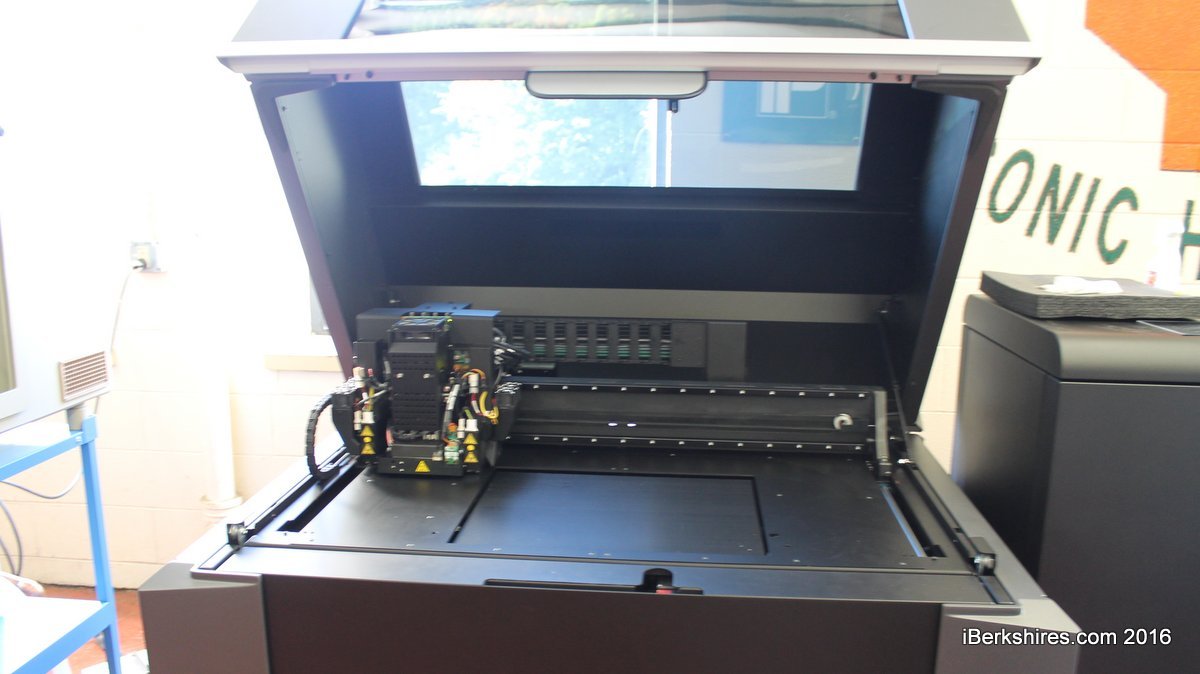
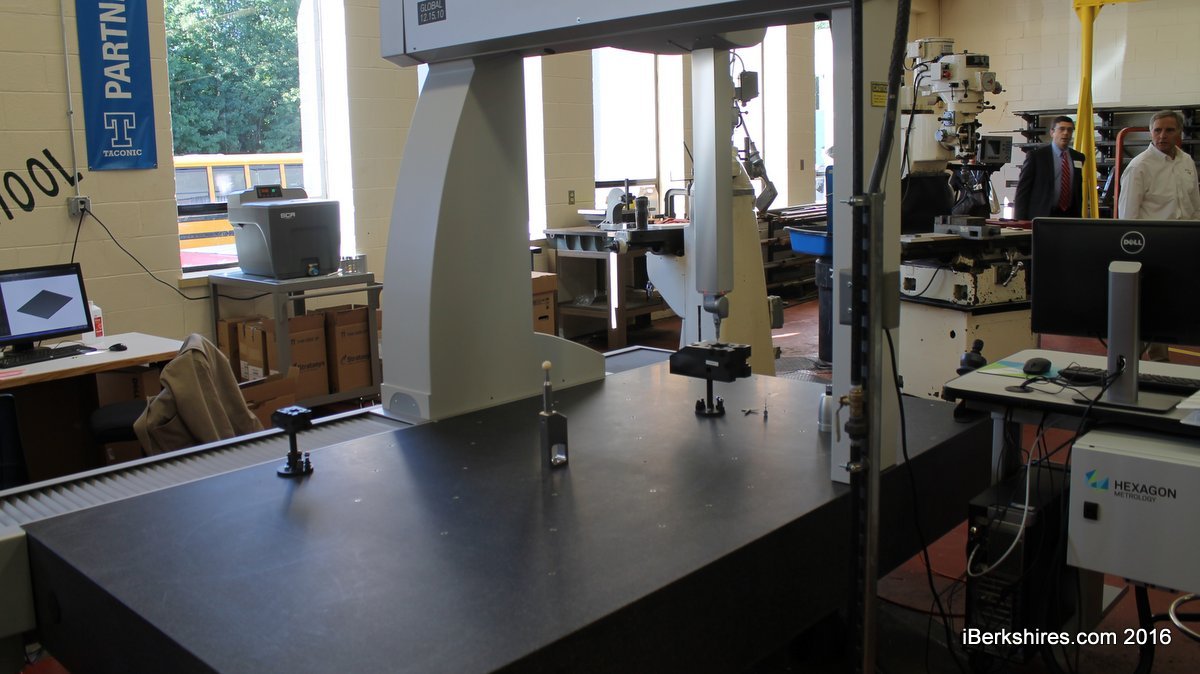
On Thursday, BIC officials and the vendors showed off three new 3D printers, a "coordinated measuring machine" uses laser scanning and a Romer arm, and software. The equipment is being stored at Taconic High School and is eyed to be moved to the BIC once the building is constructed.
Taconic and Berkshire Community College students and those companies that are members of the BIC will have access to use them.
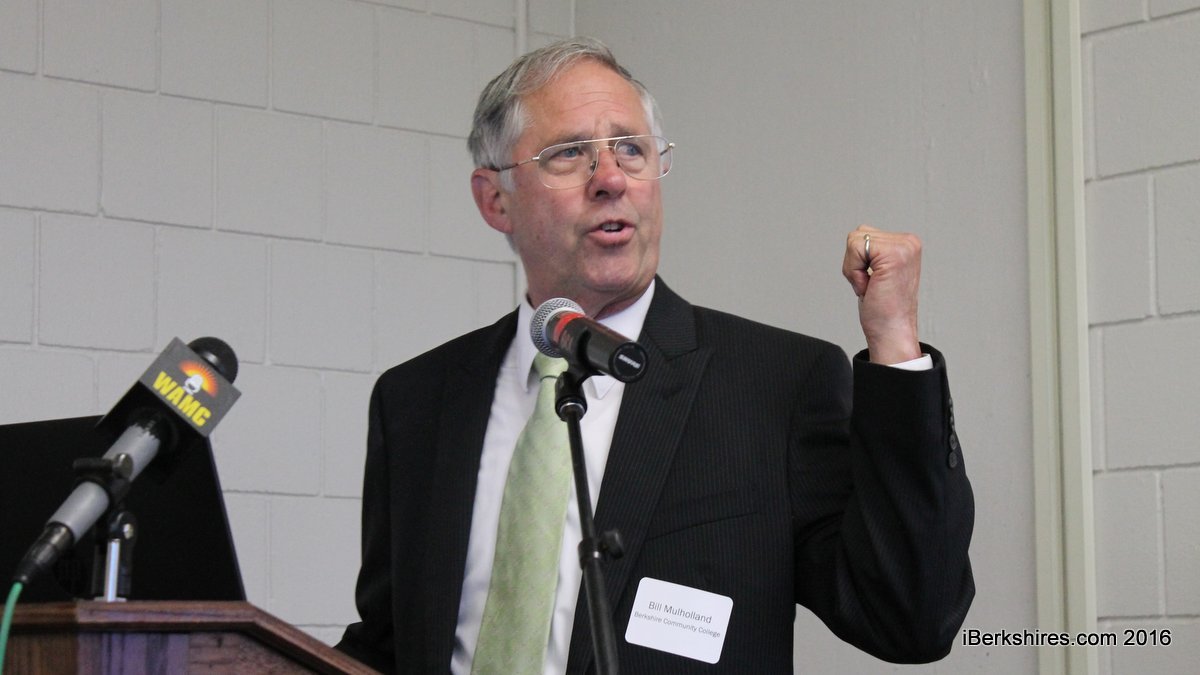
"This is the first real showcase of the high-end equipment. The mission of the BIC is alive and well," said BCC Vice President for Workforce Development and Community Education William Mulholland.
BCC procured the equipment with a $960,000 grant from Massachusetts Life Sciences and the Massachusetts Workforce Skills Capital program. The Berkshire Innovation Center is being funded by a $9.7 million grant to construct a research and development center at the William Stanley Business Park. Companies and educational institutions can become members to have access to equipment — more technology is sought outside of these pieces — to help product development.
The BIC was supposed to have started by now but the bids for the project as design came in too high, leaving a funding gap of $3 million. But the first round of equipment has arrived.
"We're seeking a small additional amount to build the facility as designed. I believe that will happen," said Project Director Rod Jane.
The 3D printers were built by Stratasys. Representative Charles Evans said it is the newest model created and the first one sold to a college. The previous model used two types of materials and seven colors. The newest model allows for printing in full color and seven materials.
Evans provided an overview of the two types of printers — the FDM and the PolyJet — at the latest of the BIC's speaker series. The printers have an array of abilities to create and test new parts. He showed a video about Oreck using the printer to quickly create a new plastic part for testing on new models of vacuums. With the PolyJet, there is the ability to mix materials — opening up a new realm of chemistry experimentation on parts.
It is estimated that the printers have reduced 60 percent of the time and 40 percent of the cost for some companies. The models can be designed during the day and then left to print overnight. Those designs are stored online. Further, the printers can work in injection molding at a "high mix, low volume" rate for prototype parts. NASA uses the technology for covers and housings and on the newest Mars Rover design.
"They are putting these 3D printed parts onto the equipment," Evans said.
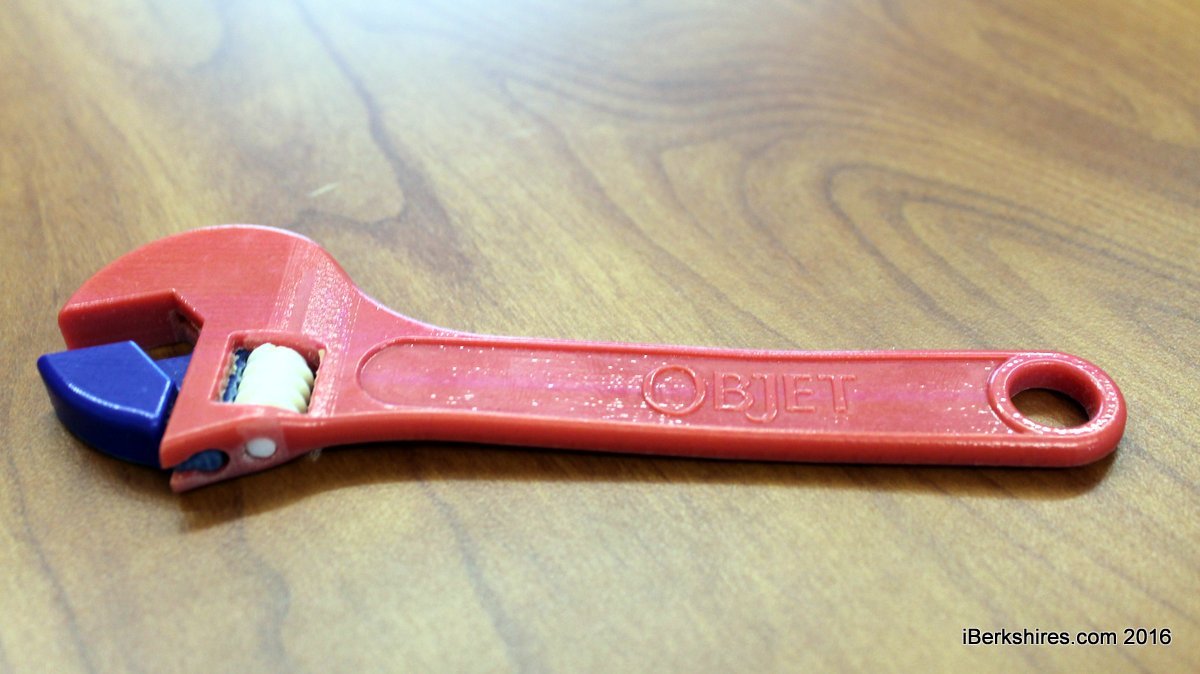
They can also be used with sand casting and to print out complex models; Evans showed up a fully functional adjustable wrench that was printed on the machine to show how even movable parts are printed all at once. It is also used with silicon molding and another video showed a bottle company using the technology to do blow molding to get prototypes to test — what once cost some $2,500 and is now reduced to $280.
"We can do it faster. We can do it cheaper. We can do it with less waste and less material," he said.
Another video showed a company crafting rubber parts for firefighter breathing apparatus, another showing a new harmonica attachment to a microphone. Car manufacturers can also use it to make parts.
Michael Maruk of General Dynamics said his company owns one of the PolyJets already and "we find it to be useful for quick turnaround."
Jane said when purchasing the equipment "we wanted the biggest machine with the most features. We're looking for equipment that nobody has."

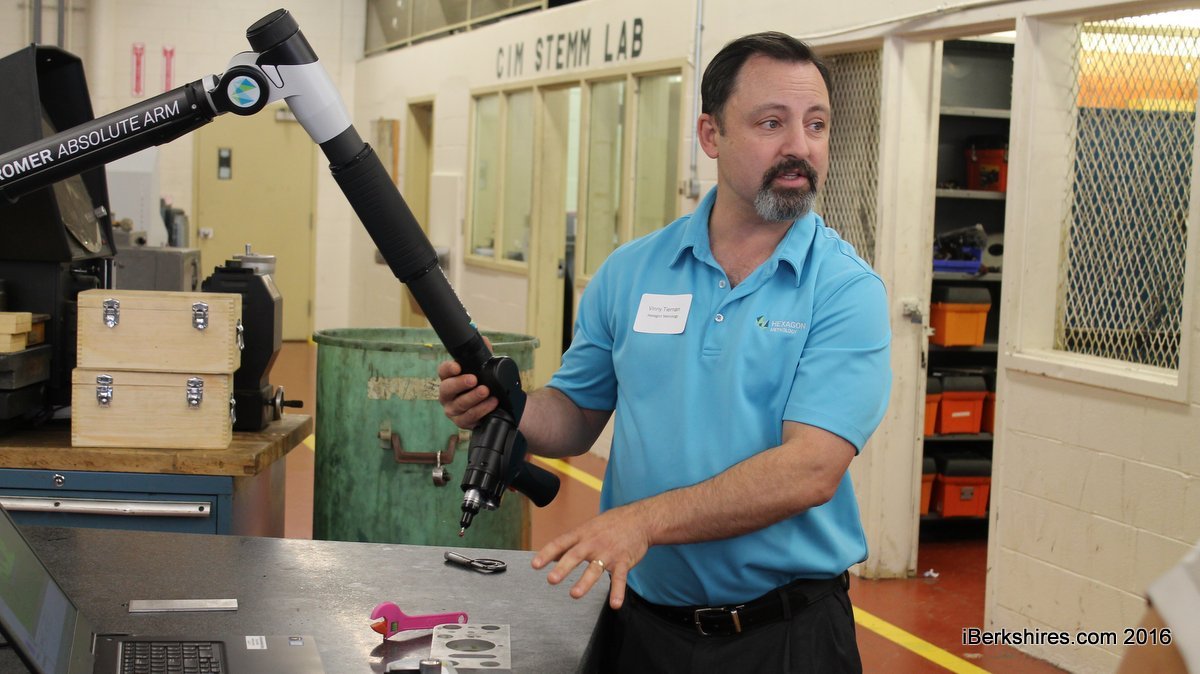
The coordinated measuring machine is useful in reverse engineering.
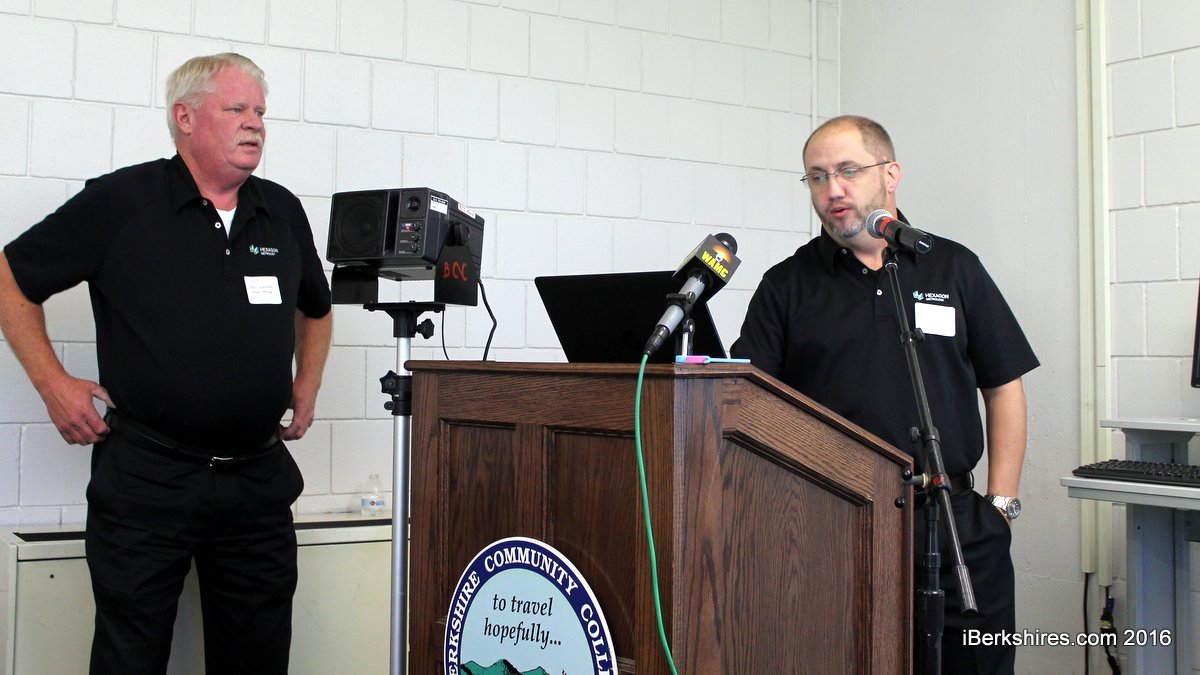
"There is not going to be a whole lot you aren't going to be able to measure," said Paul Spatcher of Hexagon Metrology.
Kevin Haynes of General Dynamics said often times his company has projects requiring specifications from products 20 years old. And, the current machines are incompatible with the files. With precision measuring, the company can take an old piece, use the measurements to reverse engineer it and build new design specifications. He said some contracts are asked to develop items that are similar to those older products and GD can craft one of those parts and use the laser scanner to get the measurements to base the next product on.
"We're excited to have that technology the BIC," Haynes said.
Spatcher said a lot of his work is with companies in the aerospace industry, which includes using the scanner to guide large parts together during assembly.
Jane said the model ordered is one that can measure anything from "microchips to a bumper."
For the educational aspect, the students will be able to take a piece, reverse engineer it, and then craft their own on a 3D printer. The technology helps construct the model that can be sent to companies for mass production.
"This is really highly technical equipment on its own right. But, what you do with it is more technical," Mulholland said.
BCC is now crafting advanced manufacturing certificate programs for students to earn through using the machines.
Tags: BIC, life sciences, manufacturing, Taconic High, technology,