Williams Brings 'BioEyes' Back To Lanesborough Elementary

The students are learning genetics through the process of watching zebrafish development.
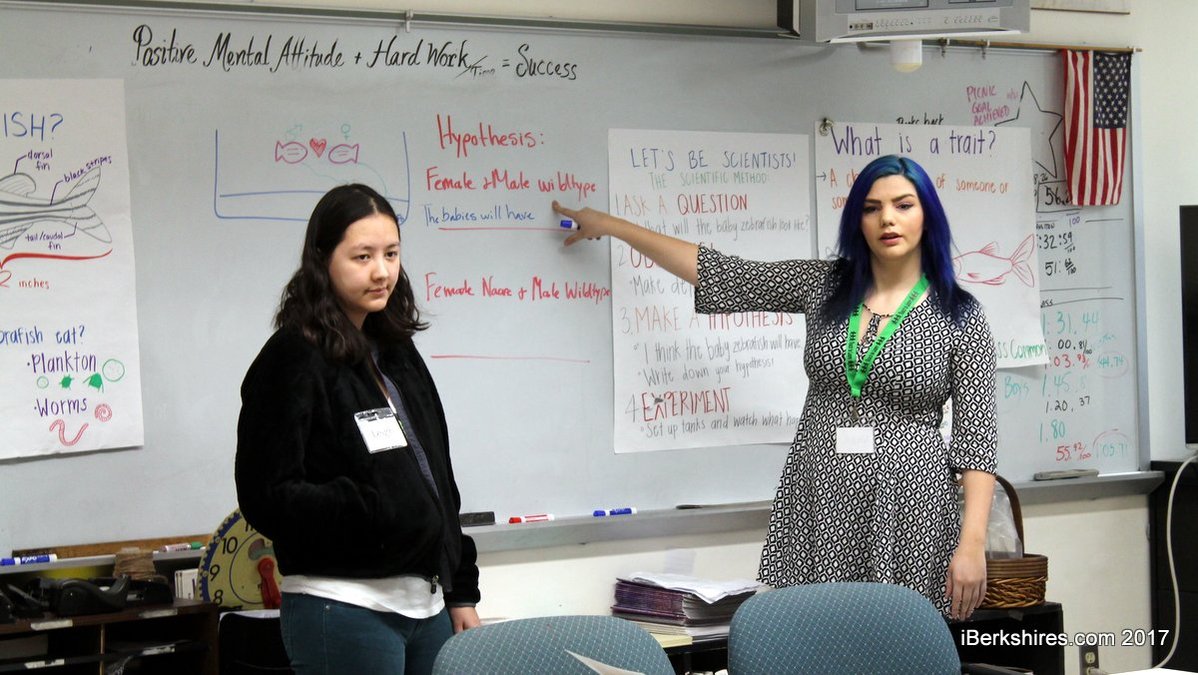
Then observation, noting what adult zebrafish look like and how they act. Then a hypothesis, an educated guess on what the babies will look like. And finally, an experiment, breed the fish and see.
That's the scientific process third-graders are going through at Lanesborough Elementary School. The lesson is part of the BioEyes program ran by Williams College.
The college sends students into the classroom with the fish over a period of a week to run the experiment.
"Hands-on science is one of the most fun things you can do. This is a weeklong program so they can see everything from the parents to the development of the embryo. It hatches and become larvae and can swim around and they can see its heart beating, they can see the pigment develop. And all of that happens in a course of a week. Zebrafish are unique because you can see through the body," said Williams College Lecturer Martha Marvin.
The program was developed about a decade ago in Philadelphia in which research institutions with the fish reach out to elementary schools to run it. Williams took it on in 2010 and has been bringing it into two or three schools in the county each year.
"This is our seventh year. We've been doing it since 2010 and we've done different towns, different schools," Marvin said. "The program was originally developed in Philadelphia and was developed to bring science into the classrooms."
Last week the college was in Williamstown Elementary and next week it will be in Brayton Elementary in North Adams. On Tuesday, Lanesborough students began their experiment.
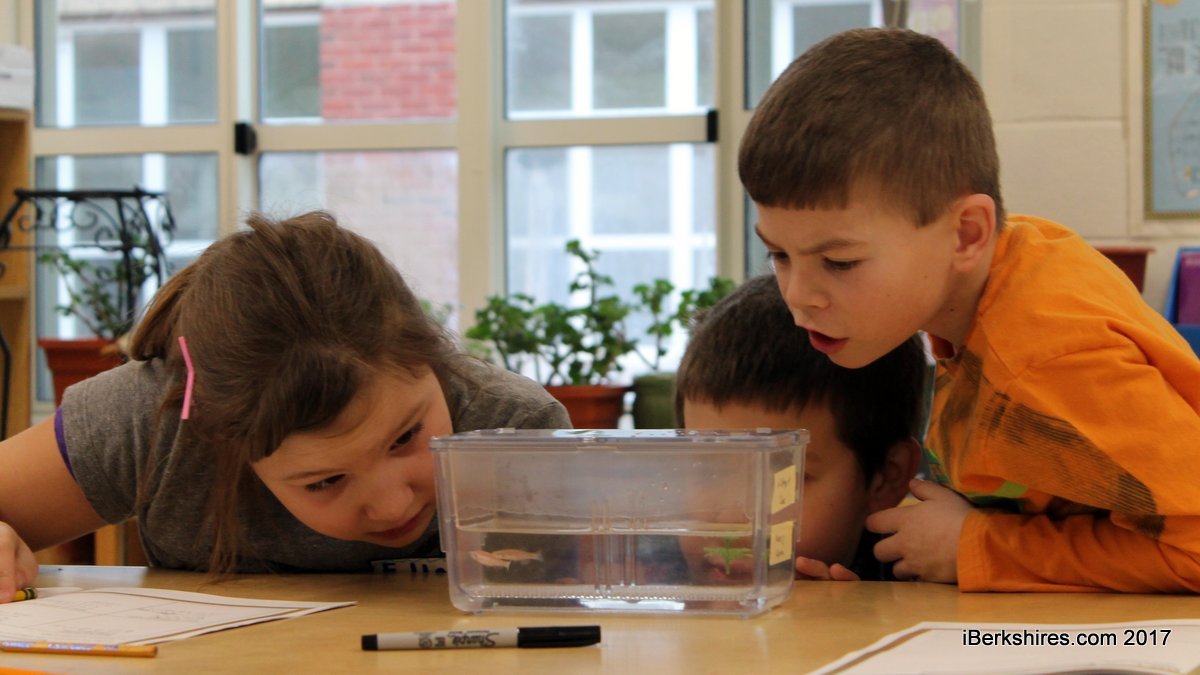
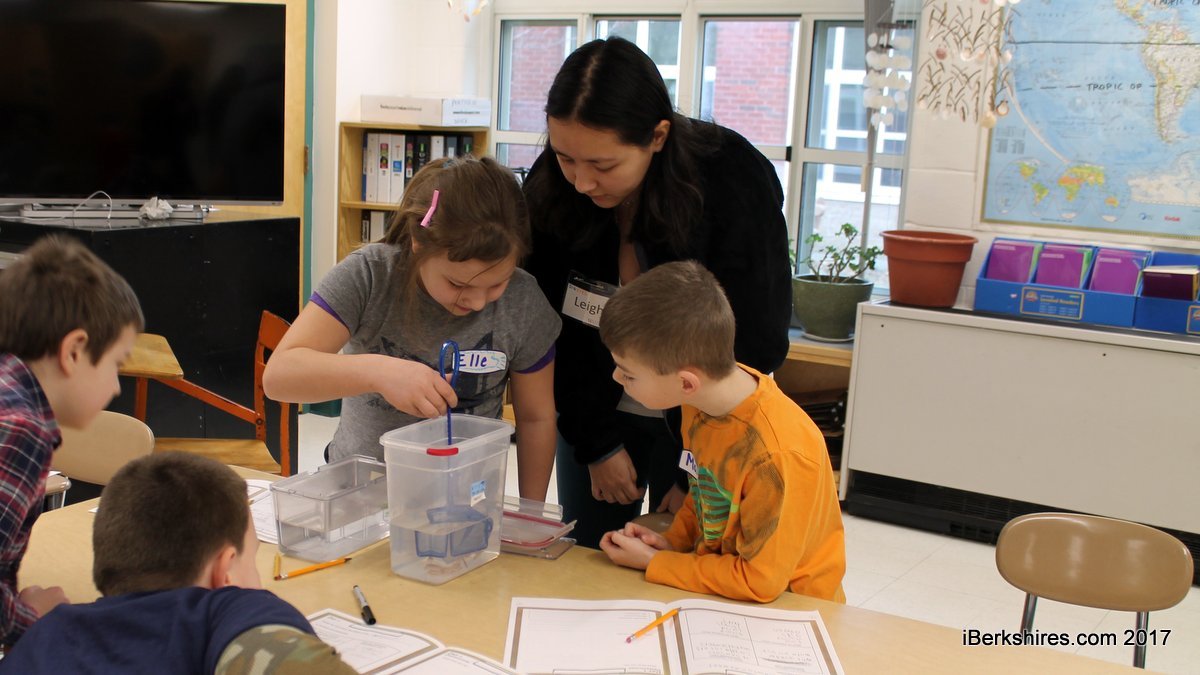
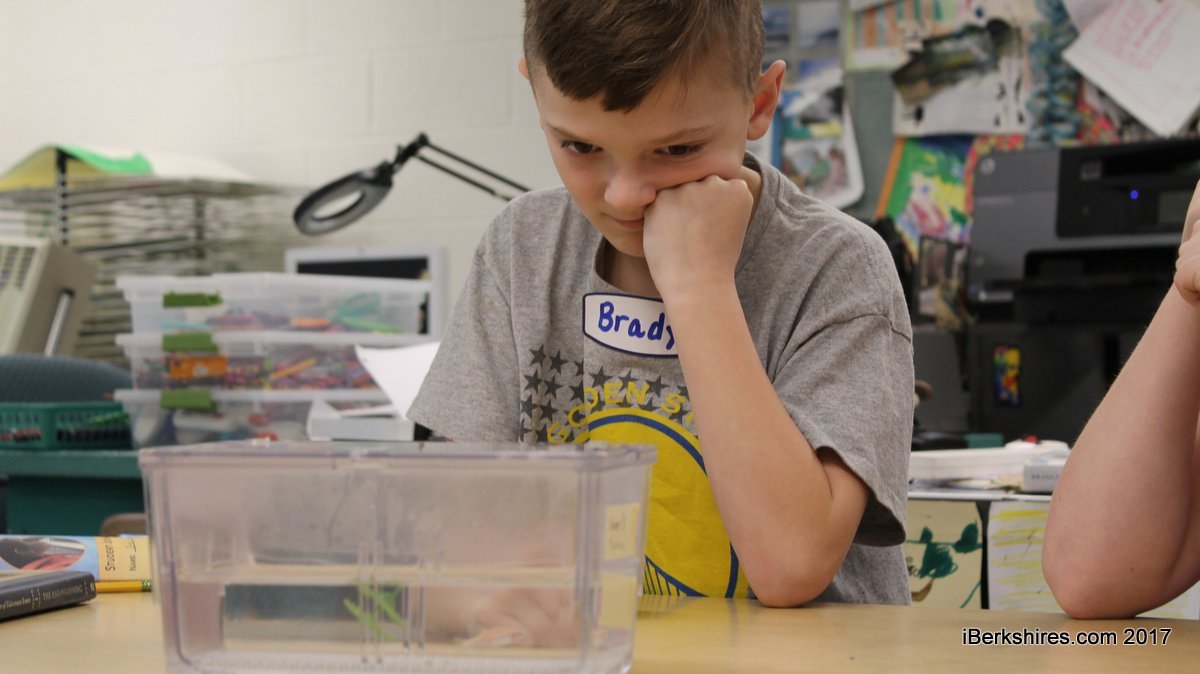
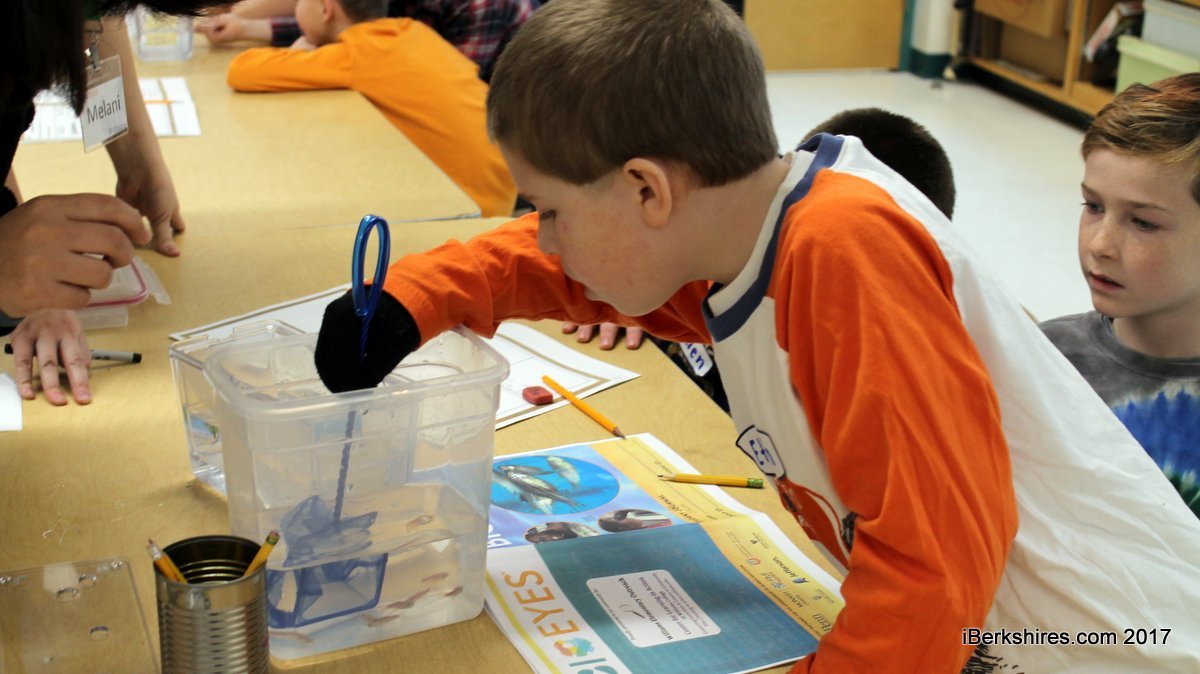
The students used a net to fish a male zebrafish out and then a female and placed them in tanks. With workbooks they wrote down information about the zebrafish and then watched as the two swam together in the tanks. The students drew pictures of everything they saw, noting the number stripes or number of fins, the color of the water, the behavior. Then they came to a conclusion — what they believed the babies would look like.
On Wednesday, the Williams students will return and by then the eggs will be laid and fertilized and the students will again follow through with their observations when peering through a microscope and taking notes. On Thursday they'll find out exactly what the baby zebrafish look like — and find out if their hypothesis was correct.
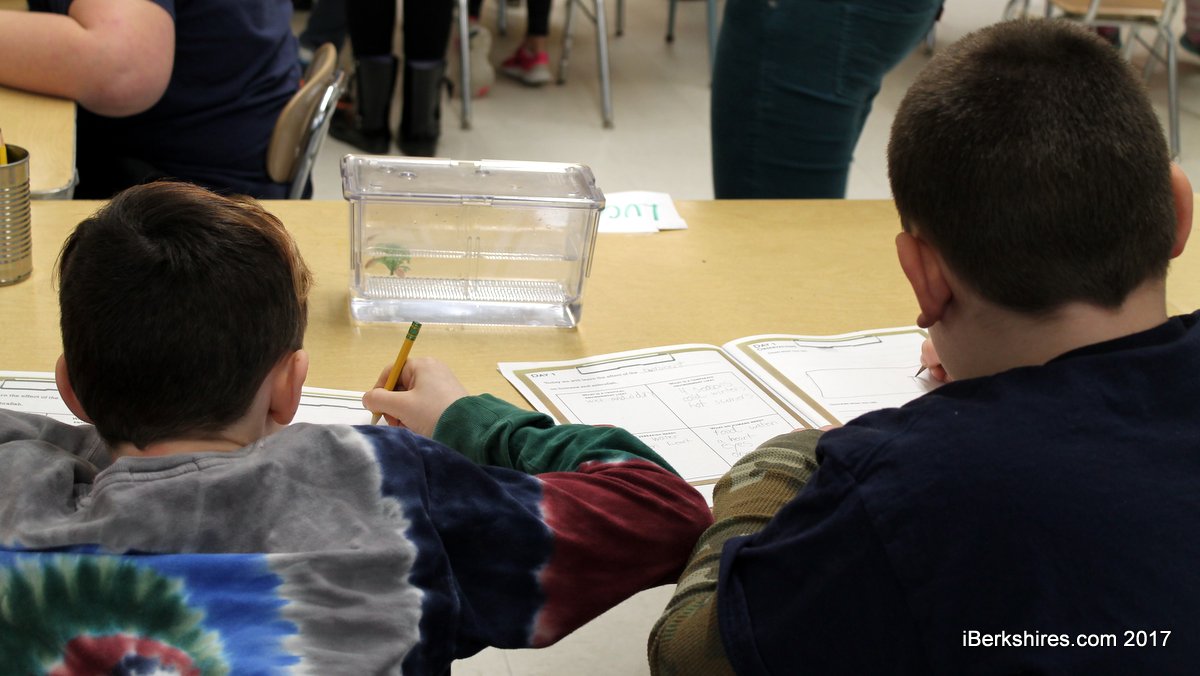
Williams has been bringing the program to elementary schools since 2010.
Williams brought the program to Lanesborough for the first time last year for the fourth grade class. Now, the program has been moved a grade lower to help with academic standards.
"This year it is different because we are doing all third grade. We've done third grade before in North Adams but with the Next Generation Science Standards this life science fits better in third grade," Marvin said.
The learning goes both ways. The Williams students learned about zebrafish enough to teach the curriculum in class. Now, they get experience working with elementary school students and experience teaching.
"The Williams College students get experience in the classroom. They're using a well-developed curriculum so they have that in place. They can go into a classroom and know more about how to communicate with the kids, how to teach the kids, and get that experience," Marvin said.
Tags: biology, LES, STEM, Williams College,