Williams College proposes faculty housing for Southworth School

Print Story | Email Story
Williams College is proposing to buy Southworth School for $100,000 and spend between $5 and $6 million renovating it into 14 rental apartments for faculty and staff. Because the building would be used for housing, the college would pay an estimated $25,000 in real estate taxes annually, according to Helen Ouellette, Williams vice president for administration and treasurer. Conversion of the building to apartments would require a special permit. Williams’ proposal was the only one submitted to the town by Monday’s 5 p.m. deadline. The selectmen will consider the proposal at their May 13 meeting. The 1898 brick building, originally the town’s high school, will no longer be needed for the schools once the school year is over next month. Next fall, children will go to school in the new building on Church Street. “It’s incredibly expensive to work within an existing building,” said Ouellette. “Clearly it costs a whole lot more to retrofit an existing building, but at the end of the day you’ve got this beautiful historic building.” “It certainly meets a very real need of ours,” said Ouellette. “It’s so close to campus, it fills our needs very well. “With our commitment to hire 25 faculty and five staff, they’re going to need rental housing,” said Ouellette. “We don’t have the housing stock to absorb them, so if we don’t create housing, it certainly wouldn’t help what’s happening in town regarding housing.” Demand for housing in town is generally recognized to have outpaced demand. Ouellette said that assuming the proposal is accepted, and depending on the demolition schedule for the other two school buildings, “We would desperately love to have it ready for fall of 2003.” Ouellette noted that for a number of townspeople, voting to approve the construction of a new elementary school was contingent on the assurance that the town would try to find a way to preserve the building. Ouellette said the selectmen designed the proposal incorporating nine criteria including compatibility with the surrounding neighborhood, preservation of the historic exterior and generation of a continuing revenue stream. “It seems the college’s proposal hits those square on,” she said. Ouellette said she believes this to be the first large-scale building the college has purchased and renovated in town. “We’ve done it with buildings we already own,” she said. “We know how to do it, but we also know how expensive it is.” Ouellette said she is not surprised that the college submitted the only proposal, although Berkshire Housing Development Corp. had viewed the property and expressed tentative interest. “It didn’t surprise me that for a developer who has to break even on the development itself would decide against it,” she said. “There’s no way for anybody to make any money on this.” In the proposal’s conclusion, Ouellette wrote: “Williams College recognizes the historic presence the Southworth school building has had on the School Street neighborhood for over 100 years. The college believes that its proposal for residential use of the building best fits the desires of the neighborhood and the fiscal needs of Williamstown in light of the limited use opportunities available. Williams College is committed to a successful, quality renovation of the building which preserves and improves its architectural character and enhances the neighborhood.” Aspects of the proposal include: Since the building would be used for residential purposes, the college’s proposed use would be compatible with the neighborhood. With only 14 apartment units, it is even likely that noise and traffic would decrease in the immediate vicinity of the Southworth building as such a residential use would not have the impacts as a school use. The college’s proposed use should have no detrimental impacts on the surrounding area. The college’s proposal clearly demonstrates the college’s commitment to preserve the historic facade of this century-old edifice. The building’s brick masonry would be repointed and cleaned and the stone lintels repaired or replaced. Additionally, the proposed new north entrance would more closely resemble the building’s traditional south entrance and be more aesthetically appealing than the current block connector. The college’s intent is to remove the building’s institutional architectural encumbrances and restore its turn-of-the-century appeal. As contingencies to the agreement, the college requests that the development agreement not require the college to enter into a payment in lieu of taxes as the request for proposals requires because although the college, as an educational institution, is tax exempt, the building’s use will not be, and it will generate real estate taxes to the town. Also, the college requests omission of the provision that the decisions of the zoning enforcement officer are final and unappealable, as the RFP requires. The college also asks to perform a detailed hazards survey for lead paint, asbestos and other hazardous materials; a structural assessment, and assessment of the roof. The college’s estimated cost of construction is $98 to $123 per square foot. The college wants to renovate the building to accommodate about 14 new apartments — three one-bedroom apartments and 11 two-bedroom apartments — all with full kitchens and baths. Each floor would be reconfigured with new gypsum board walls and hallways to suit the best possible use of the space while meeting current building code requirements. Renovations would be primarily to the interior. The exterior architecture and appearance would be maintained. Brick masonry would be repointed and cleaned, stone lintels repaired or replaced as required, new gutters installed, new exterior doors installed, and most, if not all, windows would be replaced with more energy efficient windows which would be architecturally pleasing. The slate roof would be evaluated, and repairs made as needed. The north entrance, which now has a one-story connector attaching it to the Grant School building, would be removed and a new entrance constructed. This new entrance — envisioned as more architecturally consistent with the building’s design than the present one — would have a ramp for accessibility for the handicapped, and a new lobby, and would serve as the building’s main entrance. This addition is anticipated to be less than 1,000 square feet. Interior renovations would include installation of new electrical, plumbing, heating, telephone, sprinkler and fire alarm systems. New emergency lighting and exit signage would be installed as well as new interior doors and hardware. Each apartment would have new windows, flooring and walls. Full kitchens with new appliances and full baths will be installed for each unit. The current plan is to retain the existing elevator and stairwells, assuming acceptance by code officials. The college expects to retain the existing load-bearing masonry walls and timber framing and floors, with upgrades as required. Because the heat for the building is now piped from Grant School, which will be demolished, the college expects to install a new gas-fired heating system in Southworth. Additional paved parking would be installed to the east of the building as required to meet the town’s zoning regulations. New trees and shrubs would be added as needed, and the grounds would be maintained by the college’s building and grounds staff or contractors. An architectural survey done for the town noted a small amount of asbestos in building material “in less than two square feet of miscellaneous debris in the attic.” That report suggested investigating three other areas in the event of further renovation. The building has not been tested for lead paint, according to that report. Ouellette said the college expects to finalize plans soon for the B & L lot at the foot of Spring Street that will include housing on the upper floors and retail shops on the ground floor.
If you would like to contribute information on this article, contact us at info@iberkshires.com.

North Adams Housing Trust Building Foundation for Future

By Tammy Daniels iBerkshires Staff
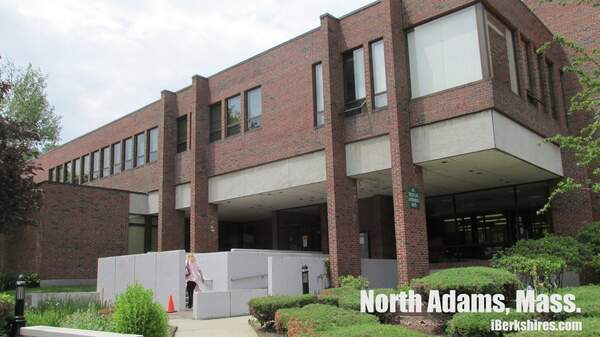
NORTH ADAMS, Mass. — The newly established Affordable Housing Trust has spent its first meetings determining its mission, objectives and resources. 
 
What it has to decide is the chicken or the egg — set goals with the purpose of finding funds or getting the funds first and determining the best way to use them. 
 
"I think that funding actually would dictate the projects that we do, rather than come up with we what we want to do, and then find a way to fund it," said Trustee Ross Jacobs last Thursday. "There may be sources we explore that will be successful. Some may not. ...
 
"If we start exploring funding options and get some of these wheels rolling, then we'll have a better idea within six months where some of these are going, and then what we can do."
 
Trustee Nancy Bullett said it may be more of doing both at the same time. 
 
"It's almost simultaneous looking at the projects that are incorporating funding, because your funding is specific to whatever it is that you're doing," she said. "So how do you identify the projects that you want to work on, which then dictates the funding."
 
This will tie into the trust's objectives which could include home rehabilitation, property tax relief, emergency rent or mortgage, or support of projects undertaken by private or public developers like Habitat for Humanity. 
 
View Full Story

More North Adams Stories