Hillcrest Commons Promotes Concurrent Therapy To Neal
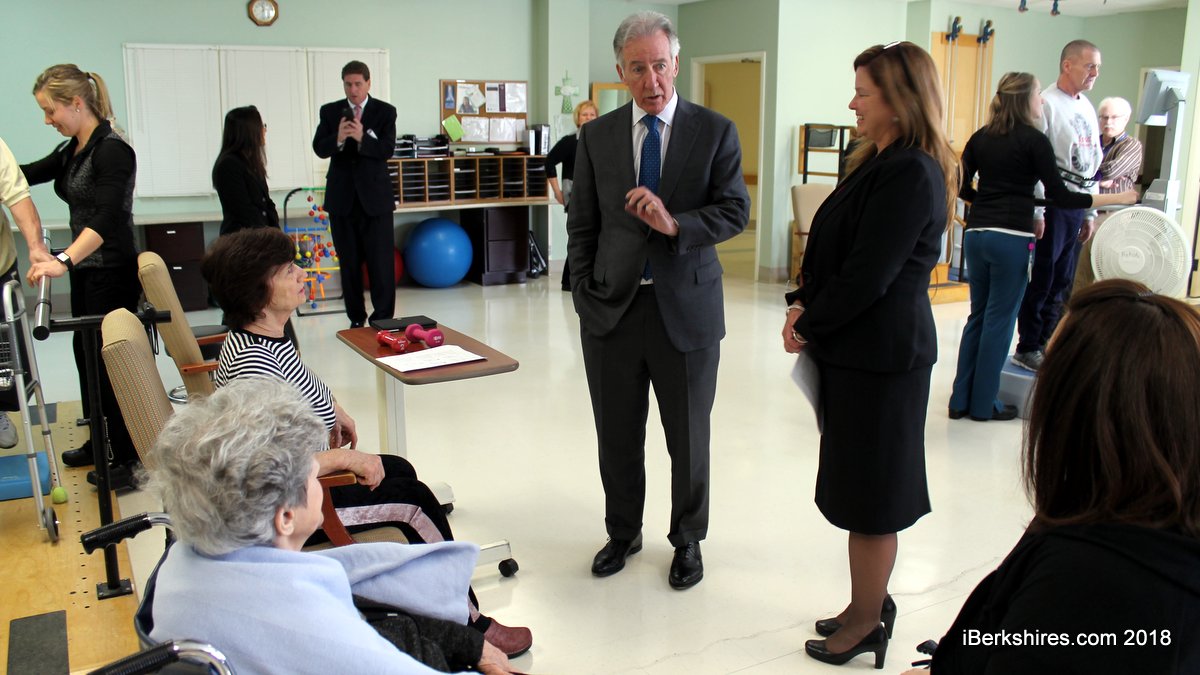
Congressman Neal is on the Ways and Means Committee, which oversees Medicaid and Medicare. A bill in Congress now could expand concurrent treatment.
But, now there is legislation that could allow for those sessions to have greater coverage, which advocates say is a benefit to the patient, the health-care organization, and to the government.
"There is pending legislation in Washington that would allow for greater therapy services for people access their Medicare benefit. Instead of one-on-one therapy, it allows for residents to come together to do group or concurrent therapies. They can motivate one another and work together to ultimately return home to the community quicker," Tara Gregorio, president of the Massachusetts Senior Care Association.
Gregorio was one of a half-dozen or so advocates for the issue who showed U.S. Rep. Richard Neal around the program at Hillcrest Commons on Monday so he can see for himself.
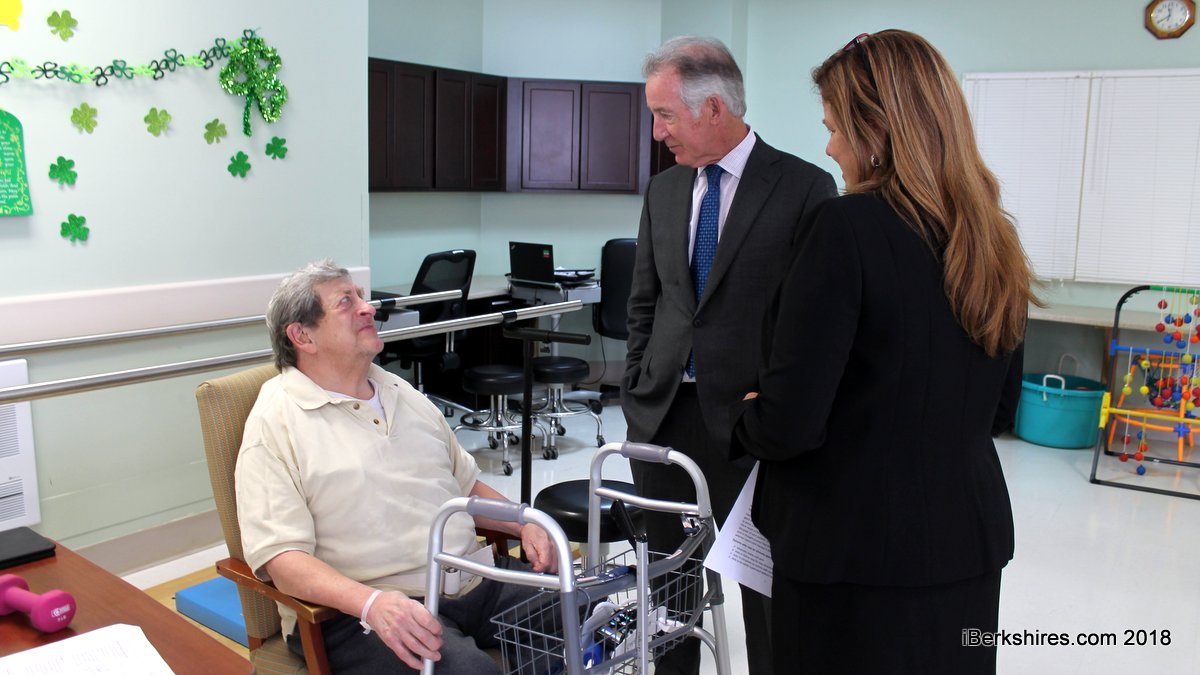
There the congressman met the likes of Jody, a 52-year-old man with a degenerative joint disease who recently had his knee replaced. Now he is in the concurrent program and gains support from his peers to get back to the workforce soon. And Orsola, a 93-year-old woman who is working through the program in hopes to return to the apartment attached to her daughter's home.
Those were some of the people who were chosen to use a concurrent therapy model because therapists felt that was the best way they'd succeed.
"There are several studies, evidence-based studies, that tell us that outcomes from group therapy and concurrent therapy are better than the outcomes of individualized therapy," said Novaleigh Dodge-Krupa, vice president of strategic care innovations for Genesis Rehabilitation Services, the vendor who provides the services at Hillcrest.
"It is not just putting people in groups, it is a mode of therapy."
According to Tricia Bragdon, vice president of operations Berkshire Health Care Systems, group therapy is for two to four people with the same ailment to do rehabilitation activities as a group. Concurrent therapy is for patients with different ailments who will do their own programs together but within eyesight of a therapist.
"Concurrent therapy is two patients who are receiving short-term rehabilitation at the home who have different goals and are in the line of sight of a therapist. For example, if you are going to return to your home -- and some of these folks are not only returning to home but to the workplace -- they want to practice in a safe environment but they don't want help, they don't want assistance," Bragdon said.
"They have to build their confidence that they can do this without somebody there. In those particular cases to have two peers together, that peer to peer support, in addition to the safety net of having a therapist there, you are getting the best of both worlds."
Dodge-Krupa said for many it is a better form of treatment because it builds both confidence and strength. She said many react better to encouragement from peers rather than a therapist.
"We are social beings. We do better when we are with other people," she said.
Chris Donnellan, senior director of government relations at American Health Care Associations, said less than 1 percent of therapy in skilled nursing facilities is group or concurrent. That is directly related to the restrictions in Medicaid and Medicare, he said. While four people may have the same knee problem, all four would need one-on-one individualized treatment.
Genesis Regional Vice President of Operations Susan Lin added that by having a broader menu of options to work with specific patients will ultimately serve the patient better, which in turn saves the Medicare and Medicaid programs from further expenses.
"If we are going to prevent a re-hospitalization, we are going to save the government lots of money. That's what this does. This saves a patient from potentially being re-hospitalized," Lin said.
Donnellan said allowing homes to use more of the group therapy options wouldn't cost the government any additional money but would result in savings to the facilities by allowing them to provide care in a more efficient manner.
"The outcomes are the same whether they are in group or in concurrent. That's what we are trying to stress," Donnellan said.
Gregorio said part of the changes proposed in Washington will limit the expansion of such programs to facilities with at least three stars, which in turn creates an incentive for underperforming homes to do better. It will also keep those facilities more financially sound.
"You may know that Massachusetts nursing facilities and this area is not immune to it, are facing immense financial and staffing challenges because of the economy as well as cuts in Medicaid and Medicare," Gregorio said.
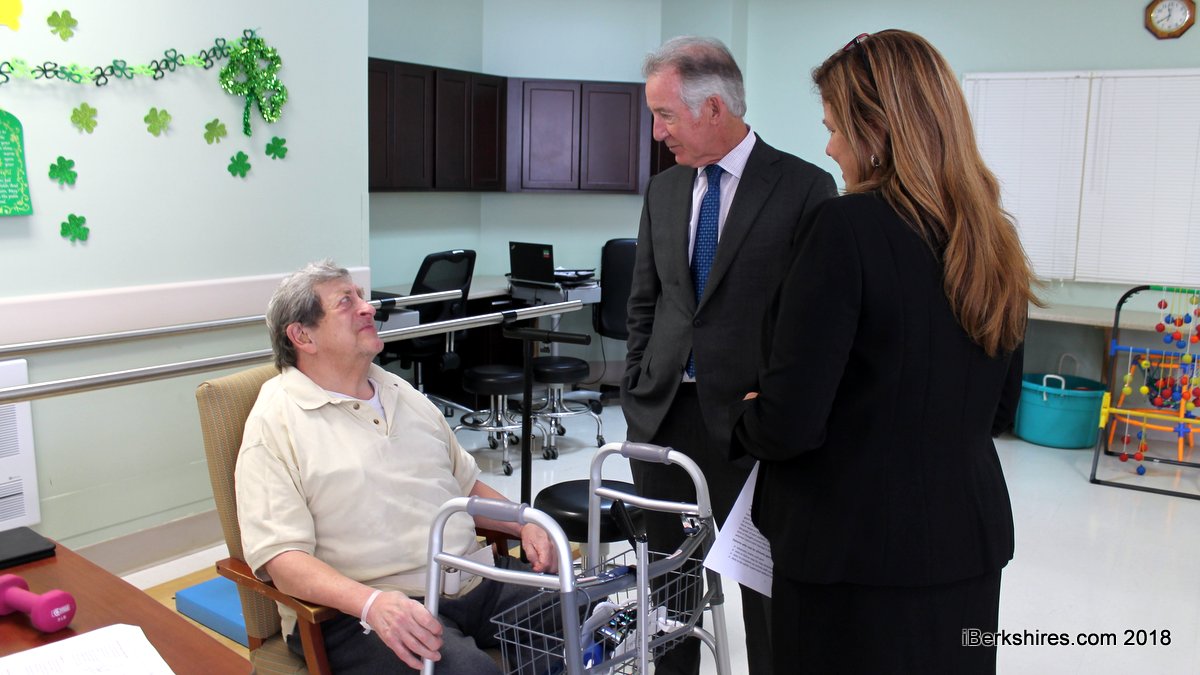
Neal said the future of Medicaid and Medicare is even more important given the demographics.
"Rehabilitation services coupled with long-term care are going to be huge priorities as the American population ages and live longer. The Medicaid dollar now is almost at 70 cents that are devoted to nursing home care," Neal said.
"There is always a continuing battle because the state and the federal government split the cost of Medicaid. There were a number of people at the facility today that are known as dual-eligible, so they receive some Medicare reimbursement and some Medicaid service reimbursement. We want to make sure that is sustained."
Massachusetts is aging and that creates a higher concentration of people using the two health care options. And Neal said the ongoing budget battle is set to put the two in the crosshairs.
"We're going to have this budget battle ongoing. You can't have a $2.3 trillion tax cut and not say down the road your not going to have to pay for it. Speaker Ryan has already said that his priority is to be looking at Social Security, Medicare, and Medicaid," Neal said.
And in the end, Neal said he wants to find a way to make sure the formula works and his tour on Monday shed a little more light on the issues he is set to take on back at the capital.
Tags: medicare/medicaid, Neal, nursing home, rehabilitation,