Q&A: Williamstown to Celebrate Dane's Career at Thursday Party
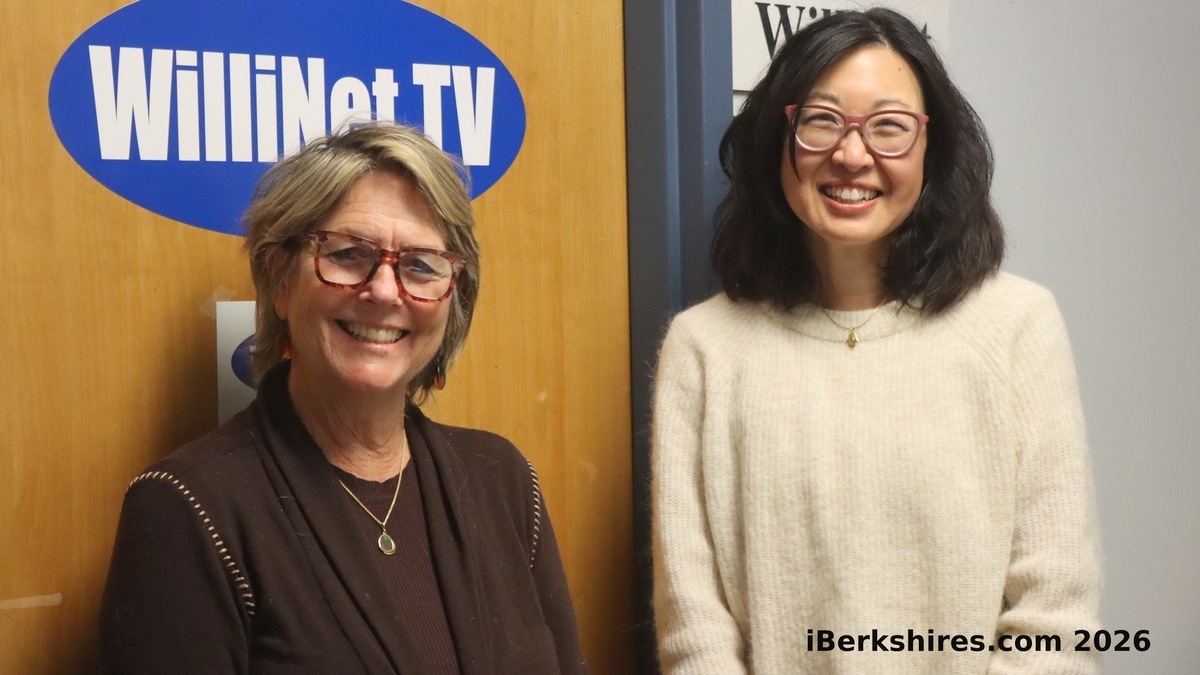
WILLIAMSTOWN, Mass. — Deb Dane has spent a lifetime working to build community and the last 20 years doing so at the town's public, educational, and government access television channel, WilliNet.
Sometimes, that work happens one person at a time.
Recently, Dane took a call at WilliNet's Spring Street office from a resident who wanted to know if the channel had filmed the graduation ceremony at Mount Greylock Regional School.
Dane replied that the station had.
"And they said, 'My grandson graduated, and I'd really like to see it,'" Dane recalled this week. "I said, 'Great, we can help you.' So I had to go through all the questions: Do you have Internet? No. Do you have cable TV? No. Working all the way down to, 'Do you have a relative I can talk to who can help show it to you?'
"She says, 'I want a CD.'"
After clarifying that the caller wanted a DVD and had the machine to play one, Dane had to make sure the station could create one.
"I texted Jack [Criddle] and said, 'Do we still have the setup to burn a DVD?'" Dane said. "And he texted, 'Yes.'"
The digital hard copy in hand, Dane called back the proud grandmother to find out where the DVD could be delivered.
"She lives up the street and across the bridge from me," Dane said. "I know exactly where she is. She's my neighbor. I said. 'I'll drop them off at your house.' She said, 'I'm going to watch this for the rest of my life.'
"It was the other end of everything we've talked about with digital distribution and young people being involved and government transparency. It was putting community together. This was my little catch-phrase that I really meant during COVID. It was proof that, 'community building can foster caring.' That's how I felt when I heard her voice. She was so happy."
WilliNet has been making Williamstown stronger and happier since 1994. In 2021, the town recognized the PEG TV station for its role in holding the community together during the COVID-19 pandemic.
"At a time when disease forced us to separate, you somehow enabled us, in many ways, to engage with each other even more fully," read a portion of the proclamation naming WilliNet the recipient of the town's Scarborough-Salomon-Flynt Community Service Award.
Dane points to that award as one of the highlights of her tenure, which comes to an end this month as she retires and WilliNet welcomes Executive Director Teri Yuan, who comes to town after serving as the chief operations officer for Oakland, Calif., civil rights, education, and advocacy organization Equality Labs.
On Thursday, Dane's career will be celebrated from 5 to 7 in an open house at The Log on Spring Street.
On Monday, Dane took a break from helping assist in Yuan's transition to reflect on her career, her time at WilliNet and what comes next.
Q: I got the feeling that I kind of roped you into this, that you weren't itching to do a story about yourself on the occasion of your retirement?
Deb Dane: I love WilliNet, but ... there's a new face to WilliNet, you know what I'm saying?
I think a lot of people think of WilliNet, and they think of me, which is awesome. That's lovely that I've been the executive director. But WilliNet is this larger community. WilliNet is us. It's you. It's literally that.
So that's what's happening. It will continue to happen with a new face to it.
That's basically it. It was a little tentative around being too identified. And I was so busy. There's so much going on.
Q: What year did you arrive? Was it 2006?
DD: I think I started part-time in 2005. ... I was on the board before that. Then I brought Carrie Greene on the board. And I went off the board pretty quickly. And Carrie called me and said, 'Would you ever think about coming and being the executive director part-time?' I said, 'What?' Then I thought, 'Sure. That sounds sort of fun.'
I never had done TV. I was a public radio person, a producer, a sound journalist. …But I did have a unique skill set that made the ball of clay she was handing me a super fun, attractive project. It had community involvement, because by then I was involved with some of the overrides in building the elementary school and Words are Wonderful and organizing that.
Then my production skills and commitment to story-telling and, definitely, civic engagement ... and by then I understood how local and how involved the community was. So it was a blast.
Q: You mentioned public radio. How long were you doing that?
DD: Twenty years, I worked in public radio.
Q: Whereabouts?
DD: I worked in Eugene, Ore., at KLCC. Then I worked in a small Norwegian fishing town in Alaska, KFSK. Then I worked in D.C., at the network at 'All Things Considered,' for five years, during the Reagan years. Then I went to Minnesota when Garrison Keillor left to work with Noah Adams, a host, on
a national, Saturday night, 6 o'clock timeslot. I worked with authors.
Then I stayed because I ended up meeting my husband and worked at Minnesota Public Radio for nine years.
Then my husband at the time came here with [web publisher] Tripod. He was, as they liked to say, the first adult hired. And I was producing books on tape at that time, so I traveled down to New York and kept that going.
Then I had my two kids were starting school. And I got involved in community.
Q: You mentioned the elementary school. Were you on the School Building Committee for that?
DD: No. But almost formed a PAC, a group of us — actually, we might have been a PAC — that did electioneering and outreach and true organizing. I oversaw the captains that did the calling for a couple of the overrides that got the money to build the schools.
There were a lot of people who were involved at that time. That was an exciting time.
Those files are finally gone from my basement when I started getting ready to move — all the call lists.
Q: You already talked about how you got involved with WilliNet -- first on the board and then you were asked to step in as executive director. You knew more about broadcasting than anyone in town, probably. But how much of a transition was it, for you personally, to television?
DD: I'll say one sentence in praise of radio because it's my first true love and where, I think, we make the most change because there's nothing quite as beautiful as the human voice in all its uniqueness for every human being.
That said, the biggest adjustment, honestly, was I didn't know from cable access at all. I didn't even watch the shows everyone makes jokes about.
It has its own culture that was still very much in play in 2005. That was the biggest thing.
And I was much more open and fluid about what WillNet could be - like sharing content throughout the county, making partnerships with people. I didn't have a sense that, 'It has to be like this,' or, 'It's always been done like this.' Which, I think, was very helpful to keep creating things.
… And we just kept it basic. As you know, at town hall, it took COVID for us to get three cameras and a whole setup. It was one camera. We were recording first on VHS and then on DVD. And we'd come in here, and we could physically only play two shows — two VHS-length shows. We daisy-chained four ... and I said, 'Can't we do it with DVDs?' And we would DVD play them such that we'd set the timer for the next one to go off when it finished. Then we could program for eight hours without someone being here putting in a tape.
When I look back now, I say, 'Holy cow.'
Q: So you had to have someone here and when one show ended, you had to pop it out and put in a new VHS tape?
DD: When I think about it now, I think, 'Was I alive then?' Because now it's all digitized.
We went to a conference and saw there was this one new company coming out of Minnesota called Tightrope that was embracing what community access stations were doing. And also, colleges do it. That was a game-changer for us, to get to digital.
And then the question came to be around distribution. Maybe 15 years ago, when smart TVs started, I was like, 'A smart TV, what is that?' 'What is Roku?' I was like, 'Oh my god, we're going to need a custom app on Roku, because we couldn't afford the next level of servers.'
Then COVID happened. And I feel it was such a happy circumstance in that, it's kind of like FEMA. We never know FEMA is there until an Irene hits. WilliNet's here, citizens in this town got it to be here through licensure and decided to put their charter franchise fees into this operation, then when it was time, we were there.
Jason Hoch, our town manager at the time, had all the partnering skills and knew how to use the CARES money from the state and the ARPA funds from the federal government. He said, 'You need to be reimbursed for what you're doing, so keep track.' That rendered the capital we needed to buy the live servers so we can stream meetings live. It allowed us to get another VOD server so we can have video on demand.
… We're still benefiting from that, and we did a lot of hard work during COVID, which the town, miraculously recognized us when we got the Scarborough [Award].
Q: It wasn't really a miracle. It kind of made sense in that moment for the town, with everything you had done, that WilliNet had done, to help hold things together in town through that period.
DD: It was really — and Jack and I, my colleague Jack Criddle, he's a wonderful partner in what we do. I'm full-time and he's part-time. I would come in during those times, if you remember that isolation, and [Jack] always showed up. And I'd say, 'Jack, what we're doing matters.' Nobody knew that the time, but I just knew it mattered. And he did, too.
That's the beauty of what WilliNet is, and I think our new hire, I'm super excited about the next executive director, Teri Yuan. She brings management skills. She has an MBA. She's smart as a whip, and she's been out in the world. And she's a community builder. And she appreciates community voices.
It's such a unique platform that's here for the community to literally talk to itself, to be creative among itself, to have this free resource. And part of that is to reiterate. It isn't the board. It isn't the director. We're not public television. We don't get federal funding. We don't have an editorial judgment. It is what the community brings to itself.
Q: You've also made it possible to not just watch what's going on this week or last week. You've made it so people can go back and look at things as an issue percolates through the process.
DD: It's true. I'm grateful for the digital era for that as well. I'm a big primary source person. And everyone knows if they've served on any kind of PTO or whatever committee, garden club, it's the secretary at the end of the day that wields the pen. It's really nice to be able to look back and say, 'Yeah, but what happened? Who said what when?' as much as you can.
I'm showing Teri what's left here. I've weeded out and taken VHS up to the town hall before [former Town Clerk] Mary Kennedy left, and she did the initial inventory. However, we opened a drawer, and there are all the VHS tapes from the Comprehensive Planning Committee from 2002. And I said, 'Jack, Teri, it will be up to you, but I think we should digitize these and replay them and remind us where we were at the beginning of the century.'
There are those among us for whom geek civic history is really fun, and that was an incredible committee. And so much of what they said has come to fruition. And I love process.
Q: You already mentioned Ms. Yuan a couple of times. I know you were retiring either way, you're moving to California, but it has to feel better knowing you're leaving WilliNet in such good hands.
DD: I felt so responsible. ... It was like, 'How will anyone ...' I felt identified with WilliNet but also attached. It's a weird little place, and is anyone going to run with it? And how? How will it be a worthy place for someone with talent to say, 'Yes, I want to come work here'?
And over the last couple of years, I feel it's in such a healthy place that I'm really happy to be walking out the door. And that took a little while.
The board is really a tip-top, young board that, I think, is committed to the mission. That buy-in around, 'What is it?' Because it's a hard, odd thing. It's TV, but it's new TV and kind of old TV. There's a lot still mixing.
Q: You're moving to California, I believe you said, to be with your grandchild?
DD: Yes, my daughter, who grew up here, she arrived when she was 3 and went to Mount Greylock, all the way through school here. She's going to be a professor at UC-Davis, doing her dream job. She had a little baby 11 months, ago, little June. They had been on me to move out there. Her husband is from out there. My stepson is out there with his kids.
I knew I was getting ready to go. I just didn't know when. Then I met this baby last July — she's June, born in July. And I said, 'OK, my last day at WilliNet will be June 30, 2026.'
Q: Is there a PEG station out there that you're interested in?
DD: In fact, there is. The one in Davis is stellar. It's a woman who runs it. She's kind of my age-ish. And they have done a whole news ecosystem survey of Yolo County that's kind of a trend-setter for community news. ... It's taking stock of the whole community, who's there. It's a huge ag and migrant worker community, the extended county, with lots of issues.
I will go and say, 'Do you want me to stuff envelopes?' [laughs] And I'm going to be a volunteer. Give me a task. It's just going to be nice to be a soldier.
But it's really quite an exciting station. And I'm near the state capital. It's 10 miles from Sacramento, so I'm excited to be able to activate my civic voice, my personal civic voice in a way that I really felt was not possible. The other part we didn't talk about is WilliNet is Switzerland.
Q: There must have been times when you were sitting in the back of the meeting room and you wanted to go up to the microphone.
DD: It's getting harder and harder, let's put it that way. The more you know, the harder it becomes. I think it's critical, absolutely critical, to maintain that neutrality, because it develops trust. And that is something the board is committed to.
That's our watchword for ourselves, for sure. Process, process, process.
But, in my retirement it will be really fun to activate my voice as a citizen, taxpayer, etc.
Tags: Q&A, retirement, WilliNet,