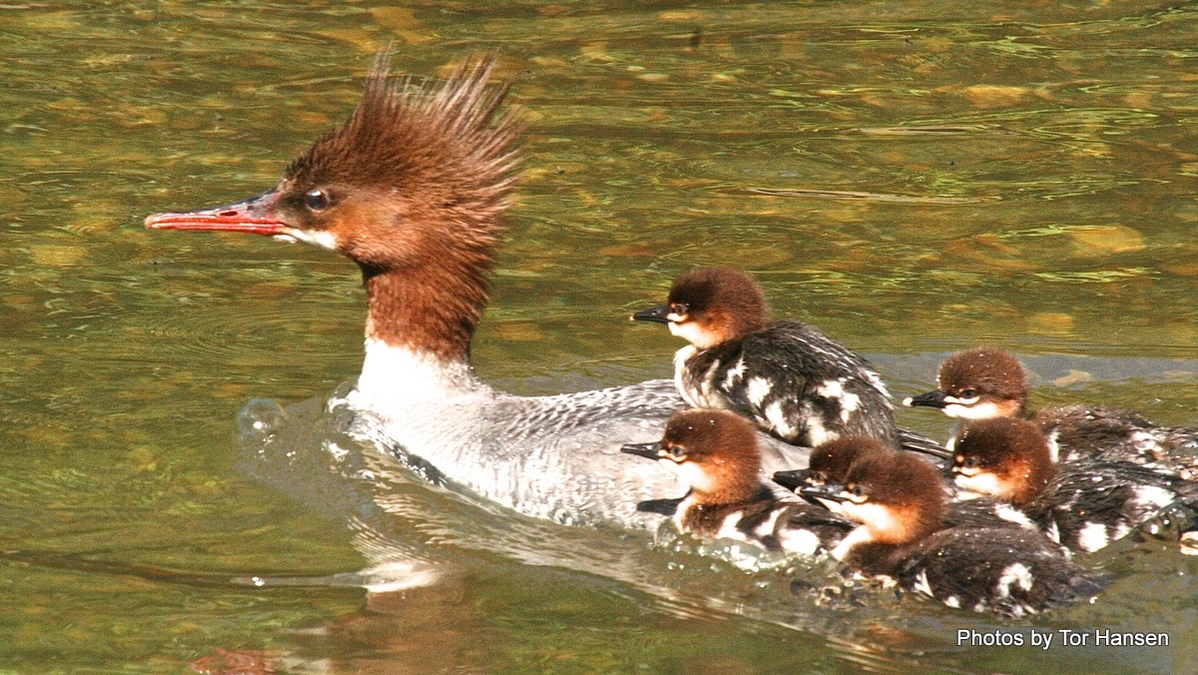
Hoosic River Host to Mother Merganser and Ducklings
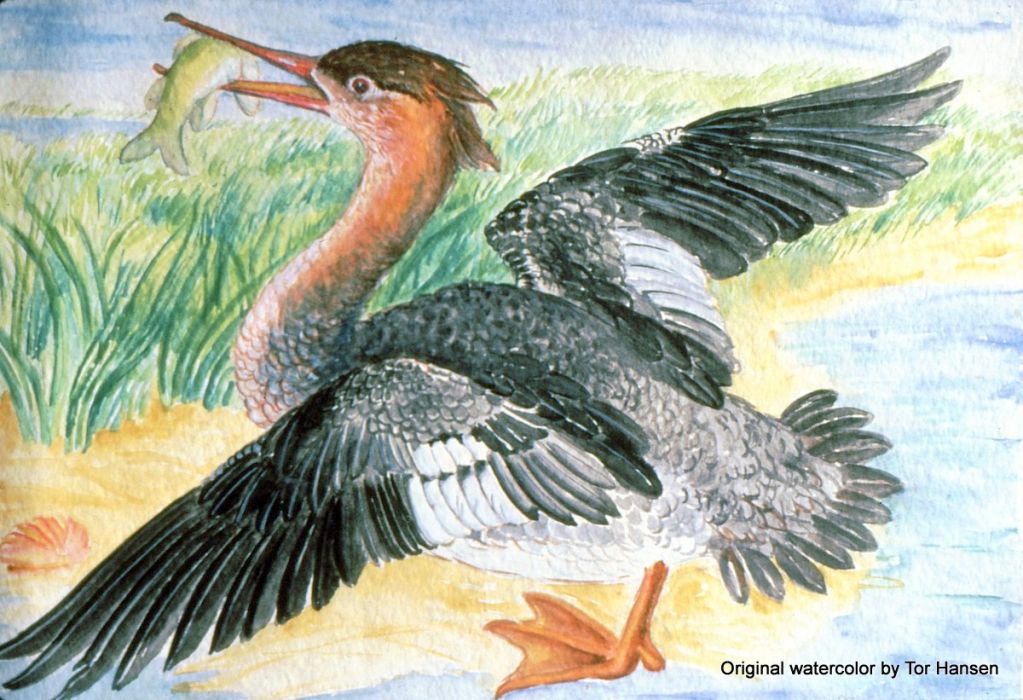
Watercolor by the columnist of a female red-breasted merganser catching a tidewater minnow in a salt marsh.
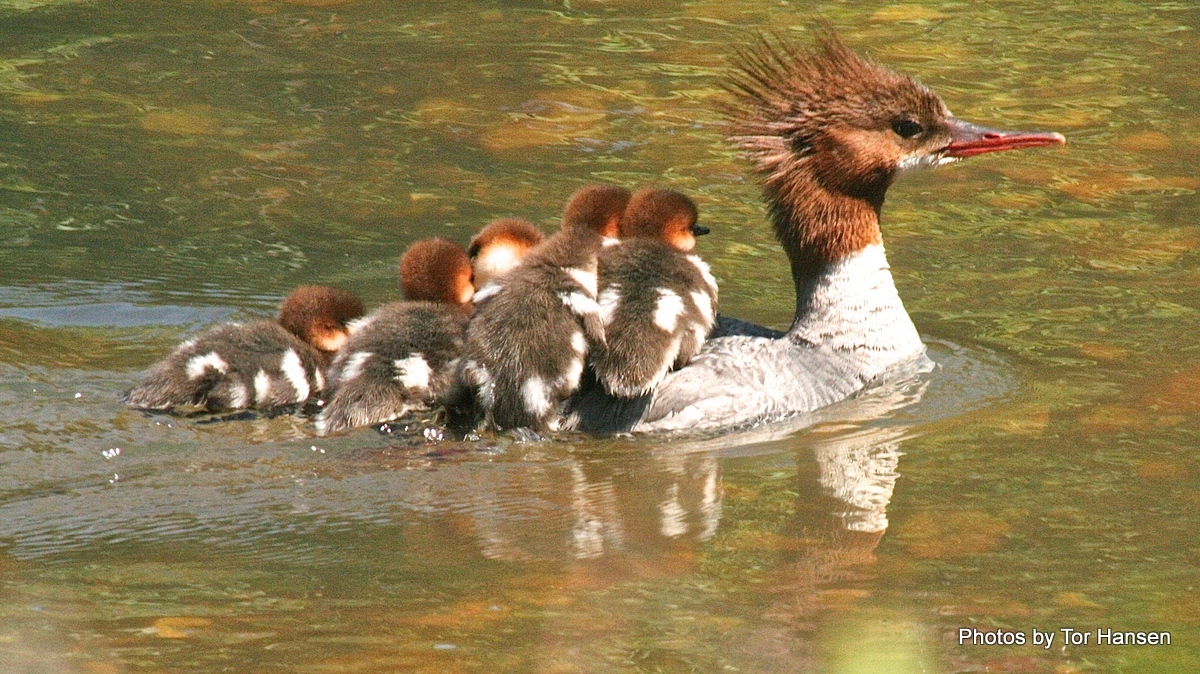
As time passed, I counted five ducklings able to catch a ride on mamma's back, while the rest paddled wildly behind, reminiscent of loons carrying baby loons while crossing an upland lake. This sighting is my first for river mergansers and caused in me a reserved jubilee, a quiet rejoicing that I might behold such a living pageant.
Since I sing in the choir at All Saints' Church here in North Adams, how could I keep from singing "Down By the Riverside?"
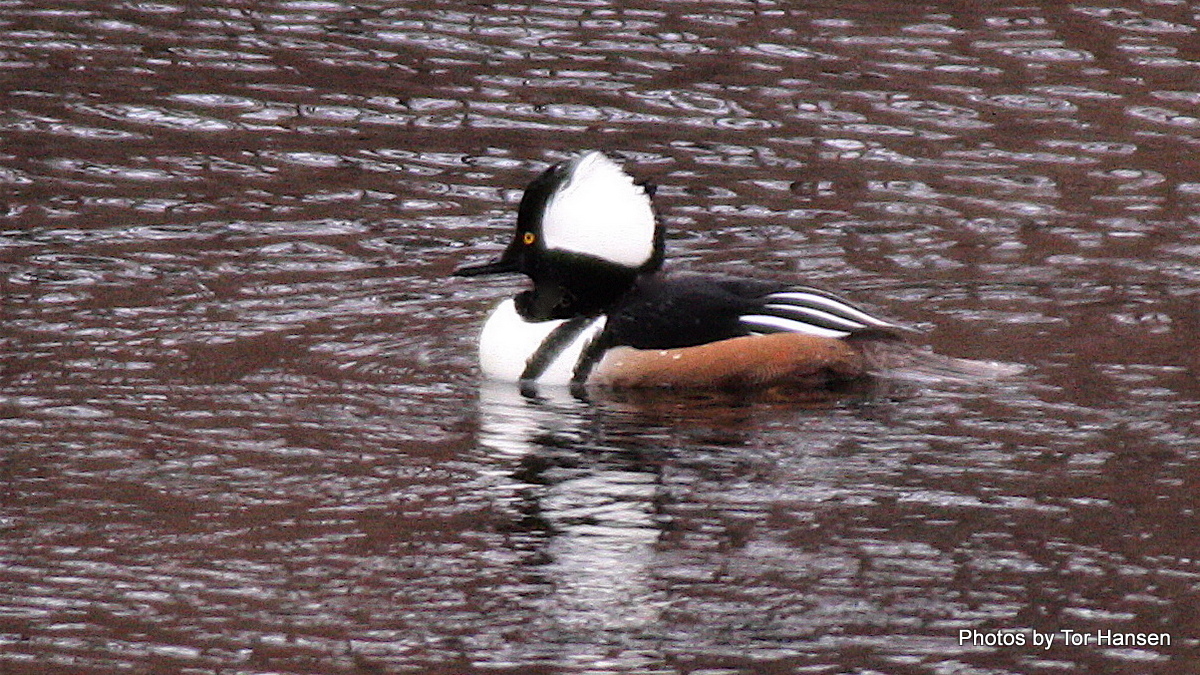
In North America, we can find three species of the nine mergansers known worldwide. Mergansers are generally fish-eating ducks. These diving ducks have thin cylindrical bills with serrated teeth, made of tissue the same as its bill, not enameled as in mammals, giving them an alternate name as sawbills, and sheldrakes as well. Hooded mergansers are rare, highly decorated diving ducks in small flocks inhabiting both marine bays and coves, as well as freshwater ponds and lakes, relying on fish and crustaceans.
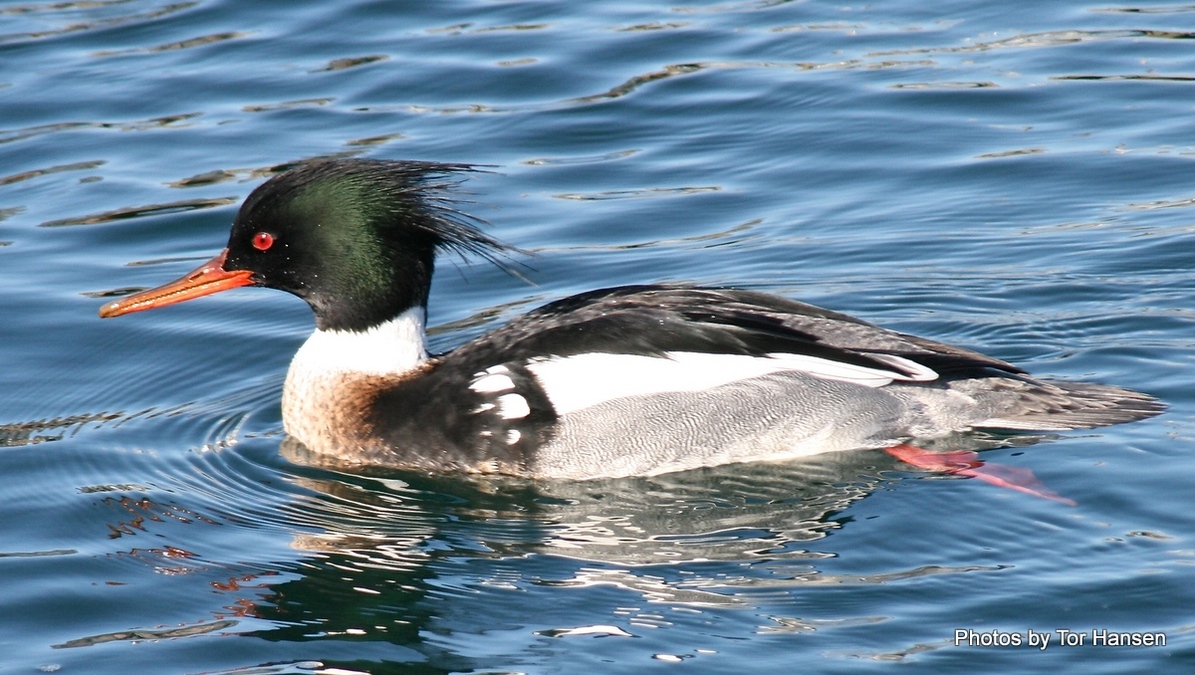
Considered among our most showy of ducks with elaborate black and white hoods and striking orange eye irises. Taxonomists have designated hooded mergs (for short) as worthy of a separate genus (Lophodytes cucullatus). Red-breasted mergansers (Mergus serrator) are marine, usually found in small flocks in bays, coves and open ocean near shorelines that feed on fish. I recall larger flocks abundant on Cape Cod Bay in the 1970s, reawakening the Emersonian vision of halcyon grandeur, in reality now much reduced.
Easily mistaken for its freshwater counterpart is our bird today, the common merganser (Mergus merganser) also a fish feeder perhaps taking crayfish and frogs as well. The dimorphic male (sexes differ in plumage) is overall white with a green head, back, and outer wing feathers. Female has a more exaggerated reddish head crest. The nest may be built in a hollow tree or concealed under vegetation along the shoreline of lake or riverside. So many eggs per nest promote a high reproduction rate so essential for species survival.
Just what adversity does this female merganser face upon rearing so many ducklings on a placid Hoosic River? Given she must elude a host of predators including possible snapping turtles, hawks, owls, herons, raccoons, mink, fisher cats, fox, and bobcats. Yes, the ducklings are coached by the gander, as she utters a "join up" firm cluck, repeated until chicks paddle in tight formation, so suggestive of mergansers on parade, and quite vulnerable at that. Hungry ducklings are amazing fleet of foot as they dash about and dunk and learn to dive for shoreline river fish like chubs, minnows, or suckers. A healthy Hoosic will also offer crayfish and other crustaceans plentiful enough to suffice so many ducklings. Unpolluted water, of course, will provide the ideal vegetation that ducks will resort to that has evolved over geological time.
A marked decline of growing ducklings became suddenly evident. Yes, the initial 16 was a few days later reduced to 12, but 48 hours later only two ducklings remained chasing after mother duck. Unlike some more heavily armed birds that can repel attacking predators, she is almost helpless except for swimming away with her armada. A great sadness overcame me as I had to accept nature's way of trimming her numbers.
Tracing limitations on available river water, the ducklings could not follow the gander upstream because they were still non-fledglings that could not fly up and over the low dam at the bridge, only two yards high, but what becomes too forceful a waterfall to navigate by intense paddling. And downstream obstacles include the concrete-harnessed flood control chute; but could the missing ducklings be swept downstream during the heavy rainstorm that day and night?
Mother merganser now with only one duckling remained upstream between dam and this downtown shallow water chute. For a moment I mused that a good fairy intervened to save the missing clutch and saved them under the spell of her magic wand. But that vision was summerly dismissed as most improbable!
The young ducklings are so darling that they do deserve a fighting chance, yet we see so often that survival is indeed a fierce crucible insensitive to life or death. Can we trust that our best stewardship efforts continue to support ideal feeding conditions for wildlife on our Hoosic River and throughout the Berkshires’ watershed?
Tor Hansen, a naturalist writer, photographer, and musician, is a recent addition to the North County community.
Tags: birds, Hoosic River,