In Pursuit of Beetle Happiness: Part 1
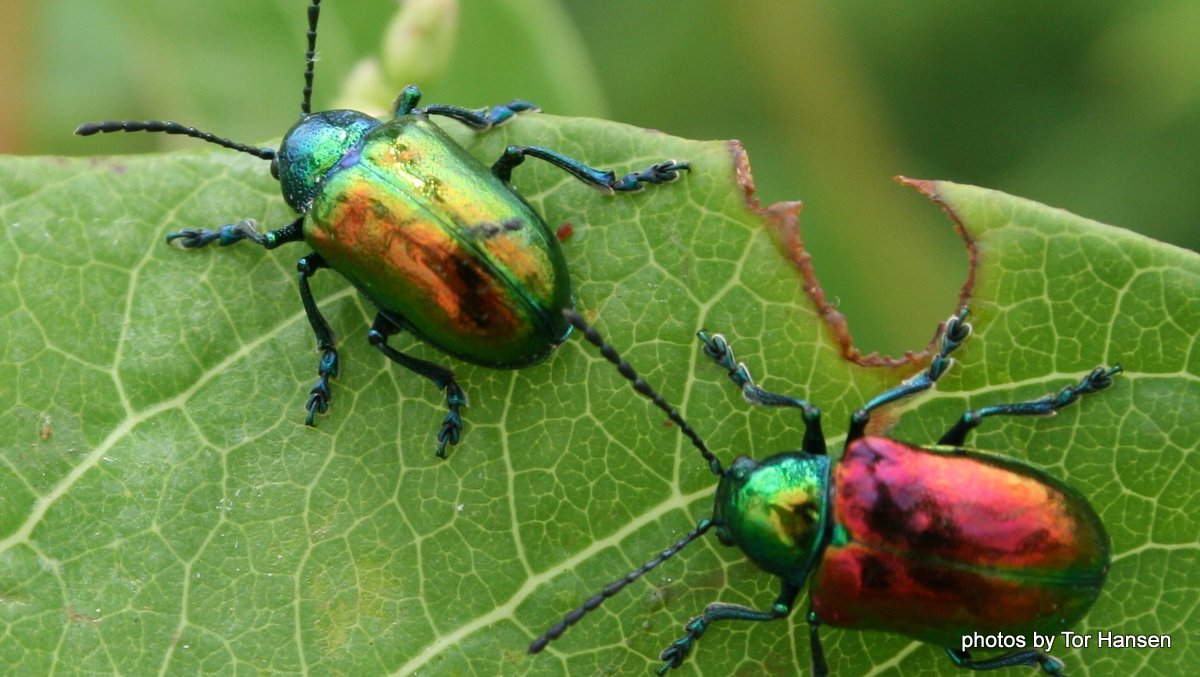
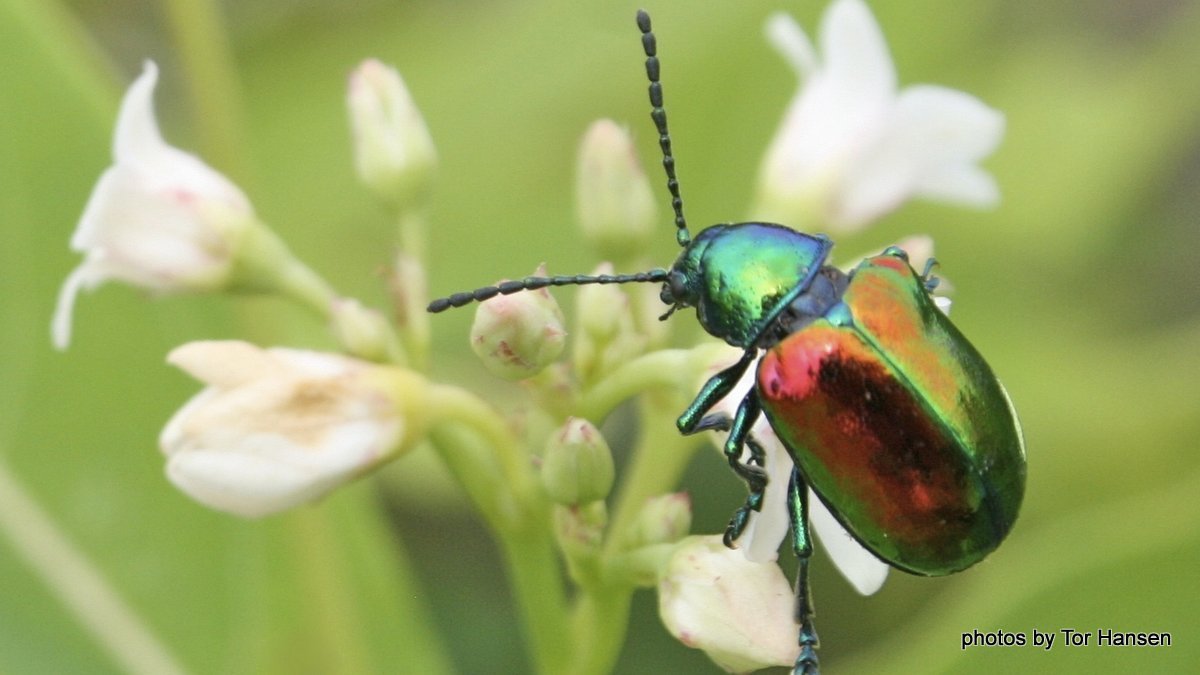
Dogbane beetles feed on dogbane, a plant similar to milkweed.
Beneficial beetles belong.
In pursuit of beetle happiness, I can cast a note of optimism about the many beetles at large in museums and private collections, that may bring us a profound joy, allowing our sense of inquiry to thrive like a child set loose in New York's American Museum of Natural History.
Looking into my own remnant beetle collection, I see what remains of former halcyon grandeur, plus some foreign purchased papered specimens, acquisitions prepared without display pins in order to emphasize the extraordinary anatomy, namely jointed legs, frontal horns, and armored wing covers (elytra) that safeguard those amazing folded wings within. Hard exoskeletons made of rigid chiton, a resilient calcium carbonate compound, are wrap-around armor, protecting legs, head, thorax, abdomen, and all external joints. By and large, most beetles have evolved up through the tower of geological time with a sterling coat of armor, sealing out many attacking predators like aggressive ants, wasps and dragonflies.
However, another pesky beetle has its taste buds trained on these sumptuous morsels, and if permitted by human neglect to withhold preservative naphthaline from the collection boxes, only shreds of soft anatomy will remain of these magnificent beetles (order Coleoptera). How dismaying it is to find the tiny Dermestid beetle (say genus Trogoderma) that can squeeze through the tiniest of gaps to invade and devastate museum beetle collections.
Many of these same insects may have originated as ancestral in the Devonian Period some 300 million years ago. Reconstructed from fossil records, when insects evolved out of rudimentary forms in the oceans, streams, and lakes, they are ancestral to modern beetles. In nature they belong; in museum collections, not at all!
Once you have beetle collections under control and purged of dermestid infestation, take a walk in the Berkshire woods. What a treat it is to see the woodlands budding green leaves, and forest floor ablaze with colorful flowers announcing spring in renewal. Listen to Igor Stravinski's tone poem "The Rite of Spring" that in musical form describes a burgeoning biogenesis. Inside unfurling leaves chlorophyl transforms solar energy into fast-growing floral tissues. With vernal warmth and increasing daylight hours (circadian rhythms), dormant plants are again aglow regaining intrinsic energy surging into new life. Spring beauty carpet the ground in profuse pink and white, while trilliums awaken displaying their three-cornered hats, or blessed trinity in burgundy or white. Trout lily open their blotched green and purple succulent leaves, sporting stalked bright yellow bonnets.
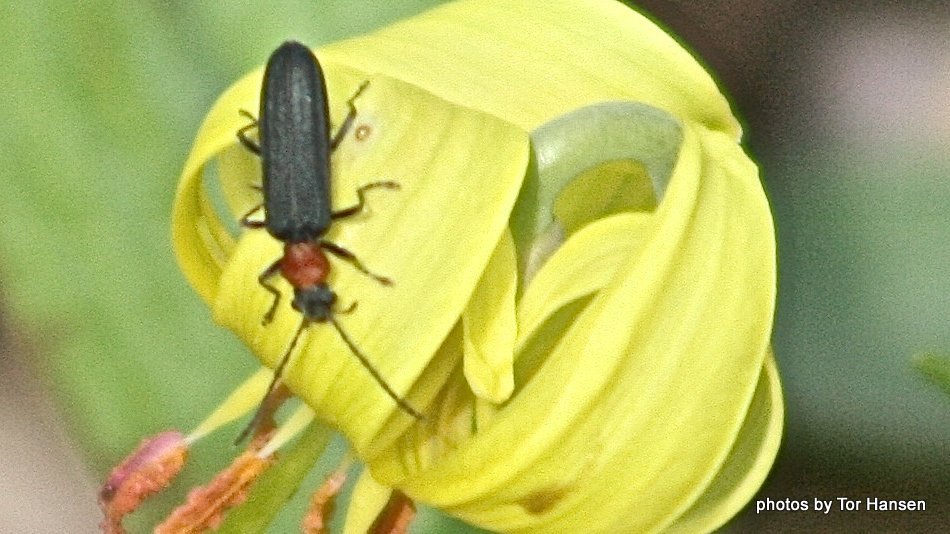
Here look for a small but agile red and black beetle with long segmented curling antennae, skilled in clinging to open blooms. Follow their feet as they may hang inverted, may brush pollen on to their legs and antennae while feeding on blossom tissues. Further analysis may show they feed on pollen and thus transfer pollen grains to organs completing pollination. I have found the same species doing much the same in the woodlands of the Palisades of New Jersey, indicating this Lepturinid is widespread. Google search leads us to identify this beneficial pollinator (possibly Grammoptera lepturnini) is performing a sound role in symbiosis.
Speaking of opulent beetles, the fiery colors inherent in the surface cuticles, the stout chitinous exoskeletons of dogbane beetles (Chrysochus auratus) amaze our senses with a quintessential aura like some artist's dream creature with metallic hues lacquered in high gloss. They appear to have evolved to feed only on dogbane, a hearty weed similar to milkweed, but with slender green leaves and sporting tiny white flowers. Their abundance suggests these sparkling beetles have no known predators, and such opulence may indicate a distasteful interior (?) When seen in small groups see if a little pride arises that such beauty exists for our admiration. Apparently, they are not a serious pest on any cash crops or garden horticulture favorites.
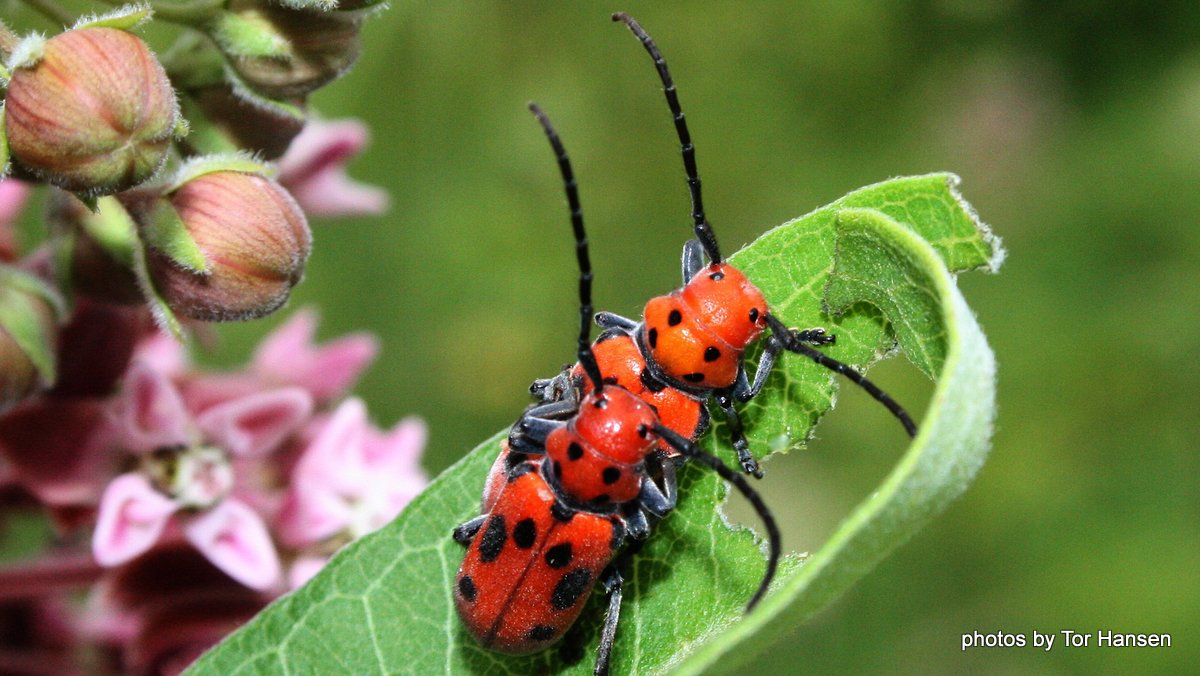
Red milkweed beetles.
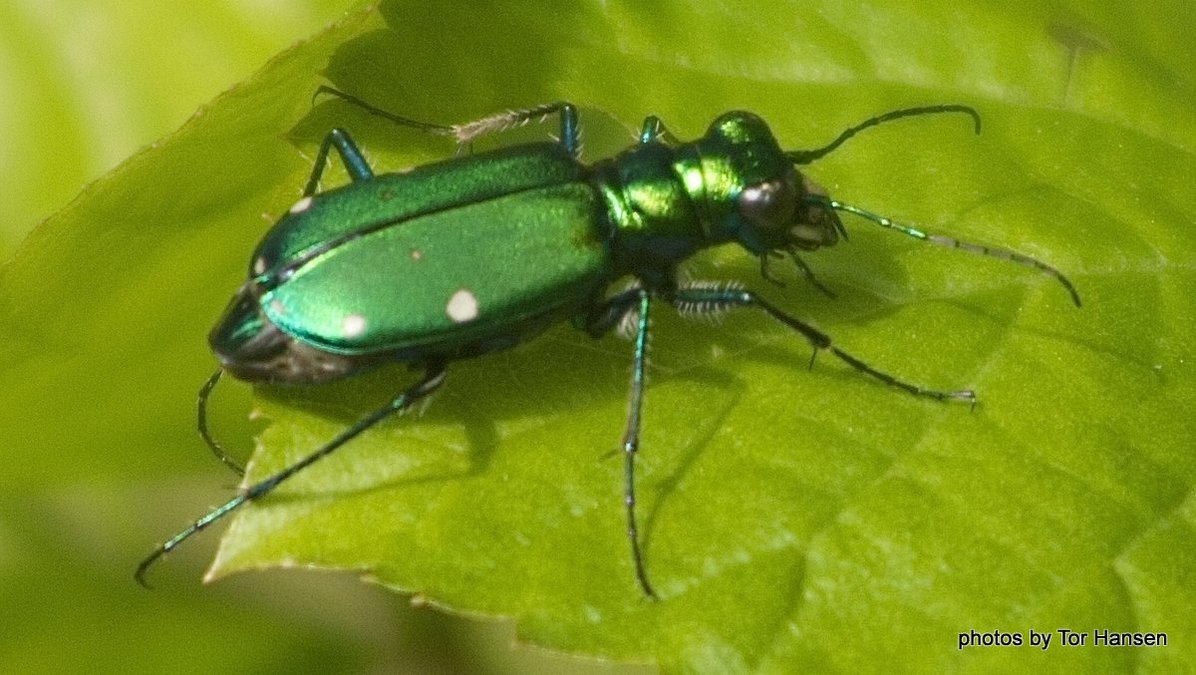
At the seashores and sand dunes on Cape Cod there lives another species in genus Cicindela that via camouflage blends in with ground brown and sandy pale hues, and surprisingly able to withstand the soaring temperatures as they scoot about before scorching their tiny tarsal toes.
There is another tiger in Miles Standish State Forest in Sandwich, wielding bold purples and violet elytra, but not only as that seen through purple spectacles. Watch how amazingly they are engineered with folding wing covers, that when elevated allow the wings to quickly accomplish "lift-off" and zip away before you know it. Tigers are likely another beetle under study by Air Force engineers who built aircraft no doubt inspired by such very agile fliers.
I follow a trail from North Gate, and inside the Mount Greylock State Reservation, many dead trees are in assorted states of decay. Our northern stag beetle (Lucanus capreolus), is too hard to find, even with so many decaying conifers and deciduous hardwoods, and why? In all those years living on Cape Cod, I found only one cache of stag beetles, in Brewster on rotting wood. Why so scarce? Pesticides are not allowed in state forests nor in Trustees of the Reservation lands like Mountain Meadow in Williamstown. Their role is again recycling of rotting wood; their white grubs with cornified jaws chew decaying wood and do little damage to healthy trees and should be left to thrive.
Young Leonardo Da Vinci may have observed with fascination beetles capable of sustained flight that may have figured in his drawings. Well-known works of foremost graphic artist Albrecht Durer, 1505, include a European stag beetle par excellence. And indulging in a great book of animal illustrations, "The Art of Natural History," by S. Peter Dance, will lead you into wonder works describing more beetles such as again stag beetles with wings unfurled.
How beetles evolved such success with retractable wing covers is a tribute to extraordinary engineering as directed from remarkable DNA and the spiraling double helix.
Tor Hansen is a naturalist writer, photographer, and musician, in North County.
Tags: beetles, wildlife,