Williamstown Con Comm OKs Marijuana Farm
WILLIAMSTOWN, Mass. — The Conservation Commission on Thursday approved plans for an outdoor marijuana plantation near the Green River.
But one member of the panel abstained from the decision, citing a potential conflict between the production and sale of the drug and federal law.
Unlike the recreational retail facility in the works on Main Street, the proposed pot plantation at 295 Blair Road is the first operation to come before the Con Comm. Member Philip McKnight, an attorney, questioned whether the town should play any role in permitting cannabis-related businesses.
Even though Massachusetts voters decided in 2016 to decriminalize the drug, marijuana remains a Schedule 1 narcotic in the federal statutes, a classification that puts it on an even footing with cocaine, heroin and LSD in federal law, McKnight noted.
"The concern I have is that in filing and acting upon this application, the commission and commission members — us and, next week, the Zoning Board of Appeals — expose ourselves to a possible conclusion by a U.S. Attorney that we are co-conspirators," McKnight said.
"Under state law … [applicant MassFlora] is permitted to apply. But I don't believe federal law gives him that permission."
McKnight said he asked the town manager to obtain a written opinion from town counsel on the potential jeopardy to town committee members who permit the drug's production and distribution in violation of federal law.
Town Manager Jason Hoch declined the request, McKnight said.
"I'm not surprised, because I think it's pretty clear what that opinion would be: That it is a potential violation of federal law," McKnight said in a meeting telecast on the town's community access television station, Willinet.
Williamstown Community Development Director Andrew Groff, who staffs the Con Comm in his capacity as the town's conservation agent, advised the commission that the town has been in contact with its counsel at KP Law (Kopelman and Paige) since the commonwealth's voters approved Proposition 4 in November 2016.
"KP Law advises many towns in Massachusetts, and this issue has not come up," Groff said, referring to McKnight's point about a conflict with federal statutes. "They've given us guidance on how to regulate this."
As with all town bylaws, Kopelman and Paige reviewed the 2017 zoning bylaw that requires all marijuana-related businesses to obtain a special permit.
The retail shop under development by Silver Therapeutics in the Colonial Plaza obtained such a special permit from the ZBA. MassFlora will be before the ZBA on Thursday, Feb. 21, to seek its special permit.
The Colorado-based grower will do so with Con Comm approval in hand. On a motion from Commissioner Michael Evans, the board voted a negative determination of applicability under the state's Wetlands Protection Act. That means the operation — which plans to grow pot on about five acres of a 20-acre parcel — can move forward without a Notice of Intent, which requires a stricter level of Con Comm scrutiny and, generally, more expensive environmental engineering work.
"If this was the same size farm, and the applicant was asking to grow tomatoes or some other product we're not familiar with, like okra, we wouldn't spend an hour on it," Evans said as the hearing passed the 45-minute mark.
Before the final vote, McKnight moved that the Con Comm delay action on MassFlora's request for determination of applicability until the commissioners receive the written opinion from town counsel he requested.
That motion to delay was voted down, 4-1.
Con Comm chair Lauren Stevens, following concerns raised by residents from the floor of Thursday's hearing, asked that the applicant provide more information to the town about potential runoff from the farm into the nearby river.
The 5-acre planting itself, which will be surrounded by a security fence and will take place outside land under the jurisdiction of the Con Comm. But MassFlora attorney Donald Dubendorf said the grower would be happy to supply additional data to the town.
Dubendorf and environmental engineer Charlie LaBatt of Guntlow and Associates both stressed to the commission that the applicant is committed to sustainable farming and would use "only organic modalities of pesticide and fertilization."
Stevens asked that the additional documentation be included in the conditions for the Con Comm's permit.
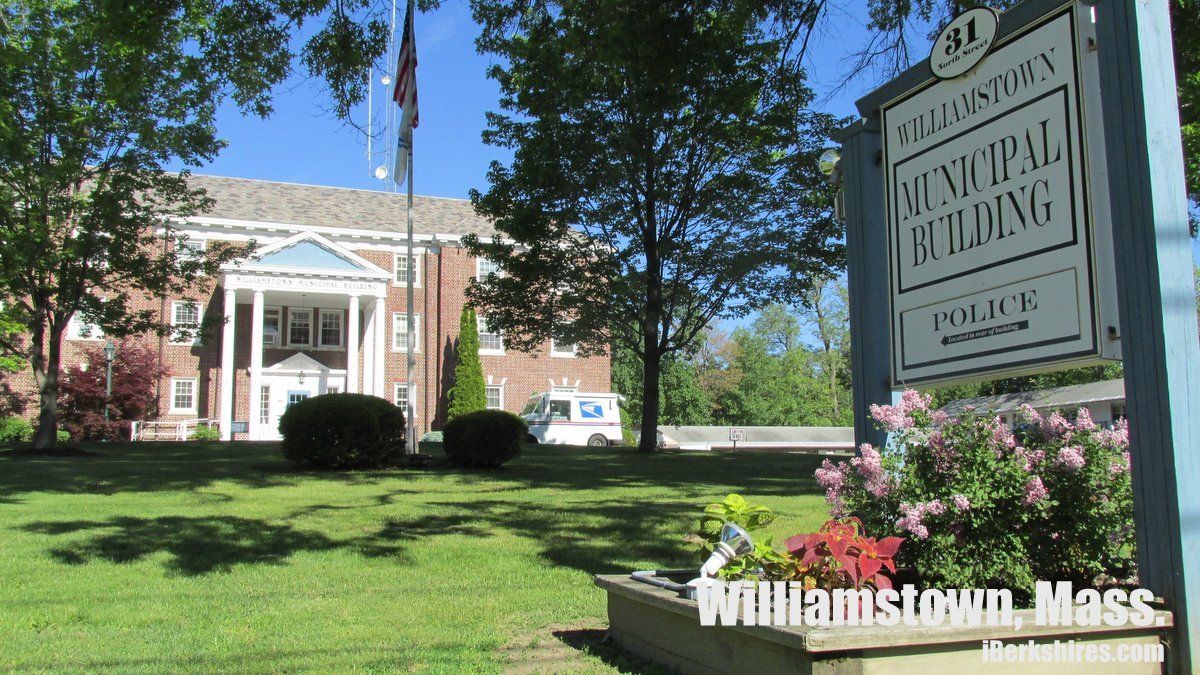
The special permit hearing before the ZBA is scheduled for 7 p.m. Thursday, Feb. 21, at Town Hall.
Tags: conservation commission, farming, marijuana,