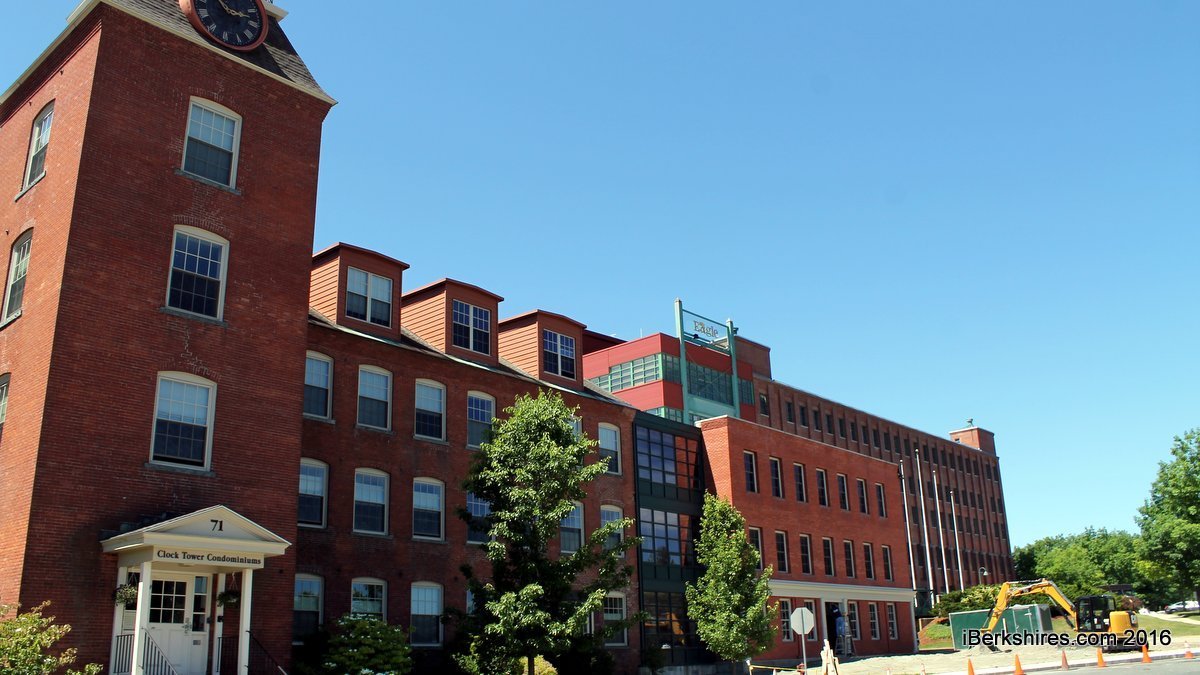
PITTSFIELD, Mass. — Wayfair has finalized a lease in the Clocktower Building and expects to move in this fall.
Spokeswoman Molly Delaney said on Friday that the lease has been finalized at 75 South Church St. in Building 3. The company will occupy 40,000 square-feet.
The former Sheaffer-Eaton Mill, now known as the Clocktower Building, is owned by CT Management under the holding company Clocktower Partners LLC. The company purchased the building for $1 million in 2016.
Wayfair is planning a service center in the portion of the building which sits between the Clocktower Condos and the main office space area. The expansion into Pittsfield will come with the creation of 300 new jobs to the city, which is considered one of the city's biggest economic development wins in a number of years.
Wayfair's total expansion will be 3,300 after the state approved $31.4 million in tax breaks to the Boston-based retailer. The majority of the jobs will be in the Boston area with 300 coming to Pittsfield. The home-decor company is owned by Niraj Shah, a Pittsfield native, who has reportedly teased the idea that there could be more expansion into the Berkshire in the future.
The e-commerce company is expected to hire 265 customer service representatives and 35 managers at the Pittsfield location. It will be the company's ninth call center.
When the announcement was made in December there was no location identified though it was widely known that the Clocktower building was the leading potential location.
The mill was constructed in 1883 by Eli Terry. A decade later it was sold to Arthur W. Eaton who turned it into the Sheaffer-Eaton mill (after a merger with the Sheaffer pens) and employed a total of 900 people at one point.
In 1987, the mill was sold to Miller family, then owners of The Berkshire Eagle. In the 1990s, the Millers renovated the entire building into offices and moved paper's operation there. Miller sold the building and business to Media News Group, which then sold it to CT Management.
The large complex houses around 40 businesses but was reportedly only about 60 to 75 percent occupied when CT Management purchased it. Delaney said she expects the company to move into the location this fall.
If you would like to contribute information on this article, contact us at info@iberkshires.com.
Your Comments
iBerkshires.com welcomes critical, respectful dialogue. Name-calling, personal attacks, libel, slander or foul language is not allowed. All comments are reviewed before posting and will be deleted or edited as necessary.
No Comments
Social Service Organizations Highlight Challenges, Successes at Poverty Talk
By Brittany PolitoiBerkshires Staff
Dr. Jennifer Michaels of the Brien Center demonstrates how to use Narcan. Easy access to the drug has cut overdose deaths in the county by nearly half.
PITTSFIELD, Mass. — Recent actions at the federal level are making it harder for people to climb out of poverty.
Brad Gordon, executive director of Upside413, said he felt like he was doing a disservice by not recognizing national challenges and how they draw a direct line from choices being made by the Trump administration and the challenges the United States is facing.
"They more generally impact people's ability to work their way out of poverty, and that's really, that's really the overarching dynamic," he said.
"Poverty is incredibly corrosive, and it impacts all the topics that we'll talk about today."
His comments came during a conversation on poverty hosted by Berkshire Community Action Council. Eight local service agency leaders detailed how they are supporting people during the current housing and affordability crisis, and the Berkshire state delegation spoke to their own efforts.
The event held on March 27 at the Berkshire Athenaeum included a working lunch and encouraged public feedback.
"All of this information that we're going to gather today from both you and the panelists is going to drive our next three-year strategic plan," explained Deborah Leonczyk, BCAC's executive director.
The conversation ranged from health care and housing production to financial literacy and child care. Participating agencies included Upside 413, The Brien Center, The Food Bank of Western Massachusetts, MassHire Berkshire Career Center, Berkshire Regional Transit Authority, Greylock Federal Credit Union, Massachusetts College of Liberal Arts, and Child Care of the Berkshires.
The federal choices Gordon spoke about included allocating $140 billion for the U.S. Immigration and Customs Enforcement, investing $38 billion to convert warehouses into detention centers, cutting $1 trillion from Medicaid over 10 years, a proposed 50 percent increase in the defense budget, and cutting federal funding for supportive housing programs.
Gordon pointed to past comments about how the region can't build its way out of the housing crisis because of money. He withdrew that statement, explaining, "You know what? That's bullshit, actually."
"I'm going to be honest with you, that is absolute bullshit. I have just observed over the last year or so how we're spending our money and the amount of money that we're spending on the federal side, and I'm no longer saying in good conscience that we can't build our way out of this," he said.
Upside 413 provided a "Housing Demand in Western Massachusetts" report that was done in collaboration with the University of Massachusetts at Amherst's Donahue Institute of Economic and Public Policy Research. It states that around 23,400 units are needed to meet current housing demand in Western Mass; 1,900 in Berkshire County in 2025.