Pittsfield Gets Grant to Help Recruit Teachers of Color
PITTSFIELD, Mass. — The School Department reeled in a $42,000 grant to help recruit young teachers of color.
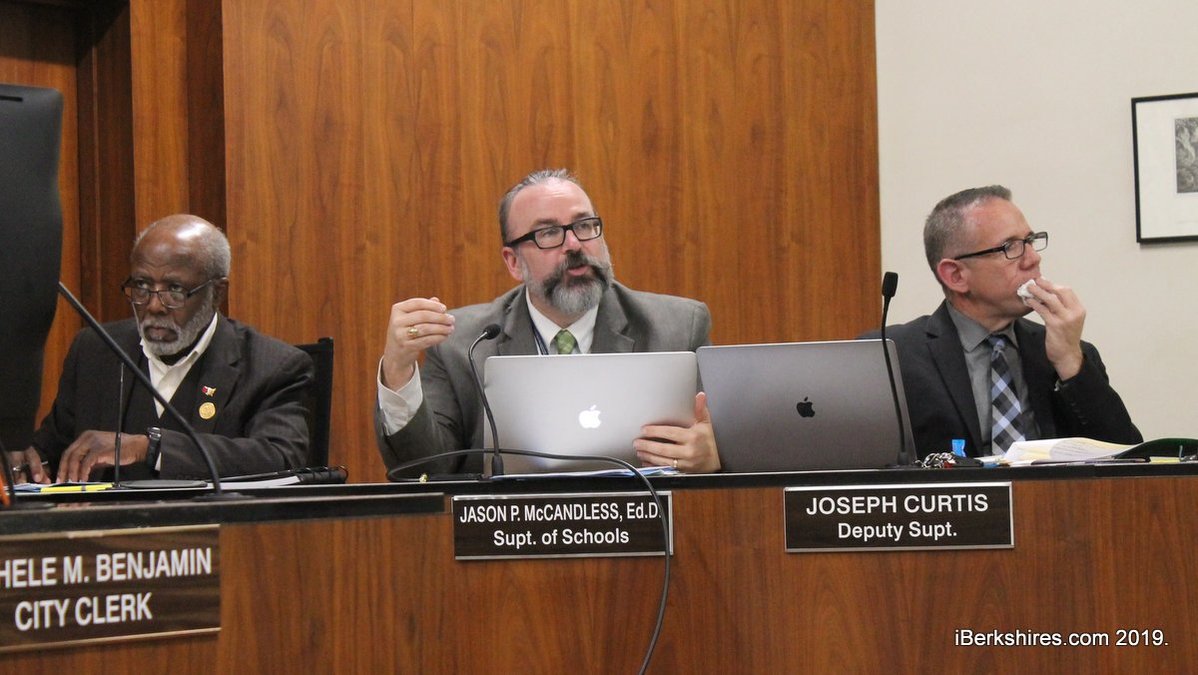
Superintendent Jason McCandless said the program will connect teachers studying at North Carolina Agriculture and Technical University. In the summer the district will bring a group of the students studying there to the Berkshires, introduce them to the school system, show them around the area, and talk to them about the Massachusetts Tests for Educator Licensure and what it takes to become a teacher in the state.
"This summer we want to get people here. In the long run, we see developing relationships with sophomores, second-year students, and grow that relationship," McCandless said.
The program will particularly help toward closing a gap between the number of teachers and administrators of color compared to the number of students of color. The city has long noted such discrepancy in that the adults and leadership demographics did not match the students and efforts have been made to close that gap -- in the last seven years has more than doubled its non-white teaching staff.
In Pittsfield, 426 teaching positions are filled by white people, or approximately 92 percent. But at the same time, more than 30 percent of the student population is non-white.
But it not an easy gap to close and schools across the country have been looking for ways to address the demographic issue. McCandless said the number of people going to school to become educators has dropped by the thousands in the last decade and those in the minority represent only a small portion of that pool.
"It is a real problem for districts that are working toward having teaching bodies, professional bodies, and administrative bodies that reflect the population," he said.
The district's cultural proficiency coach, Shirley Edgerton, had built a relationship with the North Carolina university that not only has a large pool of aspiring teachers but also a high percentage of African Americans studying there. The conversations had begun on a partnership when the state Department of Elementary and Secondary Education released a grant program that was somewhat applicable.
McCandless said the grant was geared toward needs in the eastern part of the state but state Rep. Tricia Farley-Bouvier helped the district connect with the commissioner to discussed potential funding for the "out of the box" idea. The superintendent didn't expect to receive the grant based on how the program was defined but he recently got word that the city will be funded to the tune of about $42,000.
"We are looking at bringing up eight to 12 education majors from North Carolina A&T," McCandless said, adding that it will be at no expense to the students coming to visit.
The money has to be spent by the end of August so this year's program in a bit of a time crunch but McCandless said the district has big aspirations as to where this partnership can grow. He envisions being able to connect with students in their sophomore year as part of the recruiting process. The superintendent also noted that the average teacher salary in North Carolina is about a third lower than in Massachusetts.
"We think the availability and affordability of houses here in Pittsfield will be very attractive," McCandless said.
The superintendent says if successful, he sees the model working in other industries, such as engineering, to help counteract the county's loss of the young professional demographic.
"This is a model other industries could adopt outside of education," he said.
In other business, three local parents are calling on the community to help curb unruly behavior among some of the city's youth. Social media has recently been hot with discussion over a group or groups of teenagers causing trouble in local parks and at the school. Those groups are also carrying BB guns.
"We want it addressed and we are going to do whatever we have to do," said Janet Farnsworth.
Farnsworth and two other parents have joined together to call on the entire community -- parents, police, and the school to help curb the problems. Lisa Donovan said the group has been getting into altercations. She recently attended the "coffee with a cop" program to talk with police about what can be done and then followed up by asking the School Committee to address the issue with the students at assemblies
"We're a safe community. This shouldn't be happening here," Donovan said.
Tags: diversity, recruitment, teaching,