Warbler Waves Migrating Through Berkshires
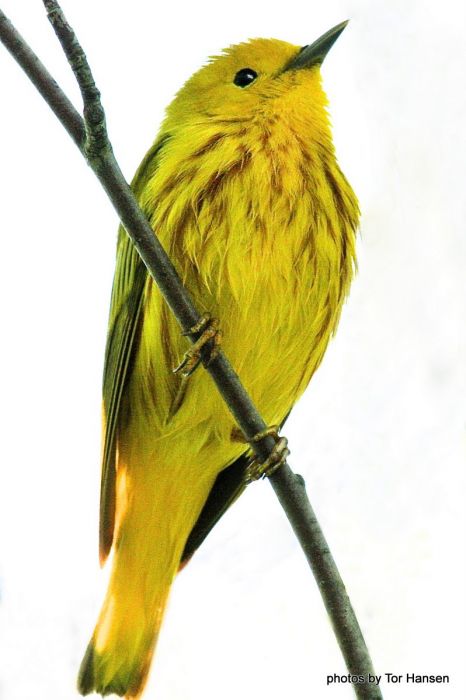
Yellow warblers nest along the Hoosic River and depend upon abundant insects.
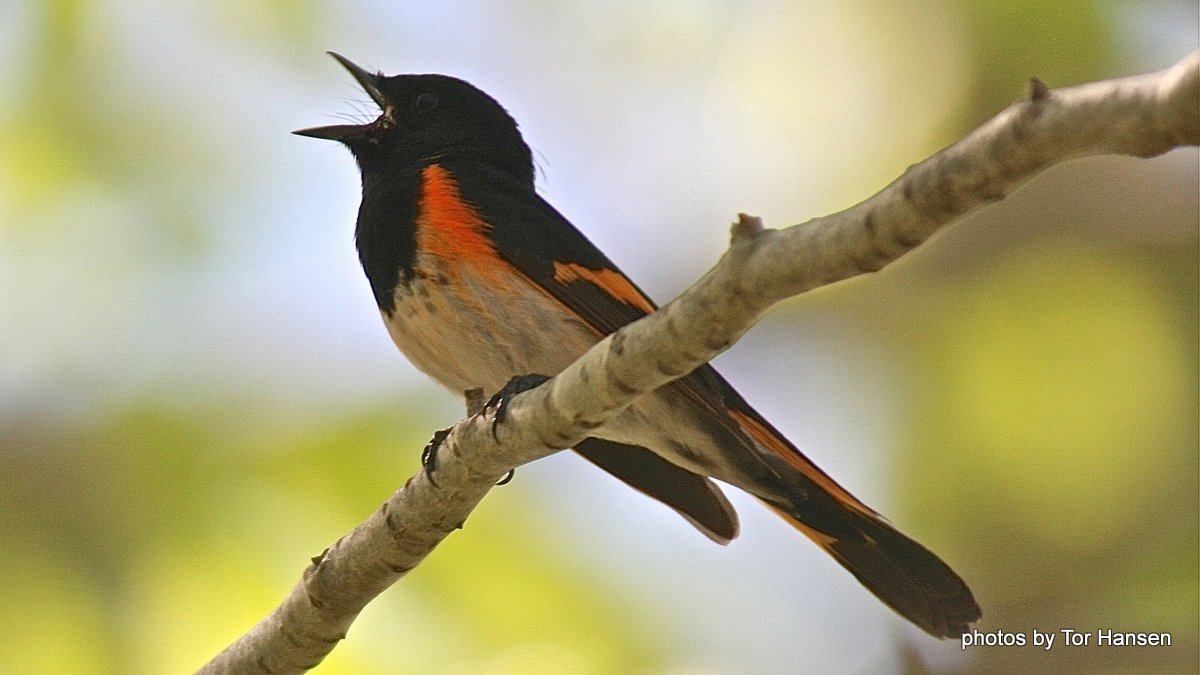
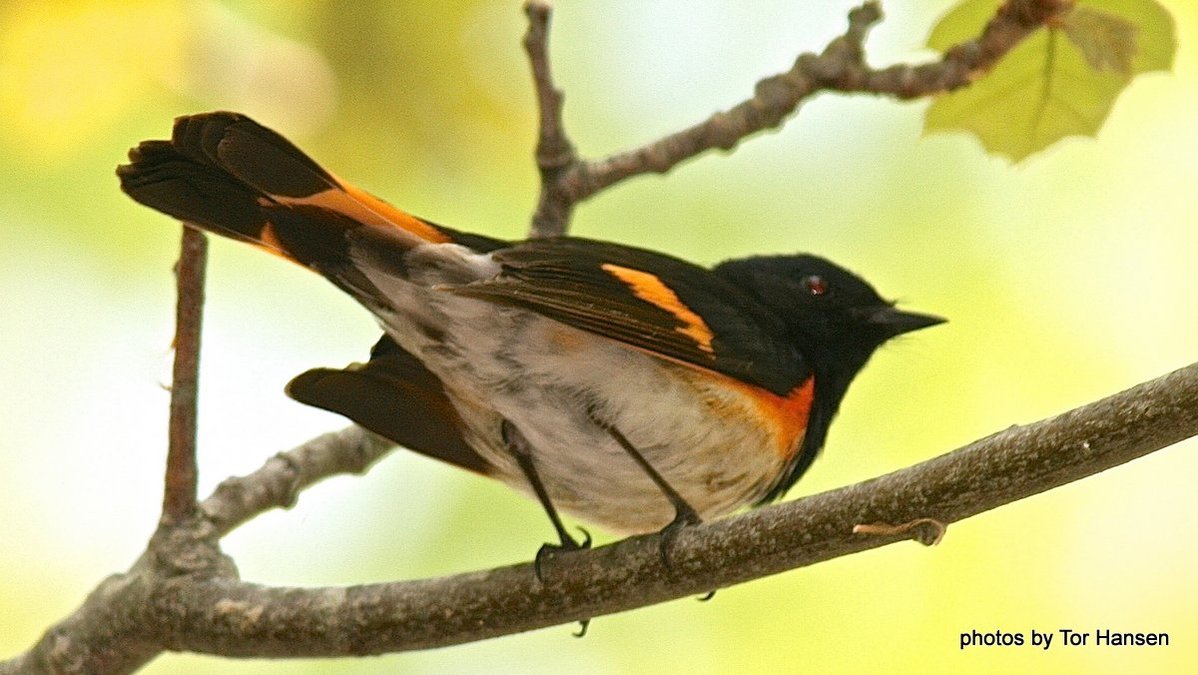
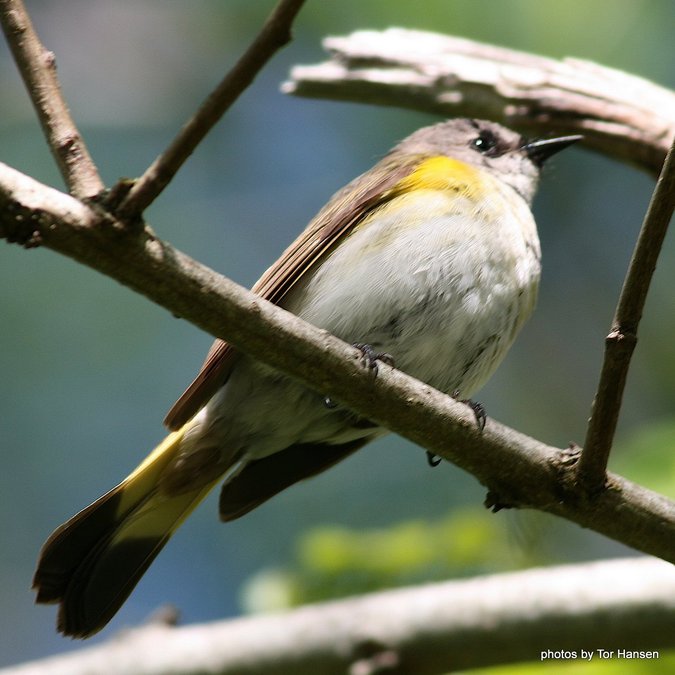
Able songster species like yellow warblers and redstarts are once again filling available niches alongside the Hoosic River where shrubs and taller trees create thickets that offer protection for nesting birds. Linger a while to observe the prenuptial dance of male and female restarts that perform a spreading of wings and fanned out tale feathers in a ritualized endearing dance prior to mating.
I wish to share a concern that can arise when mankind urbanizes our countryside. Well
defined in Rachel Carson's "Silent Spring," pesticides wreck havoc on resident food resources let alone harming animals that consume toxic elements. Habitat alteration and weed controls diminish native species that do belong in habitat!
Warblers and all birds require resident insects and spiders that supply organic proteins for the well-rounded diet for hungry chicks, insects we hope are not in short supply. These feathered songsters consume large amounts of noxious and noisome insects, reducing significant numbers that could otherwise become an overrunning plethora. With a late cold spring, we trust the myriad caterpillars, largely moths, to become numerous enough to suffice their enormous appetites.
Watch a warbler or indigo bunting dash out on the wing to snatch a mosquito or grasshopper!
Warblers here in New England for millennia have returned to feed and nest in the Berkshires. They have withstood the staggering cutting of the forests to supply the firewood for heat energy needed to power the iron forges. The Northeast is host to more than 23 species know as wood warblers in the family Parulidae. Take a leisurely walk along the Hoosic River just south of the Goodwill Store on State Street and enjoy the singing birds often plain as day voicing pleasure at raising a family or defining territory, from where they get the generic name.
Their songs connote a vibration of repeated sounds from the syrinx (analogous to a human larynx that contains vocal chords) called a "warble." Sparrow hawks and other falcons may take a warbler as prey although they too are selective in not hunting too many warblers; it is nature's way to keep a better balance of all food chain organisms.
Find the trails that punctuate the slopes of coniferous and deciduous woodlands that characterize Mount Greylock, in particular Reservoir Road and a handy service road serving the descending overflowing brook, and discover what warblers add to the potpourri.
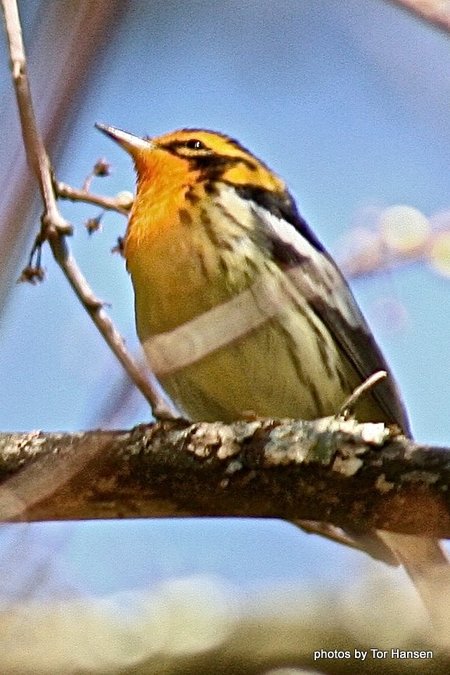
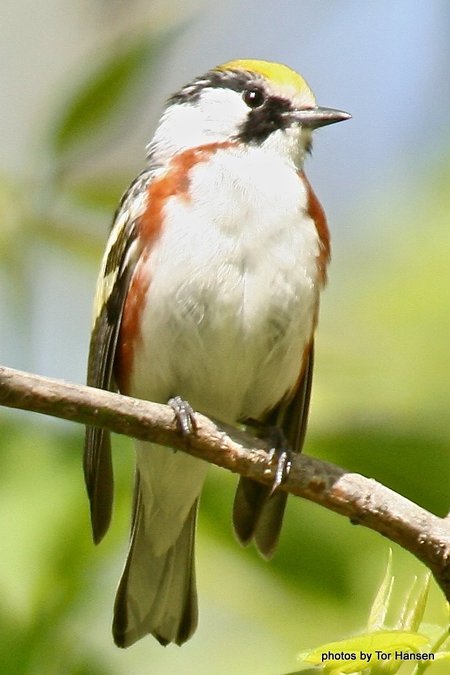
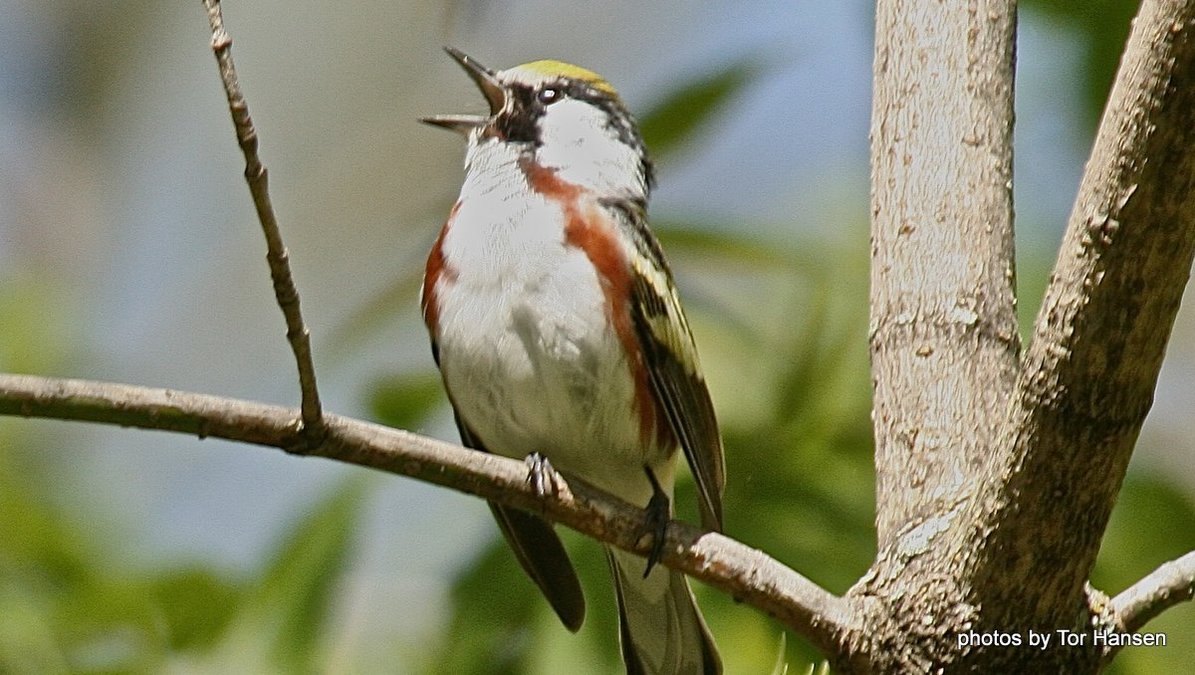
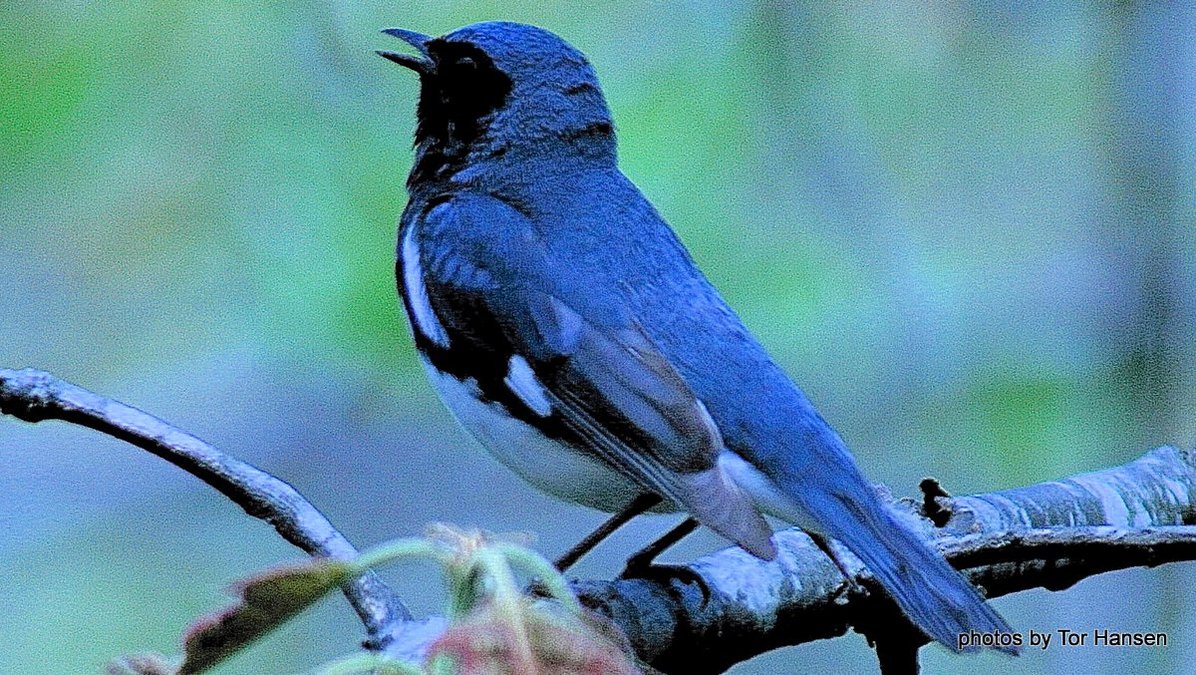
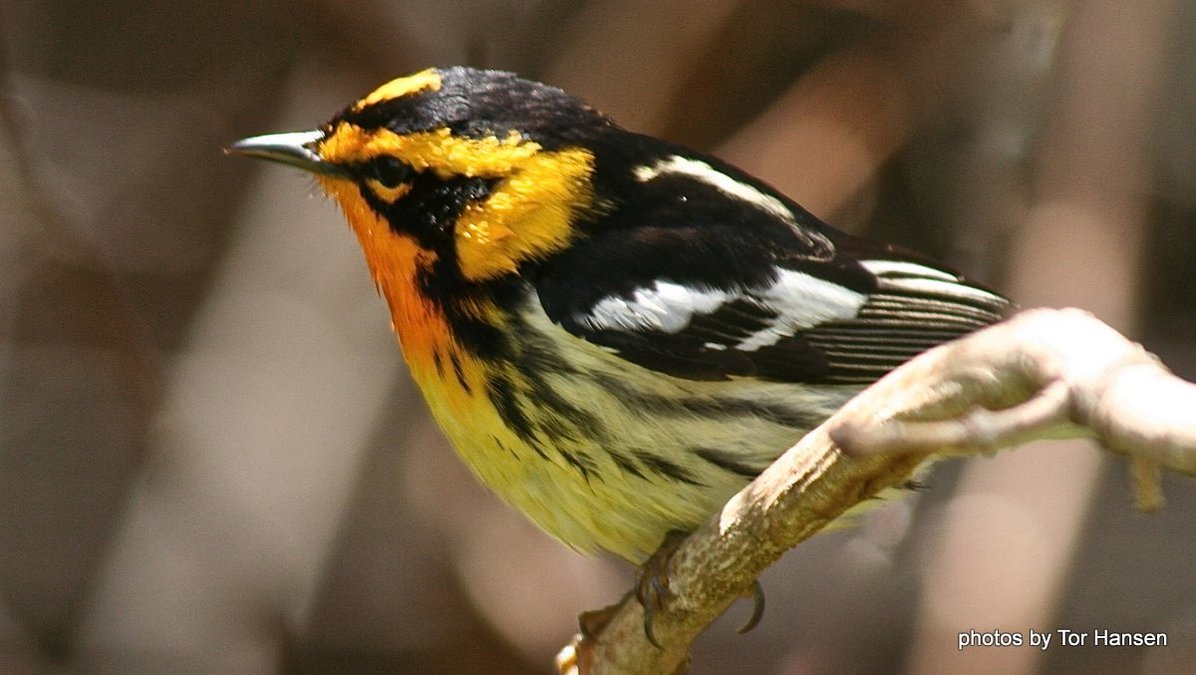
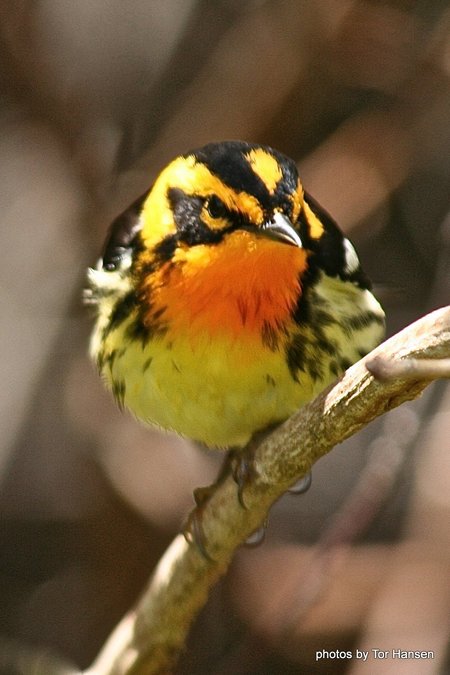
Where the babbling brook languishes into quiet water, look under the overhanging brush to see a reclusive Louisiana water thrush (today classified with true wood warblers) that looks more like thrush than a typical warbler. They show a vivid eyebrow and speckled breast. Finding their nest requires eagle eyes to detect a mossy camouflaged cup stream side. But it is better not to penetrate the thorny thickets and intrepid foliage surrounding fast running brooks. Up in the clearstory, or gallery woodland, look for a wave containing at least four mingling species: myrtle or yellow-rumped, chestnut-sided, black-throated blue, blackburnian, and perhaps Cape May warblers.
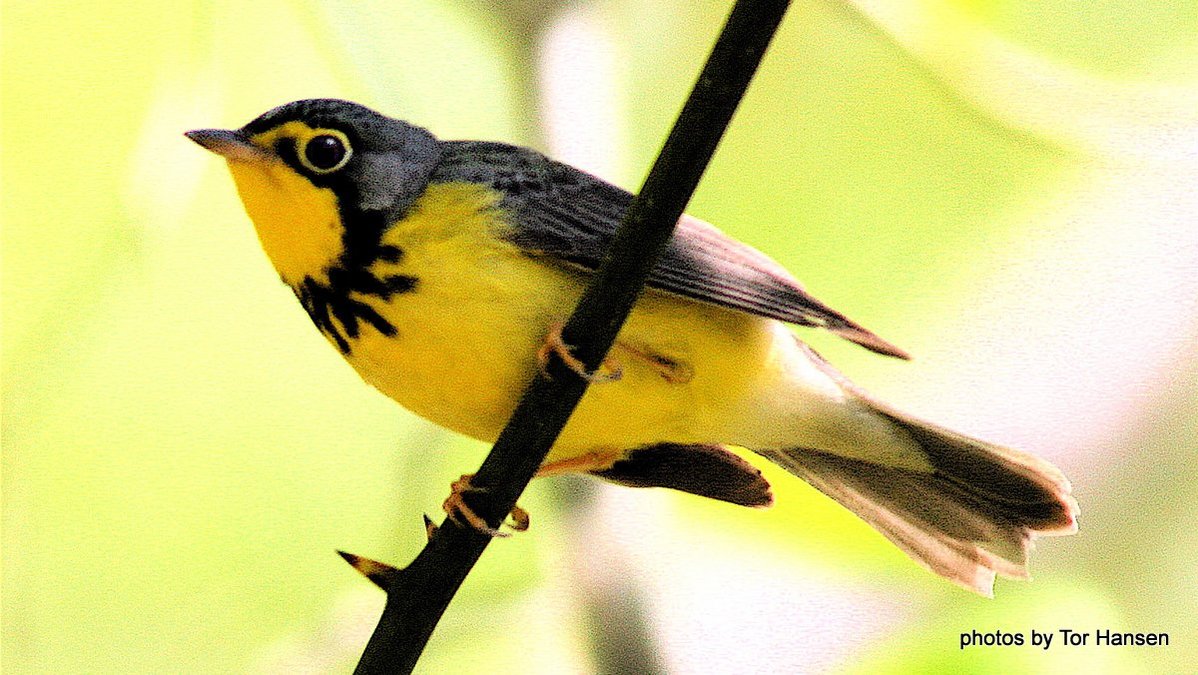
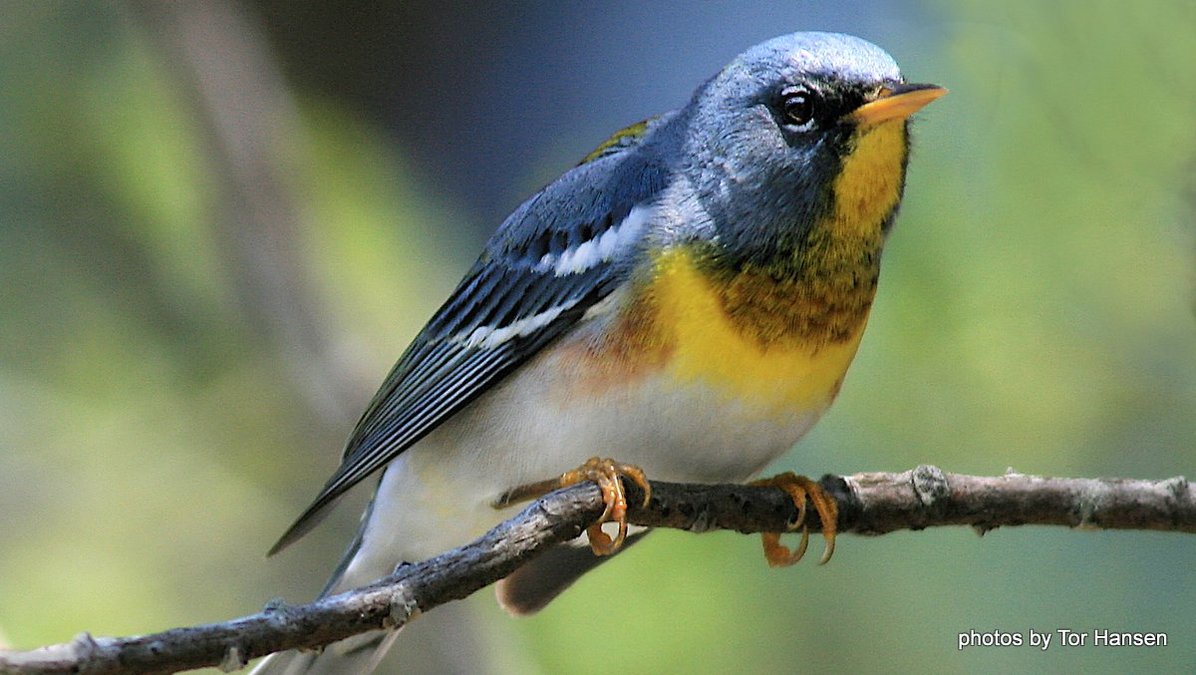
If there is such a traditional pattern or order of expected proceeding warblers, by now the first wave has already passed through, namely palm, black & white (something like a jailbird), and myrtles. This trilogy is certainly known in New jersey and cape cod. hope in successive days, before the trees entirely leaf out, to see parulas, black-throated greens, Nashville, worm-eating, and Canadas with their jeweled necklace feathers. Each adds their own distinctive cascading song to the medleys in passing feeding flocks.
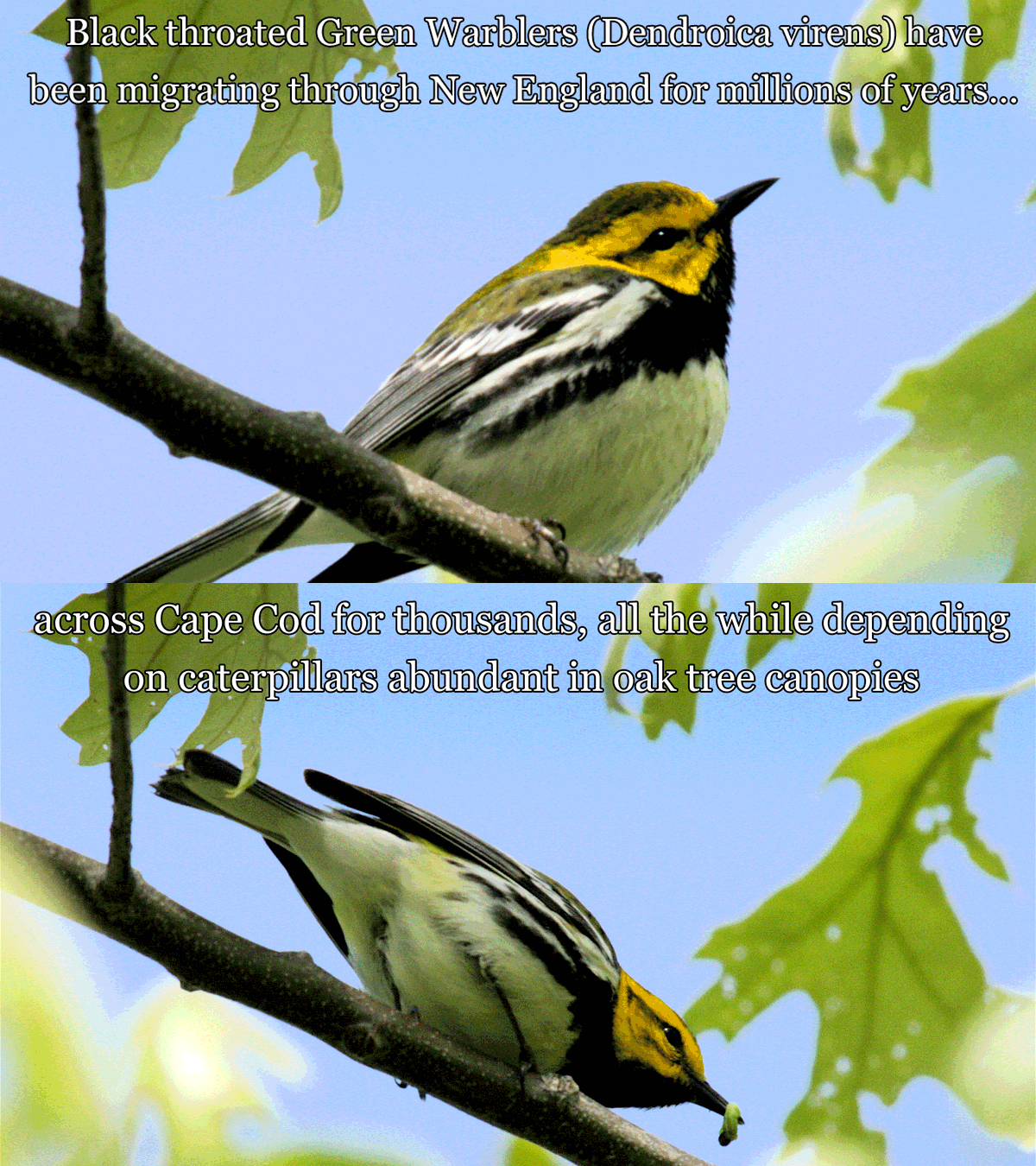
Oh yes, examine the tree trunks immersed in swampy water pond edges for a big event — a sighting of a male Prothonotary warbler with stunning yellow head ... not here so much and more southerly in range.
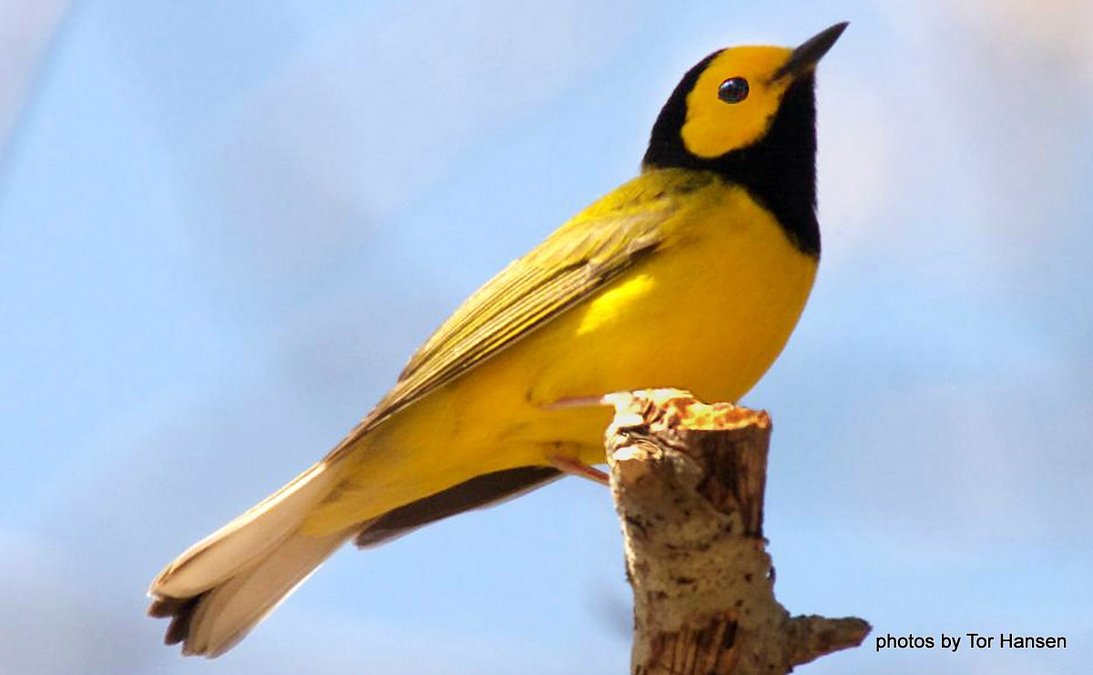
Thus we glimpse today evolution still in active progress; that is the orderly progression of definable species comprising a feeding flock is often more amalgamated or mixed with no predictable order of arrivals. The list goes on. Find out why certain species are not likely seen here in all these Western Mass mountains and valleys like: Wilson's, mourning, and hooded, somehow not likely or less widely distributed. Speaking of the dazzling male hooded, talk to fellow birders who like the three Musketeers, are all for one, and one for all as to data gathering.
Changing populations, and finding hybridized species like back-crossed Brewsters and Lawrences warblers, may be directly linked to flora that produce a considerable volume of choice tasty caterpillars, like the abundant pond willows that thrive in sandy soils.
Sharing brings good results: One May Day in Beech Forest in Provincetown, I met a lady watching magnolias in the willows around the parking lot, and she alerted me to find a solitary hooded warbler in a certain old red maple tree near the boardwalk. Sure enough this astonishing hooded provided this photo and lingered long enough to possibly link up with other fellow hooded en route to northerly climes.
Consult established expert birders for what species can be expected to flit and feed through the Berkshires, on their way north to find uninterrupted menus to procreate the next generation. And in our persistent search hopefully we find that definitely blue cerulean warbler!
Tor Hansen is a naturalist writer, photographer, and musician, in North County.
Tags: birds, wildlife,