Conversation With Wayfair CEO Opens Neal's Economic Summit
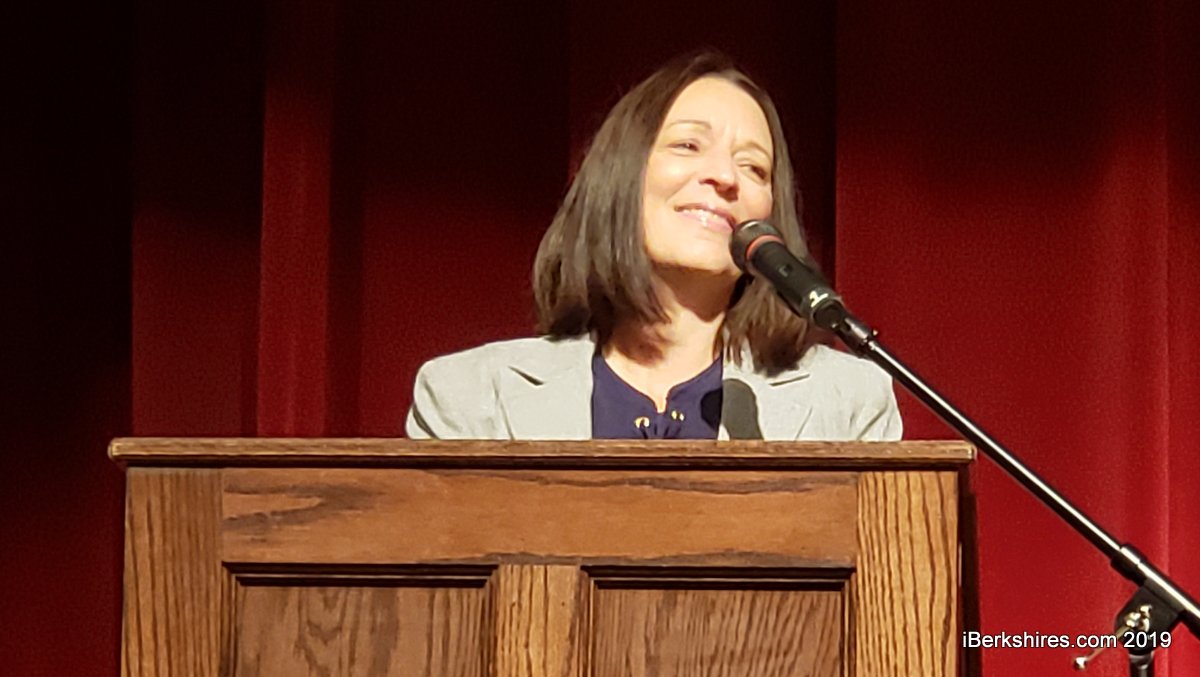
Mayor Linda Tyer welcomes the gathering on Thursday.
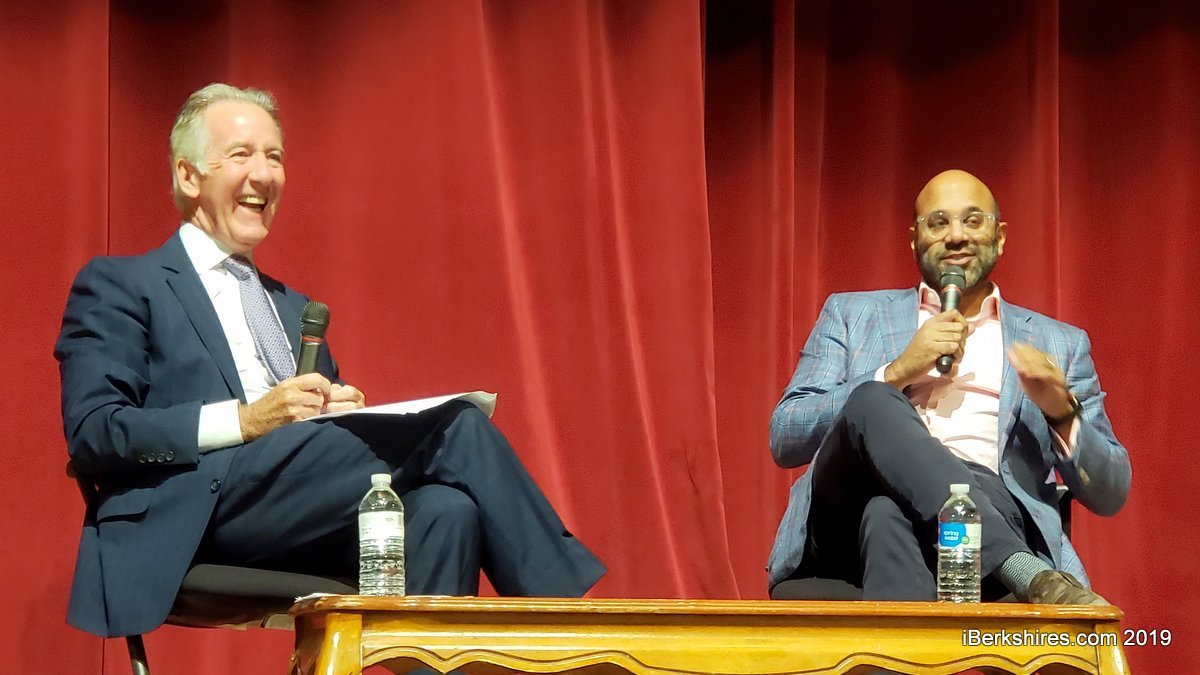
Niraj Shah, a 1991 graduate of Pittsfield High School, is bringing 300 jobs to his hometown with the development of a call center for the international home decor company. He was the keynote speaker at Neal's Economic Development Policy Summit hosted by Berkshire Community College.
Shah's father was one of the thousands employed by General Electric in Pittsfield. He'd emigrated from India to earn his master's degree in engineering and he and his wife stayed in the area to raise their family.
His dad would sometimes bring home one of those suitcase-size "compact" computers and Shah would learn to program BASIC on them. He was also "quite entrepreneurial," he said, and had a paper route and a lawn-mowing business.
Then he and a classmate discovered the internet in 1995 working in the computer lab while studying engineering at Cornell. Plans for a master's in engineering or law school went by the wayside.
"We ended up starting our first company involved with the internet right out of college in '95," said Shah, sitting on the stage in BCC's Robert Boland Theatre. "And I would say that was maybe the piece that was significantly lucky — the fact that we were graduating from college the same time as the internet."
First it was building systems for companies like The New York Times and Merrill Lynch, then selling and starting another internet company that was not so successful. But in 2002, he and college friend Steve Conine launched what would become Wayfair, a sterling success that generated more than $8 billion in revenue last year.
"It was a little bit of being in the right place at the right time and a little bit, you know, being excited about the opportunity that the internet has presented and thinking about an opportunity where there was commercial opportunity," Shah said.
That big opportunity was selling home goods through the internet.
Neal asked if it was similar to Steve Jobs' vision of teaching people want they want. Shah said his business was more about delivering what people already want better.
"We think about it as if you're a really, really keen listener, customers will basically tell you what they want," he said. "But then the question is, how can you do it to a level that exceeds their expectations ... ?"
Home goods stores are often clustered not because they're selling the same thing but rather because they're offering different styles and selections of those things, he said.
"Customers want easy and convenient delivery, customers want a fast delivery, customers want really high quality merchandise that provides inspiration as well," he said. "So what we try to do is listen really well, and then try to provide it to a level that's far surpassing what anyone else is doing."
And to keep finding ways to do it better.
Neal, in his comments opening the summit, had detailed the need to align workforce development with the thousands of jobs that go begging and the need to work through trade disputes — particularly with China — that are slowing growth. He also championed the New Market, low-income housing and historic tax credits that the first panel at the summit later expounded upon. And he also called for better immigration laws to offset a slowing population growth, satisfy workforce demands and keep talented graduates here in America.
He posed those thoughts to Shah, opening on taxes and trade.
"I think on taxes, I think it's important to be a place that people want to do business," Shah responded. "And it's important for people to be able to both have a high quality of standard, but the government to have funds to basically try to make the world appealing for everybody. So I think on the personal tax side, I think taxes should be progressive, not regressive."
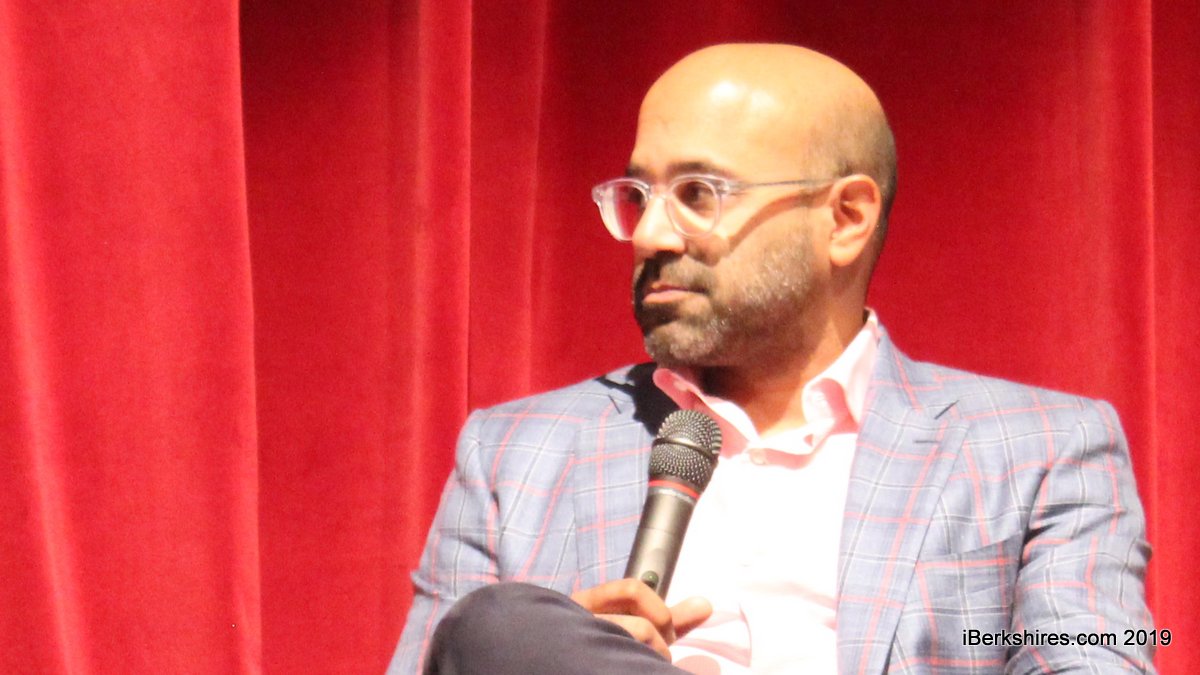
Shah was taken by the possibilities of the internet while in college. He and a classmate have grown Wayfair into an $8 billion a year business.
"I think, you know, frankly, we're a very wealthy country. So we should be able to do a lot for people in the form of education, health care, job training," Shah said. "But the expectation should also be that people have to put an effort and participate. I think there's a balance there."
As for trade, he noted that 80 percent of the goods Wayfair sells originate in Asia and about 60 percent of those in China.
"That manufacturing is not going to come back to the United States in any significant quantity versus what's already here," Shah said. "Partially because this happened 20 years ago, and the raw material supply chains have all moved, and the cost; you know, it's increasingly made by machines, even in Asia."
Ten percent of Wayfair's business is now done outside of the United States and it's growing its business in Europe. And those overseas markets and production facilities are growing jobs here since Wayfair has 13,000 employees in the United States alone.
"It creates jobs in America, when you have successful trade, and it helps American consumers if you can buy goods where the cost is lower," he said. "So I think trade is productive, it needs to be fair ... it's your point, it's inevitable, closing your borders is really not a long-term strategy in today's world by any stretch."
He agreed that immigration policies need to be "a lot more friendly."
"I mean, a company should be able to sponsor people, family should be able to sponsor you," he said, adding plenty of science, medical and tech jobs are empty. "You want to staple a green card to that, you want to encourage that person to stay in the United States, contribute to an American company, help build the U.S. economy. They're going to buy a house, they're going to put money back in the economy, I don't know why you want that person to leave."
Neal said that was consistent with his thinking, particularly in light of the domestic population not growing and the need for educated workers.
"So this current argument that we're having over immigration, I think is largely inconsistent with American history," the congressman said. "But I also think that we could say that the two of us found a common denominator here — you need a path to citizenship."
In response to questions about why he'd decided on developing the call center in Pittsfield, Shah said the company found having multiple locations beneficial because it tapped into the different talents and jobs. Yet much of the company's Massachusetts workforce is clustered in the Boston environs near its headquarters.

Congressman Neal speaks about the tax credits and trade in opening the summit on Thursday.
The cost of living and housing also had to be factored in relative the wages the company could pay. The community also has to have the "raw ingredient" skills that can be built on such as communications, writing, analytical thinking, and team work.
"Our view is if we can find people who have the core skills, we can then train them up on this specific work we do," Shah said. "But if they don't have those core skills, and then the culture fit for us in terms of being collaborative and ambitious, if they don't have those, it's very hard to really get them to be successful members of our company."
He said Wayfair is still doubling every two to three years and felt there was a lot of opportunity here in the Berkshires.
"I think that the last point I would make is that still a good education system, a good foundation, and a good job makes for a pretty happy living standard," said Neal in wrapping up. "And I think your entrepreneurship has been extraordinary on that basis."
The conversation was followed by two panels, one on tax credits and the other on workforce development. Coverage on those to come.
Tags: economic development, keynote, Neal, wayfair,