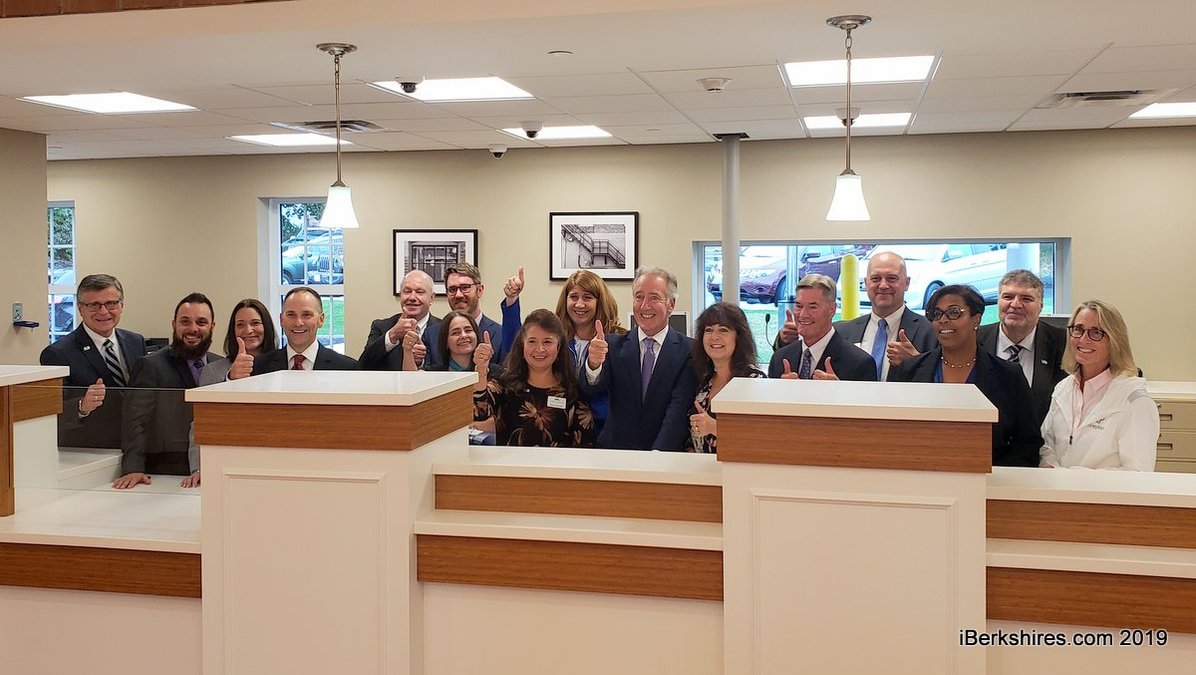
Greylock Federal Prepares to Open Community Empowerment Center
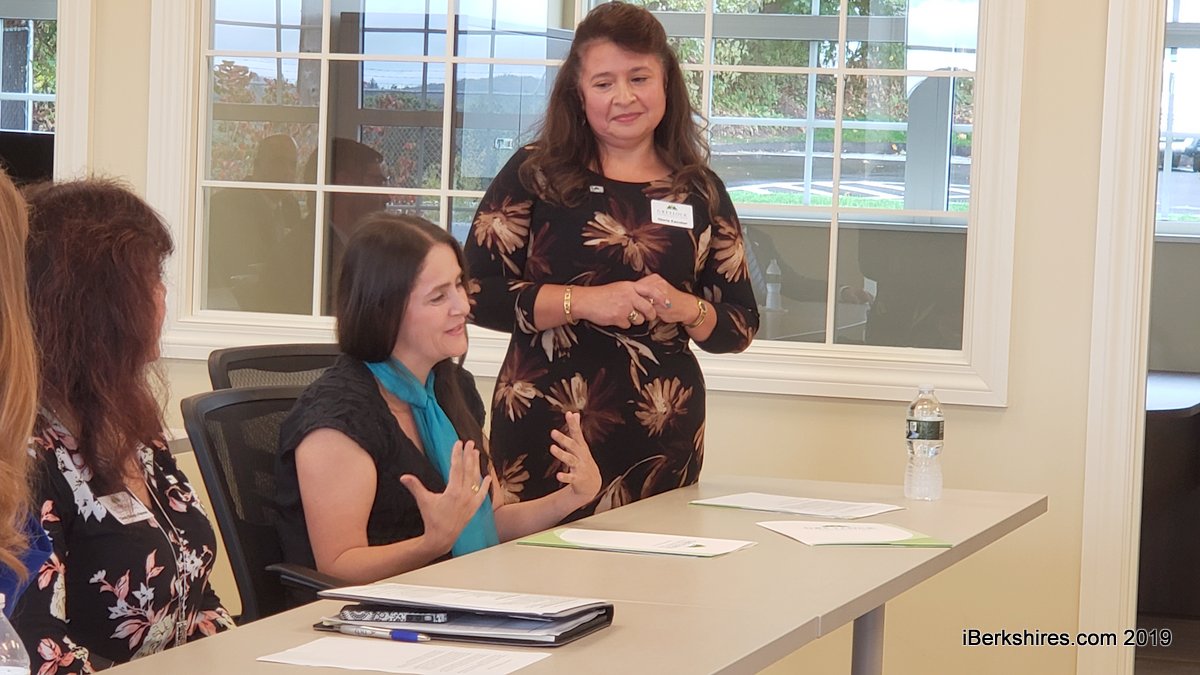
Nancy Gomez tells her story with the help of Gloria Escobar, standing.
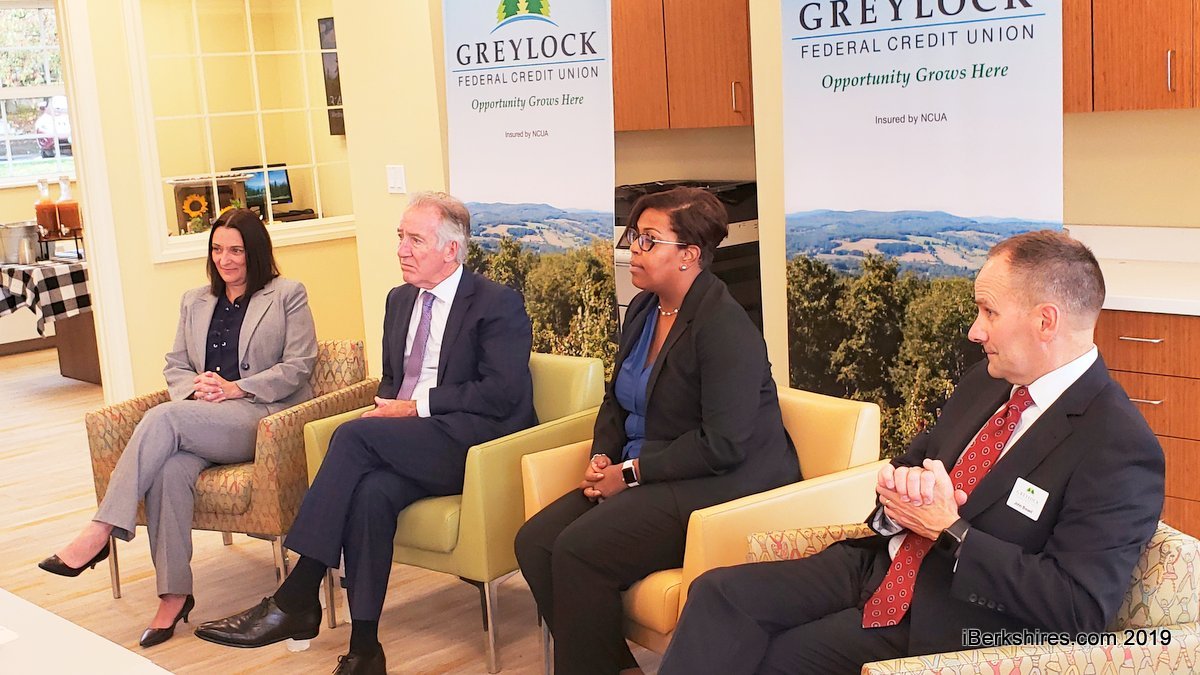
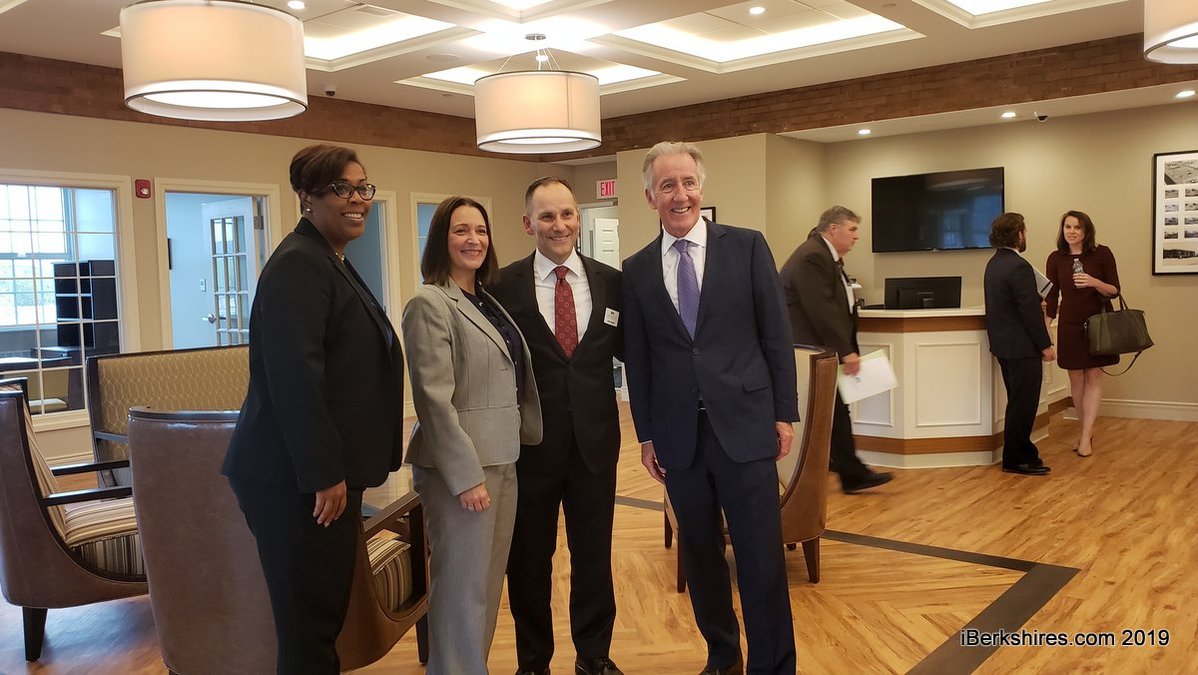
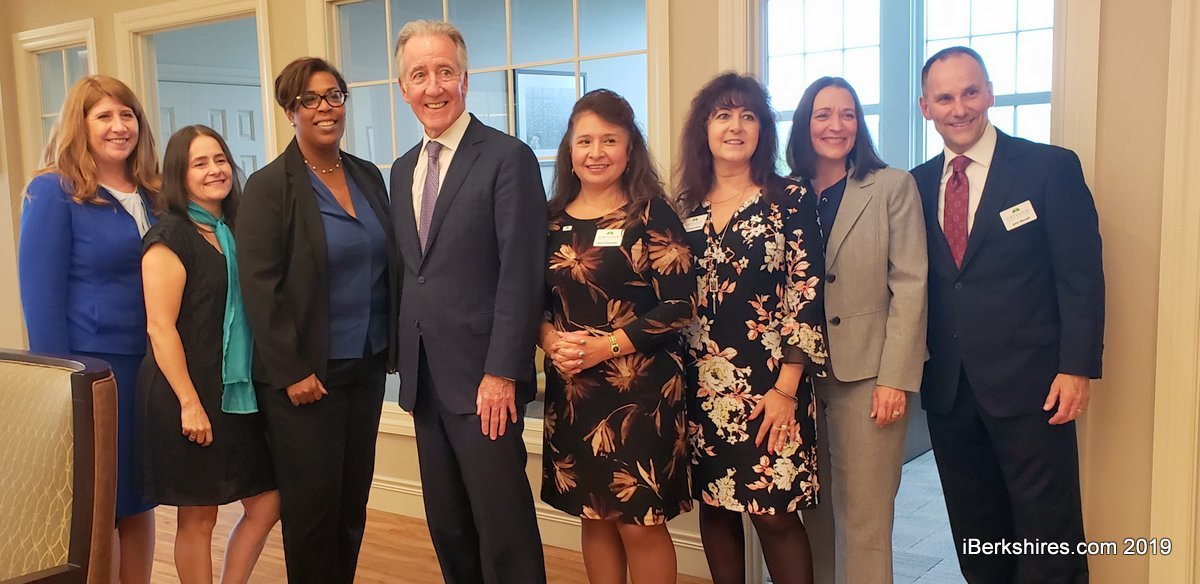
The branch is set to open within a couple weeks but U.S. Rep. Richard Neal and CDFI Director Jodie Harris were invited to the facility last week to learn about what the CEC will mean for the area's underserved and underbanked communities.
"I hope you can hear how we're here for the whole community. It doesn't matter if it's a language barrier, it's not a matter of their race, religion, age, physical mobility, gender identity, we're here for everyone," said John Bissell, Greylock president and CEO on Wednesday. "That's the philosophy that we're striving for."
The center was largely made possible by $686,500 in grant funds in 2017 from the Community Development Financial Institution Fund, a division of the U.S. Treasury Department. Greylock is the only CDFI certified institution in the county.
"The grant was a kick-starter for us, not only in being able to allow us to leverage that money into the community through loans but also change people's awareness of what Greylock was and what we could do and how we could empower people around us," said Jodi Rathbun-Briggs, Greylock's senior vice president and chief lending officer. "And it also created demand around the services that we were offering. It generated so much excitement and awareness that we grew out of our space. So here we are."
Greylock had developed a financial literacy coaching program a few years ago with Rathbun-Briggs and Cindy Shogry-Raimer, vice president and director of community development. The first year, they had one coach and 10 appointments. So they reached out to city to see how they could partner to reach more people — they've now gone from 10 people to more than 1,300 needing coaching.
"We've put $15.2 million of loans into the community because of that grant funding that we had," Rathbun-Briggs said.
That's because the services offered through the center go beyond helping with budgeting, retirement savings and college costs (although there's that, too). Greylock offers an auto loan program for people with challenged credit, payday alternative loans and lifeline loans to help keep people in their homes. It also has connections with social service organizations so can direct people to other areas that can fill their needs.
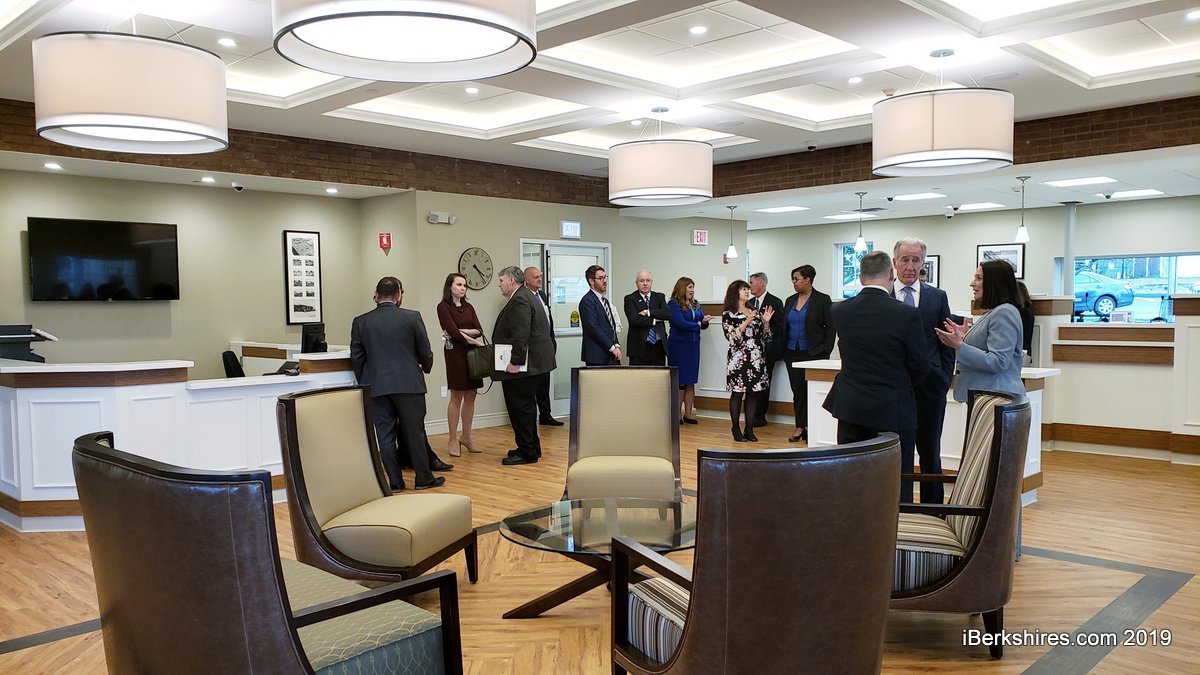
The center itself is comprised of a large classroom with modern technology, several offices and conference rooms and a separate entrance from the remodeled financial branch. A adjacent blighted property was leveled to provide adequate parking.
"This is going to empower people. So when our members come in and they need some help, many times, they just need somebody to listen to them, somebody to treat them with respect, to listen to their needs, and to help develop their courage, whatever their courage is, to take control of their financial life," Rathbun-Briggs said. "And one thing that I think that our all of our coaches do extremely well is provide one thing that tends to be missing with people who are
financially underserved, and that is hope."
Shogry-Raimer said the hope they give is the hope that there's a tomorrow. Some people are so desperate they are turning to online predatory loans.
"When you have somebody that is so desperate that they need $800 and they are going online and they come across a website. And this website gave them $800 immediately to the tune of 781 percent interest," she said. "You can't escape that."
Greylock is working with clients in those situations to reduce their financial burdens. In this case, the woman in question was working 60 hours a week and paying $234 a week to cover the loan costs. Shogry-Raimer said her team was able to buy out the contract and refinance so the woman is now paying $134 a month.
"That was the worst one," she said. "But the desperation, the need, 'I need this money to feed my family, and tires for my car to get to work. ... So they're just thinking about today, tomorrow we'll deal with tomorrow. So through our coaching, we want to show them there is a tomorrow."
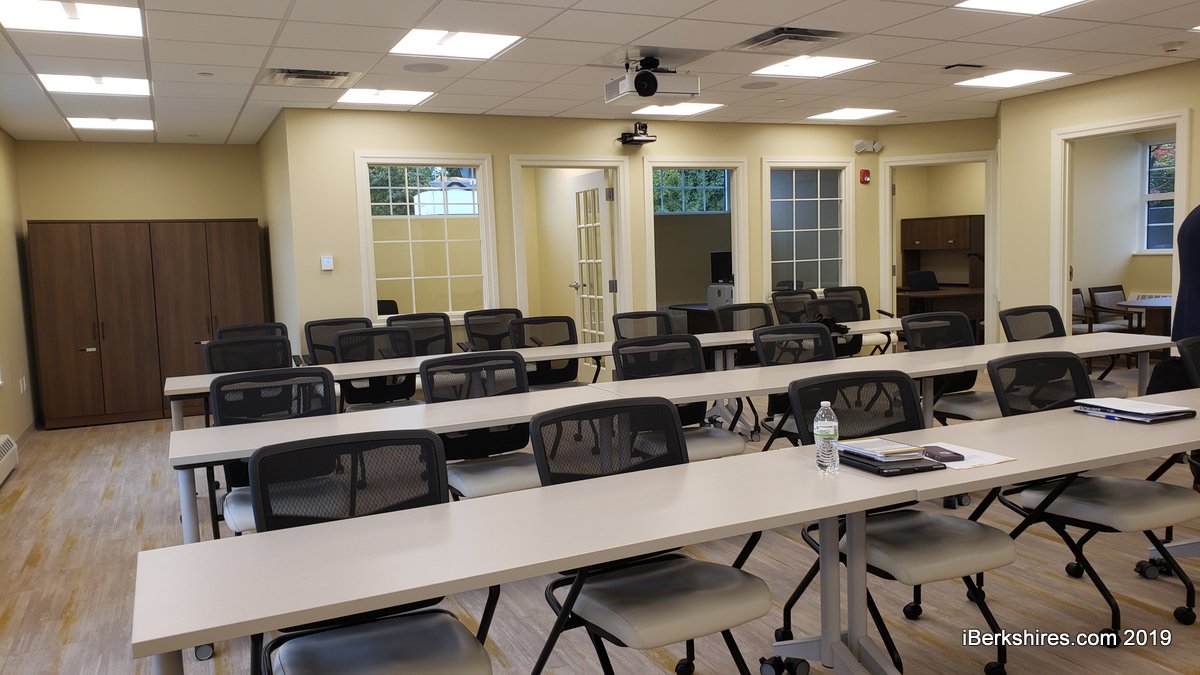
The Community Empowerment Center has a large classroom, offices and small conference room.
When Nancy Gomez arrived from Colombia two years ago with her husband and children, she was frustrated by a language barrier and a financial system she didn't understand. Through coaching and working with the CEC, she was able to establish credit and buy a house, and now a car.
"So the the big goals for the Hispanic community is buy a house, buy a very good car and go to college," she said through her translator, Gloria Escobar, a community development specialist with Greylock. "So Greylock opens the door to our community, our immigrant Spanish community, and she's very happy because she didn't have that before. And she feels that she can come with us anytime."
Escobar said she receives phone calls all the time, "people saying, I bless you, I bless you for doing this for us. Thank you so much."
Neal noted that some of the first types of credit institutions grew out of minority and ethnic populations because there were language and social barriers, and then gradually moved to workplaces. But the need hasn't changed.
"So it's the whole idea of establishing good credit, in terms of the lifetime savings in terms of interest rates, makes all the difference in the world," he said.
Harris said the stories were particularly compelling and that she wished her team that's in Washington, D.C., could come out to hear more from people working with CDFI grants to make real change in their communities.
"So I feel like the work that you're doing here is really re-establishing an anchor where all the residents can come," she said, adding that she thought it was also a great example of a public-private partnership.
Bissell pointed east toward the former General Electric land, now being transformed into a industrial park.
"Out there on that 70-acre site was once a big sprawling GE complex, there were 12,000 jobs over there, including my dad, who worked there for 30 years," he said. "And in those days, this neighborhood, there was a clear path for economic stability. Because there was the GE, three shifts of workers coming and going every day."
The building had been the first free-standing GE Credit Union branch and opened in 1971. But as GE declined, the 84-year-old credit union took out a community charter and changed its name. It more recently merged with another former industrial credit union — Landmark (Sprague Electric) — and now has more than $1 billion in assets.
"So this is a new chapter for us. It's the right time, the 70-acre site is coming back to life, this neighborhood has been incredibly resilient, it is still full of creativity and possibility," Bissell said. "And we're excited to be part of it. We spent millions on this building, because we want them to know that we're here for them."
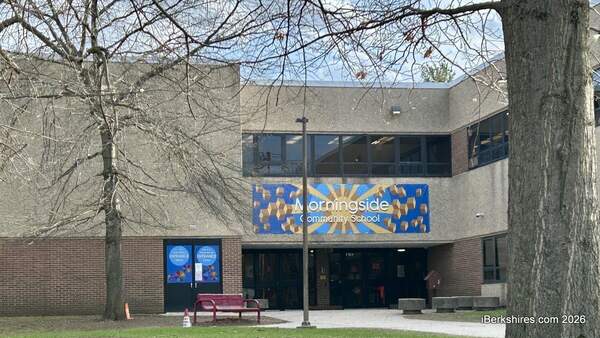
The branch sits in a neighborhood undergoing a revitalization spurred in part by being designated a state Transformative Development Initiative District. There's new development going on in terms of the St. Mary's complex and the Morningside neighborhood is bounded by Berkshire Health Systems on one end and the Berkshire Innovation Center on another.
"This is where we can give people the skills to make your dreams come true," said Mayor Linda Tyer. "And this particular neighborhood, so as John said, this new Community Empowerment Center sits in the middle of a neighborhood that we are making a full throttle effort to rebuild and revitalize."
Tags: Greylock Federal, state officials,