Valley Flyer Connecting Springfield Region to New York City
Enjoyed the opportunity over the weekend to join federal, state and local partners to celebrate the launch of Valley Flyer service, which will strengthen western Massachusetts' transportation network along the Knowledge Corridor.
— Charlie Baker (@MassGovernor) October 7, 2019
📰 via @WWLP22News: https://t.co/cuLvvKEk74 pic.twitter.com/8dxkJi0DOZ
SPRINGFIELD, Mass. — State officials on Saturday highlighted the Valley Flyer rail pilot that began service on Aug. 30 and will allow daily connections to New York City for the first time in 50 years.
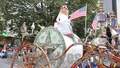
Gov. Charlie Baker, U.S. Rep. Richard E. Neal, Mayor Domenic Sarno, Amtrak officials and community members cut a ceremonial ribbon on the passenger service that will run for two years along the so-called Knowledge Corridor. Trains will be making station stops in Springfield, Holyoke, Northampton and Greenfield. The trains also connect with Amtrak's Northeast Corridor at New Haven, Conn., and serve stations between New Haven and Springfield.
Riders from Western Mass will be able to pick up the Northeast Regional, Acela, Metro North and the CTrail from New Haven's Union Station. Travelers can leave between 8 and 9 a.m. and return from 6:30 to midnight, depending on the day and location. The last time this was possible was 1967, according to Trainsinthevalley.org.
"Our administration will continue to encourage creative transportation options, provide resources for innovative ideas, and strengthen and expand existing services to meet the current and future needs of the commonwealth's communities," said Governor Baker. "The Valley Flyer pilot increases rail accessibility in the region, and we thank Amtrak and other stakeholders for their support of this program."
The augmentation of train service to the Knowledge Corridor is a project of the state Department of Transportation. Amtrak also currently runs service along this rail corridor with its Vermonter train, which connects St. Albans, Vt., to Washington, D.C. Infrastructure improvements along the corridor prior to the launch of Valley Flyer service in August included extending station platforms in Northampton and Greenfield, replacing approximately 30,000 railroad ties, upgrading signals at three interlockings, repairing culverts and making ADA-compliant improvements where passengers board and disembark.
"The new Valley Flyer service highlights the continuing growing demand of train travel throughout this country," said Amtrak President & CEO Richard Anderson. "We are proud to launch this service with our partners at MassDOT and offer Massachusetts residents and visitors with the ability to see all the state has to offer through rail travel."
Transportation Secretary Stephanie Pollack said the Valley Flyer is expected to be an economic boost to the region as well as a convenient travel option. The project is line, she said, with the state's greenhouse gas reduction goals.
MassDOT has established a goal of 24,000 new annual riders for the pilot that if not met, will mean the service will be discontinued.
"The start of the Valley Flyer train service in Western and northern Massachusetts is a welcome one and one that I take great professional and personal pride in," said Neal. "Thank you to our partners on the state level and, in particular, Tim Brennan from the Pioneer Valley Planning Commission and Linda Dunleavy of the Franklin Regional Council of Governments for their steadfast work and this great achievement."
The congressman, a former Springfield mayor, said renewing rail in Massachusetts has been one of his priorities at the federal level. The tracks were improved with federal stimulus money, as was the $110 million renovation of Springfield Union Station.
"Residents of Western Massachusetts are already reaping the benefits of improved rail and I am hopeful that this pilot program will spark the continued conversation about the importance of east-west rail, as well," Neal said.
Valley Flyer customers receive the same amenities on board as they do on all other Amtrak trains including, free wi-fi, the freedom to use phones and electronic devices at all times (no "airplane mode"), the ability to travel with small pets on many trains, spacious seats with leg room, no middle seat, and one of the most generous baggage policies in the travel industry, applicable for two personal items and two carry-on bags.
Trains 461, 471 and 495 are now originating in Greenfield and traveling to Springfield and New Haven, and Trains 478, 488, and 494 are originating in New Haven and traveling to Springfield and Greenfield. Train 400 is originating in Springfield and terminating in Greenfield while Train 499 runs from Greenfield to Springfield. Trains 471, 478, 494, 495 run Monday through Friday, and Trains 400, 461, 488 and 499 run on weekends. Tickets may be purchased on Amtrak.com, the Amtrak app, at Amtrak ticket desks and kiosks, and through 1-800-USA-RAIL.
Tags: amtrak, passenger rail, trains,