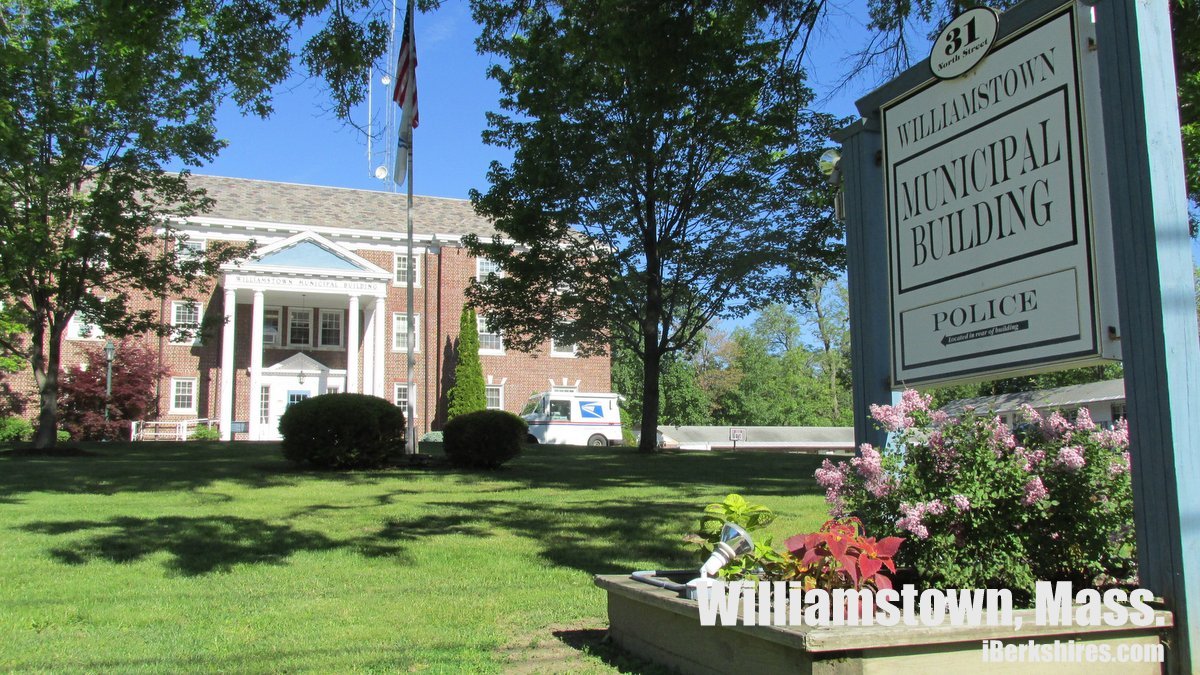
Barrett Tells Williamstown Select Board Rail Service 'Feasible'
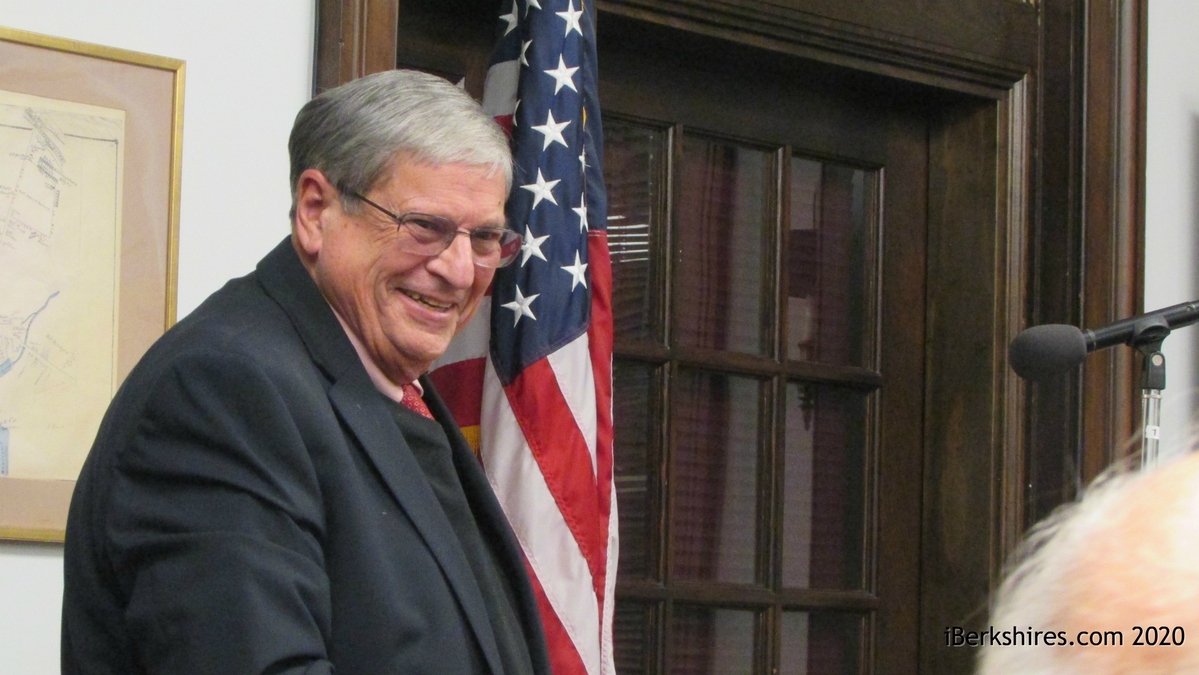
State Rep. John Barrett III informs the board about the legislative issues he's working on this year.
Barrett stopped by the panel's twice-monthly meeting to give an update on a variety of legislative issues, and he said transportation generally is perhaps the No. 1 area where the state action can benefit the Berkshires.
The North Adams Democrat and Williamstown native noted that a new train service would not be the kind of "high-speed rail" that is all the rage, but regular passenger service connecting the region with Boston still would be advantageous.
"It's at least a train service that will come through Williamstown at the bottom of Cole Avenue and get to Boston in three hours," Barrett said. "And an enjoyable three hours. You can use your internet, relax and get into the city.
"I think Pan Am, which owns the railroad, has been most receptive to meeting with people in the business community around here."
Barrett said a study is planned to begin in June and should take eight to 12 months.
"It's very feasible," he said. "It can happen."
According to the website of the non-profit Trains in the Valley, the last such east-west train service ended in 1958 with a best scheduled time of 3 hours, 10 minutes from North Adams to North Station in Boston.
Barrett said he sees rail service as a driver of economic development with the potential to bring tourists into his district and people to more easily live in the Berkshires and occasionally commute to Boston on business.
"To travel in Boston [by car], you can be 10 miles out and it takes you an hour and a half sometimes," he said, referring to the traffic within the metro region.
Barrett has been learning more about that traffic since he was elected in 2017 in a special election to fill the set vacated by the death of state Rep. Gailanne Cariddi.
He also has been learning even more than he knew about the district from his time as a 13-term mayor of its most populous community, North Adams.
"It's a very diverse district," Barrett said. "Nine different communities and nine different constituencies,. One thing in common among them is making sure they have a voice in state government.
"It's a very time-consuming job," he said of being a member of Massachusetts' lower house. "I thought mayor was bad."
In addition to transportation, Barrett said he is working on issues related to climate change, broadband service, the 2020 Census, taxes and education funding. Select Board member Hugh Daley asked Barrett for more information on the last issue.
Barrett said the Legislature passed a $1.5 billion education funding bill that will, among other things, bring tax relief to property taxpayers. And he said the regional transportation funding from the state is increasing for fiscal 2021.
"[The state] is the one who came in and said, 'Regionalize your schools and we'll come in with all this money,' " Barrett said, implying that the "carrot" has not always been forthcoming.
"The other thing is the education funding formula. They've played with that over the year. They punished North Adams for declining enrollment, yet it's punished Williamstown and Lanesborough, which is growing [enrollment] to some degree."
Barrett said every representative and senator from Western Massachusetts is focused on the education funding issue.
In other business on Monday evening, the Select Board heard a final report from the Parks and Recreation Advisory Committee that it appointed last January, was informed by Town Manager Jason Hoch that the town is executing a Host Community Agreement with a third potential marijuana retailer and was informed of a $14,400 information technology grant received from the commonwealth.
The technology grant will allow the town to convert from "paper forms to electronic to achieve operational efficiency, reduced paper consumption, greater convenience, and efficiency for customers and staff. Intended initial uses include delivery of electronic direct deposit pay advice to employees, generating Water Department billing and generating other intermittent Town bills, including Transfer Station fees."
While the town has one operational pot shop in the Colonial Plaza, a second is in the works for a second Main Street (Route 2) location.
A third is eyeing a parcel on Simonds Road (Route 7) near the Vermont state line. Hoch noted that securing an HCA with the municipality is an early part of the state regulatory process with the Cannabis Control Commission, and it is anyone's guess how long it would take Sparkboro LLC to gain approval from state regulators.
Sparkboro, the potential Simonds road purveyor, hopes to be before the town's Zoning Board of Appeals in February, Hoch said.
Monday's meeting ended with a petitioner's request. Andrew Guntlow, who operates New England Solar and Green Solutions on North Street, told the Select Board it was unfair that the town is waiving permitting fees for solar installations that are being made under the Solarize Plus program.
Guntlow said he had no problem with the state-sponsored program with its designated installer, Ashland's SolarFlair, until he heard second-hand about the waiver policy.
"In terms of fairness and process, I have a real issue with this," Guntlow said. "And as a property tax payer … that's revenue lost.
"I thought it should be an all or nothing thing. Either [collect the fees] or make it uniform through the length of the program [for all installers]. I think there should be a fair and equitable manner for this."
Hoch told the board that he was following the precedent of fee waivers set in the town's first Solarize program back in 2013, but Guntlow said he has heard that permit fees were collected back then.
In response to a question from Thomas, Guntlow said typical permitting fees for a residential installation can be $300 to $500, which impacts the per-kilowatt cost of an installation that customers use when choosing an installer.
Thomas thanked Guntlow for bringing the issue to the board's attention but noted that there was nothing the town can do now since the Solarize Plus program ends at the end of January.
"Certainly, we can think about it if we do a Solarize 3," Thomas said.
"I will say that after Feb. 1, there is no advantage to working with SolarFlair or any non-local installers, so people should contact local installers," Thomas added, addressing the WilliNet camera.
Tags: barrett, passenger rail, Solarize Mass,