Williamstown Planning Board Weighing New Pot Bylaw
WILLIAMSTOWN, Mass. — The Planning Board last week heard from several residents who want it to prohibit outdoor production of marijuana in the language of an updated bylaw the board intends to send to May's annual town meeting.
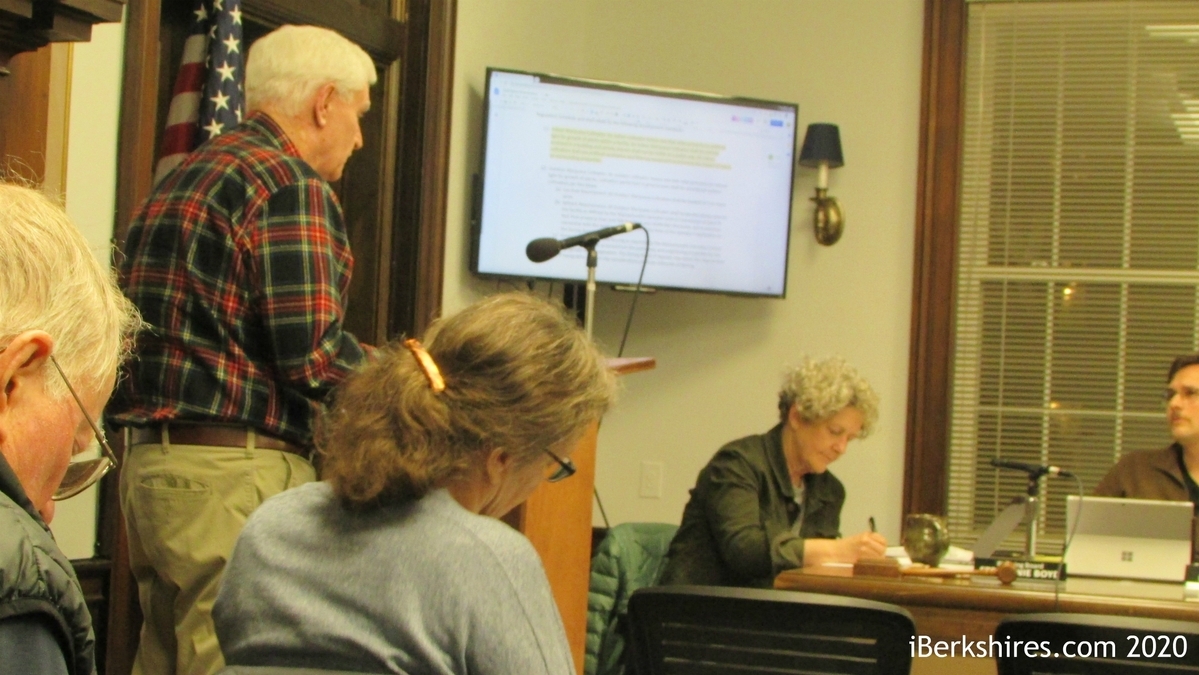
Several of the people who argued against granting a special permit to grow pot on a Blair Road parcel early last year were back at Town Hall on Tuesday to ask that town regulations be changed to allow marijuana production only indoors and then under highly regulated conditions to control odor.
The Planning Board chose to address the bylaw passed by town meeting in 2017 because it was written before the commonwealth's Cannabis Control Commission had written statewide regulations in response to the November 2016 vote to decriminalize marijuana in Massachusetts.
The town in 2017 was trying to "get ahead of the curve," and now wants to amend its language to align with the nomenclature used at the state level. For example, the 2017 bylaw refers to "marijuana production facilities." The CCC language is written to address indoor and outdoor "marijuana cultivators."
While they are at it, the Planning Board members chose to address some of the concerns raised in the 2019 Zoning Board of Appeals hearings for an application that ultimately was withdrawn. The language the board drafted for outdoor cultivators set minimum lot area, setback and screening.
But that does not go far enough for residents who fought what has been, to date, the only business to try to produce marijuana in town.
"Outdoor marijuana growth produces noxious spores, which negatively impact people with breathing problems," said Robert Behr of Blair Road. "Surely you know someone with asthma, COPD or emphysema. If they're within half a mile [of a pot farm], they're going to suffer.
"The smell, of course, is like a herd of skunks. The smell travels on the breeze at least half a mile. If the spores interact with motor exhaust, they become even more noxious."
Behr said the 500-foot setback in the draft under consideration by the board would not protect neighborhoods in the districts where the bylaw would permit outdoor cultivation by special permit.
"Then there is the financial side, which has to do with property values for homes close to outdoor growth," Behr said. "The property values of homes will shrink dramatically. The major real estate agent in town estimates shrinkage of 80 to 90 percent in value.
"Real estate taxes would shrink, and Williamstown would lose the tax value."
Ann Hogeland agreed.
"I'm not seeing overwhelming benefit to the community of allowing outdoor cultivation and the risks that have been identified to the community," Hogeland said. "I think that's a much more risky and potentially detrimental road to go down and without a significant benefit to the community."
Planning Board Chairwoman Stephanie Boyd said it might make sense to separate what was drafted as a single bylaw addressing both cultivators into two bylaws -- one for outdoor and one for indoor -- "and let the town weigh in at town meeting."
The bylaw drafted prior to Tuesday's meeting called for indoor cultivators to "use artificial ventilation and filtering equipment to minimize the impact of odor on surrounding properties."
Attorney Stanley Parese, who represented one of the opponents to the Massflora proposal last winter, told the Planning Board it needs to toughen its bylaw language on indoor cultivation if it is going to allow the practice at all.
Parese gave the planners two model bylaws to consider, one from Lenox and one from Otis.
The Lenox bylaw states, in part, "There shall be no noxious odors emitted from the cultivation or processing of marijuana or marijuana products."
It goes on to give neighbors to such a facility agency by stating, "No use shall be allowed by a marijuana establishment which creates a nuisance to abutters or to the surrounding area … "
The Otis bylaw provides more detail with the same apparent intent.
The four-page document provided by Parese to the Planning Board requires applicants in Otos to submit a facility odor emissions plan and to keep records that verify the odor control systems are well maintained.
"Any examples of facility recordkeeping forms should be included as appendices to the [Odor Control Plan]," the Otis bylaw reads in part.
"For existing facilities with engineering controls for all odor sources on the date of rule adoption: 1. Evidence that engineering controls for all odor sources were installed and operational on the date of rule adoption. 2. Evidence that engineering controls are sufficient to effectively mitigate odors for all odor sources."
Parese suggests that Williamstown follow Otis' lead in reserving "the right to engage an independent consultant to review and advise during any application" and "the right to continued monitoring of emissions and water runoff from the facility" -- all at the cost of the would-be cultivator.
Members of the board thanked Parese for his input, and town planner Andrew Groff agreed to rework the board's draft bylaw for consideration at its February meeting. Groff noted that the goal of the Planning Board should be to provide the best set of tools possible to the Zoning Board when it considers a request for special permits.
Planner Alexander Carlisle said that he preferred to allow some avenue for small-scale, "boutique" growing that would benefit small farms in town, and he indicated that limiting production to indoor cultivation encourages large, industrial concerns from outside of town to build facilities.
Chris Winters reminded his fellow planners that 60 percent of Williamstown voters voted for 2016's Question 4, which legalized pot. Although it is not a definitive statement on the town's will regarding production, it is a data point that needs to be considered, Winters said.
"I'm sensitive to the fact that the majority of people in town seem favorably disposed to this concept," Winters said. "I like the idea that now that we have more specifics, we ask, ‘How do you feel about how it's being put into practice?' Give them a chance to say, ‘I like it this way and not that way.' "
The Planning Board hopes to finalize the pot bylaw and other bylaws by its Feb. 11 meeting, to hold at least one public hearing in March to get feedback from residents and, possibly, modify the bylaw language, and get final language set in time for the town meeting warrant to be finalized on April 13.
In other business Tuesday, the Planning Board OK'd language for two other bylaws it will put before voters in May.
One brings the town's bylaw on non-conforming residences into compliance with current precedent from the Supreme Judicial Court in Boston. Another creates rules governing the grade, width and surfacing of long and common driveways in town; the new rules are a response to a dialogue with Williamstown Fire Chief Craig Pedercini, who asked the town to require driveways be adequate to allow access for emergency vehicles.
Tags: marijuana, zoning,