Williamstown Town Meeting OKs Zoning Bylaw for Pot
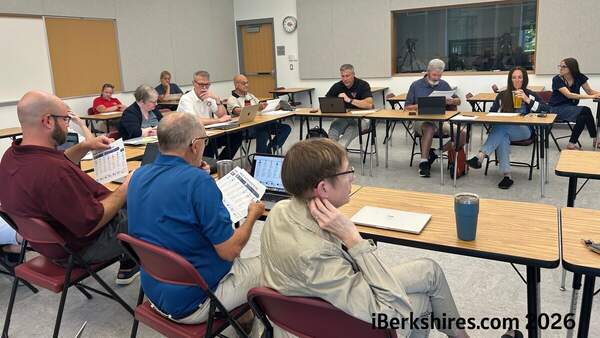
WILLIAMSTOWN, Mass. — By an overwhelming majority, voters at the annual town meeting on Tuesday approved zoning bylaw changes that create a regulatory framework for recreational marijuana businesses in town.
But it was clear that the option of banning retail pot is still very much on the table.
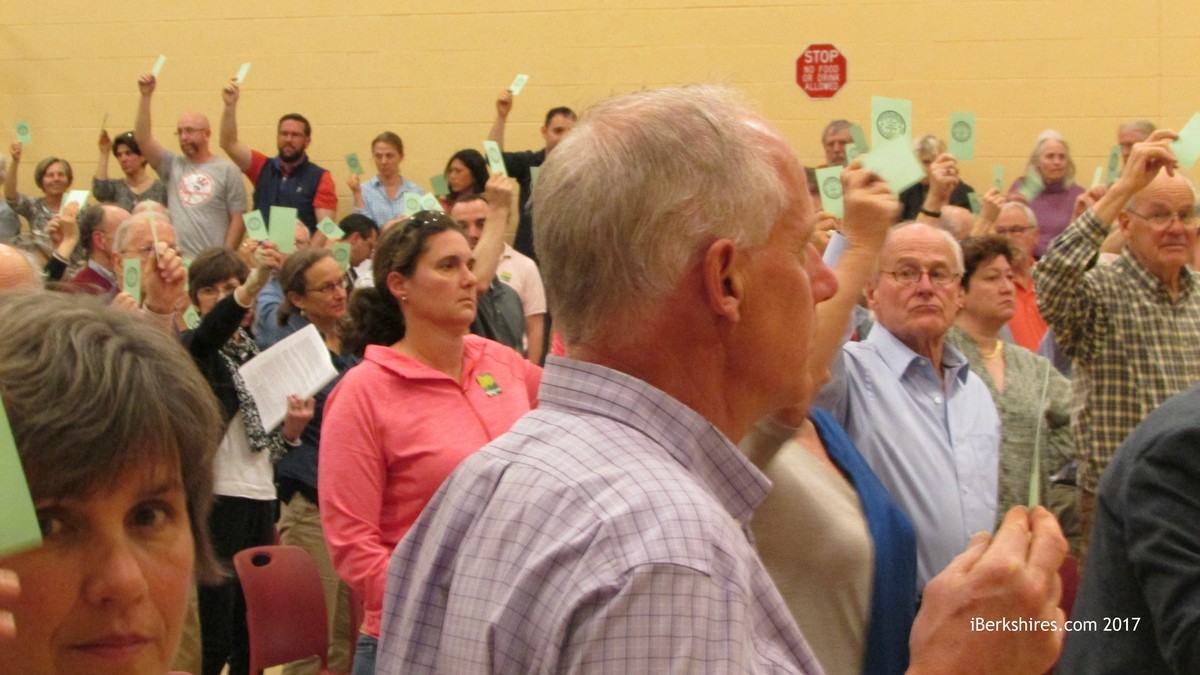
After a lengthy debate at the meeting in the Williamstown Elementary School gymnasium, the town voted 207-36 to OK a modified version of the bylaw developed by the Planning Board that would limit retail marijuana establishments to just two zoning districts: the Planned Business District and the Southern Gateway District.
All 40 articles on the town meeting warrant passed in a session that took about 2 hours, 45 minutes and drew 280 registered voters from a roll of 4,925 registered voters — a 5.7 percent turnout.
Most of the warrant articles passed without much discussion and only the occasional smattering of "no" votes.
The principal fiscal questions, including the $7.2 million general government operations article, the $6.4 million Williamstown Elementary School appropriation and the $6.4 million Mount Greylock Regional School appropriation, breezed to passage.
There was a small but vocal minority of opposition to a few of the appropriations under the Community Preservation Act, but nothing that required Town Moderator Adam Filson to call for a standing vote.
But when the meeting reached Article 36, a zoning bylaw "Regulating Medical and Recreational Marijuana Uses," it was clear that the voice vote method would be insufficient.
The narrowest vote of the evening came in the middle of the debate on Article 36, when Sheila Stone moved that the meeting table the question altogether.
The motion required a two-thirds vote of those in attendance, and although a majority agreed with Stone, the vote of 150-102 fell short of the required super majority.
Stone's motion was aimed at setting aside the land-use of question of where marijuana businesses might be allowed in favor of a townwide vote on whether those businesses should be allowed anywhere in the Village Beautiful.
Town Counsel Joel Bard explained to the meeting that the process of banning marijuana businesses in town would require two steps: a ballot vote and a two-thirds vote by town meeting to disallow pot businesses in the zoning bylaw's land-use table.
While several residents who spoke from the floor espoused the notion of moving on a ballot vote first and revisiting the zoning issue later, the majority appeared to side with the argument suggested by Selectman Hugh Daley.
"My takeaway [from a panel discussion held on the eve of the meeting] was I'd call the belt and suspenders approach," Daley said. "Pass this bylaw to install a baseline zone and revisit at a later date on a more measured schedule the concept of a ban.
"I'm OK with the town considering a ban. What I don't like is a completely open field right now. Because ... if we don't do the zoning tonight and the ban fails, we have no zoning in place, that feels like an unacceptable place to end up."
The Planning Board's argument for developing the bylaw amendment proposal is that the town needs to have a regulatory framework in place before Boston implements the rules that will govern the recreational pot businesses greenlighted by November's passage of Public Question 4, which decriminalized the drug.
Arguing the other side was Drew Gibson, a teacher at Mount Greylock junior-senior high school, who spoke of his own experience witnessing teens who use the drug.
"We do have to be careful about the message we send [to youths]," Gibson said. "The town deserves to have a vote on the ban before we do the zoning. Once we do the zoning, we're implicitly saying we approve of retail sales."
Planning Board Chairwoman Amy Jeschawitz, whose committee drafted the zoning bylaw amendment, has said the board recognizes that the bylaw could be vitiated by a subsequent townwide ban.
Wendy Penner, who serves on the Mount Greylock Regional School Committee, gave a pared-down version of the presentation she made at the Planning Board's public hearing on the bylaw amendment, citing statistics about marijuana use among teens in Northern Berkshire County and the dangers the drug poses to developing brains.
In the end, the bylaw passed with 207 votes — 85 percent of the voters in attendance and considerably more than the two-thirds needed for passage.
But first, the meeting approved two amendments: one suggested by the Planning Board itself to clarify the definition of a "marijuana production facility" and one suggested by Zoning Board of Appeals member Keith Davis to make all commercial pot facilities allowable only by a special permit from the ZBA.
As drafted, the bylaw would have required a special permit for retail in the Southern Gateway District (the Cold Spring Road portion of Route 7) and for production facilities in the Rural Residence 2 District. But the bylaw proposed by the Planning Board would have allowed retail pot by right — i.e. with no special permit required — in the Planned Business District (the east end of Main Street and the north end of Simonds Road), and it would have allowed marijuana production and testing facilities by right in the Limited Industrial District (North Hoosac Road near Cole Avenue and the current Steinerfilm site on Simonds Road).
In other business, the meeting recognized two award winners: Linda Conway, who received the Scarborough/Salomon/Flynt Community Service Award, and Kelly Galusha, a Williamstown Elementary employee who received the League of Women Voters' Town Employee Award.
Three articles generated by citizen's petition passed easily: a move to change the name of Columbus Day in the town to Indigenous People's Day, a statement affirming the Williamstown Police Department's policy on immigration status issues and a non-binding resolution to raise awareness about the impact of landscape practices on pollinators.
Tags: marijuana, town meeting 2017,