Pittsfield Council, School Committee Want Better Communication
PITTSFIELD, Mass. — The City Council and School Committee would like next year's budget process to go better than the last.
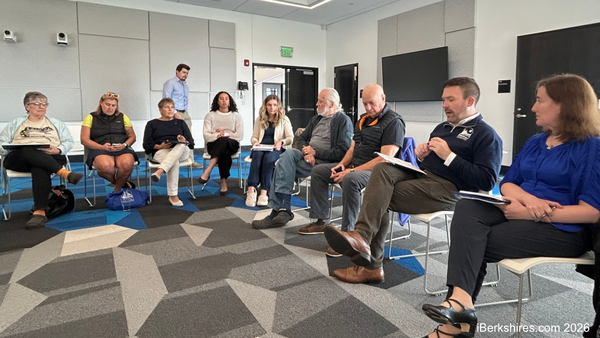
Both bodies met jointly on Monday at Reid Middle School with the intent to bridge the disconnect between school staff, the administration, and public officials during the budget process.
"It's important that the people in the school department understand how the budget works," Councilor at Large Earl Persip III said.
The city's operating budget for fiscal year 2025 passed with a $200,000 reduction to the $82 million Pittsfield Public School budget. During the final approval, all conversation was related to the schools, as droves of staff members came to council chambers believing this was a direct slash to positions.
The cut was aimed at the Mercer Administration Building or non-personnel line items. It was agreed that misinformation sparked the controversy and was attributed to a "divide" between the school district and the council.
Mayor Peter Marchetti said as the city begins the next budget, the doors of communication have to "really, really be open."
"Because if anybody thought fiscal year 2025 was a bumpy road in how we got to where we're getting, buckle up," he cautioned.
"Because I'm going to sound the alarm now that fiscal year 2026 is going to be 100 times harder."
After presentations from Marchetti, Superintendent Joseph Curtis and Assistant Superintendent for Business and Finance Kristen Behnke, Persip wanted to hear more about the school staff's involvement.
He suggested a formal process for staff members to submit feedback on the budget.
"I noticed when you were talking, the principals are heavily involved. What is the staff's involvement? Like with the principals to present their budget? Is there something I'm missing that's just not in this presentation?" he asked.
Curtis said it is unique to each school.
"Typically, the school principal has had conversation with the staff about the budget implications or what they are seeing as a viable recommendation to us," he explained.
"We hear from staff members via email. Sometimes it's a petition, all different types of ways. Sometimes it's direct contact with the School Committee that they then bring forward so it happens in a variety of different ways."
The superintendent also provides staff updates early in the budget process.
"Often, as well, they feel more comfortable with communicating with their union and so we have monthly meetings with our union presidents and often they'll communicate about positions that they've heard from their staff," he added.
Councilor at Large Kathy Amuso said she had more phone calls, emails, and in-person interactions than she would have expected about the school budget "and have to take those seriously when you have teachers and paras and recently retired administrators saying, 'We think there's room for reductions in the school budget.'"
The former School Committee chair agrees that non-administrators should have more involvement.
"It's important that we do fund the schools appropriately because we want all our children to succeed at every level," she said.
"And we want to be able to support a budget that comes before us that we know that your school system at all levels, employees support and I think that's a little bit for me, what happened last year."
School Committee Chair William Cameron said "It's not that there is any exclusion of these employees from participating in the process" but people are coming to the wrong body with concerns. He feels this is worth further discussion.
"If people are coming to the City Council with, I'll say call them complaints, but suggestions about ways that economies could be made, they're coming in at the wrong level," he said.
"Because the City Council votes only on an appropriation, and the School Committee has the capacity to take money from one line and either eliminate it or reallocate it elsewhere."
Ward 6 Councilor Dina Lampiasi feels this is a step in the right direction for ensuring more productive conversation moving forward. She is concerned about the multiple requests for anonymity when staff members voiced concerns.
"Something that was not mentioned is along with how many pieces of communications I think we all received on the City Council from employees of the School Department was a request for anonymity in those emails and phone calls and text messages and community conversations," she said.
"And to me, as somebody who has worked in HR and in hiring, that speaks to the culture and it's difficult. It's difficult to improve the culture of any organization. There are a variety of reasons why it's difficult but there's a culture of people feeling as though they cannot speak up about their concerns without being retaliated against and I don't think that we are doing the conversation service without truly acknowledging that."
School Committee member Sara Hathaway is concerned about the district's morale in general and in some cases, she said it comes back to funding. In the late budget process, she noticed that people didn't understand that the end of Elementary and Secondary School Emergency Relief funds was separate from the budget problems.
Several ESSER-funded positions expired for the fiscal year but were separate from budget cuts.
Ward 7 Councilor Rhonda Serre observed that employees do not feel that they have the agency to come forward with their feelings or don't have the opportunity to participate in a constructive way.
"An email blast out to all staff is not really going to create a feeling of welcomeness," she said.
President Pete White suggested consulting the Human Resources Department for ways to solicit feedback from city employees — possibly a suggestion box.
"I think in any environment, you don't always feel comfortable speaking up because I do know a fair share of non-school employees who have expressed concerns to me over different things," he said.
"So I don't think it's something unique just to the school department but maybe because we're coming together, we could come up with a solution for employees of the city as a whole to have a better way to express some of their views."
Persip recognized that it is difficult for staff members to stay informed by coming to meetings, as they have families and commitments. He didn't see them coming up with an answer that night but wants more consideration on how to better provide information and feedback opportunities.
He pointed to Cameron's claim that school staff don't know the process and that's what the bodies should focus on.
"They will feel more invested," Persip said. "It comes back to culture. Working on a culture. We have a culture problem."
Tags: fiscal 2026, school budget,