Housing, Jobs and Transportation Top County Needs
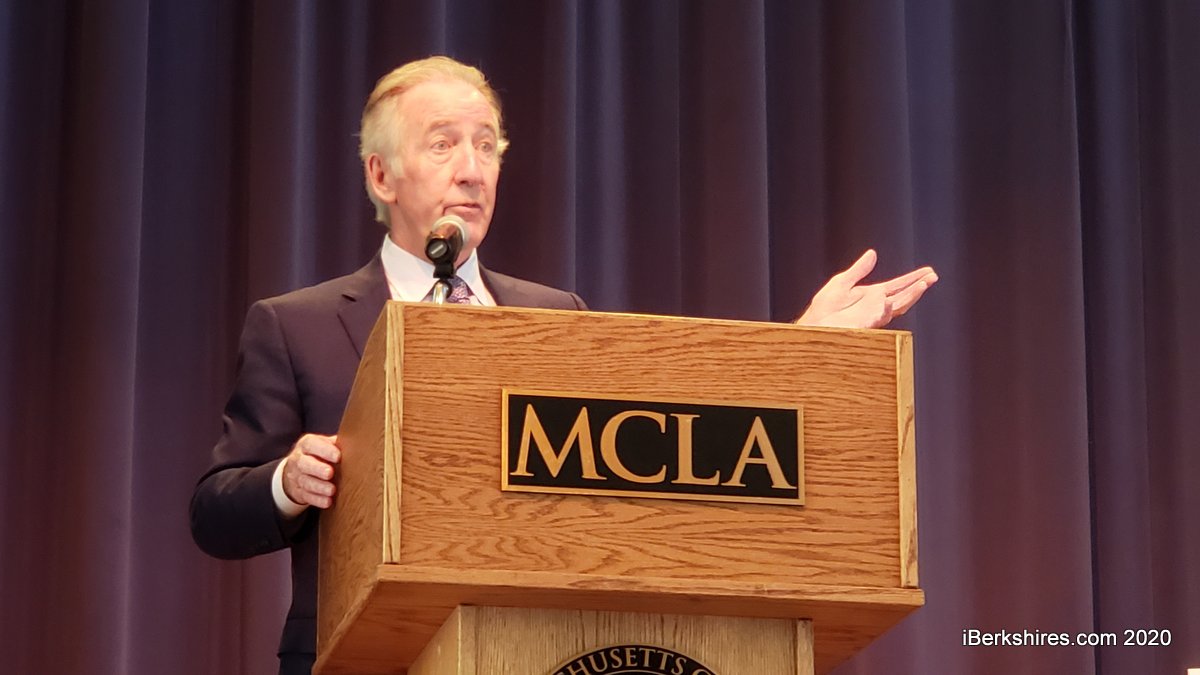
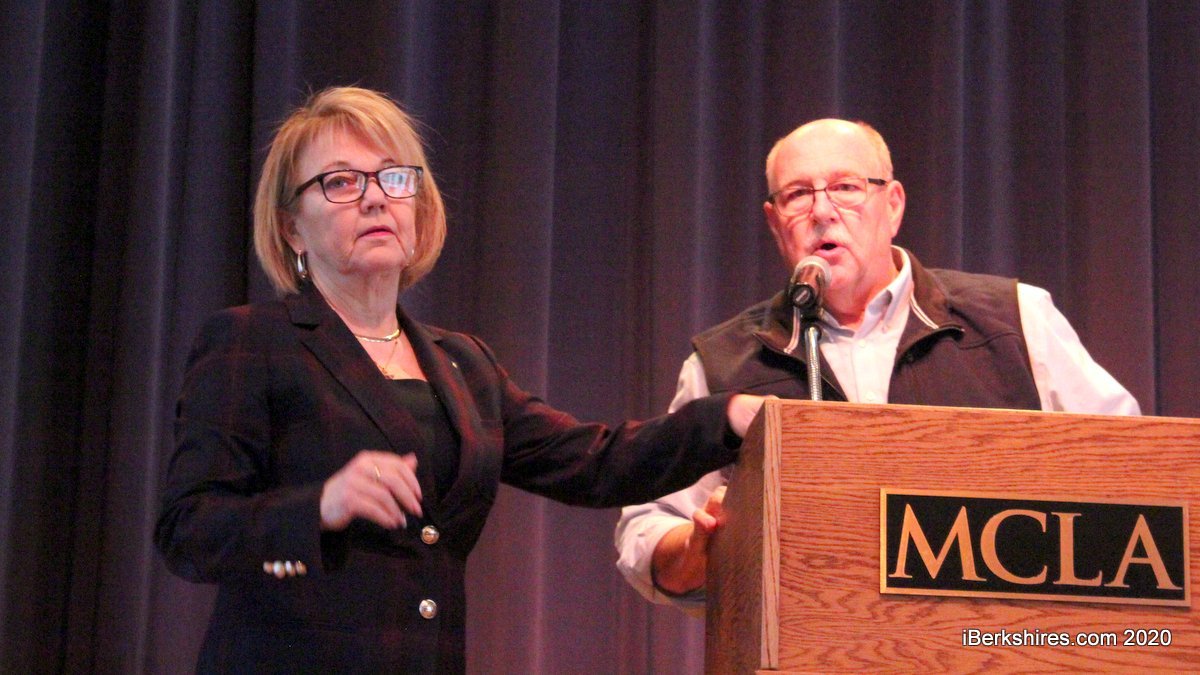
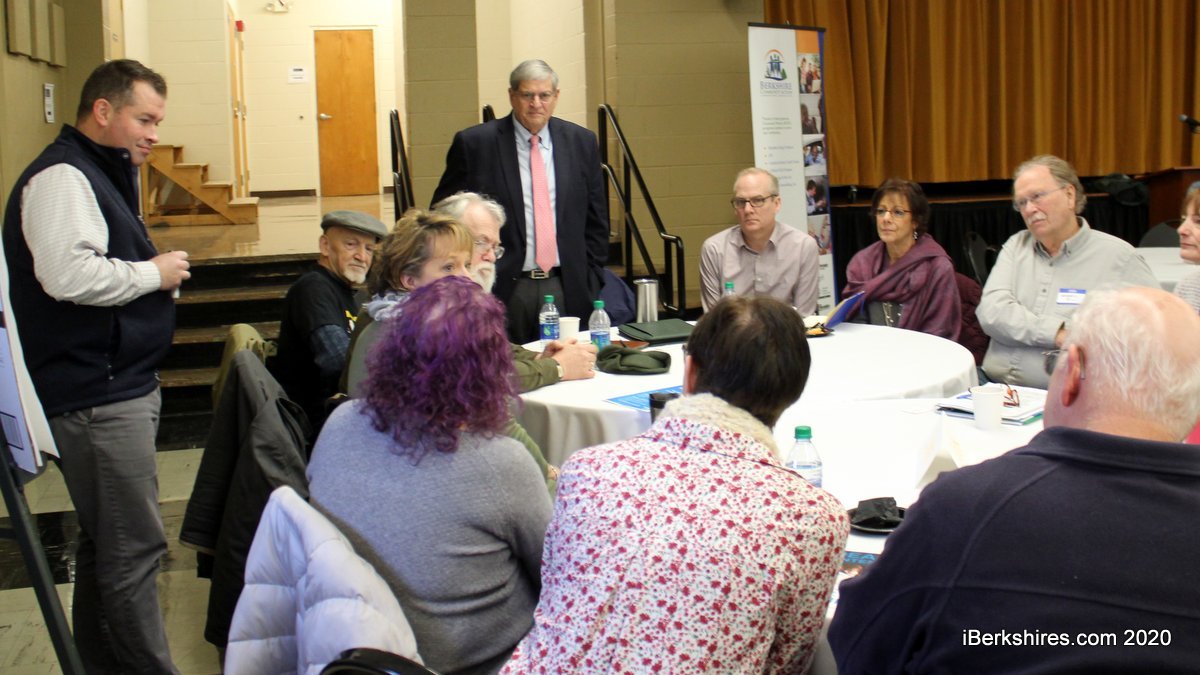
Congressman Richie Neal addresses the gathering on Friday at MCLA.
If it's two parents with a child, they both need to be working full time and earning $14.41 an hour — $1.66 above the state minimum wage — to support their family.
There's a good chance they're renting because even though homeownership in the county is higher than the state average, in some areas, like Adams and North Adams, more than 40 percent of residents rent. Of those who rent, at least half are "rent burdened" because more than 30 percent of their take home pay goes to house; around 25 percent are spending more than 50 percent.
If they need child care, they're paying between $40 to $80 a day, perhaps less if they can get a subsidy — there's 17,000 kids on the state's waiting list. And if they're in one of the more rural parts of the county, there may be no child care available.
Lack of child care can affect the ability to work or continue their education. If they don't have a vehicle, they're dependent on the limited public transportation.
Those are just a few of the challenges for people trying to work their way out of the cycle of poverty.
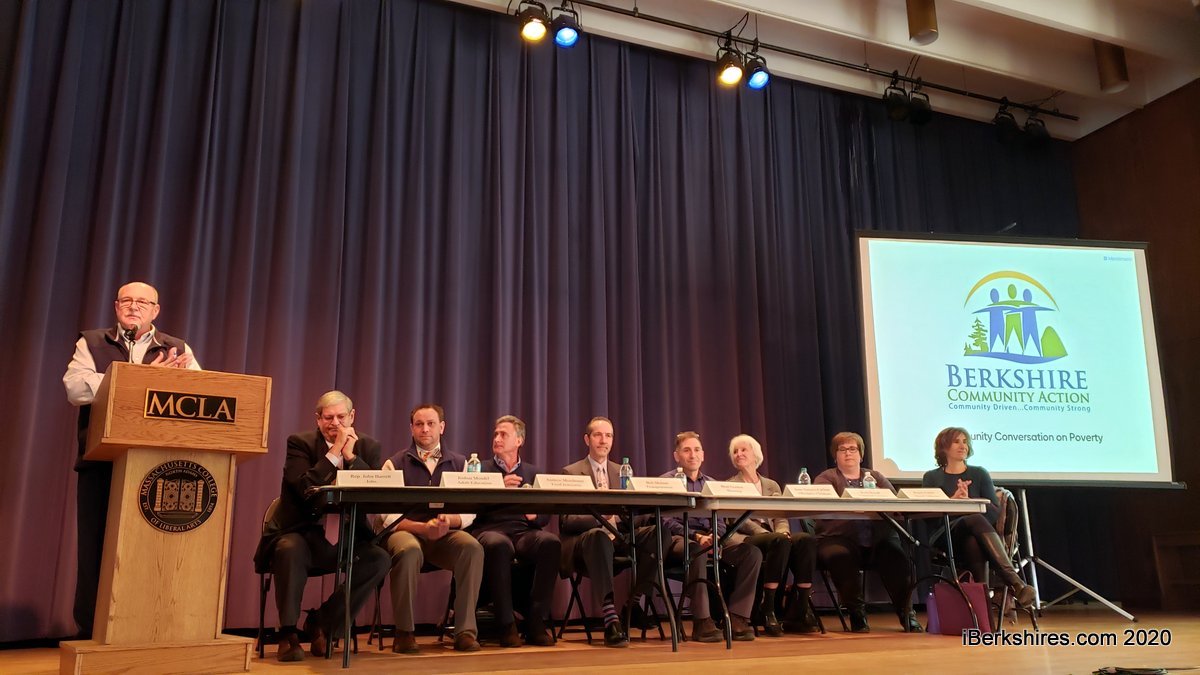
Food insecurity, housing, child care, education, financial literacy, and substance abuse were among the subjects of the poverty forum sponsored by the Berkshire Community Action Council and hosted at Massachusetts College of Liberal Arts on Friday morning.
BCAC, the federally designated anti-poverty agency for Berkshire County, is required to "take the pulse of the community" every three years, said Executive Director Deborah Leonczyk.
"Without your participation, we would essentially be deciding how to focus our work, simply on anecdotal information and assumptions," she told more than 100 representatives of local economic and social services agencies and community members.
The morning began at the college's Church Street Center with statements from a panel of experts on the issues their organization is dealing with. The panel was moderated by Richard Alcombright, BCAC's president of the board of directors and former mayor.
Speaking were state Rep. John Barrett III; Joshua Mendel, MCLA's director of corporate engagement and strategic partnership; Andrew Morehouse, executive director of the Food Bank of Western Massachusetts; Robert Malnati, administrator of Berkshire Regional Transit Authority; Brad Gordon, executive director of Berkshire County Regional Housing Authority; Anne Nemetz-Carlson has been the president & CEO of Child Care of the Berkshires; Kelli Kozak, vice president of community engagement for MountainOne; and Wendy Penner, director of prevention and recovery for Northern Berkshire.
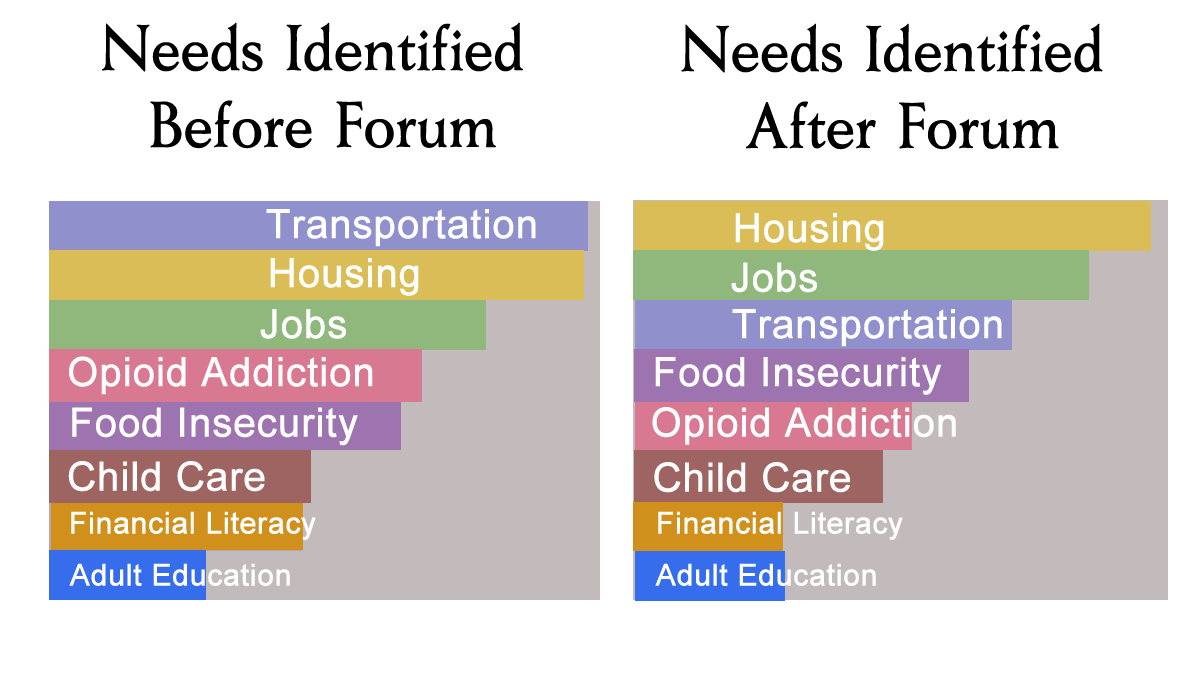
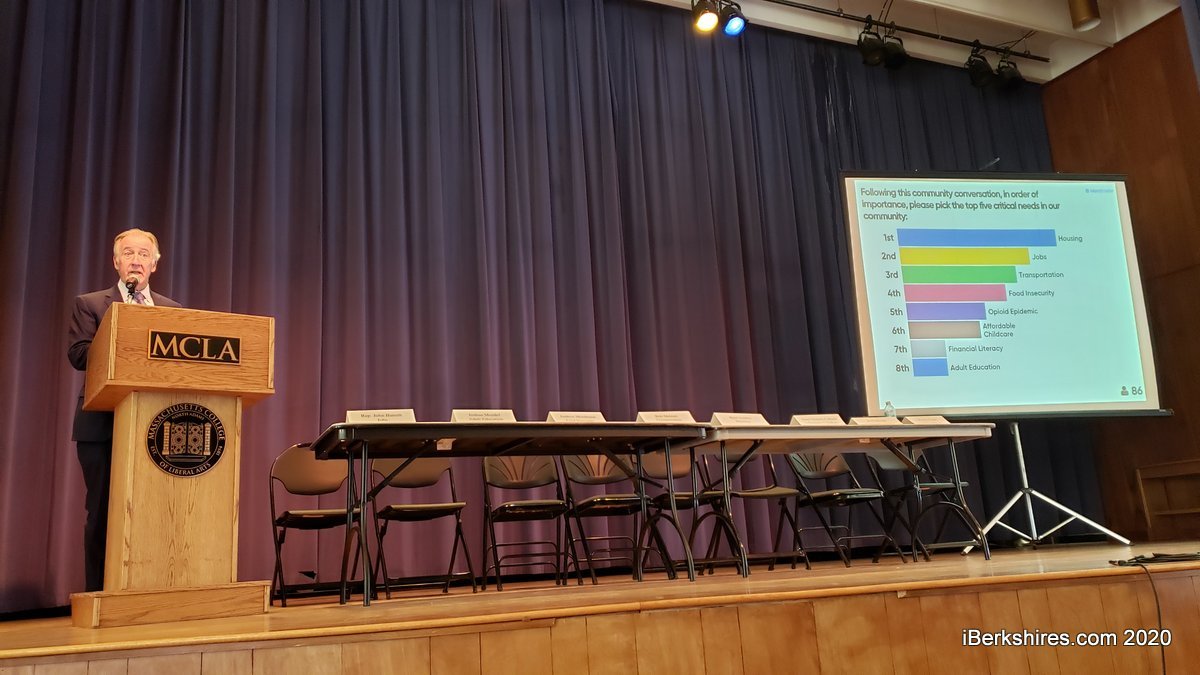
What followed were breakout sessions that explored each topic and a return for brief presentations. What the participants found was that the top identified needs stayed the same but the order in which they were priorities was shuffled.
Not suprisingly, they top needs continue to be transportation, housing and jobs — issues that have been at the forefront of the Berkshire conversations over a number of years. After the forum, however, housing rose from second to the top need while transportation dropped from first to third and jobs moved into second.
The region has mostly older housing stock and limited quality affordable housing; jobs are available but applicants are often short on the skill sets to fill them; and again, it's difficult to get to those jobs.
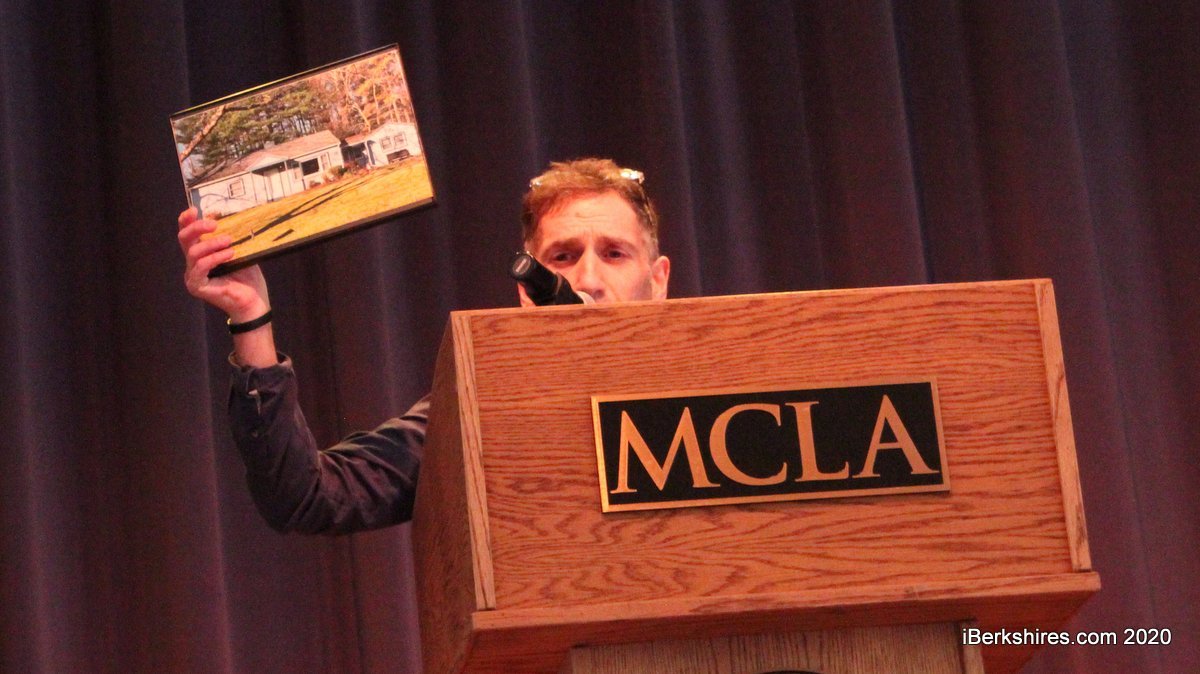
But housing, said Gordon, is the foundation for success, describing the modest ranch he leaves in that sheltered a family so they didn't need to worry about lead paint, or crime, or code violations or schools.
"It was foundational to the success of the children in this household. Literally and figuratively," he said. Many people struggle with chronic housing instability. "They may not actually be homeless, but they'll move multiple times over a year or two and that has an incredibly negative effect on that household relative to poverty. ...
"If you don't have a stable roof over your head, you're much more likely to be susceptible to the things that poverty causes."
One of the more significant challenges has been aligning workforce with jobs even as the region is seeing the lowest unemployment rate in years.
"The disconnect we've really kind of had is that there are 1,200 to 1,300 jobs but we have people underemployed an unemployed," said Jonathan Butler, president and CEO of 1Berkshire. A significant challenge is the "cliff effect," he said, for people to make the leap from the relative safety of the social service net into a low-paying job, even that job has the opportunity for future career advancement. "It's a difficult proposition ... wage levels matter."
Business doesn't often have the ability to provide the on-the-job career development, Butler said, adding that providing high school career counseling could prepare graduates for the opportunities open to them.
Mendel had ticked off a number of educational initiatives sponsored by MCLA, Berkshire Community College, and Williams College that could open up career fields, including programs being offered in Pittsfield and in conjunction with MassHire. But he acknowledged that today's students may be facing life challenges that will require more more resources.
"So, with this population, the colleges understand the need to work individually with each one of the students that each student is in a different place, and that in order to make sure that we're supporting and accommodating them properly, that we're sitting down with them with their own personal counselors," he said. "Each and every one of our adult learners in the community is a much different place from each other, and we want to make sure that they're well supported."
The BRTA is working to more flexible in providing transportation within the communities it serves, said Malnati, pointing to an app that can be downloaded to tell where the bus is so you don't have to wait in the cold and its response to changing needs by changing routes.
One element is teaching people how to use the bus, he said. "We've had a great success going to housing units and bringing a vehicle there, doing a little discussion, and it changes people's lives."
"The MTA is more than just a bus going up and down the road," Malnati said. "We're there to be a partner in the community. And we need some help from our other partners here."
.JPG)
Tabulating responses to the needs assessment.
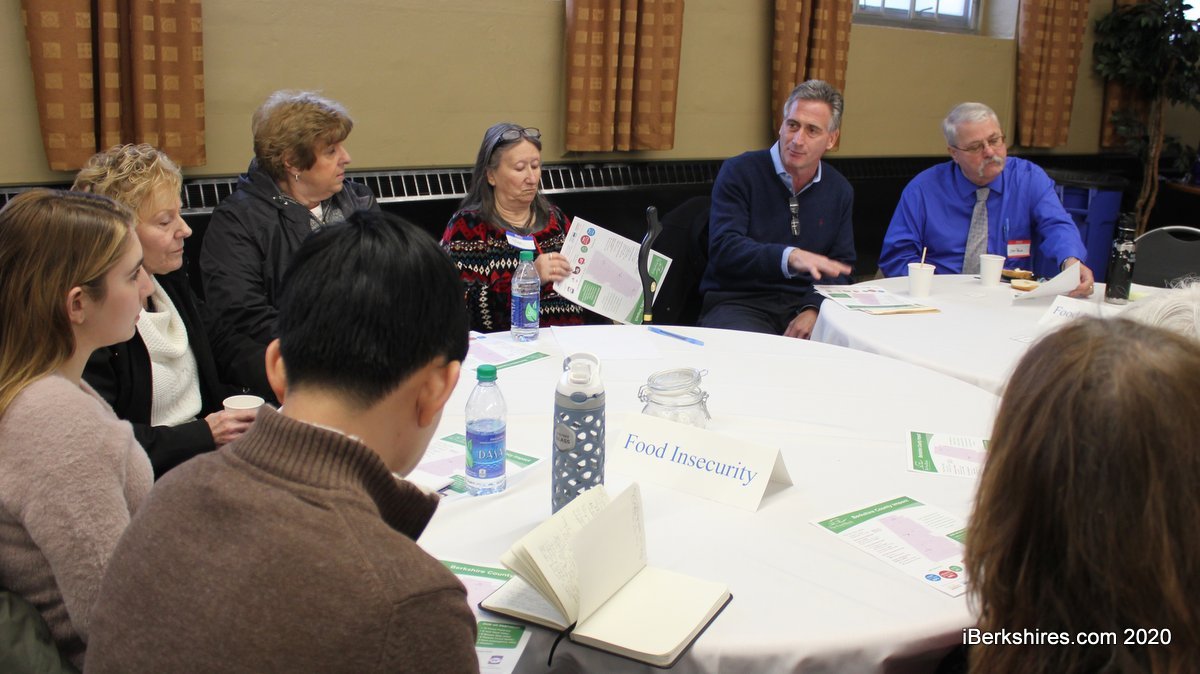
"If you don't have enough nutritious food to lead a healthy and productive life it's gonna affect your health in all kinds of ways, not only physiologically but even neurologically," Morehouse said. There are surface issues and underlying social and structural issues that cause food insecurity — from a traumatic life change such as job loss or divorce to rising costs, food deserts and lack of transportation or assets.
"Last year, we provided food to almost 38,000 people, an average of almost 18,000 individuals every month through this elaborate network of local feeding programs," he said. "We distributed the equivalent of 2 million meals, 59 percent of that food was perishable foods."
The bank advocates for policies that address hunger and its underlying causes. It's also looking to invest in farming by establishing a food hub and storage and contracting with farmers to grow the food.
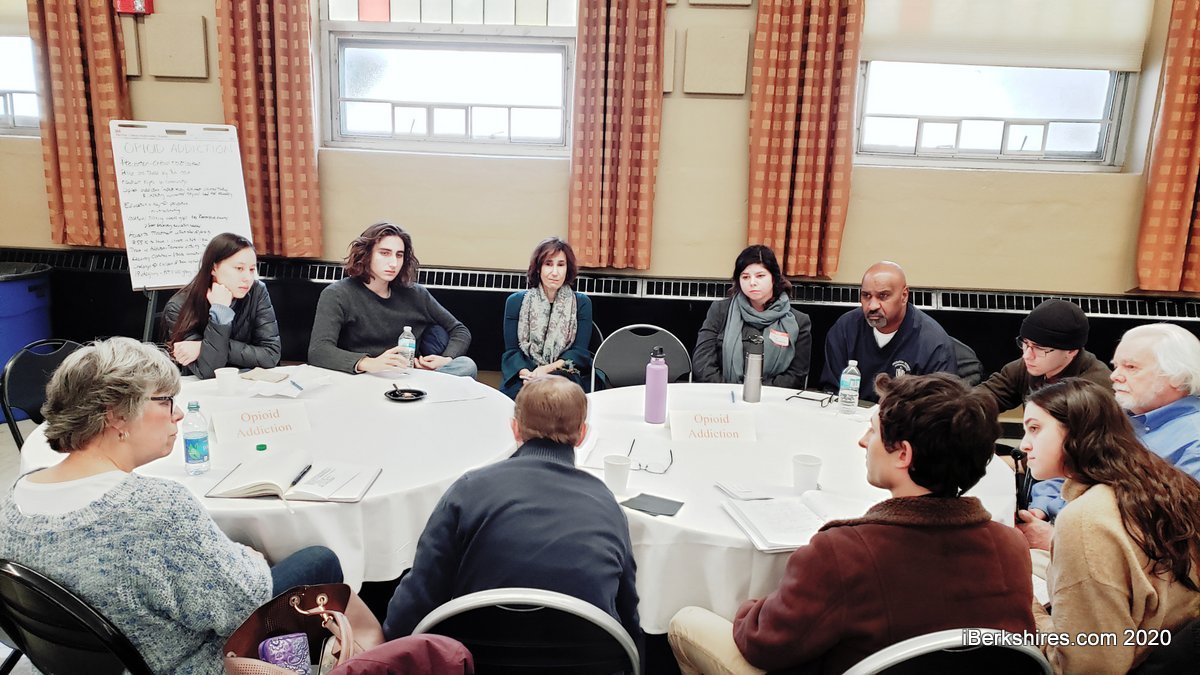
Food insecurity rose above opioid addiction, although that doesn't mean the substance abuse crisis has been solved. Penner noted that while the state is beginning to see a reduction in use, Western Massachusetts has not.
"This is a disease that knows no bounds and it's affecting people from all corners of our community and our country," she said. "Who is dying? Those at the greatest increase are those who've experienced an overdose, the homeless, folks with mental illness and those who've been recently incarcerated."
The nation has seen the average lifespan decrease each of the last three years largely to "deaths of despair," suicide and alcohol, Penner said. "Disturbing and concerning trends that have been linked to the decline of our manufacturing economy, although I really think that it's very complex to understand all the things that are contributing to the challenging social problems that we're facing."
The coalition has had a working group on opioids for some time, is helping support a peer recovery center and is working on prevention techniques that are starting at earlier and earlier ages.
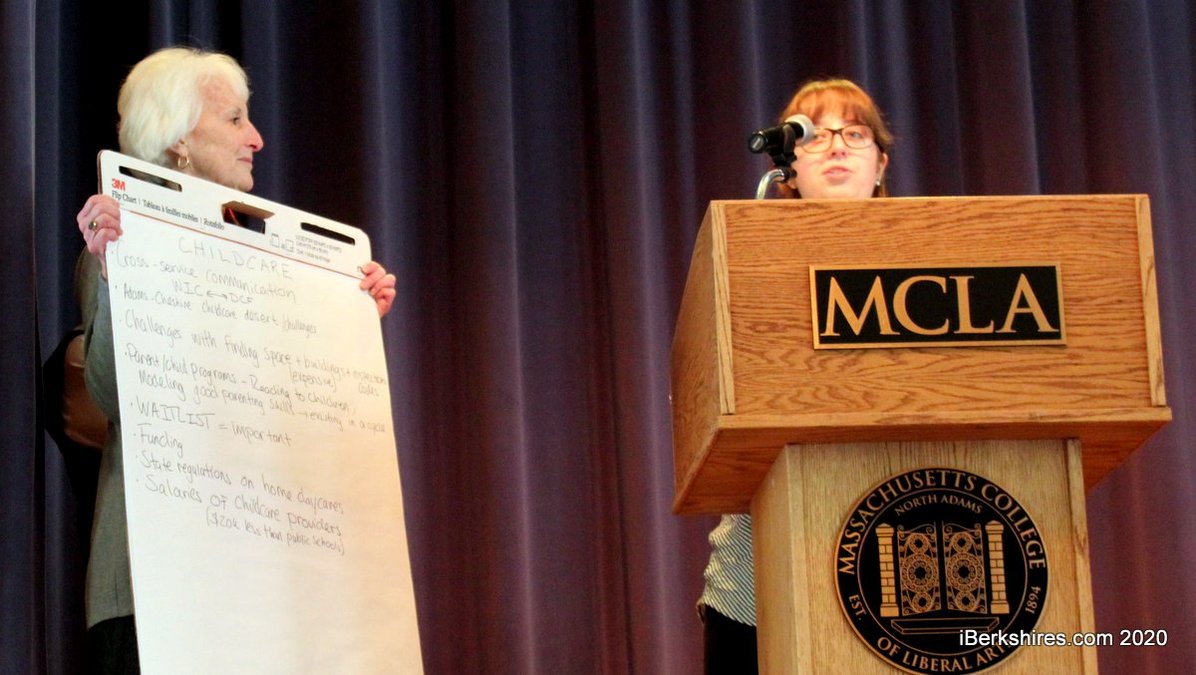
Nemetz-Carlson offered a "horror story" after the breakout sessions of a mother of twins who is still on the waiting list for child care — the twins are now 8 years old. Some 17,000 children are waiting for child care placement; CCB is able to offer a sliding scale because of support from local agencies but parents still have challenges with eligibility and transportation and the lack of care on nights and weekends.
She's hoping that the new commissioner of early education and care, Samantha Aigner-Treworgy, will come through with her strategic plan.
"She understands, or is learning quickly the problems of child care," she said. "And I think there's great hope so hope for the future but affordable child care is really a challenge."
Kozik offered a number of programs done through or in partnership with MountainOne, one of the larger local financial institutions, including financial literacy, first-time homebuyers and fraud prevention. The bank foundation also supports local social service organizations and public schools.
"And I'm saying all this this, not as a commercial for MountainOne, but because I truly feel that corporate social responsibility is a critical factor in supporting our communities, and definitely fighting poverty, particularly community mainstream banks and financial institutions," she said. "They're just so important."
Both Barrett and U.S. Rep. Richard Neal, who arrived for a brief address at the end of the forum, referenced Michael Harrington Jr.'s "The Other America: Poverty in the United States," a seminal work published in 1962 that inspired John F. Kennedy and Lyndon Johnson.
"Many of the poverty that existed then still exists today," Barrett said. He and Neal pointed to actions of the current administration to cut programs that help the poor, such as new rules to food assistance that could disqualify up to 700,000 people and attempts to cut fuel oil assistance.
Neal ran through a list of some things he's supported — the Affordable Care Act and the United States–Mexico–Canada Agreement (NAFTA upate) that he feels is a better trade agreement — and repeated his assertion that addicts should get care and not punishment to get them back into the workforce. Still, he said, the low unemployment rate doesn't "sync with the gig economy and working two jobs" and that the federal minimum wage needs to raised.
"I think what you've done today is really important for advocacy," the congressman told the gathering.
Tags: BCAC, community forum, poverty,