North Adams Committee Looks for Legal Clarification on Pillar Art
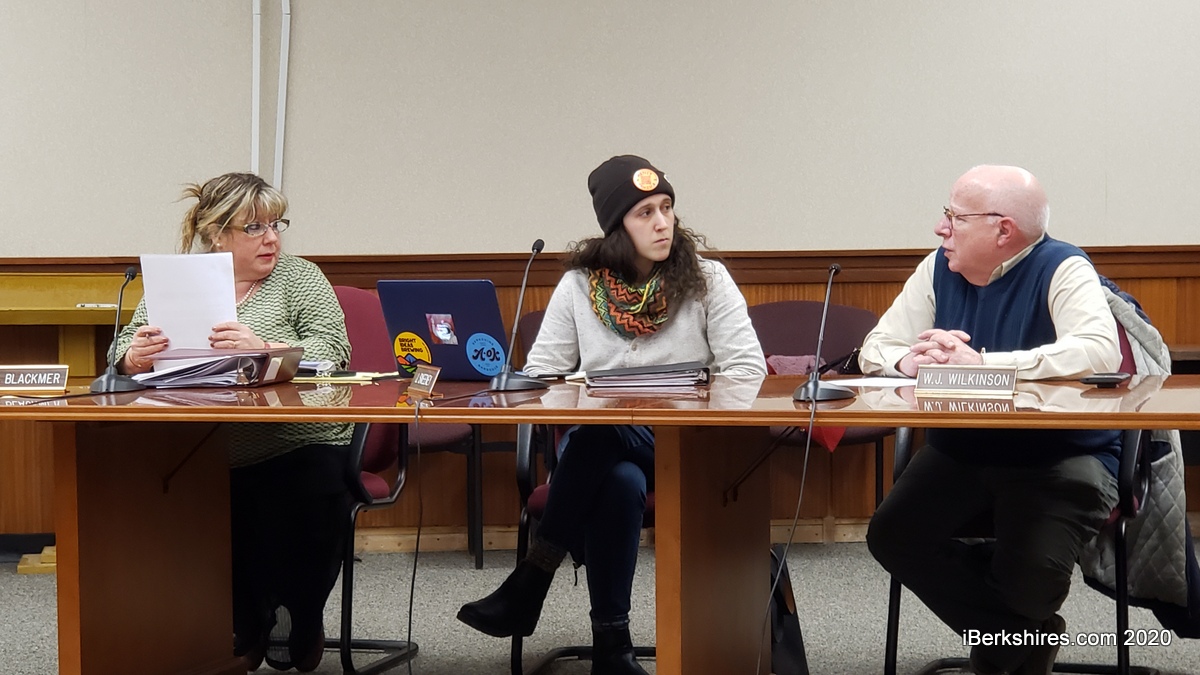
The General Government Committee, made up this term of Chairwoman Lisa Blackmer, Jessica Sweeney and Wayne Wilkinson, will report back to the council.
"We're sending it to the lawyer and my thought is let's let them do the heavy work first before we get too much in the weeds," said committee Chairwoman Lisa Blackmer.
Blackmer said her concern mainly was if or how the Visual Artists Rights Act would come into play. The 1990 act requires owners of the property on which the work is located to give artists at least 90 days notice that it will be removed. But it also only covers limited and original works of art.
William Oberst, one of the artists involved in the after-school project that produced the pillar murals, is asking that the city allow a sample to be taken to see if the works were still viable.
"A little sample two inches by two inches could possibly render 2 1/2 years moot," he said. "It would stop everything right there, we all go home."
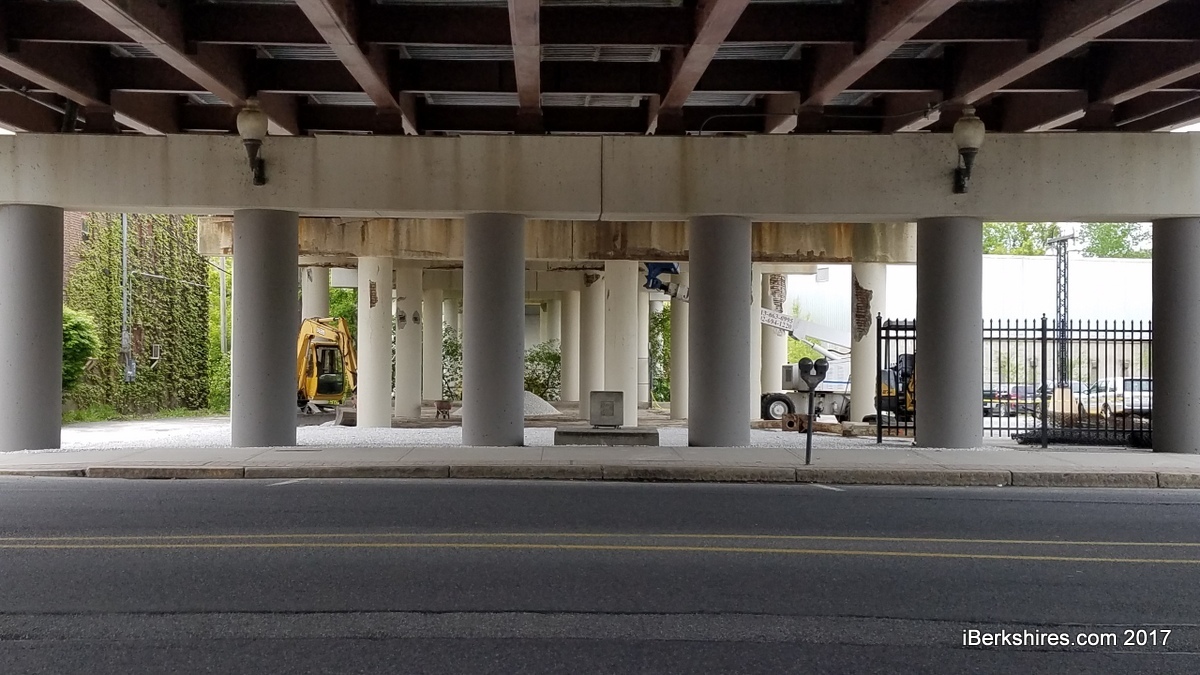
The pillars beneath the Veterans Memorial Bridge were repainted gray nearly three years ago by Massachusetts Museum of Contemporary Art as part of the restoration of the 20-year-old "Harmonic Bridge" sound installation in time for the opening of Building 6. The murals had been enlarged reproductions of Lewis Hine photos and pillow patterns made by the former Arnold Print Works.
Neither group of artists had more than verbal affirmation with the city — as far as can be determined — and Massachusetts College of Liberal Arts has uncovered no contracts or communications related to the pillar murals, which was announced in 2012 as part of DownStreet Art, a summerlong event coordinated by the college's Berkshire Cultural Resource Center.
The Public Arts Commission, which did not exist when either works were created, has rejected sampling the pillars to see if the anti-graffiti gray paint could be removed and the artwork underneath restored. Though the composition of the commission has changed, it has also stated that it did not feel ordering a sample test was within its purview.
At the commission's suggestion, Oberst and fellow artist Cynthia King reached out to the sound artists but found no resolution. They turned to the City Council, which in January referred the matter to the General Government Committee.
Oberst argued that the sound installation had not been maintained and "was basically a neglected piece of art." The murals, he said, "doesn't affect in the slightest the sound from the sound art."
He said the process for the sample taking and that Williamstown Art Conservation Center at the Clark Art Institute quoted $200 to $400 for the sampling and $125 an hour for the restoration.
Committee member Wayne Wilkinson asked who would be paying for the sample to be taken and any restoration that might happen.
Oberst said someone had offered to cover the cost in the past and he believed that offer was still on the table.
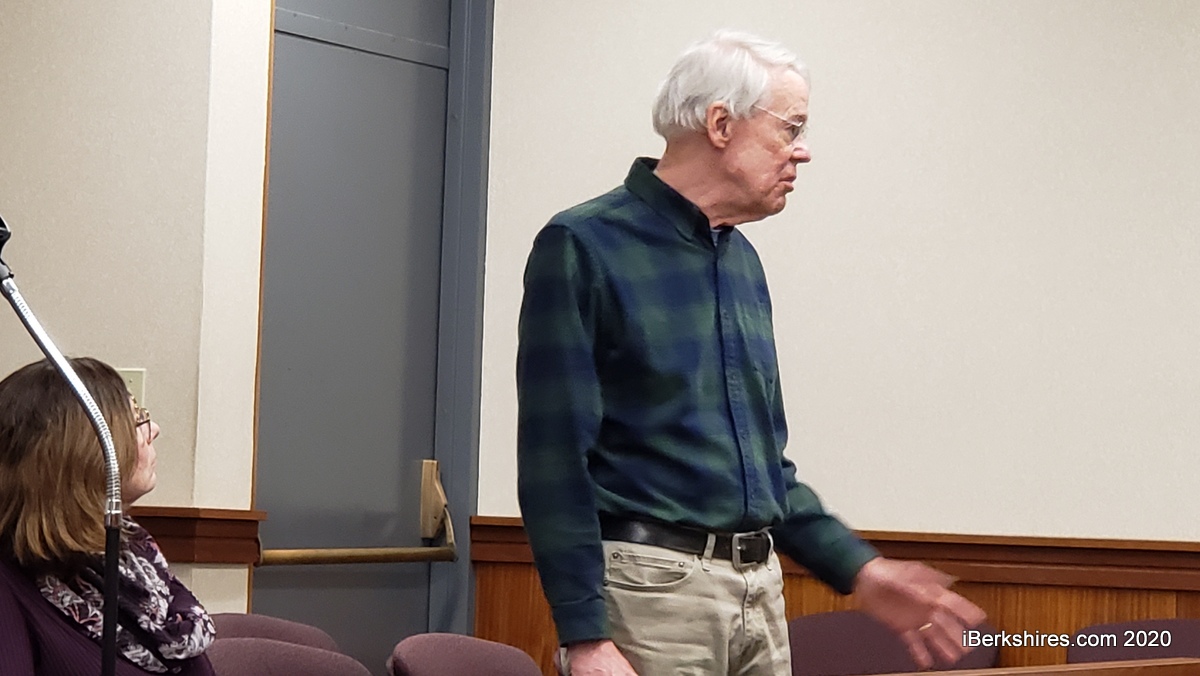
Artist William Oberst is asking that the city allow a sample to be taken of the paint to see if the murals can be restored.
"I guess it's kind of frustrating to have this kind of dumped back in," she said.
City Councilor Marie T. Harpin, who had brought forward a paper with Councilor Jason LaForest to order the sampling, responded that, "I guess I was being respectful of the commission and the mayor to take some action."
Blackmer thought that commission had take action — by not declining to forward with the sampling.
"They said it wasn't their responsibility," responded Harpin.
Resident Robert Smith, whose son Joseph has been one of the four advocates for the art, said it was a waste of the city's time.
"It's not so much for the children, who are now grown up, that are really involved with this," he said. "It's just a handful of people in the city who are involved."
The committee filed another communique related to public facing art in the form of "Big Bling." The 40-foot installation at the corner of Marshall and West Main was approved by the Planning Board and the Mass MoCA Commission.
Blackmer suggested that a representative of Mass MoCA be asked to appear before the council to fully explain the relationship between the museum, the city and the Mass MoCA Commission.
Tags: general government committee, pillar art,