Williamstown Businesses Likely to Take Hit with Students' Departure
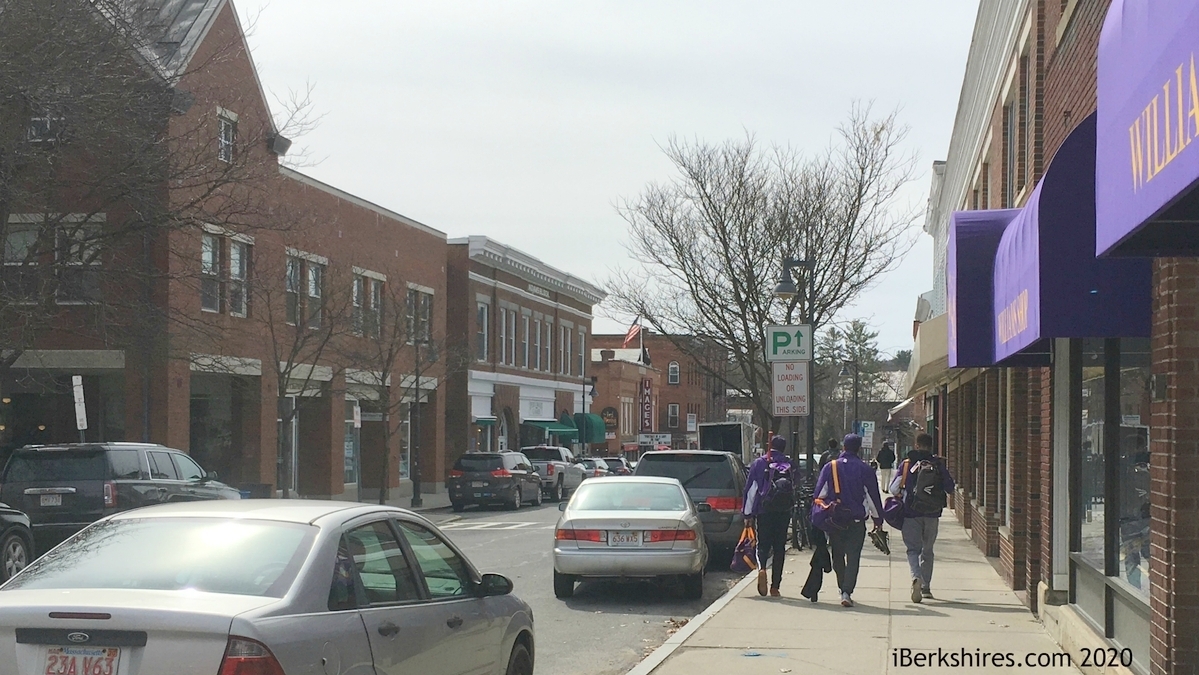
WILLIAMSTOWN, Mass. — Local business owners were concerned but not panicking Wednesday on news that Williams College will be closing its campus for classes after Friday and moving to a remote learning model for the rest of the semester in response to concerns about the novel coronavirus.
"It will impact us, definitely, on both sides of the business," said Amy Jeschawitz, a co-owner of Nature's Closet, which sells outdoor clothing and smoothies and salads in its bifurcated Spring Street store. "The smoothies are definitely popular with the students.
"We know break comes up at the end of March, but having them leave a week early does have an impact. March, as we all know, in our community, is a slow time to begin with. So this month is going to be slower. And it will lead in April, for sure."
That is because as of March 17, all students must leave college housing, which accounts for most of the student population at the liberal arts college. Faculty on Wednesday were informed by the college that they must develop online learning instruction for the remainder of the spring semester.
The college indicated that it will decide at a later date whether it will hold events like commencement and reunion weekend in June as scheduled.
"With spring sporting events and things being canceled, we're not getting the parents who would be coming into town," Jeschawitz said. "It will have an impact."
The executive director of Images Cinema agreed, though, like most people reached on Wednesday afternoon, he was not sure the extent of that impact.
"[Students are] definitely a sizable portion, and it does vary from film to film," Doug Jones said. "In addition to students there's faculty and administrative staff, too, who make up a large portion of our overall audience.
"There are always times of the year when you can feel Williamstown expand and contract in a normal year -- before school year, after school year, just before [Williamstown] Theatre Festival happens. There is a way the town breathes in and out. This is like the town suddenly has a case of hiccups. ... We're experiencing a rhythm where we don't normally have it."
Jones said the independent film house on Spring Street has implemented a variety of changes in recent weeks as concerns about potential virus transition have been heightened. That includes not handing out paper tickets, allowing customers to self-scan credit cards, installing touch-free hand sanitizer stations and a dramatic step that went into effect on Wednesday.
"We are today implementing a policy of limiting the number of tickets available to any single showing by 50 percent to ensure that there is space and capacity in the theater for people to practice their own social distancing," Jones said.
At The Print Shop, owner operator Elinor Goodwin said her business is not solely dependent on the college but she does expect some impact.
"It will definitely impact me," she said. "This is a big time for passport photos for me, all the study abroad preparation for next year. That's something we keep pretty busy with.
"I just worry about the restaurants and hotels for sure."
That said, Goodwin appreciated the difficult decision that college President Maud Mandel faced in deciding to send students home.
"I think Maud's point is completely valid that if any outbreak happened in this area, we are not medically prepared," Goodwin said. "It would really cause chaos. So I appreciate the fact that that's one of their factors.
"All I can say is I wouldn't want to be the one to have to make that decision. It's so difficult. There are so many factors."
Another Spring Street business owner was less sanguine about the decision.
Paul Lovegreen of Tunnel City Coffee questioned the efficacy of sending students home.
"I understand canceling athletic events," Lovegreen said. "I understand canceling theater events. I understand canceling anything that brings populations from outside the community into town.
"But to cancel classes of a population that is least vulnerable [to COVID-19]? It's really pathetic. What kind of message does that send? Go home?"
Lovegreen stressed that was his personal reaction to the college's decision. He was less sure from a business standpoint how much the closure of campus will impact his popular coffee shop.
He said the recent spate of construction in and around the south end of Spring Street was "devastating" and he thought potentially more impactful than sending the students home.
"I'm not going to say we won't be hurt," Lovegreen said of Wednesday's announcement. "We are. It's just too soon to tell how much."
Lovegreen said he would have a better idea of the impact of the students' departure at the end of the month.
The owner of the Moonlight Diner on Main Street (Route 2) said the most likely impact for him will be the loss of things like college sporting events that draw visitors from out of town.
"We had one of our busiest weeks of the winter last week, but a piece of that was Williams had a hockey tournament, which was good for us," said Mike Ameen, who has been at the diner for 27 years.
"I think we'll lose that kind of business, the teams and people who come to the school over a weekend. It will definitely hit the area. Williams College, obviously, is one of the bigger institutions in Williamstown. If they're shutting down, it will have a ripple effect through the businesses. Hopefully, we'll be able to survive. It's a difficult situation. Everyone is doing the best they can -- the people in the town, just in general, not just the diner."
Ameen said he did not notice any drop-off generally in business because of concerns about COVID-19.
"The good thing about the food industry in general is they have really good procedures anyway for keeping things clean," he said. "Now it's just more focus on it -- maybe a little overboard, but that's what the situation calls for.
"[Williamstown Health Inspector] Jeff Kennedy does inspections all the time. He's very knowledgeable and keeps us up to date on all the latest information. The restaurant industry is more equipped to handle this than other businesses. The food industry more aware of regulations about sanitation and stuff."
A couple of Spring Street businesses declined to comment on the impact of the college's decision.
The manager of one shop replied, "It's the biggest employer in North County, what do you think is going to be the impact?" with more than a hint of sarcasm in his voice before saying he had "no comment."
Others agreed that businesses will have to do what they can in what promises to be a challenging spring.
And one observer, who owns commercial property on Spring Street, said other customers could fill the gap in the prolonged absence of the students.
"Now is the time that local residents can really step up and support these businesses," said Hugh Daley, who serves on the town's Select Board. "People obviously need to do what is right for them as far as taking care of their health. But when they shop or come out to eat, they should think about keeping their business local."
Tags: local business, spring street, Williams College,