image description

BRPC Eliminates Community Assessment Increases

By Jack GuerinoiBerkshires Staff
Print Story | Email Story
PITTSFIELD, Mass. — The Berkshire Regional Planning Commission accepted an amended budget Thursday with no increases to community assessments.
 
The Committee voted to rescind the assessment increases to member communities in response to the financial impacts COVID-19 will surely have throughout Berkshire County.
 
"The situation has changed dramatically since January and understanding the fiscal challenges that our communities are going to be facing over the next year and possibly longer," BRPC Executive Director Thomas Matuszko said. "It is a recommendation to roll back that increase."
 
Originally in January, the commission voted to implement a 2.5 percent increase to all member communities but earlier this month agreed it may be better to keep the assessment level funded.
 
Matuszko said this amount may be small, around $2,600 and is more symbolic.
 
"I think it is an important symbol to our communities to show that we recognize their plight," he said. 
 
The committee then accepted the full fiscal 2021 budget of $3,434,072. Matuszko said the budget is actually $574,564 higher than fiscal 2020. This is primarily because of several new grants for Education, Public Health and Environmental programs.
 
Toward the end of the meeting, the committee took some time to talk about the impacts of COVID-19 and Matuszko asked if any of the communities were considering new zoning that would expand outdoor dining and shopping.
 
"It seems that the social distancing requirements might be with us over the summer," Matuszko said. "Something that might allow for greater flexibility for outdoor dining."
 
Sheila Irvin, the Pittsfield representative, said the city is considering such changes. She said other communities have found ways to use public space for dining.
 
Pedro Panchano, the Great Barrington representative, said his town has had early conversations about closing down roads to vehicles and allowing open markets that would allow social distancing. 
 
James Sullivan, the Hinsdale representative, said he was hesitant to change town or city codes until there is more information on the virus. 
 
"Making changes to the zoning bylaws and having to go back and change them again later would be redundant to begin with," he said. "We are 4 1/2 months into this and are literally talking about restructuring everything we do."
 
He reiterated that the virus was not permanent and noted there is not a one size fits all zoning change that would help all communities and businesses.
 
Commissioner Roger Bolton said these changes could be temporary and they did not have to try to push full on zoning changes. 
 
Commissioner Malcolm Fick added that he did not see a zoning change as restrictive but something that could help restaurants and businesses recover and cope with social distancing requirements.
 
"Every town is suffering a lot and if we can do something small to help businesses that are suffering it is a worthwhile endeavor," he said. " What we can do to help small businesses now is vital."
 
Chairman Kyle Hanlon agreed and said restaurants specifically are going to "take it on the chin" this summer and it may be helpful if planners could find a way for them to capture more revenue through this next short term period. 
 
John Duval of Adams said it also may help build consumer confidence if communities can find ways to alter zoning to allow people to visit establishments while maintaining social distancing.
 
"It is a matter of confidence," Duval said. "They can be open, they can be clean, and have all of the social distancing but if people don't have the confidence to go out and visit these restaurants or stores ... we need to get people confident to help them in the short term."
 
In other business, the commission approved the Berkshire County Metropolitan Planning Organization draft Transportation Improvement Program that ranges from fiscal years 2021 to 2025.  
 
Anuja Koirala, senior transportation planner, went through the plan and requested that the chair vote for the plan at the upcoming MPO meeting. 
 
A comprehensive view of the plan can be found here in the meeting documents.
 
The commission also accepted the proposed Transportation Unified Planning Work Program for fiscal 2021 and some changes to the Solar Massachusetts Renewable Target (SMART) Program Regulations
 
Both of these can be found in the meeting documents.
 

Tags: BRPC,   fiscal 2021,   
If you would like to contribute information on this article, contact us at info@iberkshires.com.

PCTV is Turning 40

By Breanna SteeleiBekshires Staff

PITTSFIELD, Mass. — Pittsfield Community Television is turning 40 this week, and it's celebrating with its viewers and listeners.

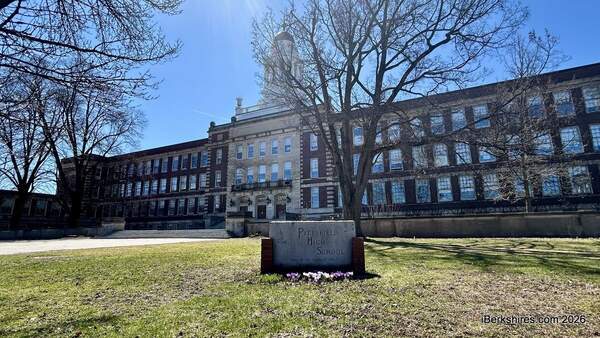
This Friday, Sept. 18, PCTV will celebrate at the Berkshire Hills Country Club. Ryan Peterson, WTEN News10 ABC anchor and Pittsfield High School graduate, will give the keynote address. 

Executive Director Shawn Serre, who has been with the station for over 32 years, said it's their chance to celebrate all they have been able to bring to the community.

"It's a chance to reflect on everything that the organization has done over those years, all the people that have been involved. From board members to volunteers to producers to crew people to staff members, and all the different programs that we've produced," he said. "Everything from public programming to education, sports, graduations, parades, government meetings and forums, and election night coverage, and all kinds of other things that just year upon year of history that we've been able to create and document here for the Pittsfield community over those years." 

Serre took over as executive director about nine years ago. Originally a volunteer fresh out of college.

The original board included former mayor Edward Reilly, Dan Dillon, Diane Morgenstern, Bernard Avalle, and John Fukes of the Berkshire Athenaeum. The operation was all-volunteer until PCTV hired the first executive director in January 1989.

PCTV has operated out of its station on Federico Drive since 1999. But originally they worked out of a basement. 

"The first location that we ever had, we had all of our equipment stored in cardboard boxes in the basement of the Berkshire Athenaeum, because the Berkshire Athenaeum at the time was very gracious and allowed us to have some space while we sort of got our feet on the ground and sort of got things organized," he said. "But we had no location. We had no studio. We just had this equipment that was ordered with the money that we had from the original cable franchise grant."

"So that lasted a couple of years, and then we signed and got a lease over in our first studio location, which was over on Fourth Street in Pittsfield," Serre continued. "That was around the time that I first got involved, just before we moved to Fourth Street. So I was there in the basement of the library, opening those boxes up and seeing what we had for equipment. So we stayed there at Fourth Street for about 10 years, and then this building that we're currently in now, over on Federico Drive, was constructed in 1998. It was built kind of custom-made for the cable company and for us and for one other company." 

Serre said one of their proudest moments was saving the radio station WTBR-FM back in 2018. PCTV made space for them so they could continue operation.

"We carved out some space here in our facility for that, and we've been operating that radio station ever since. So those are some of the big milestones of growth of the organization over the years, and the things that we've done," he said.

They have also invested in advanced technology to keep their programming accessible to all.

"Technologically, there's another whole series of things that we've gone through," he said. "We've started out with a single cable TV channel. We grew to three cable TV channels. We started out as standard definition on videotape, and we grew to digital, and then to high definition, and then everything went to the internet. So we're able to offer video on demand and live streams and video on social media. And then with the radio station, we also have a live stream there and podcasting. So we've seen a lot of technological change and tried to roll with that over the years."

Serre said that PCTV strives to keep people informed while also allowing space for people to create their own media.

"The whole idea behind PEG [Public Education and Government Access]...the whole idea behind that back in the 70s and 80s was that people could be left behind with the technology that's available to the big corporations," he said. "So, if you had a cable system at the time, ordinary people maybe they had camcorders at home, but they didn't have access to a TV studio; they didn't have access to the kind of technology that we had to allow them to create programs and share it with the community. So we filled that gap, and that was one of the main things that we did. And then also to be able to create programming for viewers and for the city, so that the municipal meetings can be shown, and so school committee meetings can be shown, and it really brings people in and involved."

View Full Story

More Pittsfield Stories