Governor Launches Mask Awareness Campaign After COVID-19 Outbreaks
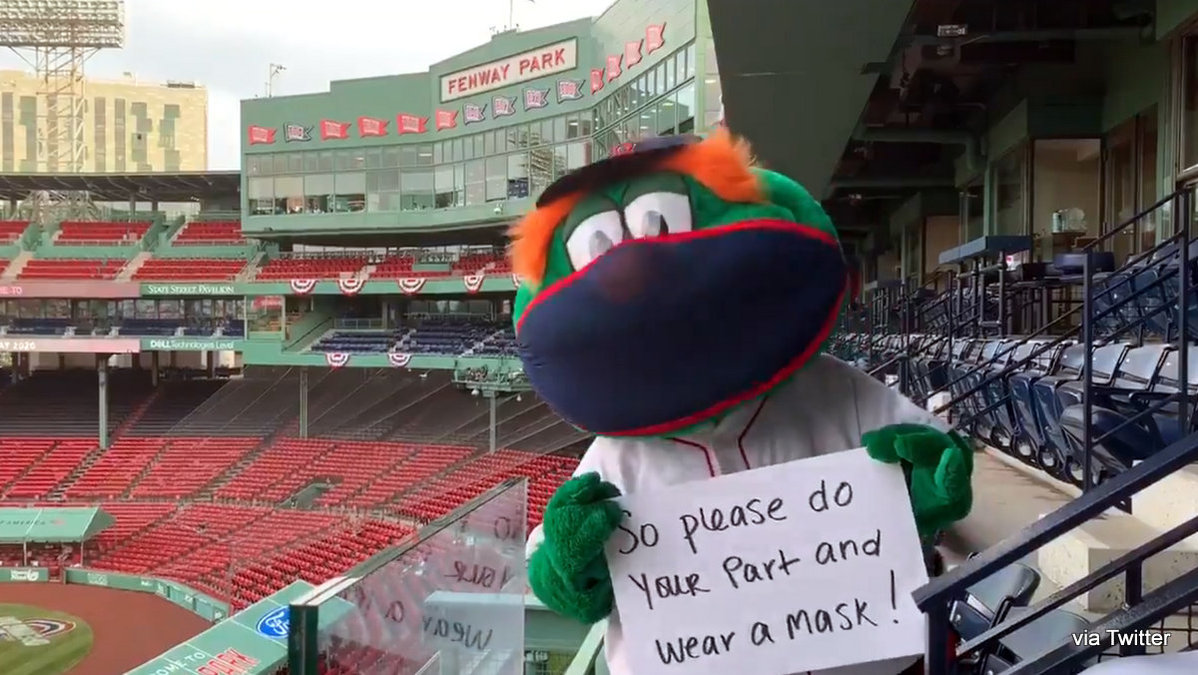
I’m joining @MassGovernor & @MassDPH to keep Massachusetts safe. It’s time to #MaskUpMA! https://t.co/oFUZs2q1QM pic.twitter.com/NlQv1d9Qna
— Wally (@Wally97) July 31, 2020
BOSTON — House parties, camps and other large gatherings are being blamed as contributing to "a slight but important rise" in positive cases in Massachusetts.
Gov. Charlie Baker, in announcing a #MaskUpMA initiative on Friday, said these "lapses in judgment" are "missed opportunities to keep the door that we all work so hard to close shut." All of the gatherings cited that have created hot spots were in the eastern part of the state, where the number of positives has been consistently higher than in the Berkshires or the islands. One cluster in Western Mass was the result of lax masking at Baystate Health Systems in Springfield that resulted in dozens of cases.
The state had seen an uptick in the number of positive COVID-19 cases and the seven-day average of positive cases has risen from 1.7 percent during most of July to 2 percent over the past week. The Department of Public Health is investigating a large lifeguard party in Falmouth, a house party in Chatham, an unauthorized football camp in South Weymouth, a 90-person prom party in Cohasset, and a private party on a ship in Boston Harbor.
"These gatherings were planned by both adults and young people that demonstrate an at-times unwillingness to accept the fact that this virus is extremely contagious and in many cases invisible as it spreads," Baker said Friday, reiterating the need to follow protocols. "We've said many times before, that a significant portion of the population that gets infected by COVID will not show symptoms. But they can and often do pass the virus on to others who do get very sick and in some cases, die. Anecdotal evidence in Massachusetts makes clear that this has happened a lot over the course of the past four months."
The state is in Phase 3 of reopening, which allows limited indoor activity in restaurants, worship services and offices, and the reopening of businesses including personal services such hairdressers, barbers and nail salons. Indoor gatherings are limited to 25 people within appropriate-sized venues that allow for social distancing.
"The situations I just recapped are a recipe for disaster and need to stop if we want to continue to reopen and get back to a new normal in everybody's lives here in Massachusetts," a frustrated-sounding Baker told the press. "If we continue to see a rise in new cases, changes in our public health data, we'll have to consider a number of options, including reducing the gathering size back down to a smaller number."
DPH is working with local boards of health in the community tracing collaborative to identify and follow up with potential contacts in the most recent outbreaks. Since the collaborative's launch, nearly 141,000 contacts have been made to aid in mitigating the spread of the virus.
The governor and Secretary of Health and Human Services Marylou Sudders stressed the need to keep wearing masks, avoid crowds, social distance at least 6 feet and keep sanitary practices. The #MaskUpMA launched on Friday will include social media testimonials and updated public service announcement from the Department of Public Health on the importance of masking. The Red Sox's mascot, Wally the Green Monster, was featured as one of the first social media postings.
Baker said the goal at the beginning of the pandemic was to get the seven-day positive rate below 5 percent, which was accomplished. The "troubling clusters" have not been the result of the commercial reopening, he said, but rather private recreational behavior.
"I think from our point of view, if we continue to see rises and positive test rates, we're going to have to make some changes," he said. "But the best way to deal with a cluster is to not have one in the first place. Businesses are open. The weather's good - go outside and enjoy yourself and do the things you know you have to do to slow the spread."
The state instituted a two-week quarantine for anyone coming into Massachusetts to stay and who come from areas outside the low-risk Northeast region, unless that person had a negative test within 72 hours. The order goes into effect on Saturday and violaters are subject to finds of $500 a day. Baker said much of the concern was people coming from the Sunbelt and far West where COVID-19 rates were 10-12 percent.
"I will say this, the travel form website has had over a million hits, since we put it up, and there are 8,000 people so far, who have filled out the form," he said.
Tags: COVID-19,
More Coronavirus Updates