Williamstown Ag Commission Argues for Farmer in Dispute with DCR
WILLIAMSTOWN, Mass. — The Agricultural Commission this past week went to bat for a local farm involved in a dispute with the Department of Conservation and Recreation over a leased parcel in the Mount Greylock State Reservation.
Richard Haley of Cold Spring Road and Carl Sweet of Hopper Road in May received a "cease and desist" letter from DCR alleging unauthorized activities on the land which the farmers say they have leased continually since their uncle sold the 31-acre property to the commonwealth in 1990.
On Monday, the Ag Commission met with Haley for the second time in two weeks and agreed unanimously to send a letter to the director of the DCR's Western Regional Office protesting the farmers' treatment at the hands of the agency's employees and requesting that DCR work to resolve the dispute amicably.
Among other points of contention is the status of the lease itself.
In a May 13 letter signed by DCR West Region Regional Director Domenick Sacco, the agency says that a special use permit for haying purposes on the land expired on Dec. 31, 2007.
Haley told the Ag Commission that Haley Farm pays the state $250 every year for use of the property, and he has the canceled checks to prove it.
He told the commission at its July 29 meeting that the agency first told the farm that DCR would be raising the cost of a lease to more than $2,000 per year but later revised that figure under circumstances that struck the commissioners as curious, to say the least.
"[A DCR official] met with us two weeks ago today in the Hopper parking lot with his new, revised edition of this permit," Haley said. "The first thing he said to me was, 'We have a lot of mutual friends,' so instead of $70 an acre, he wants $25 an acre.
"He can't make deals like that because we have mutual friends. You're supposed to bid on the land."
Ag Commission Chair Sarah Gardner drove that point home in her letter to DCR dated Aug. 10.
"The proposed new lease price is more than double the current price, and we question how the amount was arrived at, because we know that other farm leases are set by bid, not established by the DCR," Gardner wrote.
At the July 29 meeting, Haley told the Ag Commission that the farm proceeded with its first cut of hay this year in spite of the mid-May "cease and desist" letter after consulting with state Rep. John Barrett III, D-North Adams.
"I got hold of Rep. Barrett, and he told me to continue farming," Haley said. "The second cutting is ready. I'm in a bind. I think I should listen to Rep. Barrett because he's the only one standing there for the small farmers. He answered my phone calls and is trying to help me. He's the only one who has tried.
"John Barrett specifically told me to go ahead and continue farming."
Ag Commissioner Averill Cook encouraged Haley to continue to use Barrett as his point person for dealing with the agency.
On Monday, Haley told the commission that Barrett told him that since Haley Farm already paid for use of the land in 2020, it should continue to use the acreage as it has in the past.
Meanwhile, the commission developed its own response, a three-page letter that talks about the importance of preserving family farms and argues the commonwealth and its agencies should be working to support those farms rather than creating roadblocks to success.
The panel asked DCR to reconsider its demand for higher lease payments and the restrictions outlined in a 10-page draft "Mitigation and Operations Plan" that the commissioners called "burdensome and expensive."
"We sincerely hope it's not the DCR's intent to push Haley Farm out of business," the Ag Commission wrote. "This circumstance has caused the farmers a high degree of stress for the past several months, as they have been careful stewards of this land for decades, and are now living in fear that they will be removed from the land for their inability to afford the new lease price and the measures required in the Mitigation Plan."
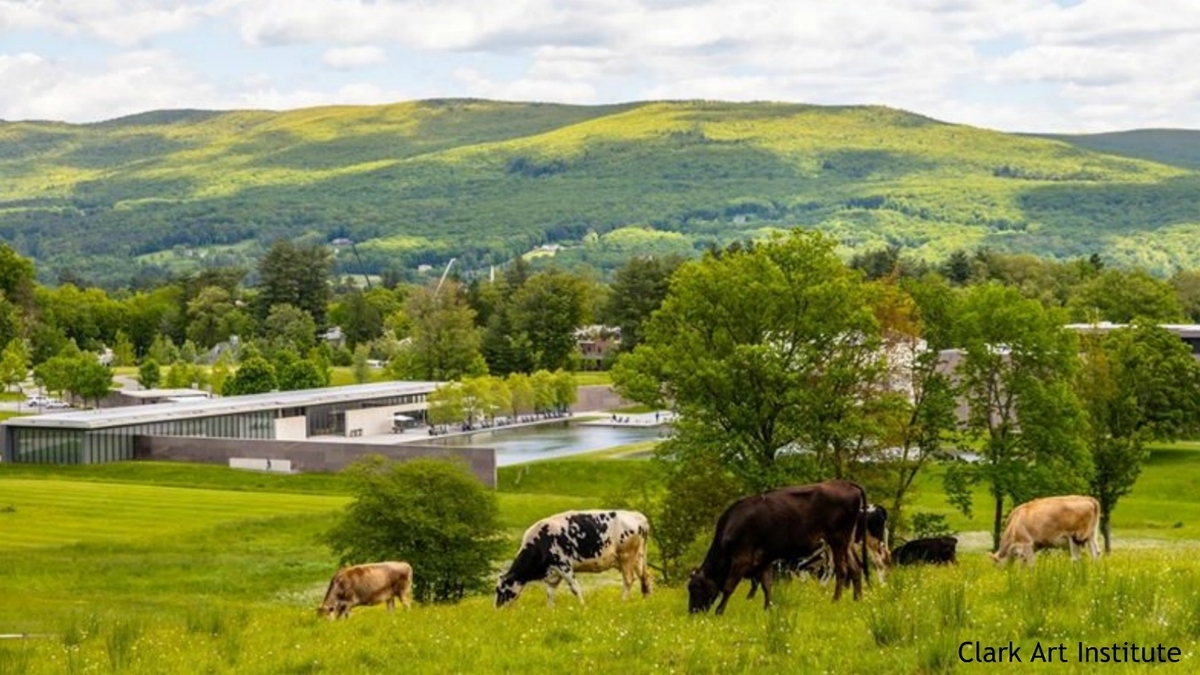
The Ag Commission's letter also talks about the contribution Haley Farm makes to the Williamstown community by pasturing its cows in the summer on the grounds of the Sterling and Francine Clark Art Institute.
Haley told the commission he has a great relationship with the art museum, which highlights his cows in its promotional materials, including a banner photo currently appearing on the institution's web page.
"This little farm in Williamstown means a lot to the community," Haley told the commission. "If you go back and ask most alumni from Williams College, they've been up in that pasture. The college uses it for their Mountain Day. They go up and camp out with the cows.
"No other place, probably in America, can you go, enter a pasture, enjoy the view and cows and walk up and pet 'em."
Tags: agricultural commission, agriculture, DCR, farming,