image description

Clarksburg Keeping Municipal Buildings Closed to Public

By Tammy DanielsiBerkshires Staff
Print Story | Email Story
CLARKSBURG, Mass. — The governor's orders issued this week restricting gatherings means that Clarksburg public buildings won't be reopening any time soon. 
 
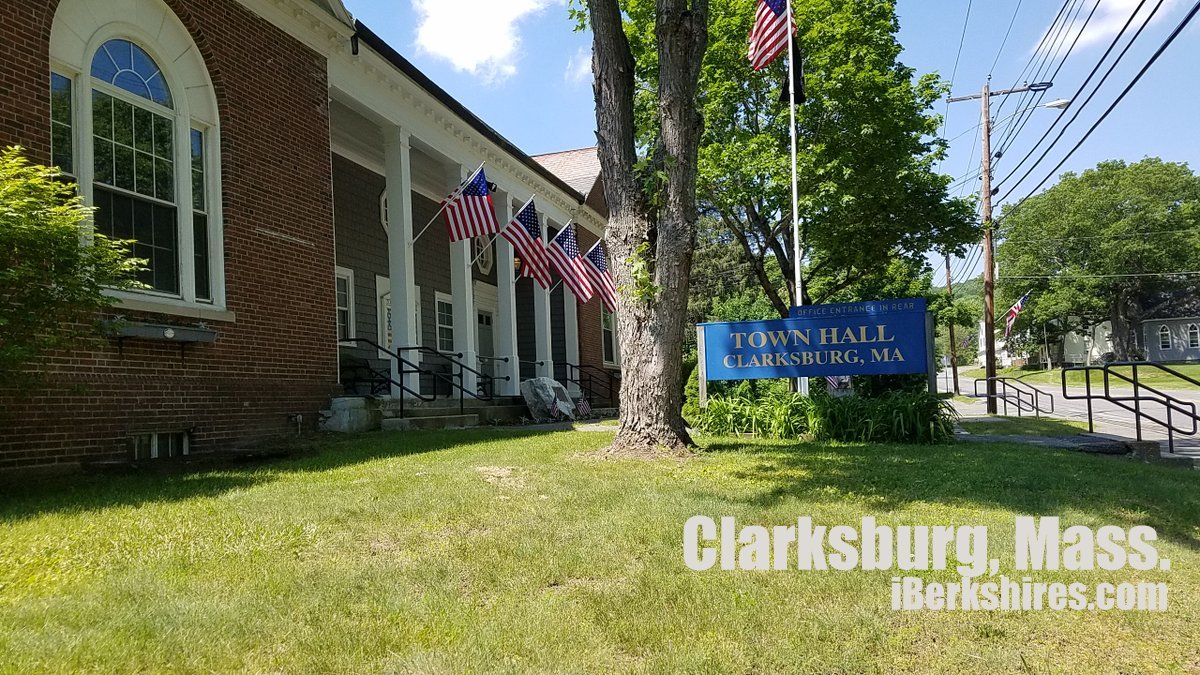
The Select Board, in a brief emergency meeting on Tuesday morning, voted to keep the library, Town Hall and Community Center closed indefinitely effective Nov. 4.
 
The board had worked with the Board of Health to prepare for reopening the buildings to the public on Monday. But Gov. Charlie Baker this week pulled back on gatherings as part of several orders made to address an uptick in novel coronavirus cases in the state. 
 
The reopening had been dependent upon getting the square footage of the buildings to determine the occupancy levels. The governor's orders, effective Friday, Nov. 6, are that personal can have a maximum of 10 people and event venues 25, as along as 6 feet of social distancing is maintained. 
 
Board member Danielle Luchi asked that the motion allow the library to continue its curbside operations. 
 
"I know they like have their trustees help out at the library and now I just want to make sure, hopefully, that they're being cautious and keeping it under 10 people," she said. 
 
Chairman Ronald Boucher did not see it as an issue since the library had been functioning this way for a while. 
 
The Town Hall reopening would mainly have affected access to the Selectmen's Meeting Room since most operations are being done by phone, email and secure drop box. However, the Council on Aging had been hoping to reopen the Community Center for activities for small groups of seniors.
 
The date was set for Nov. 4 because of the general election being held (today) Tuesday; the polls are open at the Community Center until 8 p.m.
 
A message was sent to boards and department heads about the decision. Luchi asked that signs be posted as well.
 
"Town officials want to be sure we continue to remain cautious in order to keep everyone as safe as possible," the message reads. "Please share with members of your respective boards and committees."
 
"It's just better to be cautious, you know," Boucher said. "We've gone this long, a bit longer won't kill us."

Tags: COVID-19,   


More Coronavirus Updates

Keep up to date on the latest COVID-19 news:


If you would like to contribute information on this article, contact us at info@iberkshires.com.

Berkshire Towns Can Tap State Seasonal Communities Resources

BOSTON — Governor Maura Healey announced that 18 additional municipalities across Massachusetts have been designated as Seasonal Communities, opening up new tools, support and grant funding to help them manage seasonal housing pressures. 
 
Created as part of the historic Affordable Homes Act signed into law by Governor Healey in 2024, the Seasonal Communities designation was designed to recognize Massachusetts communities that experience substantial variation in seasonal employment and to create distinctive tools to address their unique housing needs. The law also established the Seasonal Communities Advisory Council (SCAC).  
 
The Affordable Homes Act identified several communities to automatically receive the designation, including:   
  • All municipalities in the counties of Dukes and Nantucket;   
  • All municipalities with over 35 percent seasonal housing units in Barnstable County; and   
  • All municipalities with more than 40 percent seasonal housing units in Berkshire County. 
  •  
To identify additional communities, the Executive Office of Housing and Livable Communities (HLC) reviewed available data, specifically focusing on cities and towns with high levels of short-term rentals and a high share of second- or vacation homes.
 
In Berkshire County, Egremont, Great Barrington, Lee, Lenox, New Marlborough, Richmond, Sandisfield, Sheffield, West Stockbridge and Williamstown have been designated. 
 
"Our seasonal communities are a vital part of Massachusetts' cultural and economic fabric, but they're also home to essential workers, families, seniors, and longtime residents who deserve a place to live year-round," said Governor Healey. "That's why we're committed to supporting these communities with innovative solutions like the Seasonal Communities designation to meet their unique needs, and I'm thrilled that we're offering this opportunity to 18 additional communities across the state. Everyone who calls these places home should be able to live, work and grow here, no matter the season." 
 
As with the statutorily identified communities, acceptance of the designation for municipalities is voluntary and requires a local legislative vote. HLC will open an application for newly eligible communities that haven't accepted the Seasonal Communities designation to request consideration. 
 
The Affordable Homes Act created several new tools for communities who accept the Seasonal Communities designation to be able to:  
  • Acquire deed restrictions to create or preserve year-round housing 
  • Develop housing with a preference for municipal workers, so that our public safety personnel, teachers, public works and town hall workers have a place to live 
  • Establish a Year-Round Housing Trust Fund to create and preserve affordable and attainable housing for year-round residents 
  • Create year-round housing for artists 
  • Allow seasonal communities to develop a comprehensive housing needs assessment 
  • Permit tiny homes to be built and used as year-round housing 
  • Permit year-round, attainable residential development on undersized lots 
  • Increase the property tax exemption for homes that are the owners' primary residence 
 
View Full Story

More Clarksburg Stories