Hillcrest Commons Seeing Hope in COVID-19 Recoveries & Vaccine
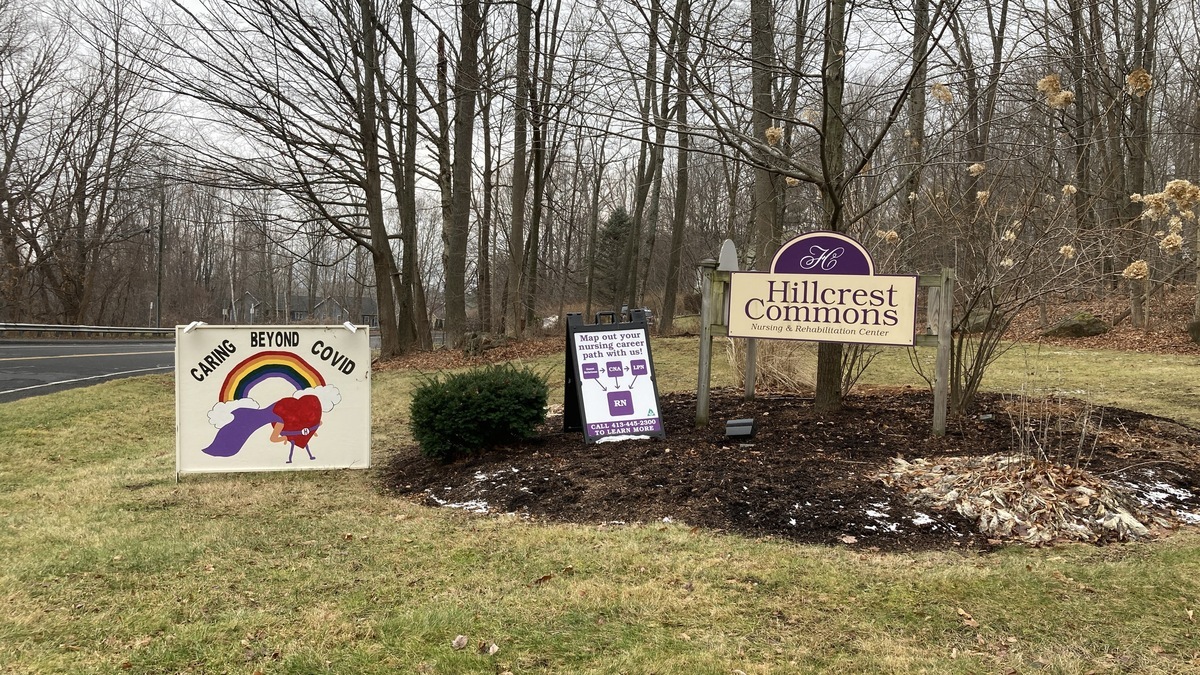
PITTSFIELD, Mass. — Hillcrest Commons Nursing and Rehabilitation Center is suffering a devastating outbreak of COVID-19 after having avoided the virus completely for nine months.
Within a few weeks, 75 percent of its residents were infected with the novel coronavirus and 32 had died. Hillcrest has now accounted for nearly 80 percent of all deaths from the virus in Pittsfield.
Lisa Gaudent, vice president of Berkshire Healthcare Systems, which operates Hillcrest along with 14 other long-term care centers, said the past weeks have been painful for both residents and staff members who care for them.
"Imagine losing members of your family one right after the other over a period of a couple of weeks," she said. "That would be devastating for anybody and it's devastating for our families and it's also devastating for our staff."
As of Thursday, 73 Hillcrest residents were COVID-19 positive and 13 were at Berkshire Medical Center. Fifty residents have recovered and are no longer considered actively infected, and 32 have passed away.
Thirty-eight members of the staff are currently positive and 45 who were previously positive have recovered.
Before the breakout, Hillcrest had 224 residents; it is now down to about 162 from a combination of discharges, hospitalizations and deaths.
Gaudet said Hillcrest Commons was the last facility in the state of Massachusetts to have an infection. Among the first was Williamstown Commons, which saw 25 deaths from the novel coronavirus early in the pandemic. Long-term care centers have been have been at high risk for infections; a case of COVID-19 can quickly spread through through a facility.
On Nov. 18, a staff member at Hillcrest tested positive, and within a couple of days, the spread of infection had grown dramatically. Both staff and residents are tested on a weekly basis as part of the facility's COVID-19 protocol plan.
"It happened very quickly," Gaudet said.
Though the origin of the initial infection is not known, the cause of the outbreak is likely related to the increased community spread that Pittsfield is currently experiencing. Because both staff and visitors are naturally out circulating in the community, the risk of COVID-19 entering a nursing home is increased.
Gaudet said the nursing home has been adhering to the same strict COVID-19 protocols since the virus first surfaced in the region in March.
The state Department of Public Health guides nursing homes with everything from how often to assess residents for signs of infection to how the staff should wear personal protective equipment.
Gaudet said there is a lot of guidance pertaining to how the facility operates even when there is not an infection in the building.
The state has been conducting Infection Control Surveys to see how well facilities are complying with the information they are given. Hillcrest Commons has had a number of these surveys prior to July, resulting in it being deficiency-free, meaning it was not cited by the state for any infractions.
"The state believed we were doing a good job," Gaudet said, "and we were."
After the outbreak, Hillcrest Commons had another deficiency-free survey, which was even more confirmation that it was following all of the state-provided guidance to contain and prevent the spread of COVID-19.
When the pandemic first hit in March, the state suspended or restricted all visitors to nursing homes and continued that until summertime, when regulations were loosened and to allow outdoor visitation.
As the weather got colder, elderly residents couldn't be outside and the DPH adapted rules to allow visitation indoors but with a number of restrictions. By this time, nursing homes could allow residents to hug loved ones when masked, with staff making sure that their faces remained away from one another.
Gaudet said the period when residents were not able to see their families was hard on them, as they rely on those connections to keep them in good spirits.
"Residents obviously really benefit from having connections with their loved ones and having physical contact," she said. "So I think the state tried to find a nice balance there."
After the positive COVID-19 test result on Nov. 18, all visitation ceased and Hillcrest Commons went back to square one, focusing on keeping people separated.
Gaudet said working in a nursing home is very different than working in a hospital or physician's office because there's a special, personal kind of relationship that develops between caregivers and residents.
"This is a home to these folks, this is where they live," she said. "the vast majority of them are there because they need to be there because they are needing more support and help than can be provided in a normal home setting, and so our staff overtime really develop relationships with these people as well as with their families."
At Hillcrest Commons, staff members know the residents' histories, the names of their grandchildren, when they got married, and their anniversary.
"These people become like grandparents or parents to many of our staff," Gaudet said. "And it's a very personal battle that they are watching their residents fight."
At the same time, many of Hillcrest Commons' staff have become ill and are not able to be at the facility aiding their residents, which Gaudet said has hurt as well.
Though the facility has suffered a great deal of loss over the past month, Gaudet said they are trying to find hope in the number of residents and staff members who have recovered from the virus.
Additionally, Hillcrest Commons is feeling a sense of relief after last week's announcement that Berkshire Medical Center would be one of the first hospitals receiving the Pfizer vaccine and long-term care patients and workers were being prioritized for distribution on a federal and state level.
"I think that is significant in terms of what it says about where this battle has been fought and who has really been the heart of the suffering related to this," Gaudet said. "Hopefully, we are at the beginning of the end."
Tags: COVID-19, nursing home,
More Coronavirus Updates