Greylock Valley Apartments Fire Leaves Several Families Homeless
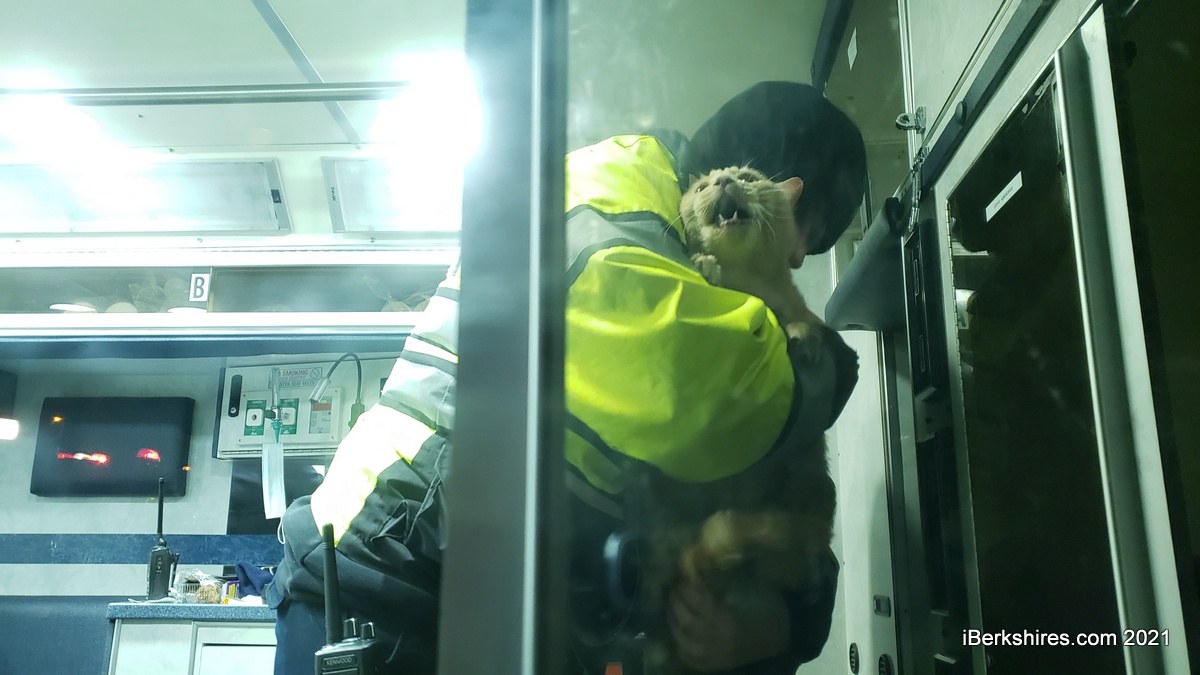
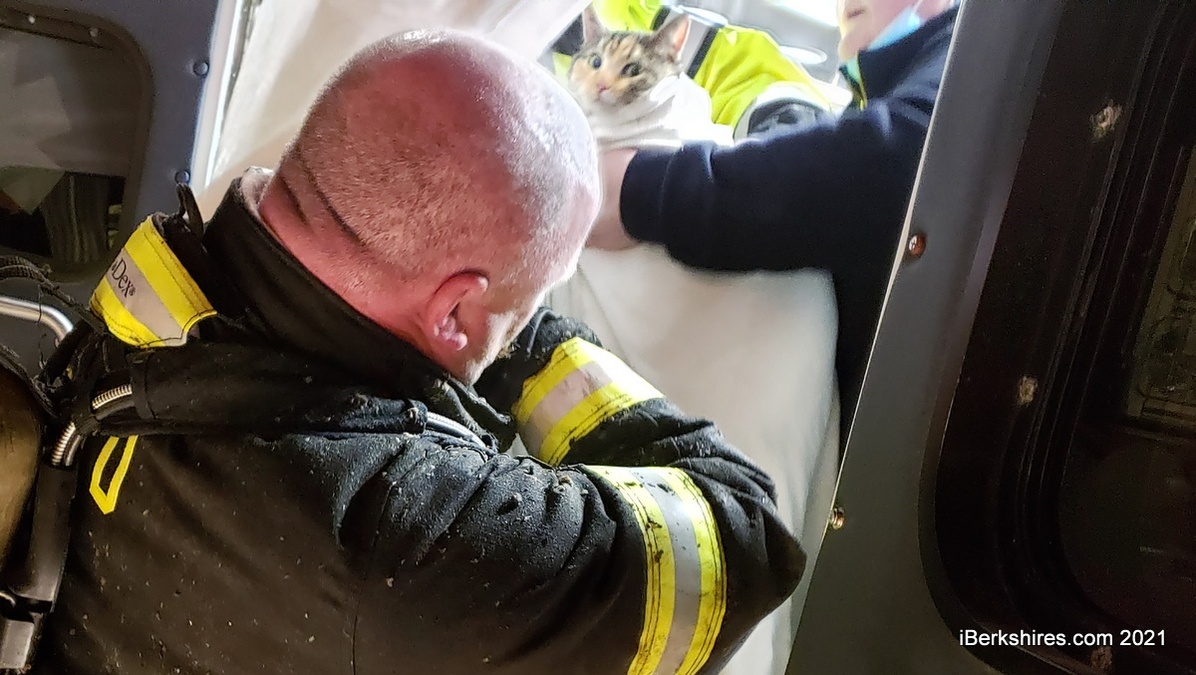
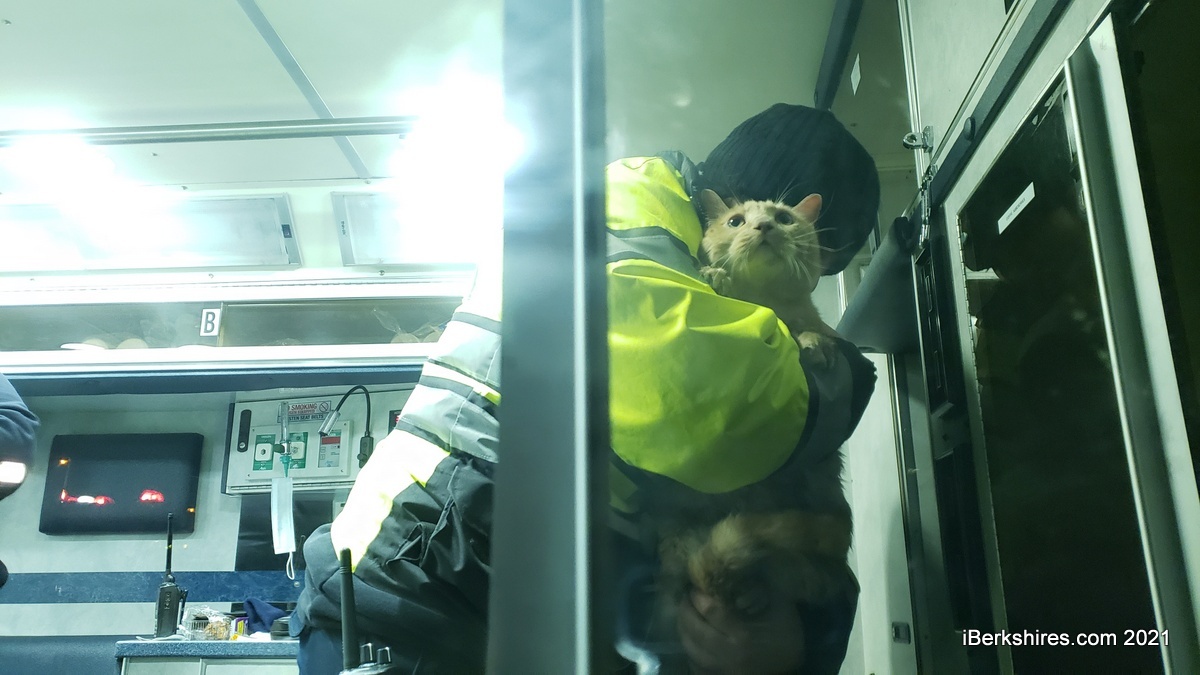
One of two cats rescued by firefighters yowls his displeasure. The cats were wet and cold and were warmed up by ambulance personnel.
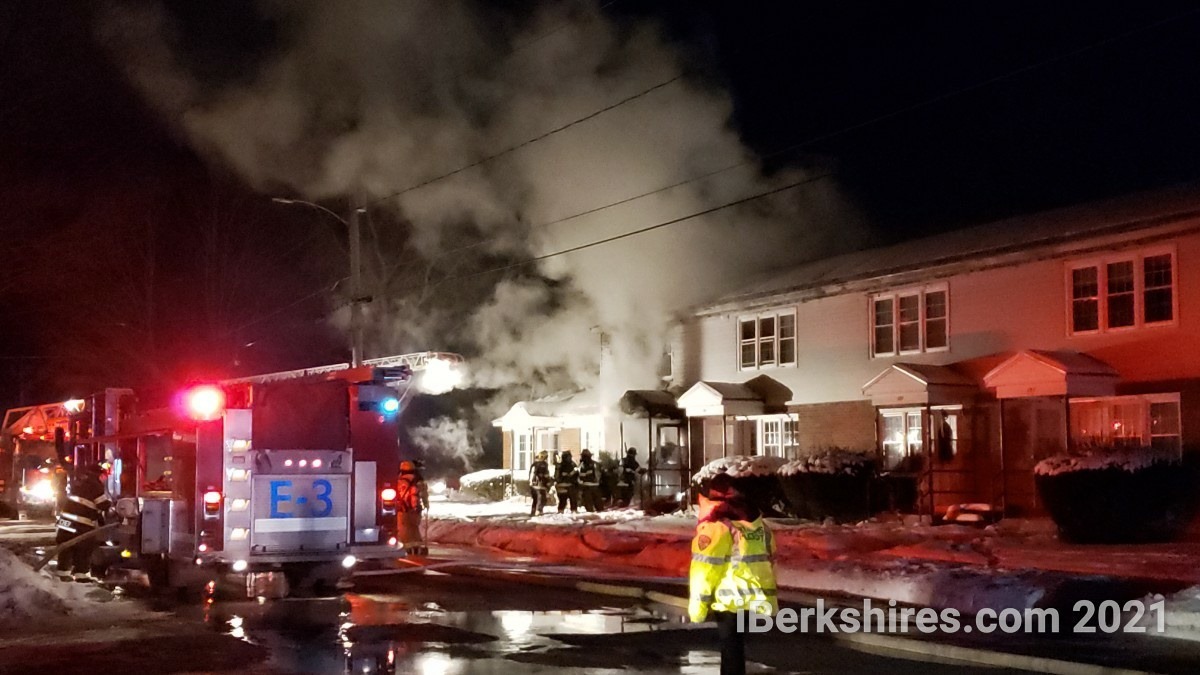
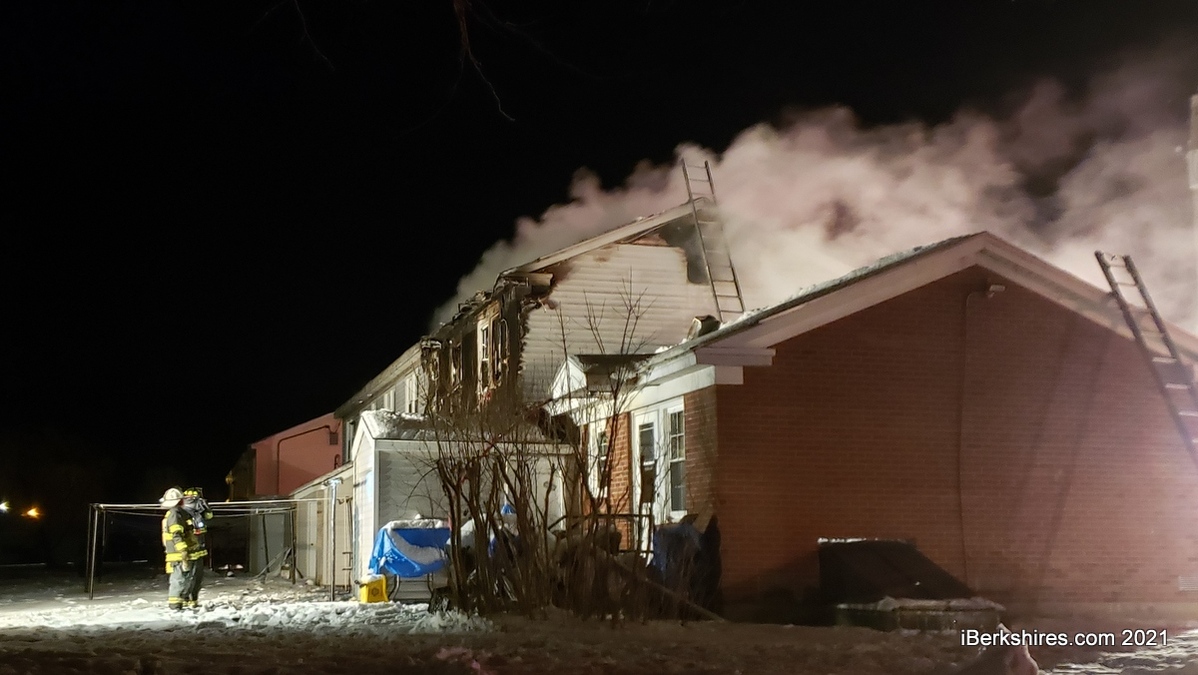
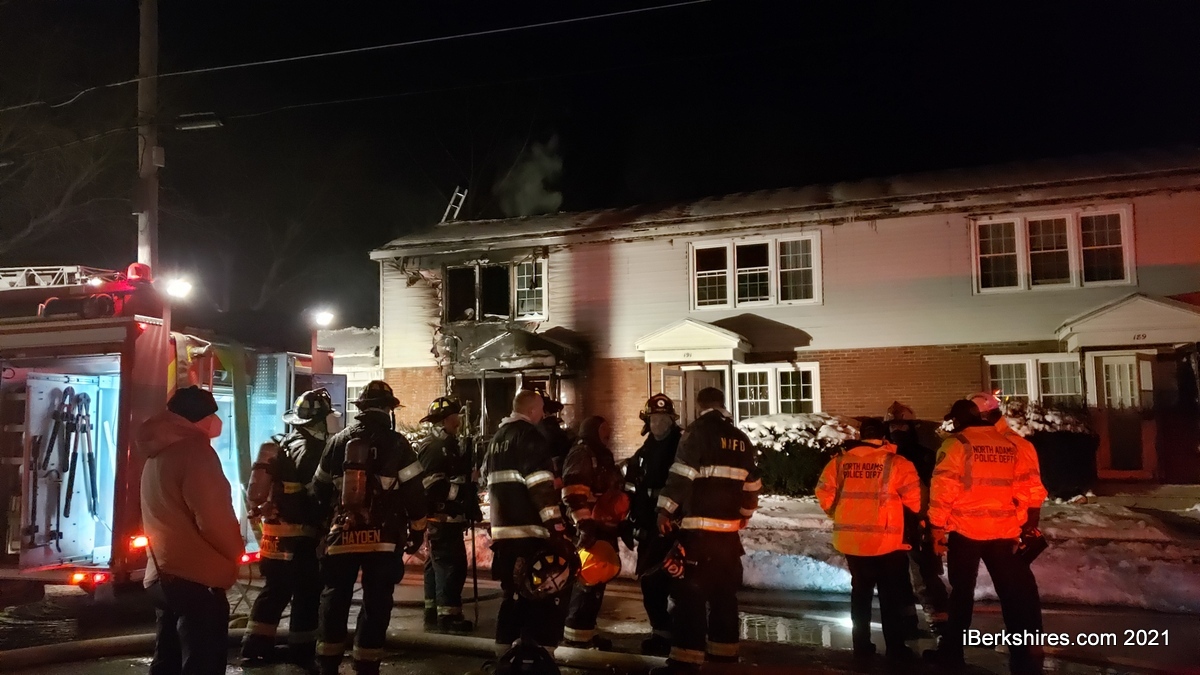
The report of a structure fire came in about 5 p.m. and Police Officer Stephanie Mirante, first on the scene, arrived as occupants of the six-unit block were fleeing the building.
The fire appears to have started in the first-floor rear of unit 193, in the kitchen. The cause is still under investigation.
"Flames extended up the outside and the inside, they went up the back into the upper second floor from the outside," said Fire Chief Stephen Meranti. "And it also extended up the internal stairway, rapidly extending fire. The winds helped push the fire right through the building."
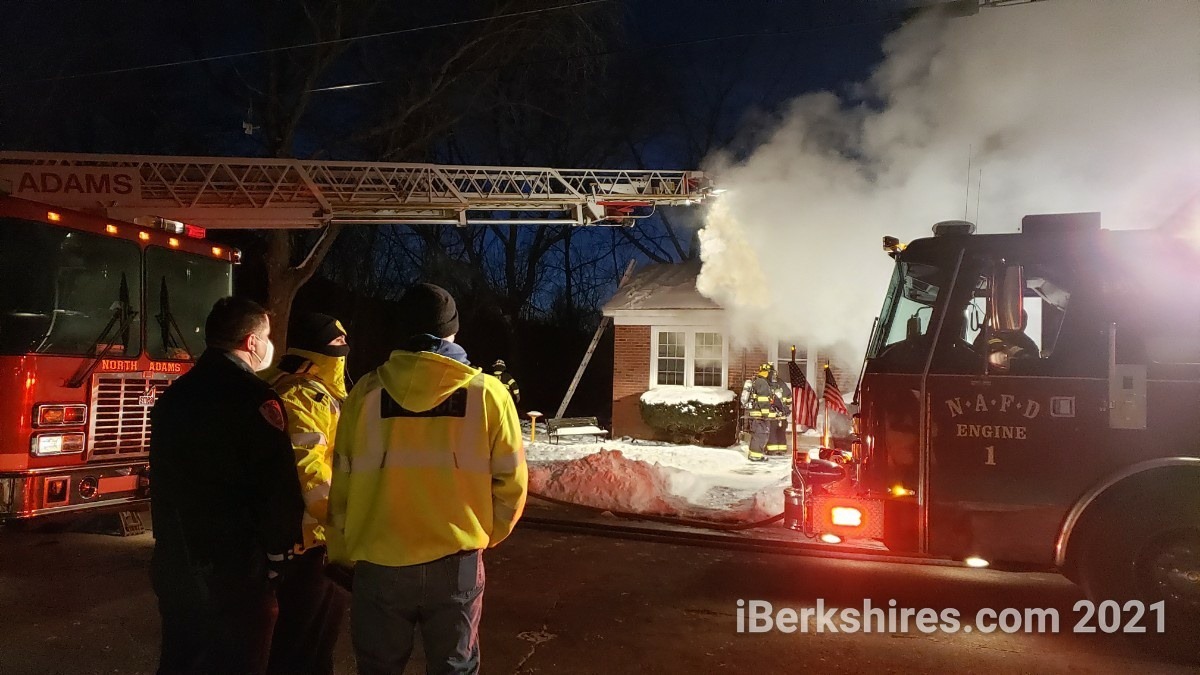
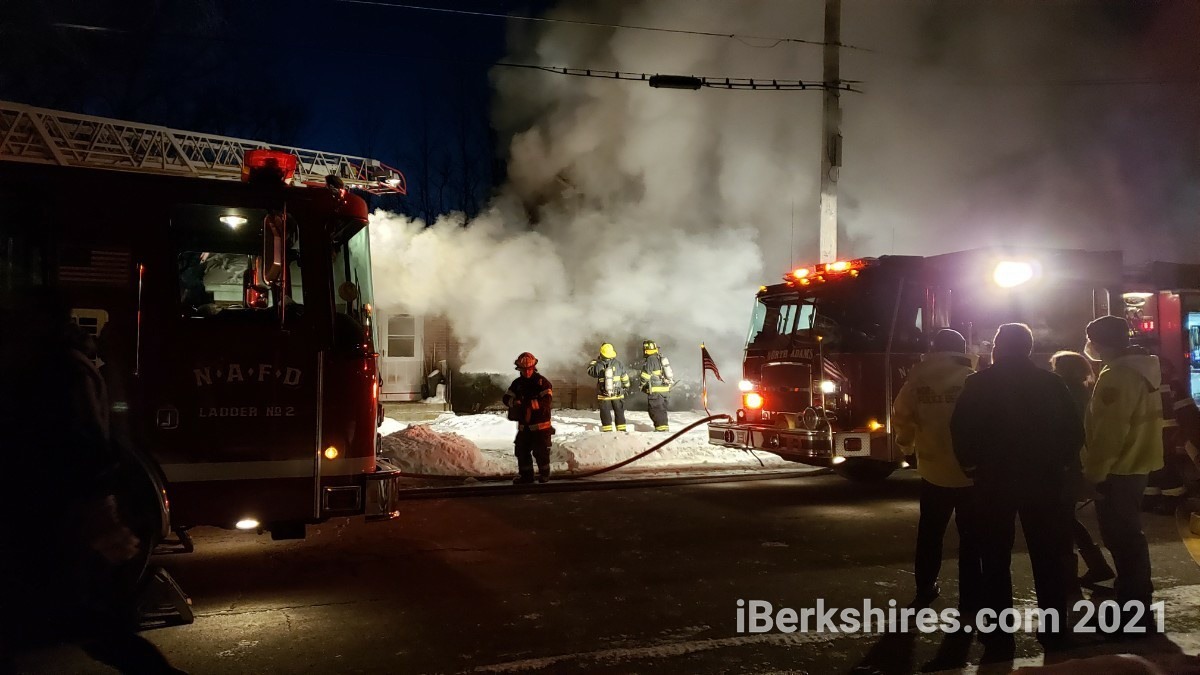
Flames and smoke were pouring out of the unit in the last block on Greylock Avenue. Meranti said the smoke was so low and thick you couldn't see the building.
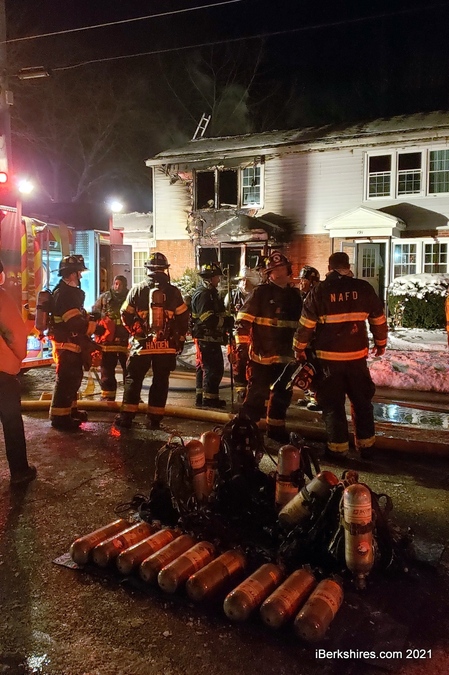
City firefighters were aided by the Clarksburg Fire Department, which sent its air-pack truck and Williamstown handled a call that came in from the Braytonville Apartments.
"We had a couple occupants that tried to get back in to get their pets during the fire," said Meranti. "We had to stop them from going in but it worked out OK — firefighters rescued the two cats."
The cats, an orange tabby and a tortoiseshell, were rescued from unit 191 next door by firefighters. Both were wet and shivering and taken into a Northern Berkshire EMS ambulance that was standing by to be dried and warmed up.
Temperatures hovered around zero creating an icy mess on the roadway. The city's Department of Public Works responded to keep the streets clear.
Meranti said the attic space was blocked between the four two-story units and that helped to prevent the fire from spreading through the structure. Flames did get into the attic space of the unit 195, a single-story attached apartment on the south side of the building but the chief said they were able to knock that down fairly quickly.
"The majority of the fire was in 193 there's a little bit of extension and some water damage from into 191," he said.
Executive Director Jennifer Hohn said she had notified the U.S. Housing and Urban Development and the board of commissioners, and would be working with the Housing Authority Insurance Group on Saturday to schedule an on site appraisal.
Occupants of that block were evacuated and were able to find places to stay for the night; the Red Cross put up a few people at the Holiday Inn. The Greylock Valley is operated by the North Adams Housing Authority and officials were on hand to coordinate with public safety.
"From the looks of it, extensive smoke and water mitigation to the entire block will be required," Hohn said. "Additionally, the unit where the fire started and the adjacent units may require total demolition and reconstruction.
"If it is determined that this incident was the result of negligence, NAHA will work with our attorneys to evict the resident as they clearly pose a health and safety risk to their neighbors."
Hohn said it could have been worse if the authority hadn't begun replacing nonfunctioning hydrants in the apartment complex.
The authority was used more than $10,000 in federal Coronavirus Aid, Relief, and Economic Security Act money to purchase five hydrants.
Meranti said the hydrant across the street from the burning block didn't work but one of the new recently installed was just down the street and put into service. Williamstown Fire Department also ran a line to another new hydrant around the corner.
"Williamstown actually responded on a second call for us at Braytonville for a gas leak," said Meranti. "We were over there earlier in the night for a stove fire so it's been a busy night."
The untouched apartments in the block can't be occupied until they've been cleared and the power restored.
In fact, the entire complex was out of power — and heat — because the transformer on the pole in front of unit 193 was out. National Grid was on its way but it was unclear how long it would take to get the heat back on.
Meranti complimented the assists from police and the Clarksburg and Williamstown fire departments and EMS, which brought in a heater and water, and was making cocoa.
Lt. John Paciorek was in charge of the scene and it was the first fire for the department's newest hire, Charlie Sanchez.
"He was just sworn in last week and he did a good job," said Meranti. "They all do a good job."
Tags: structure fire,