Williamstown DIRE Committee Chair Reports on Talk with Acting Police Chief
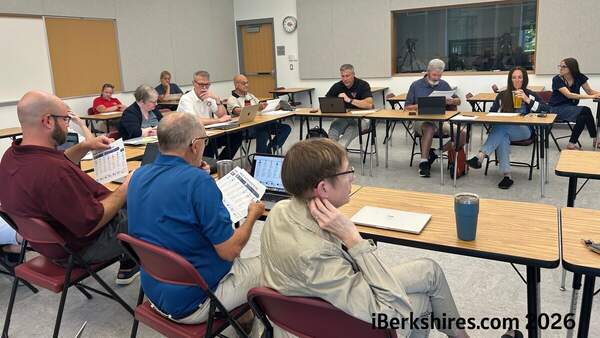
WILLIAMSTOWN, Mass. — The chair of the town's committee on diversity, equity and inclusion Monday reported to his colleagues that he had a long conversation with the town's acting chief of police and that future dialogues between the committee and Police Department are planned.
"This past weekend, I had an extensive meeting with Lt. [Michael] Ziemba," said Mohammed Memfis, the chair of the Diversity, Inclusion and Racial Equity Committee. "We met for a very long time and talked about a host of issues.
"One of the things that was really clear from the conversation that was explained by Lt. Ziemba is that DIRE has played an exceptional role for the WPD in terms of understanding the importance of … lenses and understanding how saying things, doing things that seem so minor, seem so normal for one individual could be quite the opposite for another and how various perspectives and identity influence lenses, outlooks and what a person's perception might be — especially in interactions with law enforcement, public safety and so on."
Ziemba also told Memfis that he would like to promote transparency in the force by creating a website that gives more information about the officers and the department's policies and procedures.
As for those policies and procedures themselves, Memfis said Ziemba is working to bring them into alignment with the police reform bill recently passed on Beacon Hill, and wants input from the DIRE Committee on future policy revisions.
"There was a resolution that we passed on one particular policy … on professional standards and investigations," Memfis said. "That is a policy that should be updated relatively soon. It's pretty much already drafted. [Ziemba] pulled it up on his laptop and showed me the new, revised policy with all the tailoring to Williamstown. As soon as that's approved by whoever becomes the chief, that will become policy. It was great to see that our resolution was responded to.
"Even more important is a conversation we had about policies and procedures and how they're updated from now on. The idea Lt. Ziemba had was that there should be a formalized stream so whenever the Williamstown Police Department has a policy they're planning to update or change or create, there be a consultation with DIRE so we can provide direct feedback, suggestions, points of clarifications on any sort of policies and procedures that are going through the police department that are within the scope of something that we think is material to our committee.
"I think that could be really productive for us going forward."
On the broader topic of reimagining what public safety looks like in the town of 7,700, Ziemba told Memfis that he welcomes a townwide conversation about how to expand capacity for social workers to respond to calls currently handled by the police.
"[Ziemba] expressed a dire need for the presence of more public health clinicians to deal with some of the public safety issues that have traditionally been addressed with police officers," Memfis said. "He said that calls that would have required that kind of support 10 years ago happened maybe once a week. Now, it's like once or twice a day.
"And those resources are being shared across the region, so you can often find yourself in situations where it's difficult to pull in someone who may be already occupied with something else."
While Memfis characterized his meeting with Ziemba as productive and an opening for future cooperation between the DIRE Committee and the department, some of his colleagues were more cautious.
"I'm wondering if in this work you're doing, Mohammed, have you included the union person who smacked us around, who ridiculed us in a very nasty way in the paper that then the Board of Selectmen co-signed?" Bilal Ansari asked. "I'm wondering if the police union person can write an apology, can write a statement of acknowledgement that our work is valuable, that our work is not trying to harm the Williamstown Police Department. Can he come and join the narrative, not just leave Mike Ziemba out there but join that work so we can collectively work toward restorative healing?"
Aruna D'Souza echoed that sentiment.
"I think that outreach is fine, but outreach when this is still sitting on the table, when the police union actually spoke about members of this committee in ways that I think increased hostility toward members of this committee in intangible and, in some cases, tangible ways, that needs to be addressed," D'Souza said.
Andrew Art said he believed the October letter from the local police union was not just the work of one officer but had been widely circulated in the department before it was sent to the Select Board.
Memfis said the union's letter was a topic of discussion in his meeting with Ziemba and that, personally, he laughed it off at the time.
"As I explained to Lt. Ziemba, my primary focus right now is on the decisions that are being made now and will continue to be made in the future and what effects and consequences they'll have for the town and people who live in it," Memfis said. "The inappropriateness of that letter was made clear, and issues dealing with the police union will continue to be central to discussions that we have with the WPD moving forward."
Memfis said he hopes to have the police participate in DIRE Committee meetings down the road and that he hopes the collaboration will continue with whoever the town hires as an interim police chief and, ultimately, permanent police chief.
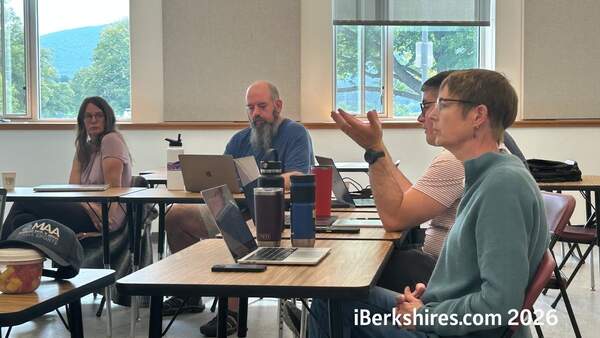
In other business on Monday, the DIRE Committee discussed an email it received from a member of the LGBTQIA-plus asking the panel to be more inclusive in its efforts at inclusion.
Memfis and other members of the committee talked about how intersectionality of discrimination plays a role in harming members of the community in different ways.
"Even within a specific group and a person's identity, there's the concept of intersectionality that exists, which means that you can be gay, you can be trans, but then there's this other layer of, if you're Black, you may have a different experience or if you're not a U.S. citizen who is living in the United States with those identities, you may have a different experience," he said.
The email was referenced a couple of different times during the meeting.
"I would welcome to hear from people about the types of things they think our committee should be focused on," Art said during a different agenda item. "If they think our agendas have been too narrow … ."
"Two hundred years," Ansari interjected. "Eight months, we've been talking about race, and people are tired already."
D'Souza said that all equity work intersects.
"The assumption that if we're working on racial equity we're not also working on LGBTQIA-plus equity is belied even within the terms of our committee itself," D'Souza said. "It drives me nuts. I think that if one takes intersectionality seriously, it means that when we're looking at inclusion, we need to be thinking about all of those things at once. If our work on racial equity was ignoring or downplaying the needs of people of color who are queer or gay, lesbian, trans, whatever, that would mean we're doing bad work on racial equity."
And the committee heard a proposal from member Kerri Nicoll to formally reach out to the community and ask how Williamstown could be safer and more inclusive for all people.
"My basic idea is to get feedback from as many people as possible in our community on three open-ended questions that focus on inclusion: What do you think it means for a community to be inclusive? Do you feel included in our community and why or why not? What is one step you think our community can take to be more inclusive?" Nicoll said.
Nicoll asked her colleagues for input on the best way to ask those questions — either in a survey or in focus groups. The consensus was that the committee should pursue both tracks: having in-depth conversations with residents but also supplementing that input with data from a broader survey.
Tags: DIRE, williamstown police,