Pittsfield Council OKs $960K for Infrastructure Benefiting Bousquet
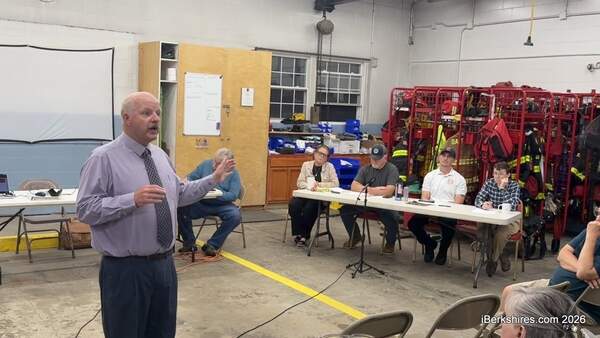
PITTSFIELD, Mass. — The City Council on Tuesday approved an appropriation of $960,000 in Pittsfield Economic Development funds for infrastructure improvements on Dan Fox Drive. The motion passed 10-1 with Ward 4 Councilor Christopher Connell voting against.
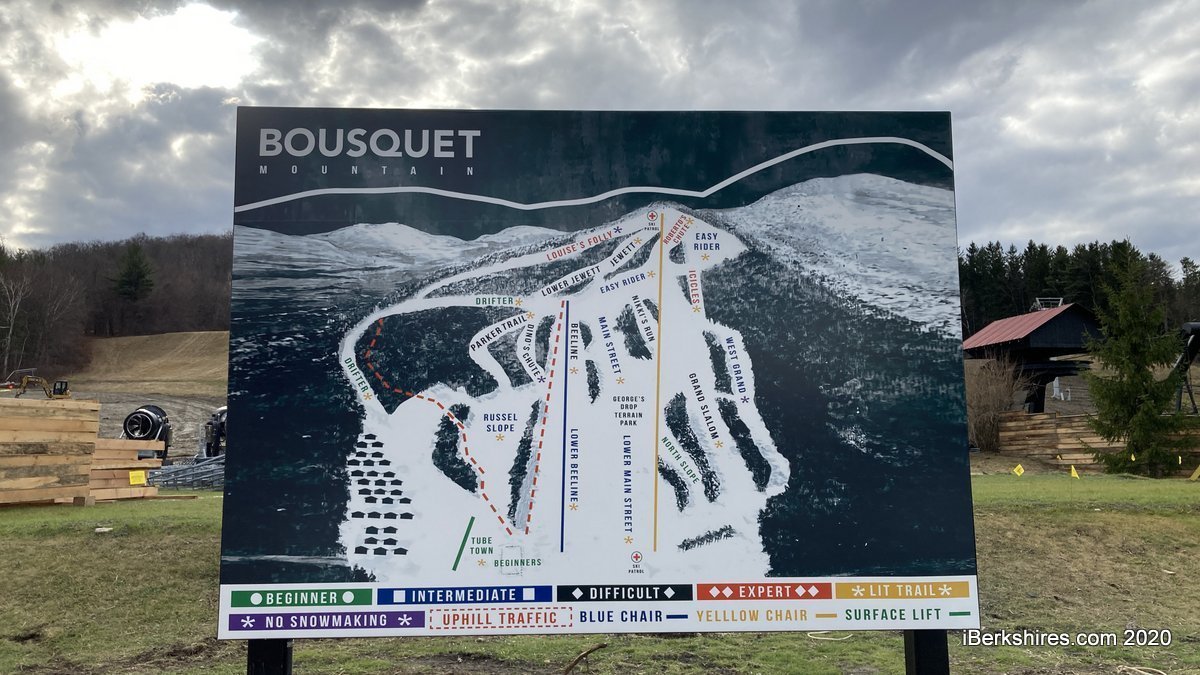
These funds will go toward the extension of water and sewer lines along Dan Fox Drive, connecting the lines immediately to Bousquet Mountain. Though Bousquet is an immediate part of the equation, these improvements will make the area capable of handling future growth and is purposed to promote the "much needed" development.
The ski area's new owners Mill Town Capital plan to demolish Bousquet's existing base area because it is "dramatically out of code" and build a new $5 million one in its place but are not able to move forward with the project depending on well water and a faulty sewage system.
Last week, the Community Development Board unanimously approved this allocation with high hopes for how it will improve that corridor of Dan Fox and the whole city. Earlier this month, the Finance subcommittee unanimously recommended a tax increment financing (TIF) agreement for Bousquet Ski Area that offers 100 percent forgiveness of real estate and personal property taxes in Year 1 and decreases 20 percent a year over a five-year period.
"I appreciate Mill Town Capital's investment in the city," Connell said. "I certainly voted for the TIF, but when it comes to the Economic Development Fund I feel there are specific guidelines that, for whatever reason, seem to be altered, in my opinion, from time to time, and do not meet the true perspective of what they were designed to do."
Before this reduction, the Economic Development Fund, or also referred to as the "GE Fund," had a net balance of $2.967 million. Director of Community Development Deanna Ruffer explained that this investment meets the criteria for economic development because of the level of investment by the developer being more than 10 times the proposed investment by the city, the creation of 40 to 50 full-time equivalent positions, and the overriding public benefit.
"There are also the immediate and long-term public benefits, including the increase of at least a doubling of the revenue to the city immediately and more likely a tripling of revenue at the least," Ruffer said. "And again, that's not taking into consideration the other properties and the anticipated increase in the number of visitors to the city, who will then also need places to stay and we do know there is another development potential in this general area and we see this as a destination business contributing to the development interest along the corridor."
Connell also voiced his concerns about the disproportionate amount of full-time and part-time jobs Bousquet will generate. For the winter ski area, Mill Town is proposing the creation of seven full-time jobs and 130 part-time seasonal jobs.
To determine the full-time equivalence of the part-time seasonal jobs, Ruffer considered both a 3 to 1 and a 4 to 1 part-to-full-time factor that identified 33 and 43 new full-time jobs, respectively. This amounts to a total full-time equivalent of 40 or 50 jobs created.
"Many of our young residents were just out of high school and may not have made a decision about college, or may have made a decision to defer college for some time," Ruffer said. "They use these part-time jobs to help themselves prepare for the next phase of their life. I believe these are very important jobs within our economy and need to be counted."
Mill Town's CEO and Managing Director Tim Burke explained to the council that his group is trying to shift Bousquet away from being a "bar with a ski area attached to it." To achieve this, they are going in a different direction to make the facility more accessible for kids and families, eliminating "really low dollar" tickets that cause problems such as $10 Thursday nights.
"That word 'accessibility' means a lot of things," Burke said. "I think we want to work to try to get into neighborhoods for kids that don't have access to Bousquet at all, and figure out how we can improve that. So I think there's a lot of ways to leverage the accessibility part of it, a lot of ways to make it more affordable and family-friendly. And I think actually, some of those ways mean increasing our ticket prices at certain times where it's been problematic for families and kids."
Bousquet is also planning on partnering with Pittsfield schools, offering skiing education programs, and assisting with transportation.
Ward 1 Councilor Helen said she would not want lower-income families to lose the opportunity to ski with the increase of prices, suggesting local ticket prices.
"I think that would be very meaningful," she said. "Especially as we see a lot of tourists come into the area."
Ward 2 Councilor Kevin Morandi supports this funding in hopes that Bousquet will drive economic development in the corridor but wishes that it could be taken from another source.
"I do think that we should explore another avenue before using GE money again," he said. "However having said that, I also am interested that other things on that stretch could benefit, other possible economic development opportunities on that stretch."
Tags: GE fund, ski resort,