image description
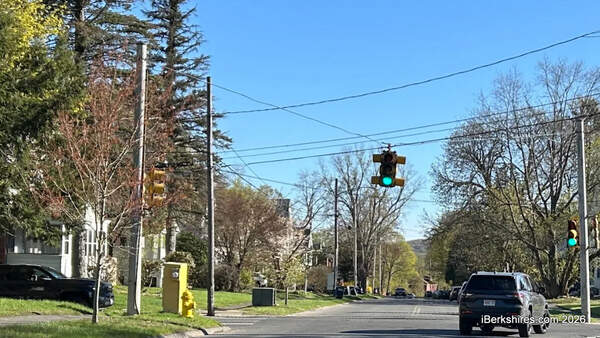
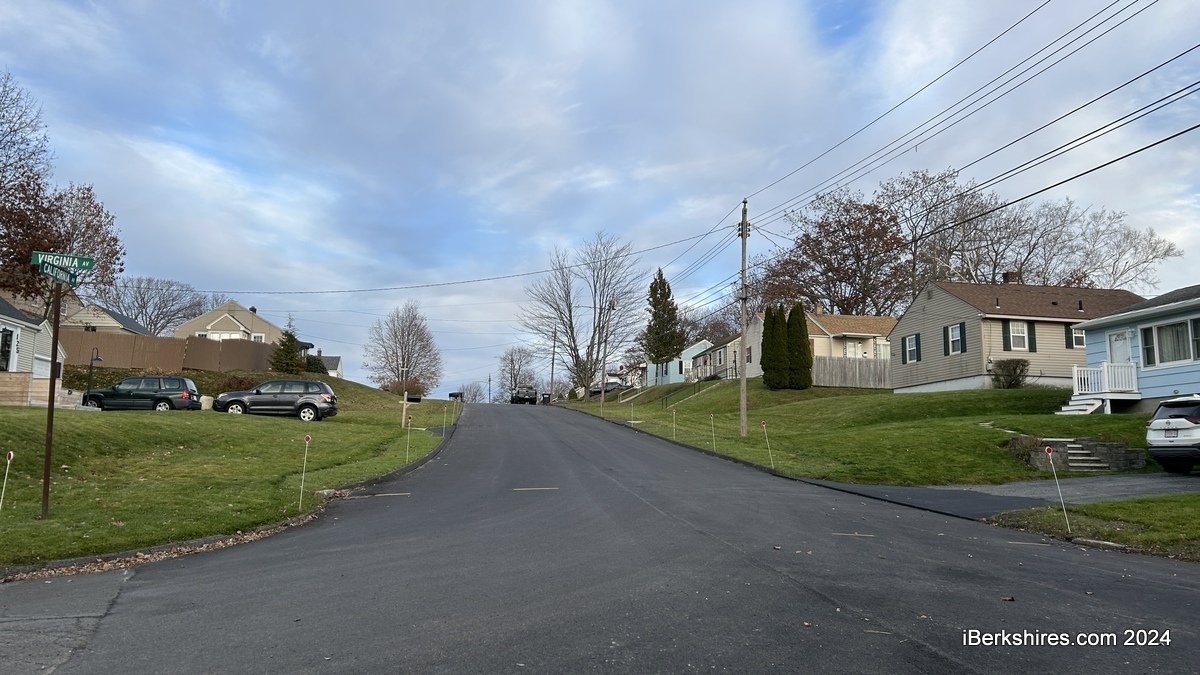
The panel supported 25 mph speed limit signs on California Avenue.

Pittsfield Traffic Commission OKs Bus, Street Signage

By Brittany PolitoiBerkshires Staff
Print Story | Email Story

PITTSFIELD, Mass. — The Traffic Commission OK'd additional bus stops and multiple items in the former General Electric neighborhood at its first meeting of the year.

The Berkshire Regional Transit Authority came to the panel last week with a second round of requests for bus stop signs as a part of larger operational changes. A couple of stops will be on Center Street  and there will be regular stops on Tyler and Seymour Streets.

"This is the 50th year as a transit authority. We're kind of doing a two-fold thing. Since 1974, it's been primarily a flag service where you just stand and hail a bus like a cab. For numerous reasons it's very problematic," general manager Rauley Caine said.

"So the authority a few years ago decided to start implementing bus stops in town. This is the second round of requests we have. It's probably one of many more to come."

He explained that the standard stop spacing is about 1,000 feet or five in each direction per mile, but the BRTA would like to keep it between 800 and 1,000 feet.

"This is our, I think, third year doing this and we've had no negative feedback," he said.

"All the locations, the way the process works is we first identify where we want bus stops then I take a lawn sign that says, 'This is a proposed stop. Questions, comments, that's my email.' As part of our public engagement process, we also advertise locations for 30 days in the paper for comment. We receive frankly, almost no comments every time, and anything that we do receive negative we just move it around."

Eventually, it will be up to the city to decide if the BRTA does not respond to bus hailing but the intention is to have bus stops and at some point have a transition process to just using them, Caine explained, but in the changeover, there would still be flag service.


Commission members expressed concern for elderly people who may not be able to commute to the stop and it was clarified that the bus will not be driving past them in that case.

The panel also supported 25 mph speed limit signs on California Avenue. City Engineer Tyler Shedd explained that the city adopted a 25 mph limit for thickly settled areas and proposed putting the signs at each end of the street.

Chair Mark Brennan was not surprised that people are concerned about speeding, adding, "I don't like it when people go whipping down my street to get their kids to Egremont School either."

Shedd also asked that no parking ordinances on California, Maryland, and Allendale avenues be removed.

"That neighborhood I guess back in GE's heyday had a big problem with the workers parking there, walking to work, so they put up no-parking signs," Shedd said.

"It's not really a problem anymore and people want to be able to park in front of their houses on their street."


Tags: traffic commission,   
If you would like to contribute information on this article, contact us at info@iberkshires.com.

Social Service Organizations Highlight Challenges, Successes at Poverty Talk

By Brittany PolitoiBerkshires Staff

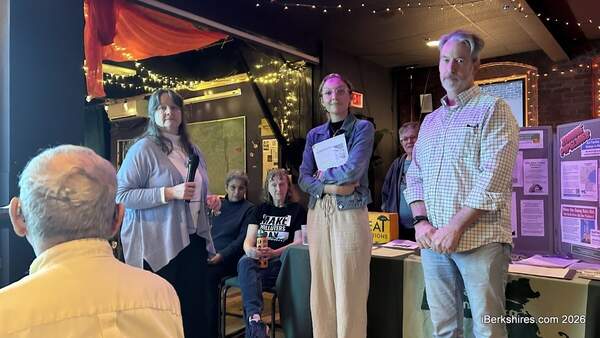
Dr. Jennifer Michaels of the Brien Center demonstrates how to use Narcan. Easy access to the drug has cut overdose deaths in the county by nearly half. 

PITTSFIELD, Mass. — Recent actions at the federal level are making it harder for people to climb out of poverty.

Brad Gordon, executive director of Upside413, said he felt like he was doing a disservice by not recognizing national challenges and how they draw a direct line from choices being made by the Trump administration and the challenges the United States is facing. 

"They more generally impact people's ability to work their way out of poverty, and that's really, that's really the overarching dynamic," he said. 

"Poverty is incredibly corrosive, and it impacts all the topics that we'll talk about today." 

His comments came during a conversation on poverty hosted by Berkshire Community Action Council. Eight local service agency leaders detailed how they are supporting people during the current housing and affordability crisis, and the Berkshire state delegation spoke to their own efforts.

The event held on March 27 at the Berkshire Athenaeum included a working lunch and encouraged public feedback. 

"All of this information that we're going to gather today from both you and the panelists is going to drive our next three-year strategic plan," explained Deborah Leonczyk, BCAC's executive director. 

The conversation ranged from health care and housing production to financial literacy and child care.  Participating agencies included Upside 413, The Brien Center, The Food Bank of Western Massachusetts, MassHire Berkshire Career Center, Berkshire Regional Transit Authority, Greylock Federal Credit Union, Massachusetts College of Liberal Arts, and Child Care of the Berkshires. 

The federal choices Gordon spoke about included allocating $140 billion for the U.S. Immigration and Customs Enforcement, investing $38 billion to convert warehouses into detention centers, cutting $1 trillion from Medicaid over 10 years, a proposed 50 percent increase in the defense budget, and cutting federal funding for supportive housing programs. 

Gordon pointed to past comments about how the region can't build its way out of the housing crisis because of money. He withdrew that statement, explaining, "You know what? That's bullshit, actually."

"I'm going to be honest with you, that is absolute bullshit. I have just observed over the last year or so how we're spending our money and the amount of money that we're spending on the federal side, and I'm no longer saying in good conscience that we can't build our way out of this," he said. 

Upside 413 provided a "Housing Demand in Western Massachusetts" report that was done in collaboration with the University of Massachusetts at Amherst's Donahue Institute of Economic and Public Policy Research. It states that around 23,400 units are needed to meet current housing demand in Western Mass; 1,900 in Berkshire County in 2025. 

View Full Story

More Pittsfield Stories