State Education Board Approves Push for In-School Learning
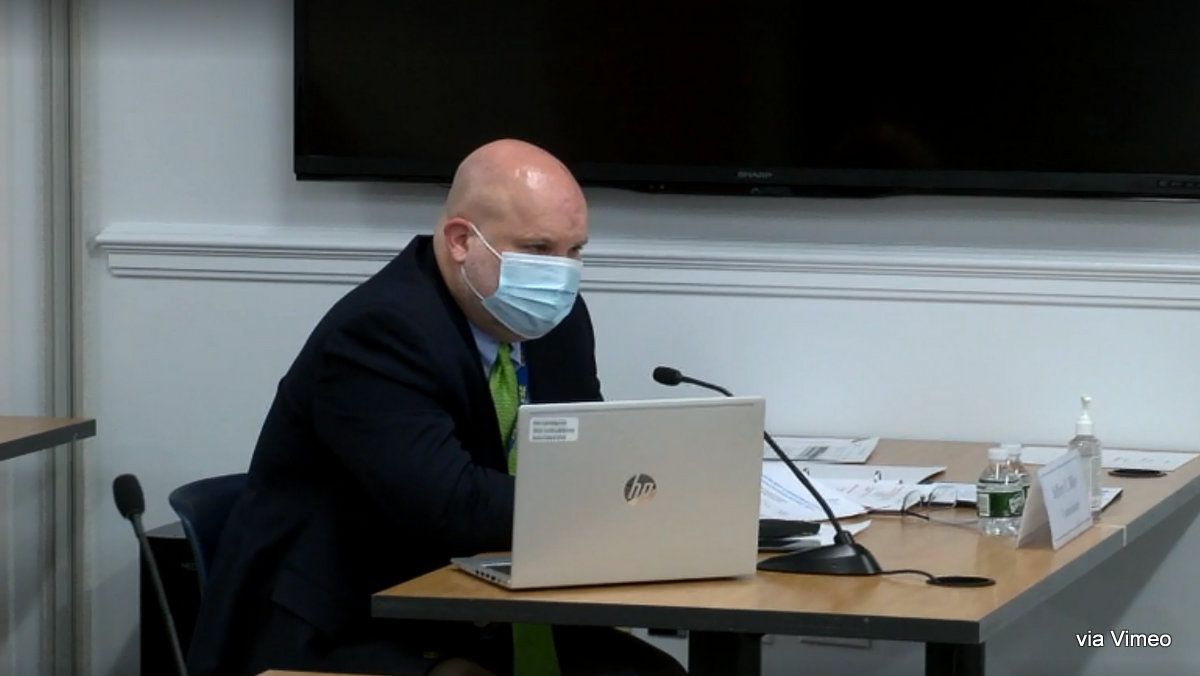
DESE Commissioner Jeffrey Riley explains the reasoning for getting students back in classrooms and off remote learning.
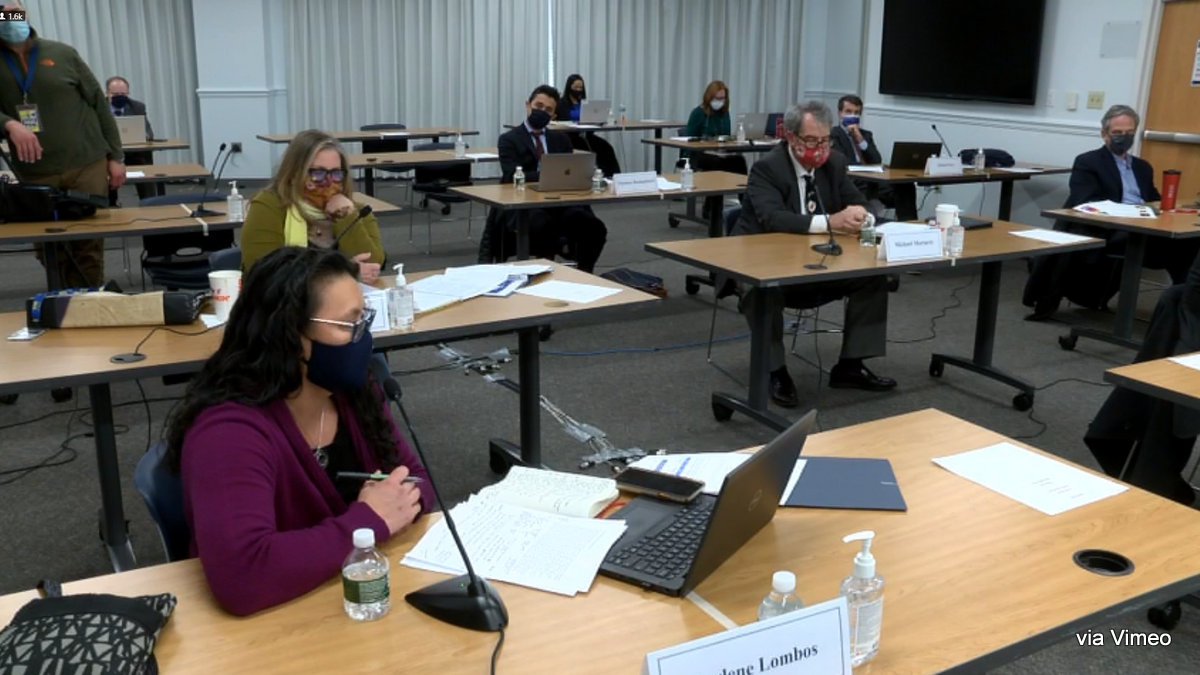
The Board of Elementary and Secondary Education voted 8-3 on Friday afternoon to accord DESE Commissioner Jeffrey Riley authority to change requirements for learning time that would not include remote learning.
Families would still have the ability to remain remote for the rest of this school year and some schools may be able to get waivers, but the state would have the ability to hold back Chapter 70 education funds for schools out of compliance.
The vote followed hours of testimony from medical professionals, educators and parents that veered from strongly encouraging the return to school as an important to students' health, well-being and educational needs to cautions that many schools did not have the ability to provide adequate spacing or COVID-19 precautions and calls for school employees to be vaccinated prior to any return.
Mayor Thomas Bernard was among those who provided written testimony against returning in full. The North Adams Public Schools have been in hybrid mode since starting the school year in September and just this week had its seventh and eighth grade classes revert to remote because of a potential contact with a student who tested positive.
"While we approach our work from different perspectives we share the same goal — to serve the young people in our schools and districts safely and equitably," he wrote. "We can't meet that goal by imposing artificial timelines and punitive strategies. We have to allow time for collaboration, and consideration of local conditions for success. Otherwise the result will be time lost and trust eroded. And it will be our students who pay the price, as we all say in full sincerity that we're acting in their best interest."
The amendments to the learning time regulations would allow Riley to disallow remote learning as an alternative, based on consultation with medical experts and state public health officials.
"If the Commissioner concludes that students may safely attend classes in an in-person setting with health and safety requirements issued by the Commissioner pursuant to this section, then he may, with prior written notice to the Board, notify districts that they may no longer use one or more of the alternative education models, in whole or in part, to meet the minimum school year and structured learning time requirements," reads the approved amendment.
Secretary of Education James Peyser said educators and the medical community now know more about how the novel coronavirus is spread and that, with the advent of vaccinations, now is the right time to begin a return to classrooms.
"First of all, we know a lot more about what works and we've been talking a lot about that over the course of today's conversation, in terms of the experience on the ground in schools in classrooms, with all the mitigation strategies that have been employed across hundreds of schools in Massachusetts, thousands across the country and around the world," he said. "We now have a research base including some of the new data that the commissioner presented this afternoon, that verifies and validates the impact of those mitigation strategies on reducing the spread of the virus. ...
"We also know a lot more about the impact of remote learning and remote learning over the course of time, getting back to now a year ago, on children, both in terms of educational progress, but equally important in terms of their social emotional development, their mental health, and in particular for students who have special needs and who have disabilities experience has had on them and it has not been good."
He also pointed out that the state has provided nearly $1 billion for schools to make adjustments over the past year in terms of technology, personal protective equipment and retrofitting or upgrading HVAC systems, with another $2 billion possible from the federal stimulus bill.
"There are so many things that are coming together right now that it makes sense for us to take up this measure," Peyser said.
The study he referred to had been introduced by Riley and had looked at a 3-foot rather than 6-foot social distancing, finding that the closer distance did not have an effect on transmission as long as masking and other sanitation practices are in place.
"Massachusetts private and public schools have opened with as little as 3 feet of distance between students and have proven that with these other mitigation measures, in-school transmission is exceedingly rare," according to a letter signed by dozens of infectious disease researchers and physicians. "The closer spacing fails when these other mitigation pieces are not in place. This mirrors data from other states and other countries."
Riley also noted that the Biden administration and U.S. Centers for Disease Control did not think teachers needed to be vaccinated to be back in school, and that many teachers are already in school buildings for hybrid learning.
The educational community — from teachers to bus drivers — will be eligible for vaccination beginning on March 11.
Commissioner Mary Ann Stewart, who voted against the amendment, thought it was too soon to bring students and staff back to buildings.
"I think we need to be very cautious," she said, noting even though positive rates have decreased, they did so during the summer too before surging last fall, plus there is the unknown of the variants that have emerged. "We're not out of the woods. I'm not at all comfortable with mandating that schools go back in person."
Rather, she said, the state should provide the resources but let local school committees decide. It was also imperative that educators be vaccinated, she added, saying the emergency was really in addressing the pandemic.
Fellow Commissioner Matt Hills, however, was "very enthusiastic" about getting elementary school started on April 5 and encouraged Riley to be cautious about too many transitional waivers.
North Adams Superintendent of Schools Barbara Malkas said at Tuesday's School Committee meeting that a new plan would have to be developed should the state board approve the amendments.
"In order to maximize physical distance between students at 6 feet, we would now have to recapture places like the cafeteria and auditorium," she said. "So there's still more that we need to find out, and because there is a discrepancy between the recently released CDC guidance and some of the things that have come to light through the commissioner's plan based on what he is shared with superintendents, that needs to be rectified in some way before we would proceed."
Malkas said each day the school system was not in compliance, it would have to make up the time at the end of the year or forfeit 1/180 of Chapter 70 for each day out. Schools are required to be in session for 180 days.
"I understand that there's a desire to get students back into the class as much as humanly possible. We have wrestled with that as a committee and as a community in all kinds of different ways," said Bernard, chairman of the School Committee, on Tuesday. "We know that our students are struggling, and my feeling and my frustration from the start with this is that our partners at the state level have said very clearly to us, look local control, you make the decisions, and then turned around and said, but you're doing it wrong. ...
"And this most recent set of guidelines and the implicit threat in them regarding time on learning, and now the potential threat to our funding, is something that I am deeply concerned about."
Bernard Testimony to the Board of Elementary and Secondary Education by iBerkshires.com on Scribd
Tags: remote learning, state officials,