image description
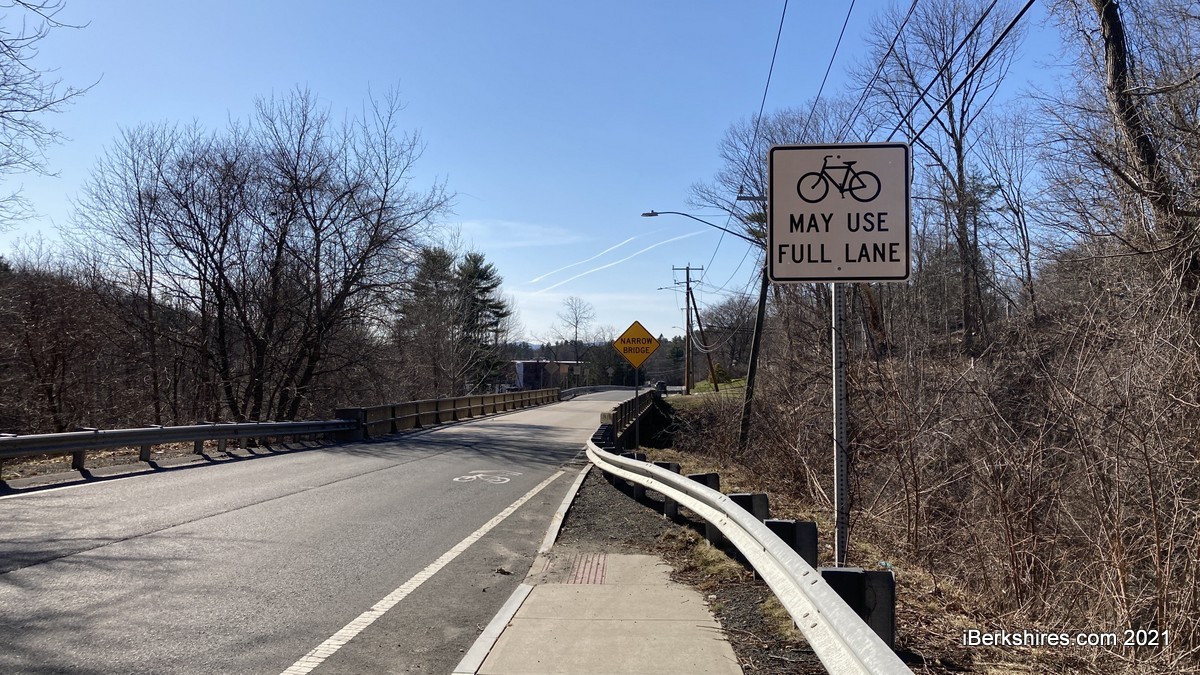
The Select Board is hoping the dangerous unfinished pedestrian way at East Housatonic Street and Carson Avenue can be included in the proposed federal infrastructure bill.

Dalton Ponders Request for Infrastructure Bill

By Joe DurwiniBerkshires Correspondent
Print Story | Email Story
DALTON, Mass. — Dalton is keen to get a deferred pedestrian bridge project in front of Congressman Richard Neal for possible inclusion in the anticipated federal infrastructure bill.
 
The pedestrian bridge at East Housatonic Street and Carson Avenue is an infrastructure need that was already drafted, but deleted from a previous federal road construction project completed a few years ago. Select Board member John Boyle proposed now is the time to revisit it.
 
Neal, who Boyle says has been "very conscientious about taking care of the western part of the district," is a key architect in the legislation, as chair of the House Ways and Means Committee.
 
The previous project, which was undertaken from 2014-2018, included the installation of a sidewalk that now dead ends abruptly at the bridge, forcing pedestrians to cross traffic dangerously.
 
"Obviously this is a very unhealthy situation," said Boyle. "In my mind, it's a disaster waiting to happen."
 
Boyle recommended that the town submit a presentation including the previous study and design work, along with traffic commission endorsement, and other narrative materials explaining the importance of the project to Dalton.
 
Member Joseph Diver was reserved about the proposal, questioning if other town projects, such as needed sewer reconstruction, might be higher priorities to pursue in this bill. Diver suggested this bill has "some hill to climb" yet, offering time for a more exploratory conversation with Neal's office.
 
"I think we need to move very quickly," disagreed Boyle. "Everyone in the country is going to be having the same thought."
 
He maintained that the pedestrian bridge option has the advantage of being essentially shovel-ready, with a great deal of costly engineering already completed.
 
Town Highway Superintendent John Roughly added that upfront engineering costs for any other major project would need to be paid by the town, and it's unlikely they'll be able to fund studying such a project in the immediate future.
 
"This looks like a good opportunity that we could get a little slice of that pie," said board member Dan Esko.
 
In the end, Esko and Chairman Robert Bishop favored having Boyle "begin the conversation" with Neal's office about submitting the bridge proposal.
 
One percent of the approximately $3 trillion 2021 Infrastructure Bill will be devoted to congressional earmarks.
 
In other town business, the Health Department will make final determinations on Tuesday about plans for reopening Town Hall on Monday, April 5. Dalton will be one of the first town halls in Berkshire County to return to in-person business this year, following re-surging numbers in the region beginning in the fall.
 
After discussing various options and locations, the Select Board has decided to continue to permit the informal, wooden ramp "skate park" located at Pine Grove Park, for the time being. It was clarified that the town is not liable for their use, since the structures are the property of the youth who set them up.
 
"I'd rather see them doing it there, than doing it out in the street," said Bishop.
If you would like to contribute information on this article, contact us at info@iberkshires.com.

Lanesborough Planners Bring STR, ADU, Signage Bylaws for Town Vote

By Breanna SteeleiBerkshires Staff

LANESBOROUGH, Mass. — The Planning Board held a public hearing on the much anticipated bylaws for short-term rentals, accessory dwelling units, and signage to be presented at the annual town meeting.

For the past few months, planners have diligently been working on wordage of the new bylaws after Second Drop Farm's short-term rental was given a cease and desist because the building inspector said town bylaws don't support them.

The draft bylaw can be found on the website.

The board voted on each of the four articles and heard public comment before moving to entertain any amendments brought forward.

A lot of discussion in the STR section was around parking. Currently the drafted bylaw for parking states short-term rentals require two parking spaces, and with three or more bedrooms, require three spaces but never more than five.

There were questions about the reasons for limiting parking and how they will regulate parking renters choose to park on the lawn or the street. Planners said it is not their call, that is up to the property owner and if it is a public street that would be up to the authorities.

Some attendees called for tighter regulation to make sure neighborhoods are protected from overflow.

Lynn Terry said she lives next to one of the rented houses on Narragansett Avenue and does not feel safe with all of the cars that are parked there. She said there can be up to 10 at a time on the narrow road, and that some people have asked to use her driveway to park. She thinks limiting to five cars based on the house, is very important.

The wordage was amended to say a parking space for each bedroom of the house.

Rich Cohen brought up how his own STR at the Old Stone School helps bring in money and helps to preserve the historic landmark. He told the board he liked what they did and wants to see it pass at town meeting, knowing it might be revised later on.

He said the bylaws now should not be a "one size fits all" but may need to be adjusted to help protect neighborhoods and also preserve places like his.

After asking the audience of fewer than 20 people, the board decided to amend the amount of time an short-term rental can be reserved to 180 days total a year in a residential zone, and 365 days a year in every other zone. This was in the hopes the bylaw will be passed and help to deter companies from buying up properties to run STRs as well as protecting the neighborhood character and stability.

They also capped the stay limit of a guest to 31 days.

Cohen also asked them to add "if applicable" to the Certificate of Inspection rule as the state's rules might change and it can help stop confusion if they have incorrect requirement that the state doesn't need.

The ADU portion did not have much public comment but there were some minor amendments because of notes from KP Law, the town counsel.

View Full Story

More Pittsfield Stories